Best Audience Intelligence Platforms in 2026: 8 Platforms Compared
Looking for the best audience intelligence platforms? We compare 8 tools on segmentation, social data, survey research, and pricing for marketing teams.
- Editor's choice
 Audiense
Social audience segmentation
Starts atSee websiteVisit audiense.comFull review - Great alternative
 Brandwatch
Consumer intelligence at scale
Starts atSee websiteVisit brandwatch.comFull review - Also consider
 Meltwater
Media and social intelligence
Starts atSee websiteVisit meltwater.comFull review
TL;DR:
- Audiense is the strongest choice for social audience segmentation, while GWI is the strongest choice for survey based consumer profiles across many markets.
- Brandwatch and Meltwater suit large brands that need deep social and media coverage, but both are quote priced enterprise tools.
- SparkToro is the best low cost starting point, with a free plan and clear self serve pricing.
- No single platform covers every data type, so many teams pair a social tool with a survey tool for a fuller picture.
Quick comparison
| Tool | Best for | Starts at | Free plan? | |
|---|---|---|---|---|
| Audiense | Social audience segmentation | See website | No | Visit |
| Brandwatch | Consumer intelligence at scale | See website | No | Visit |
| Meltwater | Media and social intelligence | See website | No | Visit |
 Pulsar | Audience and narrative research | See website | No | Visit |
 SparkToro | Fast audience research on a budget | $50 per month | Yes | Visit |
 GWI | Survey based global consumer profiles | See website | No | Visit |
 YouScan | Visual social listening | $499 per month | Free trial | Visit |
 Talkwalker | Social listening and analytics | See website | No | Visit |
The best audience intelligence platforms
Audience intelligence platforms answer a simple question: who is this audience, what do they care about, and where do they spend time online. Some tools answer from social data, others from surveys, and others from media coverage. We compared official feature pages, published prices, and public reviews to rank the platforms that best cover those different data types.

Audiense is built around a clear idea: people reveal a lot through who they follow and connect with. Its platform builds segments from those connections, then shows affinities, interests, demographics, and job roles for each group. That makes it useful for persona work, influencer shortlists, and media planning that needs more than age and gender.
The limit is the data source. Social connections show interests and communities, but they do not directly show purchase intent or offline behavior. Audiense works best when you combine its segments with your own first party data or survey research. For social led audience work, though, its segmentation depth is hard to match.
- Deep segmentation from social connections and affinities
- Useful for persona building
- Large global consumer profile base
- Pricing is quote based for full access
- Social data alone does not explain why people buy

Brandwatch Consumer Intelligence draws on more than 100 million online sources, with a deep historical archive that lets teams compare current conversation with past trends. Its AI tools spot emerging topics, analyze sentiment, and recognize images and logos in social posts. For a large brand tracking a category over years, that depth matters.
The cost and complexity are the trade offs. Brandwatch is sold by quote, and its full value needs staff who can write good queries and build useful dashboards. Smaller teams may find a lighter tool such as SparkToro enough for basic research. For enterprise consumer intelligence, Brandwatch remains a leading choice.
- Very large archive of social and online conversations
- Strong AI analysis and trend detection
- Broad dashboard and reporting options
- Enterprise pricing by quote
- Learning curve for advanced queries and dashboards
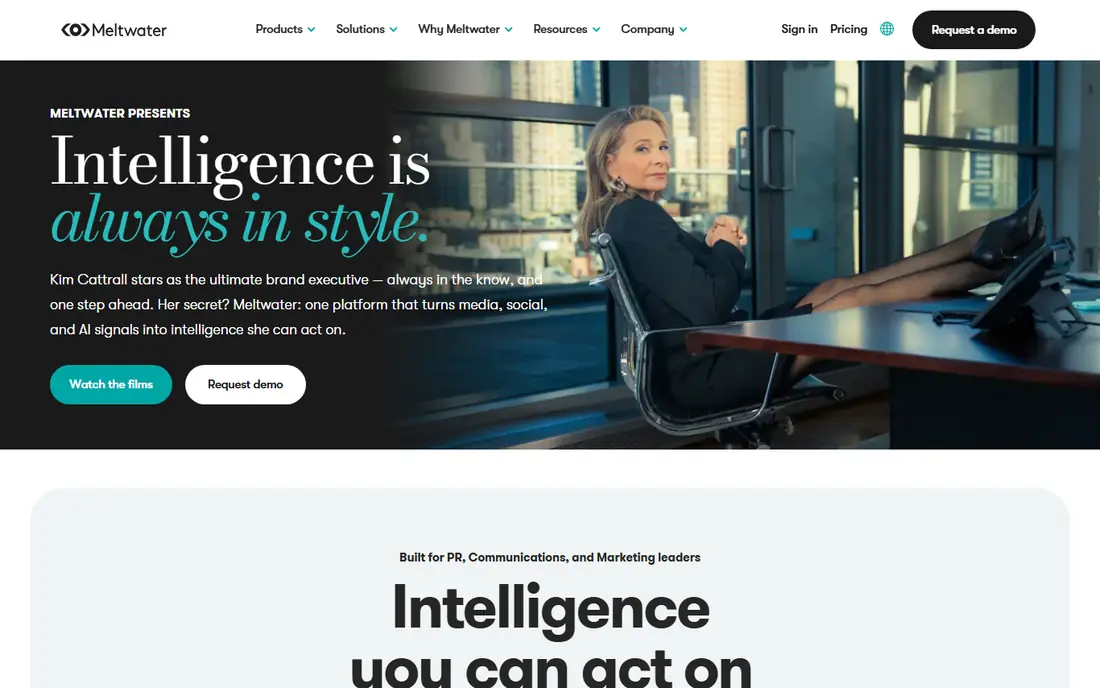
Meltwater started in media monitoring and has grown into a wider intelligence platform. It tracks millions of online sources each day, covering news, social media, broadcast, and print, and it now adds signals from AI answer engines. That breadth suits PR teams that need to know how a story travels across media types.
For pure audience segmentation, Meltwater is broader than it is deep. It will tell you what people are saying and where coverage appears, but it is less focused on building detailed personas than Audiense or GWI. Pair it with a segmentation tool if you need both media coverage and audience profiles.
- Combines news, broadcast, print, social, and AI search signals
- Strong for PR and brand reputation work
- Large global customer base
- Quote based pricing
- Broad scope can feel large for a narrow audience research job
Pulsar blends listening and audience work in one workflow. Teams can track a topic, then break the conversation down by audience community, and see how different groups interpret the same story in different ways. Its narrative tools rank emerging stories across billions of posts, which helps strategy teams spot shifts early.
That research depth suits agencies and large brands with a clear research question. A small team that only needs a quick audience snapshot may find Pulsar more than it needs, and its quote based pricing reflects its enterprise focus. For narrative led audience research, it is one of the most thoughtful tools available.
- Combines social listening with audience segmentation
- Strong narrative and trend analysis
- Research support available
- Quote based pricing
- Best value needs a research led team
SparkToro answers a practical marketing question quickly: where does this audience already pay attention. Type in a topic or audience description, and it returns the podcasts, YouTube channels, publications, social accounts, and websites that audience follows. That output feeds PR outreach, sponsorship, content planning, and paid media in a direct way.
It does not replace deep listening or survey research. SparkToro shows attention, not sentiment or detailed attitudes, and its reports are lighter than an enterprise platform. For small teams, creators, and agencies that need fast and affordable audience research, that speed and clarity are exactly the point.
- Clear self serve pricing with a free plan
- Fast answers on podcasts, channels, and publications an audience follows
- No sales call needed to start
- Shows where audiences spend time, not what they say in detail
- Limited depth for enterprise segmentation
GWI takes the opposite approach from social tools: it asks people directly. Its surveys cover almost a million internet users a year across more than 50 markets, released in waves through the year. That gives brands comparable numbers on interests, attitudes, media habits, and buying behavior across countries, which social data alone cannot provide.
The trade off is freshness. A survey reflects answers to fixed questions on a set schedule, so it will not capture what your audience said this week. GWI also prices per seat by quote, which puts it out of reach for many small teams. For global brands that need defensible audience numbers, it is a strong core research tool.
- Survey data across more than 50 markets
- Comparable attitudes, interests, and buying habits
- AI analyst for plain language questions
- Quote based per seat pricing
- Survey waves mean data is not real time
YouScan stands out for visual analysis. It can interpret images in social posts, which matters for brands where products appear in photos more than in text. A food, fashion, or beauty brand can see how its products show up in real posts, not just how often its name is typed. Its AI copilot turns raw conversation into readable insights.
That visual strength comes at a price, with plans starting at $499 per month. It is also a listening tool first, so it will not give you the survey based profiles that GWI offers. For visual brands that need to understand how people actually show products online, YouScan fills a gap other tools miss.
- Image recognition in social listening
- Conversational AI for insights
- Useful for visual brands and consumer goods
- Entry price is high for small teams
- Coverage is social led rather than survey based
Talkwalker is a long standing social listening platform with broad coverage and strong analytics. It tracks brand mentions, sentiment, share of voice, and audience demographics, and it adds visual analytics for images and logos. Marketing and PR teams use it for campaign reporting and for ongoing brand health tracking.
Its pricing is quote based, and its ownership has changed over time, so buyers should confirm the current product and support plan before signing. For teams that need a mature listening platform with solid reporting, Talkwalker remains a credible alternative to Brandwatch and Meltwater, especially when visual analytics matter.
- Broad social and media coverage
- Strong analytics and reporting
- Visual analytics including image recognition
- Quote based pricing
- Now part of a larger group, so product direction needs checking
How we picked these
We compared official feature pages, published prices, and public reviews for audience intelligence platforms active in October 2026. We included social segmentation, listening, media intelligence, and survey research, because audience intelligence covers all four. We did not claim hands on testing of enterprise contracts, and where pricing was quote based we wrote See website rather than guessing.
How to choose an audience intelligence platform
Start with your research question. If you need to know where an audience spends time, start with SparkToro. If you need detailed social segments, look at Audiense or Pulsar. If you need comparable numbers across markets, look at GWI. If you need media and reputation coverage, look at Brandwatch or Meltwater. A tool that answers a different question will disappoint even if it is a good product.
Next, check data freshness and coverage for your market. Social tools update constantly, while survey tools update in waves. A global brand may need both, while a local brand may only need social data for its own country and language. Ask each vendor which sources cover your audience, and test with a real audience you already know well.
Finally, plan for action. The best platform is the one whose output your team can use in a brief, a media plan, or a content calendar. Ask for a sample report during a trial, and check whether exports, dashboards, and integrations fit your workflow. Insight that stays inside a dashboard helps no campaign.
FAQ
What is an audience intelligence platform?
An audience intelligence platform collects and analyzes data about a group of people, such as their interests, affinities, media habits, and attitudes. It helps marketing and insights teams build personas, plan media, and create content that fits a real audience. Data may come from social media, surveys, news, or a mix of sources.
Which audience intelligence platform is best for small businesses?
SparkToro is the best starting point for most small businesses, because it offers a free plan and clear self serve pricing from $50 per month. It answers the most practical question quickly: where does your audience already pay attention. Larger teams with bigger budgets can add Audiense or GWI later for deeper segmentation.
How much do audience intelligence platforms cost?
Costs range from $50 per month for SparkToro to $499 per month for YouScan, while Audiense, Brandwatch, Meltwater, Pulsar, GWI, and Talkwalker are priced by quote. Enterprise platforms often cost thousands per month depending on seats, data volume, and support. Always request a quote for your exact use case.
Are audience intelligence platforms based on private personal data?
Reputable platforms work with aggregated public or consented survey data, not with private messages or personal contact details. Still, you should read each vendor privacy policy and check how it handles data protection rules in your markets. Avoid any tool that promises access to private user data.
Can audience intelligence replace market research surveys?
It can complement surveys, but it does not fully replace them. Social and listening data show what people do and say in public, while surveys show attitudes and buying intent in a structured way. Many teams use both: a tool such as GWI for survey profiles, plus a social tool for live conversation.
How do I measure success with an audience intelligence platform?
Measure it by decisions it improves, not by dashboards it produces. Track whether media plans reach the right channels, whether content topics match audience interests, and whether campaign reporting becomes faster and clearer. If a platform does not change a brief or a plan within a few months, it may not be the right fit.