Best Audio Books App in 2026: 8 Apps Compared
We compared the best audio books app options, including Audible, Libby, Spotify and Kobo, on price, ownership, catalog and free listening in 2026 today.

- Editor's choice
 Audible
Serious listeners who want to own books
Starts at$14.95 per monthVisit audible.comFull review - Great alternative
 Libby
Free listening with a library card
Starts atFreeVisit overdrive.comFull review - Also consider
 Spotify
Casual listeners already paying for music
Starts at$12.99 per monthVisit spotify.comFull review
TL;DR:
- Audible is the best pick for serious listeners who want to own books and build a permanent library.
- Libby is the best free audiobook app, since a library card gives free borrowing with no subscription.
- Spotify suits casual listeners who already pay for music and want audiobooks in the same app.
- Kobo is a strong budget credit option, while Chirp suits listeners who prefer deals with no subscription.
Quick comparison
| Tool | Best for | Starts at | Free plan? | |
|---|---|---|---|---|
| Audible | Serious listeners who want to own books | $14.95 per month | Free trial | Visit |
| Libby | Free listening with a library card | Free | Yes | Visit |
| Spotify | Casual listeners already paying for music | $12.99 per month | Yes | Visit |
 Kobo | Budget credit buyers | $9.99 per month | Free trial | Visit |
 Libro.fm | Listeners who want to support indie bookshops | $14.99 per month | Free trial | Visit |
 Everand | Listeners who finish many books | $11.99 per month | Free trial | Visit |
 Chirp | Deal hunters with no subscription | Free to join | Yes | Visit |
 Hoopla | Free borrowing where libraries support it | Free | Yes | Visit |
The best audio books apps
We compared audiobook apps on price, ownership, catalog, offline listening and whether a subscription or pay-per-book model fits your listening habits.
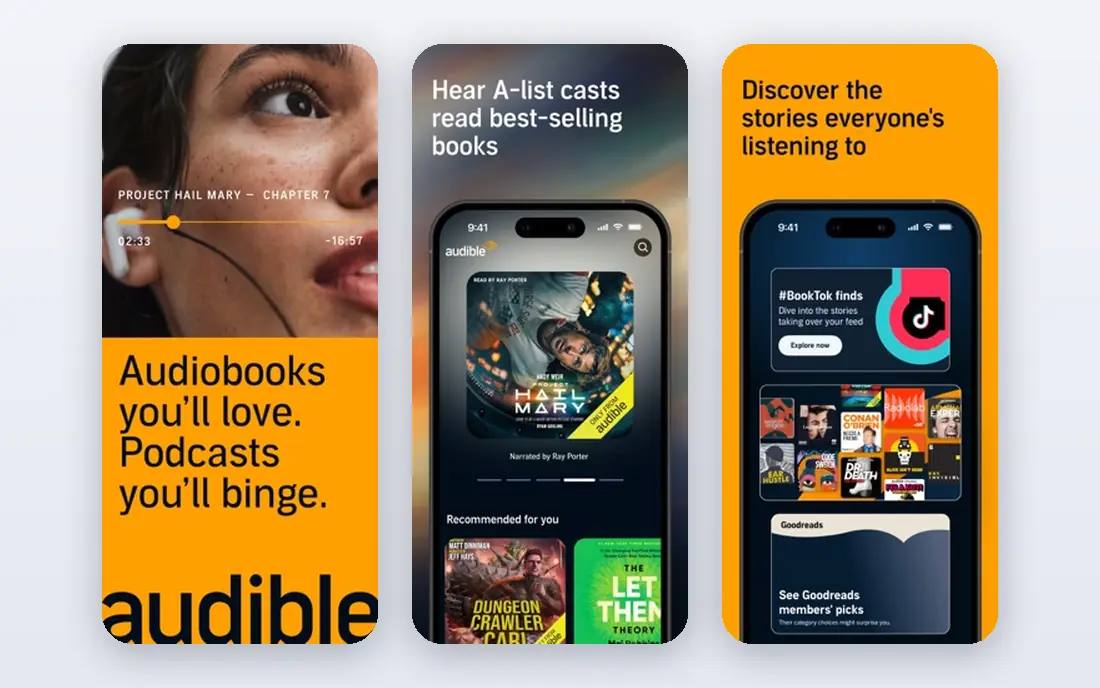
Audible fits serious listeners who finish at least one book a month and want to build a library they keep. Its strength is catalog depth and exclusives, with one monthly credit that buys almost any title to keep. The Plus Catalog adds extra listening between credit purchases, including Audible Originals and selected titles.
The catch is that Plus Catalog titles leave when you cancel, and light listeners may pay more than pay-per-book options. Our view is that Audible is the best overall audiobook app for regular listeners who value ownership.
- Large catalog and exclusives
- One credit per month to keep
- Plus Catalog for extra listening
- Plus Catalog titles are not yours after cancelling
- Monthly cost adds up for light listeners
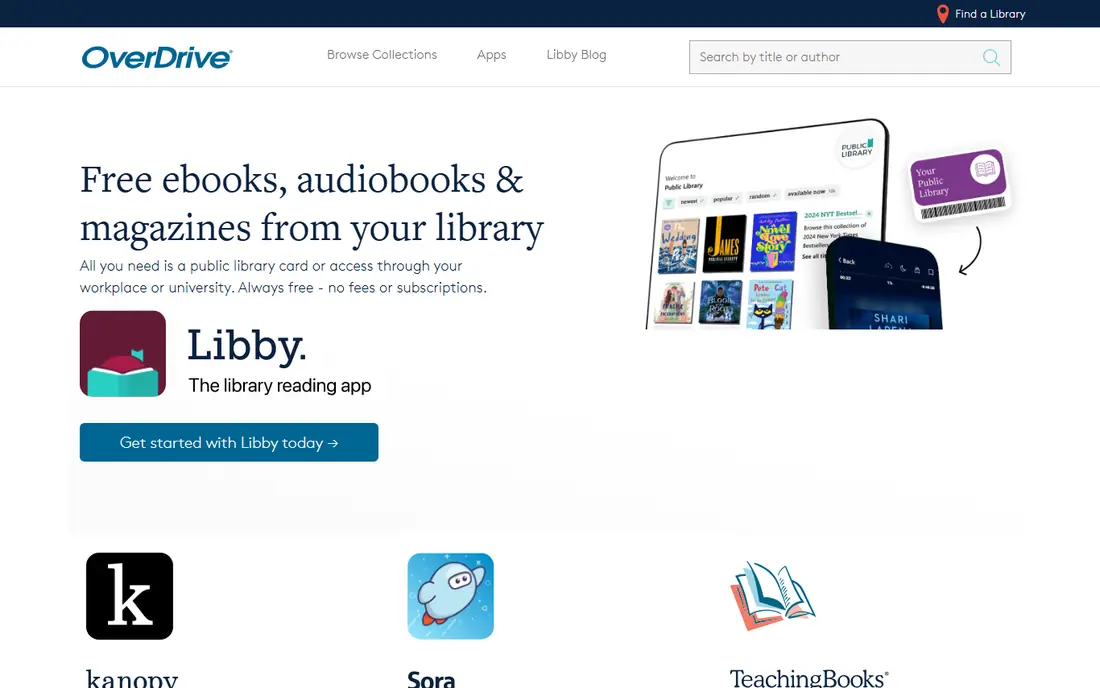
Libby fits anyone with a library card who wants free audiobooks without a subscription. Its strength is cost, since borrowing is free and the app covers audiobooks, ebooks and magazines in one place. Offline listening and holds make it practical for commutes, travel and bedtime listening.
The catch is availability, since popular titles may have waitlists and loan periods end, so you cannot keep every book. Our view is that Libby is the best free audiobook app, and the first app every listener should try.
- Free library borrowing
- Audiobooks, ebooks and magazines
- Offline listening
- Needs a library card
- Popular titles may have waitlists

Spotify fits listeners who already pay for Premium and want audiobooks without a second subscription. Its strength is convenience, since music, podcasts and audiobooks sit in one app with familiar controls. Fifteen hours of audiobook listening per month covers many casual listeners, especially for shorter books.
The catch is the hour cap, since heavy listeners will run out before month end, and included titles are not owned. Our view is that Spotify is a good bonus for existing subscribers, but not a replacement for Audible for heavy listeners.
- Audiobooks inside a music subscription
- 15 hours included for Premium
- Familiar app and devices
- 15 hours may not cover heavy listeners
- Audiobooks are not owned
Kobo fits budget listeners who want a monthly credit at a lower price than Audible. Its strength is value, since the $9.99 credit plan undercuts several rivals while still letting you keep purchased books. The same account covers ebooks, which helps readers who switch between reading and listening.
The catch is catalog size, since Kobo's audiobook range is smaller than Audible's, and regional availability can vary. Our view is that Kobo is a strong budget pick, provided your must-read titles are in its catalog.
- Lower credit price than Audible
- Audiobooks and ebooks in one account
- Pay-per-book option
- Catalog is smaller than Audible
- Some titles may not be available in every region
Libro.fm fits listeners who want the Audible-style credit model while supporting an independent bookshop. Its strength is the bookshop link, since membership supports a local store you choose, which many readers value. Credit purchases are yours to keep, and the app offers a straightforward listening experience.
The catch is catalog and price, since the range is smaller than Audible's while the monthly price is similar. Our view is that Libro.fm is the best ethical pick for credit listeners, especially if you already shop at an indie store.
- One credit per month to keep
- Supports a chosen indie bookshop
- DRM-free listening options
- Price is similar to Audible
- Catalog is smaller than Audible
Everand fits fast listeners who finish several books a month and prefer streaming over credits. Its strength is volume, since a subscription gives broad access to audiobooks, ebooks and magazines without counting credits. That model suits readers who sample widely and move on, rather than building a permanent library.
The catch is limits, since some popular titles may face monthly listening limits, and access ends when you cancel. Our view is that Everand is the best value pick for high-volume listeners who do not need to own every book.
- Streaming access to many titles
- Ebooks and magazines included
- No credit system to manage
- Some bestsellers may face listening limits
- Titles are not owned
Chirp fits listeners who want to own audiobooks but do not want a monthly subscription. Its strength is deals, with frequent discounts that make individual titles cheaper than full credit prices. Because there is no subscription, you only pay when a deal or title is worth it, which suits irregular listeners.
The catch is volume, since costs add up quickly for heavy listeners, and there is no all-you-can-listen library. Our view is that Chirp is the best pay-per-book pick, and a useful companion to Libby for free borrowing.
- Discounted audiobooks with no subscription
- Books you buy are yours to keep
- Frequent deals
- No subscription library
- Costs add up for heavy listeners
Hoopla fits library users whose library supports it and who want instant borrowing without waitlists. Its strength is instant access, since many titles borrow at once without the queues common on Libby. The app also covers movies and music, which makes it a broader free media library than an audiobook-only app.
The catch is limits, since libraries set monthly borrow caps, and not every library offers Hoopla. Our view is that Hoopla is an excellent free companion to Libby, and the best free pick where your library supports it.
- Free borrowing with a library card
- Audiobooks, movies and music
- No waitlists on many titles
- Needs a participating library
- Monthly borrow limits apply
How we picked these
We compared official pricing pages, catalog descriptions and app features for each service, with attention to credit terms, ownership, offline listening and free options. We favoured services with clear pricing and a distinct listening model. We did not claim hands-on testing, and we treated catalog size claims as vendor claims to check for the titles you actually want.
How to pick an audiobook app that fits how you listen
Count how many books you finish per month
If you finish one book a month, a single-credit plan such as Audible or Kobo can be good value, especially for expensive titles. If you finish several books a week, a streaming service such as Everand or library borrowing through Libby may cost less. If you listen rarely, pay-per-book deals through Chirp may beat any subscription.
Decide whether you want to own books
Credit services such as Audible, Kobo and Libro.fm let you keep purchased books even after cancelling, which suits re-listeners and reference readers. Streaming and library services give access only while you subscribe or borrow, which suits one-time listeners. Check what happens to Plus Catalog or streaming titles when a plan ends.
Check devices, offline listening and narration
Confirm the app works on your phone, tablet, car system or e-reader, and that offline downloads work for travel. Listen to a sample before buying a credit, since narration style matters as much as the story. Also check sleep timers, playback speed and bookmarking, which affect daily listening comfort.
FAQ
What is the best app for audiobooks?
Audible is the best overall audiobook app for serious listeners, with a large catalog, credit ownership and strong apps. Libby is best for free listening, while Spotify is best for casual listeners who already pay for music. Choose based on how many books you finish and whether you want to own them.
What is the best audio book platform for free listening?
Libby is the best free platform, since a library card gives free audiobook borrowing with no subscription. Hoopla also offers free borrowing where your library supports it. LibriVox offers free public-domain classics, though narration quality varies since volunteers record them.
Is Audible or Spotify better for audiobooks?
Audible is better for serious audiobook listeners who want credits, ownership and a deep catalog. Spotify is better for casual listeners who already pay for Premium and want 15 hours of audiobook listening included. Heavy listeners will usually run out of Spotify hours before the month ends.
What is the best platform for audiobooks if I want to support bookshops?
Libro.fm is the best pick for supporting independent bookshops, since each membership supports a local store of your choice. Its credit model is similar to Audible, so you keep purchased books. That combination suits listeners who value both ownership and local bookshops.
Can I listen to audiobooks offline?
Yes, most paid and library apps allow offline downloads on phones and tablets, which helps for travel, flights and areas with weak signal. Check download limits and whether borrowed library books expire on the device. Streaming-only titles usually need a download step before offline listening works.