Choosing Quantum Cloud Platforms in 2026: 5 Options Compared
Searching for the best Quantum cloud platforms? Here are 5 options with prices and free plans. Compare costs and catches in one place. Clear verdicts.
- Editor's choiceIonQ
Trapped ion quantum systems
Starts atPricing on requestVisit ionq.comFull review - Great alternativeGoogle Quantum AI
Research and advanced quantum computing
Starts atPricing on requestVisit quantumai.googleFull review - Also considerAzure Quantum
Quantum with AI and HPC
Starts atPricing on requestVisit azure.microsoft.comFull review
Direct answer
This list puts IonQ first for trapped ion quantum systems. If your case is different, Google Quantum AI suits research and advanced quantum computing and Azure Quantum suits Quantum with AI and HPC. Details and limits for the rest of the 5 tools are below. None of these vendors publish plan prices, so pricing is on request for every option.
TL;DR:
- Number one here is IonQ, a fit for trapped ion quantum systems.
- The main caution on IonQ: specific to trapped ion technology.
- Amazon Braket fits AWS-integrated quantum development.
- Only Amazon Braket offers a free plan among these 5 tools.
- Every tool from IonQ to Amazon Braket works by quote, with no list price shown.
Last checked November 2026. Pricing on request: vendors did not publish plan prices when this guide was last checked (November 2026), so ask each vendor for a written quote.
Quick comparison
| Tool | Best for | Starts at | Free plan? | |
|---|---|---|---|---|
| IonQ | Trapped ion quantum systems | Pricing on request | Not stated | Visit |
| Google Quantum AI | Research and advanced quantum computing | Pricing on request | Not stated | Visit |
| Azure Quantum | Quantum with AI and HPC | Pricing on request | Free trial | Visit |
| D-Wave Leap | Quantum annealing and hybrid solvers | Pricing on request | Not stated | Visit |
| Amazon Braket | AWS-integrated quantum development | Pricing on request | Yes | Visit |
The full Quantum cloud platforms list
Short on time? The summary and table above give the quick view of 5 Quantum cloud platforms, and the profiles that follow give the detail behind each entry.
IonQ
Best for: Trapped ion quantum systems
IonQ makes the most sense for trapped ion quantum systems. IonQ gives trapped ion quantum computing systems, cloud access, and enterprise solutions for real-world quantum applications. Beyond that, the range of available hardware might be narrower compared with systems that aggregate several backends.
Consider other choices if you need access to a diverse set of quantum technologies. In daily use, the company centres on practical applications of quantum computing. IonQ shows no starting price here, so confirm the cost on the vendor site. Free access: Not stated.
Drawbacks to consider: Specific to trapped ion technology.
- Enterprise solutions offered
- Cloud access available
- May have narrower hardware choices
Google Quantum AI
Best for: Research and advanced quantum computing
Google Quantum AI works best for research and advanced quantum computing. It provides research and resources to help with quantum computing efforts. In practice, Google Quantum AI is heavily research-focused, so it may not offer the same level of enterprise support or general-purpose cloud access as commercial systems.
Where it falls short: Restricted general-purpose access.
It might not be the right choice for organizations seeking a turnkey quantum cloud service for business applications. Look elsewhere if you need wide, production-ready quantum access. Check the vendor site for Google Quantum AI pricing; none is listed in this comparison. As for free access: Not stated.
- Research resources available
- Hardware and software tools
- Primarily research-oriented
Azure Quantum
Best for: Quantum with AI and HPC
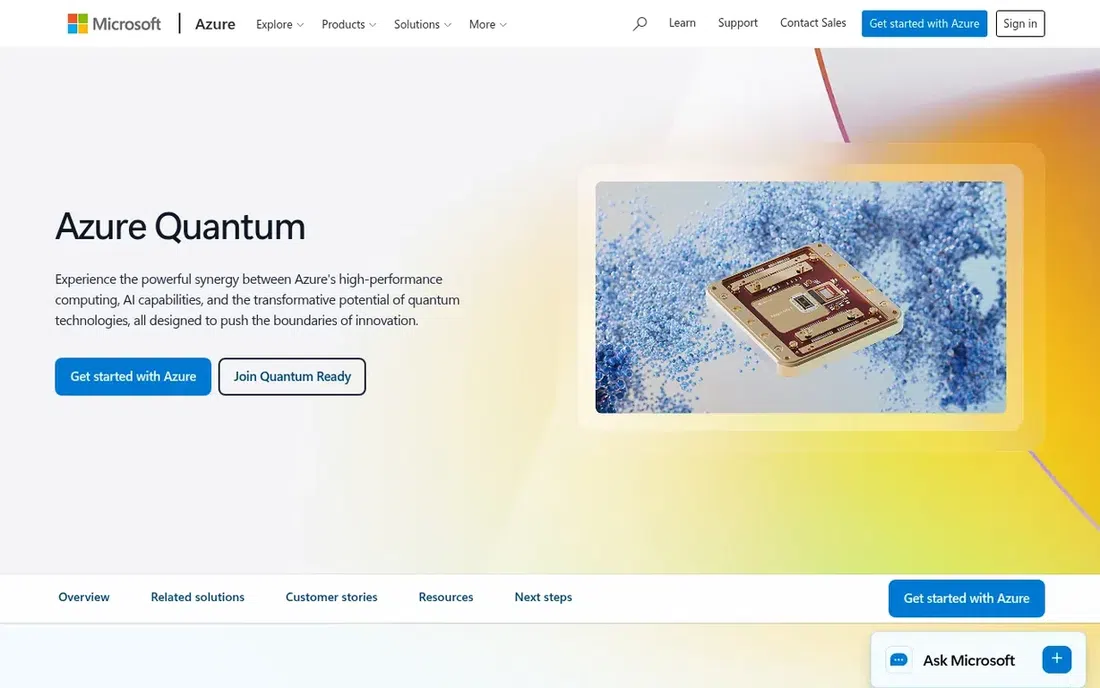
Azure Quantum is designed for Quantum with AI and HPC. Azure Quantum is Microsoft's quantum computing system that merges quantum solutions with AI and high-performance computing to drive innovation. The product aims to support a mix of quantum hardware and software tools.
It may not be well suited to those seeking a standalone quantum service without cloud system dependencies. Evaluate other choices if you need a more light or provider-neutral entry point. This comparison lists no price for Azure Quantum; ask the vendor. Free access: Free trial.
The main drawbacks: Needs Azure familiarity.
- Merges quantum with AI and HPC
- Access to advanced quantum options
- Azure-centric integration
D-Wave Leap
Best for: Quantum annealing and hybrid solvers
D-Wave Leap serves Quantum annealing and hybrid solvers. D-Wave Leap is a quantum cloud service that provides immediate, live access to D-Wave's Advantage2 quantum computers and quantum hybrid solver services. It is built for users working on optimization problems and those interested in quantum annealing.
Drawbacks to consider: Not gate-model quantum.
For everyday use, consider Leap if your focus is on optimization and annealing-based approaches. On top of that, Leap gives you a way to experiment with quantum computing for practical applications. Check the vendor site for D-Wave Leap pricing; none is listed in this comparison. Free plan details: Not stated.
- Centred on optimization problems
- Quantum hybrid solver services
- Specialized in annealing
Amazon Braket
Best for: AWS-integrated quantum development
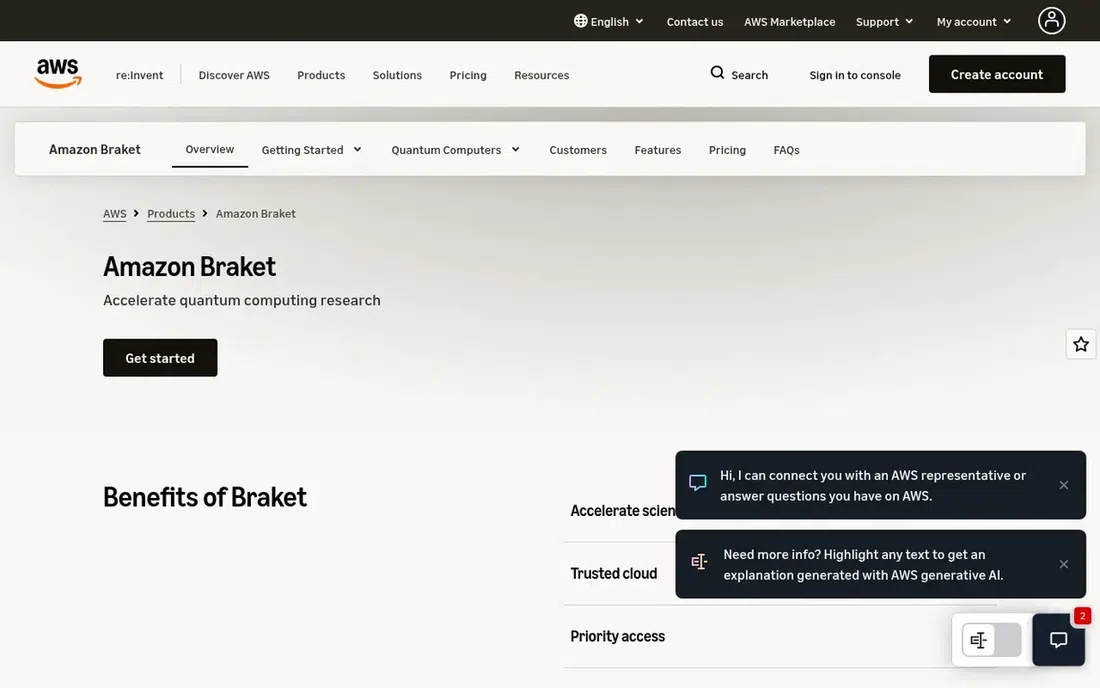
Pick Amazon Braket if this describes you: AWS-integrated quantum development. As for the details, since Braket is an AWS service, teams outside the AWS ecosystem may face additional integration steps.
It may not be the best fit for organizations that prefer a cloud-agnostic approach or need deep integration with non-AWS tools. In daily use, the service aims to ease access to different quantum backends through a consistent interface. Pricing for Amazon Braket is not stated here, so ask the vendor for current figures. Amazon Braket has a free plan.
Where it is weaker: Hardware variety may vary.
- Access to quantum computers and simulators
- Managed service on AWS
- Tied to AWS ecosystem
How we compared the tools
Pre-purchase checklist
- Confirm the entry price with every vendor: no tool from IonQ to Amazon Braket shows a fixed starting price.
- Test the free plan from Amazon Braket against your real workload before relying on it.
- Run a trial of Azure Quantum with real work before paying for a year; your own workflow is the best test.
- Before choosing IonQ, weigh its main limit: specific to trapped ion technology.
- Find out whether the entry plan of Azure Quantum covers your must-haves or only a trimmed-down version.
- Before rolling out D-Wave Leap, verify the integrations your workflow depends on.
FAQ
Is IonQ the right pick for everyone comparing Quantum cloud platforms?
No single tool suits every team. IonQ comes first because it fits trapped ion quantum systems, while Google Quantum AI suits research and advanced quantum computing and Azure Quantum suits Quantum with AI and HPC. Match the tool to your own size, budget and workflow before deciding.
How are the tools for Quantum cloud platforms ordered?
The order follows typical fit for Quantum cloud platforms, with IonQ first and Amazon Braket last, then price clarity and free access. It is editorial judgement, not a score, so another team could rank the tools differently.
Which options for Quantum cloud platforms have a free plan?
Amazon Braket is the only tool in this list with a free plan. Free plans usually cap users, projects or features, so check the limits on the vendor page. One other tool offers a trial instead.
Which quantum cloud system is best for beginners?
IonQ is the pick this page puts first, mainly for trapped ion quantum systems. If your situation differs, Google Quantum AI suits research and advanced quantum computing, and Azure Quantum suits Quantum with AI and HPC. Compare price and limits before you decide.
Can I try these options before paying?
Often, yes. Amazon Braket has a free plan and Azure Quantum offers a free trial. Use your own data and a real task during the test, and check what the free tier or trial limits before you rely on it.
Sources
- https://ionq.com
- https://quantumai.google
- https://azure.microsoft.com/en-us/products/quantum
- https://www.dwavesys.com/solutions-and-products/cloud-platform
- https://aws.amazon.com/braket