Top 6 Platforms for Building LLM Applications for 2026 (Prices and Free Plans)
Best platforms for building LLM applications: 6 tools compared on price, free plans and fit. Strengths and weak spots are spelled out. See the full list.
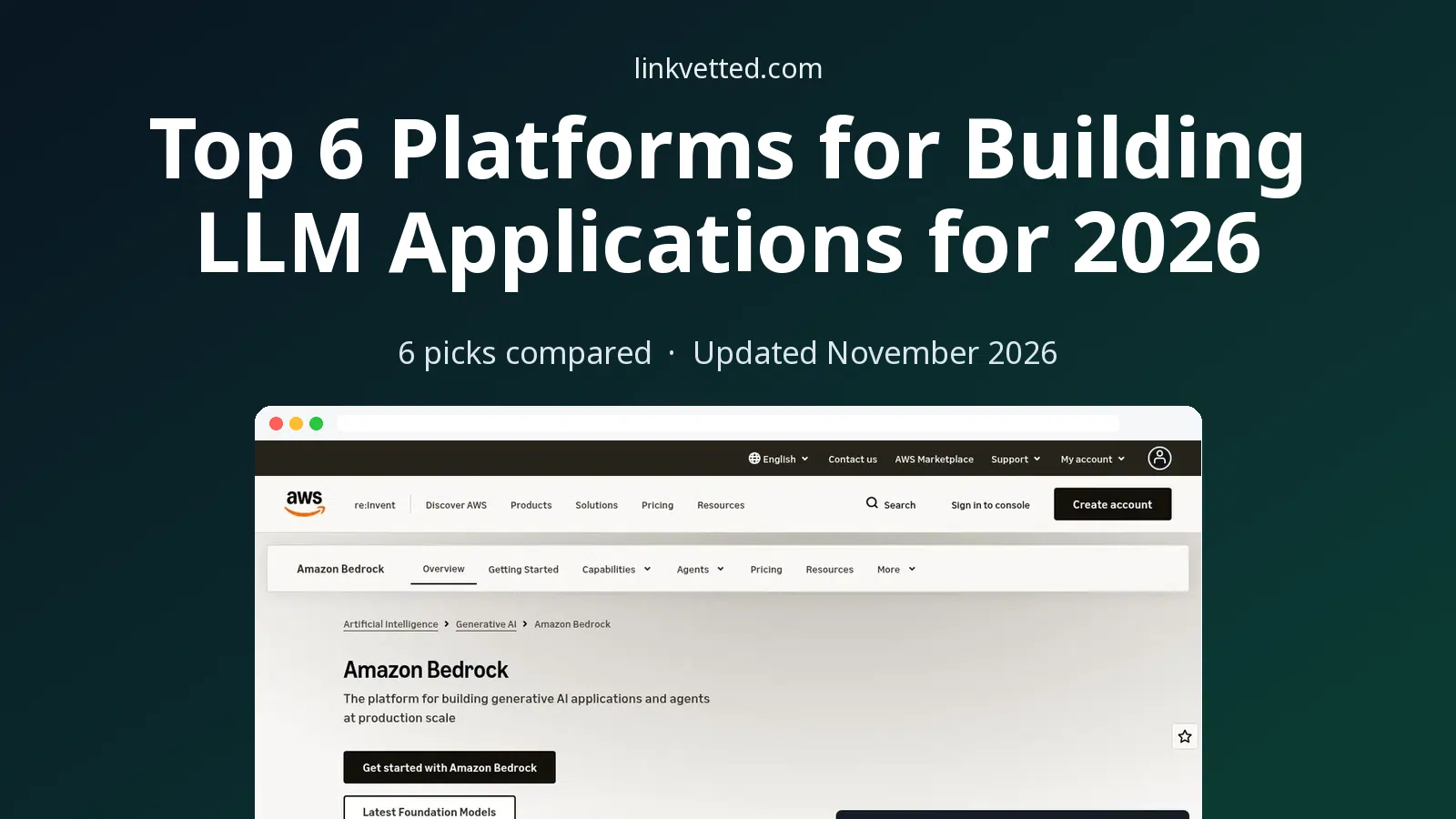
- Editor's choice
 Amazon Bedrock
Managed generative AI on AWS
Starts atSee websiteVisit aws.amazon.comFull review - Great alternativeAzure AI Foundry
Cloud-native AI app development on Azure
Starts atSee websiteVisit azure.microsoft.comFull review - Also consider
 LangSmith
Tracing and debugging LLM agents
Starts at$39 per seat a monthVisit langchain.comFull review
Direct answer
Our first pick is Amazon Bedrock, best for managed generative AI on AWS. Listed starting prices: LangSmith from $39 per seat a month and Pinecone from $20 a month. Alternatives: Azure AI Foundry for cloud-native AI app development on Azure, and LangSmith for tracing and debugging LLM agents. The remaining 3 options are covered below with prices and limits.
TL;DR:
- The list opens with Amazon Bedrock, aimed at managed generative AI on AWS.
- Only LangSmith offers a free plan among these 6 tools.
- Pinecone is the one to check for vector search and retrieval knowledge.
- The lowest published monthly entry price here is $20 per month, from Pinecone.
- What to know about LangSmith first: centred on observability instead of model hosting.
Last checked November 2026. Prices and plan details were read from the vendors' own pages in November 2026; vendors change plans often, so confirm the current price on the vendor site before you buy.
Quick comparison
| Tool | Best for | Starts at | Free plan? | |
|---|---|---|---|---|
| Amazon Bedrock | Managed generative AI on AWS | See website | Not stated | Visit |
| Azure AI Foundry | Cloud-native AI app development on Azure | See website | Not stated | Visit |
| LangSmith | Tracing and debugging LLM agents | $39 per seat a month | Yes | Visit |
 Google Vertex AI | Building and governing agents on Google Cloud | See website | Not stated | Visit |
 Cohere | Private enterprise models and options | See website | Not stated | Visit |
 Pinecone | Vector search and retrieval knowledge | $20 a month | Free trial | Visit |
6 platforms for building LLM applications in detail
Choosing platforms for building LLM applications usually comes down to price, fit and limits. This LinkVetted guide sets 6 tools side by side on those three points, with the facts kept short and checkable.
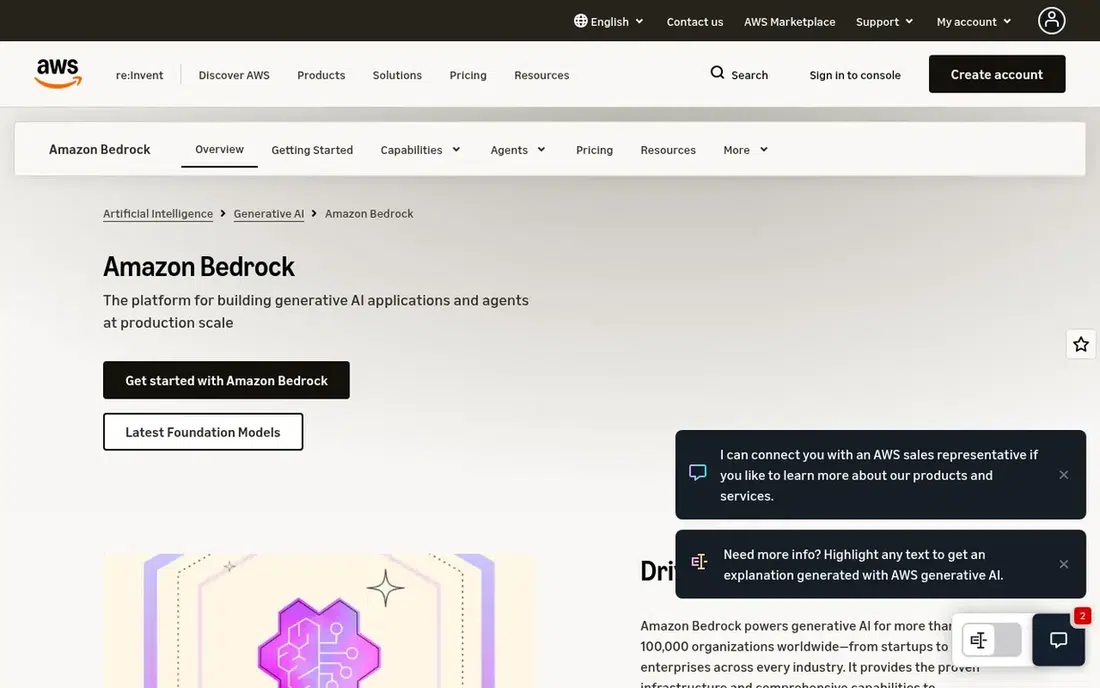
Amazon Bedrock was built for managed generative AI on AWS. Amazon Bedrock is positioned as a system for building generative AI applications and agents at production scale.
For everyday use, teams outside AWS, or those wanting a single narrow tool, may find Bedrock broader than needed. On top of that, consider a dedicated observability or retrieval tool if your application already runs elsewhere and only one layer is missing. Amazon Bedrock does not show a starting price in this comparison, so check the vendor site for current pricing. As for free access: Not stated.
Where it falls short: Wide system to learn.
- Suits AWS-centric teams
- Production-scale positioning
- Tied to the AWS ecosystem
Azure AI Foundry
Best for: Cloud-native AI app development on Azure
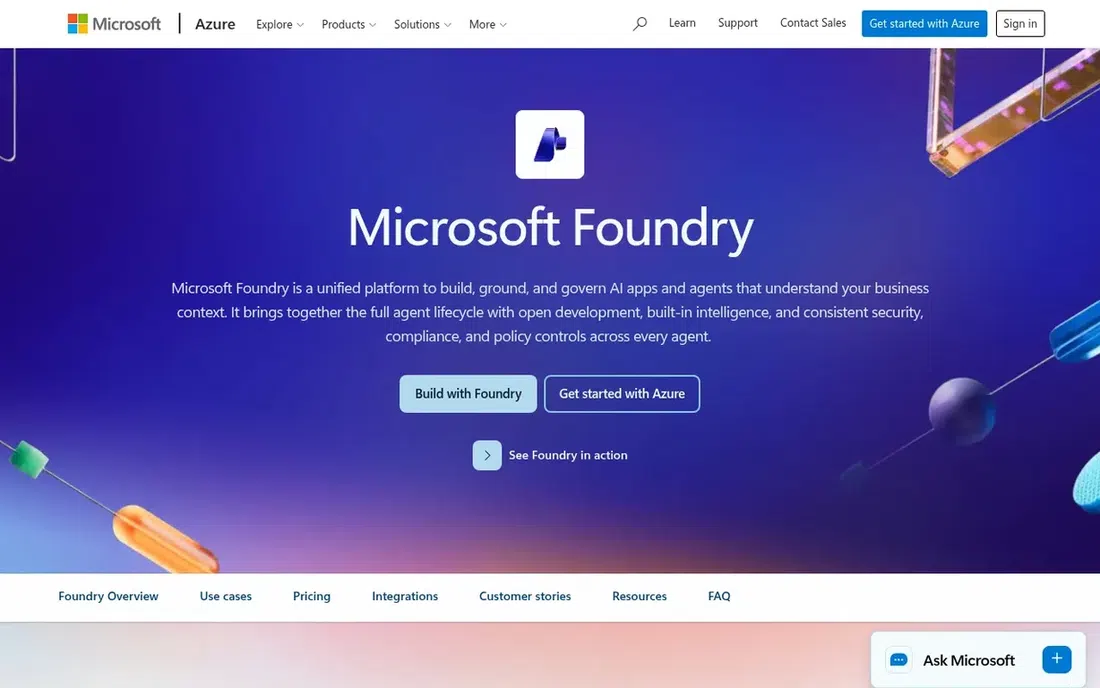
Azure AI Foundry was built for cloud-native AI app development on Azure. A focused tool for tracing or search can be simpler when only that capability is required.
Azure AI Foundry is described as an AI app and agent factory built to accelerate AI-driven, cloud-native development across industries. If your workloads live on another cloud, the fit is weaker, and the product handles more ground than a small project may need. Check the vendor site for Azure AI Foundry pricing; none is listed in this comparison. As for free access: Not stated.
Limits to weigh: Best value inside Azure.
- AI app and agent factory positioning
- Geared toward cloud-native development
- Broad surface area to navigate
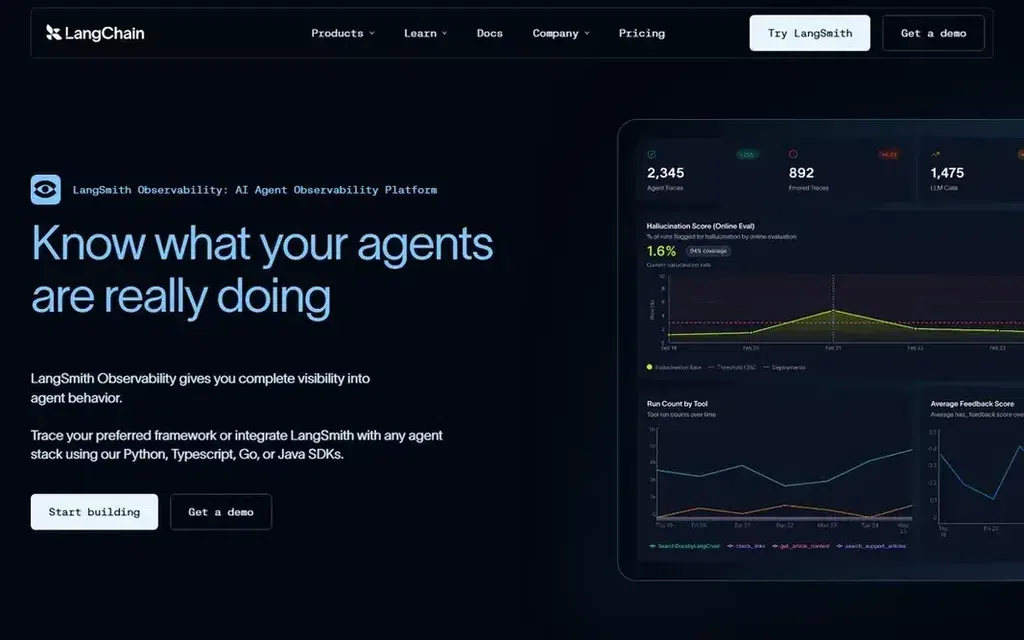
In short, LangSmith is for tracing and debugging LLM agents. If your central gap is model access or storage instead of debugging, a cloud system or vector database may be the better starting point. For everyday use, LangSmith is an agent and LLM observability product built around tracing and live monitoring.
Points against: Centred on observability instead of model hosting.
It is targeted at teams that already have an application running and have to see what happens inside agent workflows, find failures rapidly, and watch cost and latency as usage grows. More specifically, since its focus is observability, LangSmith is not the place to host models or handle large data pipelines. Entry price for LangSmith: $39 per seat per month. LangSmith includes a free tier.
- Tracing for agent and LLM workflows
- Live monitoring of failures
- Not a full data platform
Google Vertex AI is aimed squarely at building and governing agents on Google Cloud. The breadth means a learning curve, and the value is most solid inside Google Cloud.
What works well: Optimization focus.
The main drawbacks: Plenty of moving parts.
As for the details, for a single concern for example retrieval or tracing, a narrower product may get you moving quicker. Google Vertex AI does not show a starting price in this comparison, so check the vendor site for current pricing. As for free access: Not stated.
- Gemini system positioning
- Build
- Centered on Google Cloud
Where Cohere fits: private enterprise models and options. Cohere builds models and AI options geared toward enterprises, with a private, secure and configurable positioning.
The main drawbacks: Enterprise orientation may not suit small teams.
It suits organizations that want to automate processes, support employees and turn fragmented data into actionable insight using models tuned to their needs. This comparison lists no price for Cohere; ask the vendor. Free access: Not stated. Highlights: Enterprise-focused models and options.
- Turns fragmented data into insights
- Private, secure
- Model-centric instead of full system
Pinecone works best for vector search and retrieval knowledge. Pinecone describes itself as an AI knowledge company, with an AI knowledge product spanning Database, Nexus and Marketplace to power accurate, quick and economical AI.
Where it falls short: Not a full application platform.
Upsides: AI knowledge system around vector search; Nexus and Marketplace components.
Also, Pinecone addresses retrieval instead of the entire application lifecycle, so you still need tooling for orchestration and monitoring. Choose it when search quality is the priority and other layers are already covered. Starting cost for Pinecone: $20 per month. Free options: Free trial.
- Accurate retrieval
- Aimed at quick
- Concentrated on the retrieval layer
Our selection method
Selection started from tools commonly considered for platforms for building LLM applications, then narrowed to 6 that have clear pricing information or a clear quote process. Prices and plan limits come from vendor pages and can change, so confirm them on the vendor site before you buy. The sequence is a judgement call: typical use case first, then pricing transparency, then free access. Use the profiles to check fit.
What to check before you buy
- Get a written quote from Amazon Bedrock, Azure AI Foundry, Google Vertex AI and Cohere; the list shows no starting price for them.
- Test the free plan from LangSmith against your real workload before relying on it.
- Use real work to test the free trial from Pinecone, rather than a demo project.
- Before choosing Amazon Bedrock, weigh its main limit: tied to the AWS ecosystem.
- Run a one or two week pilot of Pinecone with the people who will use it every day.
- Find out what support Azure AI Foundry includes on your plan, and whether onboarding help costs extra.
FAQ
Can I try these tools before paying?
Often, yes. LangSmith has a free plan and Pinecone offers a free trial. Use your own data and a real task during the test, and check what the free tier or trial limits before you rely on it.
Do I need both an observability tool and a cloud platform?
Cloud products for example Amazon Bedrock, Azure AI Foundry and Google Vertex AI offer model access and agent building, whereas LangSmith concentrates on tracing and monitoring. Plenty of teams pair a build product with a dedicated observability layer.
Do these tools publish their prices?
Not all of them. Amazon Bedrock, Azure AI Foundry, Google Vertex AI and Cohere publish no starting price, so expect a quote request for those. The rest, LangSmith included, show a starting price, though seats and billing terms still change the final cost.
How are the tools for platforms for building LLM applications ordered?
Amazon Bedrock sits first and Pinecone last because the order follows typical fit for platforms for building LLM applications, then price clarity and free access. It is a judgement call, so read each profile for fit and limits.
Where does a vector database fit in a LLM application?
A vector database for example Pinecone supplies the retrieval layer that grounds model responses in your own knowledge. It complements, instead of replaces, the product you use to build and monitor the application.
Which options for platforms for building LLM applications have a free plan?
LangSmith is the only tool in this list with a free plan. Free plans usually cap users, projects or features, so check the limits on the vendor page. One other tool offers a trial instead.
Sources
- https://aws.amazon.com/bedrock
- https://azure.microsoft.com/en-us/products/ai-foundry
- https://www.langchain.com/langsmith
- https://cloud.google.com/vertex-ai
- https://cohere.com
- https://www.pinecone.io