Best Platform for E Commerce Website (2026): 6 Picks Checked on Vendor Pages
Shortlisting the best platform for e-commerce website? 6 products compared on cost, free access and ideal buyer. Real limits included. Full profiles inside.
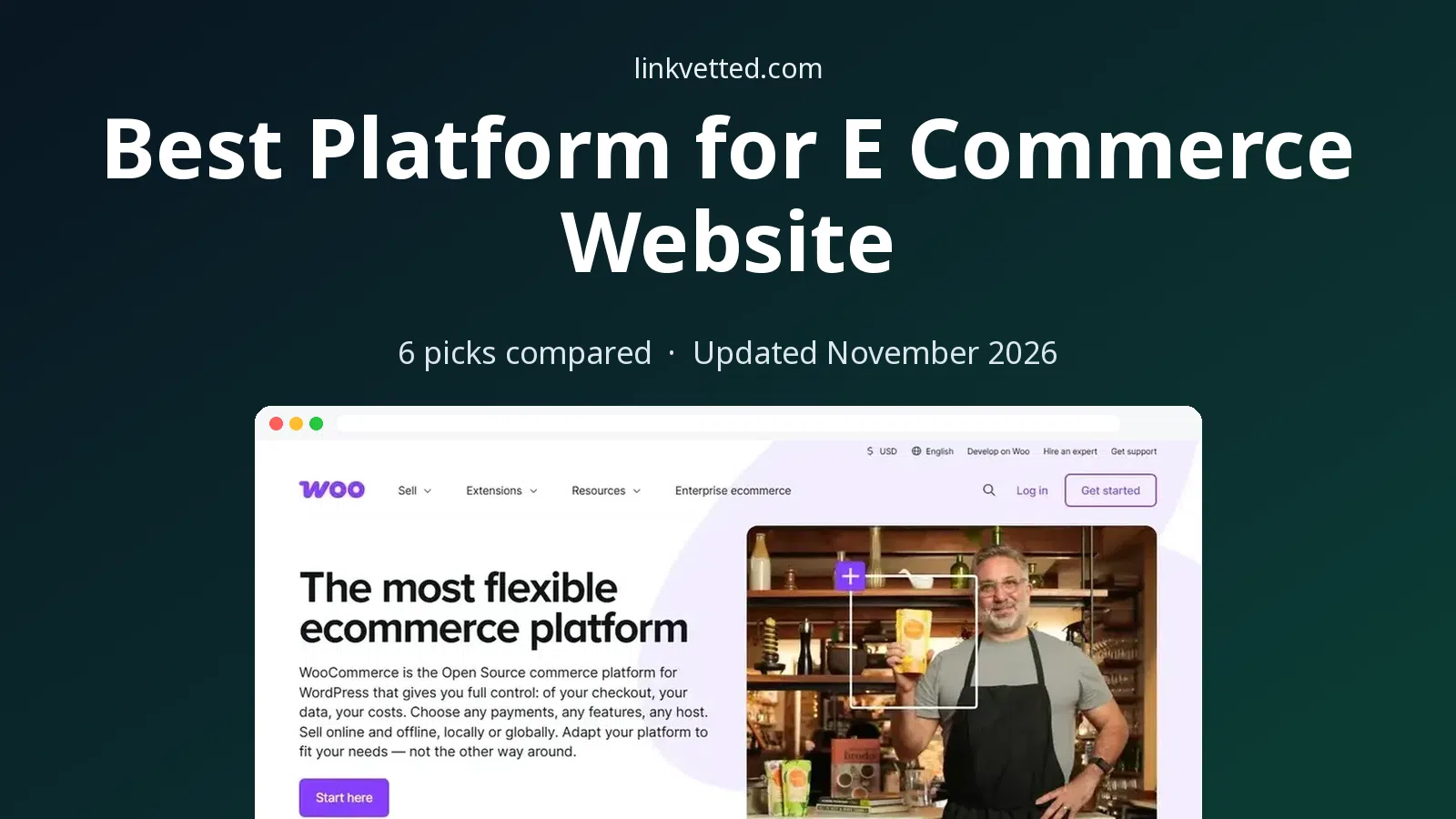
- Editor's choice
 WooCommerce
Open-source ecommerce on WordPress
Starts at$29 a monthVisit woocommerce.comFull review - Great alternative
 Wix
Straightforward website and store building
Starts atSee websiteVisit wix.comFull review - Also consider
 Adobe Commerce
Enterprise B2B and B2C commerce
Starts atSee websiteVisit business.adobe.comFull review
Direct answer
This list puts WooCommerce first for open-source ecommerce on WordPress. Listed starting prices: WooCommerce from $29 a month, Shopify from $19 a month and Squarespace from $12 a month. Wix is the stronger choice for simple website and store building, while Adobe Commerce suits enterprise B2B and B2C commerce. All 6 tools are compared below on price, free plan and limits.
TL;DR:
- WooCommerce takes the first slot, best suited to open-source ecommerce on WordPress.
- For design-led websites with commerce, Squarespace is worth a look.
- WooCommerce, Squarespace and the 4 others all need a premium plan or a trial, since no free plan is listed.
- Squarespace is the lowest-priced starter here at $12 per month.
- Before buying WooCommerce, weigh this: needs WordPress hosting and upkeep.
Last checked November 2026. Prices and plan details were read from the vendors' own pages in November 2026; vendors change plans often, so confirm the current price on the vendor site before you buy.
Quick comparison
| Tool | Best for | Starts at | Free plan? | |
|---|---|---|---|---|
| WooCommerce | Open-source ecommerce on WordPress | $29 a month | Not stated | Visit |
| Wix | Straightforward website and store building | See website | Not stated | Visit |
| Adobe Commerce | Enterprise B2B and B2C commerce | See website | Not stated | Visit |
 Shopify | All-in-one commerce for most companies | $19 a month | Free trial | Visit |
 Salesforce Commerce Cloud | Commerce within the Salesforce ecosystem | See website | Not stated | Visit |
 Squarespace | Design-led websites with commerce | $12 a month | Free trial | Visit |
Platform for E-Commerce Website profiles
LinkVetted compared 6 tools for platform for e-commerce website. The goal is a practical shortlist: published prices, free plan facts, best-fit use cases and honest limits for every entry.
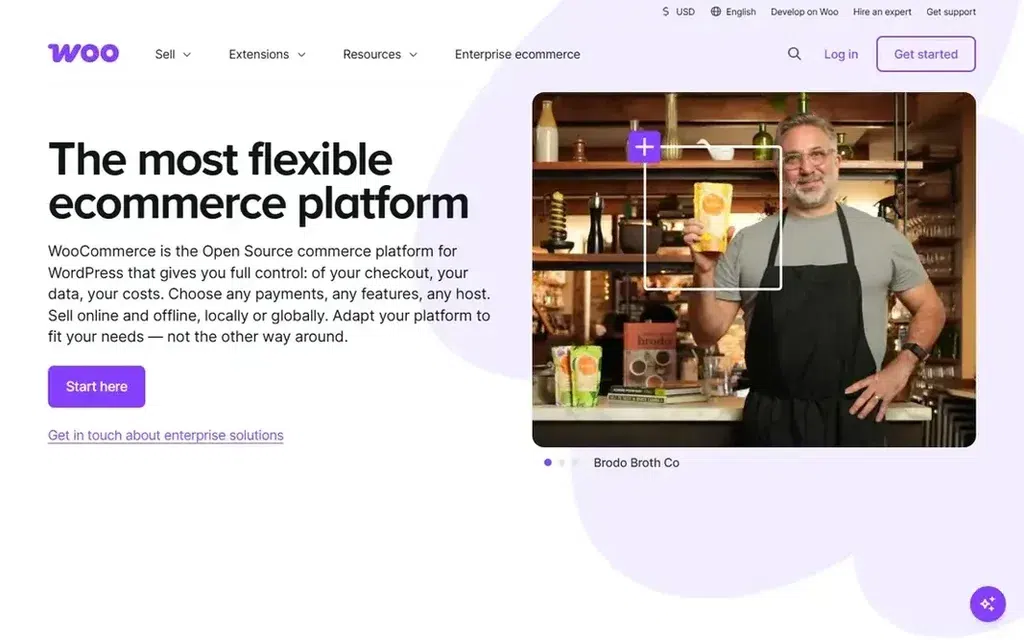
WooCommerce makes the most sense for open-source ecommerce on WordPress. WooCommerce is the open-source ecommerce product that helps merchants and developers build firms for the long term.
It runs on WordPress, so store owners keep control of their data and can extend functionality through the wider ecosystem. In daily use, WooCommerce is not a completely hosted service, so you are responsible for hosting, security, and maintenance, which layers on technical overhead. Price to start with WooCommerce: $29 per month. Trial and free access: Not stated.
Honest limits: Needs WordPress hosting and upkeep.
- Aimed at merchants and developers
- Open-source and extensible
- More technical setup than hosted builders
Wix makes the most sense for straightforward website and store building. Its ecommerce features let small companies set up an online store alongside a broader website.
Limits to weigh: Less depth for large catalogs.
More specifically, Wix is less suited to large or highly customized catalogs, and backend adaptability is restricted compared to open-source choices. Check the vendor site for Wix pricing; none is listed in this comparison. On free options: Not stated.
- Domains and marketing included
- Hosting and business tools built in
- Restricted backend customization
Pick Adobe Commerce if this describes you: enterprise B2B and B2C commerce. Adobe Commerce, formerly Magento, is an AI-powered composable ecommerce product for B2B and B2C firms delivering personalized experiences at global scale.
What works well: Designed for B2B and B2C at scale.
As for the details, Adobe Commerce carries significant implementation and operational complexity, so it is not a practical starting point for small keeps. Check the vendor site for Adobe Commerce pricing; none is listed in this comparison. Trial and free access: Not stated. What to check first: Needs specialized development resources.
- Composable
- Personalization for global experiences
- Implementation complexity is high

Shopify is built with all-in-one commerce for most firms in mind. Shopify is a hosted, all-in-one commerce product that bundles store building, AI-assisted tools, and business management features in one place.
Drawbacks to consider: Less control over backend code.
It suits merchants who want to launch rapidly without managing servers or stitching together separate systems. Starting cost for Shopify: $19 per month. Free plan details: Free trial.
- Hosted product with wide feature set
- Built-in tools for managing a business
- Continuing subscription required
Salesforce Commerce Cloud works best for Commerce within the Salesforce ecosystem. It is made for organizations that want to link storefronts with customer and sales data across their business.
Downsides: Enterprise-focused complexity.
In practice, Commerce Cloud is enterprise-oriented, with implementation complexity that typically needs specialized partners and continuing resources. Salesforce Commerce Cloud does not show a starting price in this comparison, so check the vendor site for current pricing. As for free access: Not stated.
- Part of the broader Salesforce system
- Links up with customer data workflows
- Needs specialized implementation support
Squarespace is aimed squarely at design-led websites with commerce. Its commerce features support small to mid-size stores that prioritize visual presentation.
Trade-offs to know: Commerce depth is moderate.
From a buyer's view, Squarespace provides moderate commerce depth, so keeps with complicated product rules or high-volume operations may outgrow it. On cost, Squarespace starts like this: $12 per month. Trial and free access: Free trial.
- Domain and site tools in one place
- AI website builder tools
- Fewer advanced store features
What went into this list
Pre-purchase checklist
- Confirm the entry price on the vendor page. For Wix, Adobe Commerce and Salesforce Commerce Cloud that means a quote rather than a fixed price.
- Use real work to test the free trial from Shopify and Squarespace, rather than a demo project.
- Before choosing WooCommerce, weigh its main limit: needs WordPress hosting and upkeep.
- Confirm minimum seats and billing terms with WooCommerce before you commit to an annual plan.
- Make sure Salesforce Commerce Cloud lets you export your data in a format another tool can read.
FAQ
What is the cheapest option for platform for e-commerce website in this list?
On published monthly entry prices, Squarespace is the lowest here at $12 per month. Entry price is only part of the cost, because seats, add-ons and billing terms can change the total. For the full picture, the cards above cover all 6 entries of this platform for e commerce website list, including price, free plan and limits.
Can I try these tools before paying?
Often, yes. Shopify and Squarespace offer a free trial. Use your own data and a real task during the test, and check what the free tier or trial limits before you rely on it. Prices, free plan details and limits for all 6 tools in this platform for e commerce website roundup sit on the individual cards above.
Is WooCommerce the right pick for everyone comparing platform for e-commerce website?
No single tool suits every team. WooCommerce comes first because it fits open-source ecommerce on WordPress, while Wix suits simple website and store building and Adobe Commerce suits enterprise B2B and B2C commerce. Match the tool to your own size, budget and workflow before deciding.
Do these tools publish their prices?
Not all of them. Wix, Adobe Commerce and Salesforce Commerce Cloud publish no starting price, so expect a quote request for those. The rest, WooCommerce included, show a starting price, though seats and billing terms still change the final cost.
Sources
- https://woocommerce.com
- https://www.wix.com
- https://business.adobe.com/products/magento/magento-commerce.html
- https://www.shopify.com
- https://www.salesforce.com/commerce
- https://www.squarespace.com