Best Online Retail Platforms in 2026: Prices, Free Plans and 6 Picks
Shortlisting the best online retail platforms? 6 products compared on cost, free access and ideal buyer. Every pick includes one clear drawback. Choose faster.
- Editor's choice
 Adobe Commerce
Enterprise B2B and B2C experiences
Starts atSee websiteVisit business.adobe.comFull review - Great alternative
 WooCommerce
Open-source control for merchants and developers
Starts at$29 a monthVisit woocommerce.comFull review - Also consider
 BigCommerce
Scalable multichannel commerce foundations
Starts atSee websiteVisit bigcommerce.comFull review
Direct answer
Adobe Commerce leads the list, best for enterprise B2B and B2C experiences. Listed starting prices: WooCommerce from $29 a month and Shopify from $19 a month. WooCommerce is the stronger choice for open-source control for merchants and developers, while BigCommerce suits scalable multichannel commerce foundations. All 6 tools are compared below on price, free plan and limits.
TL;DR:
- Adobe Commerce is the opening pick, best for enterprise B2B and B2C experiences.
- One limit worth knowing about WooCommerce: requires more technical upkeep.
- Shopify is the lowest-priced starter here at $19 per month.
- For configurable all-in-one store building, Wix eCommerce is worth a look.
Last checked November 2026. Prices and plan details were read from the vendors' own pages in November 2026; vendors change plans often, so confirm the current price on the vendor site before you buy.
Quick comparison
| Tool | Best for | Starts at | Free plan? | |
|---|---|---|---|---|
| Adobe Commerce | Enterprise B2B and B2C experiences | See website | Not stated | Visit |
| WooCommerce | Open-source control for merchants and developers | $29 a month | Not stated | Visit |
| BigCommerce | Scalable multichannel commerce foundations | See website | Not stated | Visit |
 Salesforce Commerce Cloud | Commerce inside the Salesforce ecosystem | See website | Not stated | Visit |
 Shopify | All-in-one commerce for most sellers | $19 a month | Free trial | Visit |
 Wix eCommerce | Configurable all-in-one store building | See website | Not stated | Visit |
Every option for online retail platforms explained
Choosing online retail platforms usually comes down to price, fit and limits. This LinkVetted guide sets 6 tools side by side on those three points, with the facts kept short and checkable.
For enterprise B2B and B2C experiences, Adobe Commerce is a natural candidate. It suits established enterprises with complicated catalogs, several brands or regions, and the technical teams needed to run a composable architecture.
Where it is weaker: Heavy for small catalogs.
The system assumes substantial implementation and maintenance resources, so it is poorly matched to small keeps or teams without technical support. This comparison lists no price for Adobe Commerce; ask the vendor. Trial and free access: Not stated.
- Serves B2B and B2C at global scale
- AI-powered personalization
- Needs significant technical resources
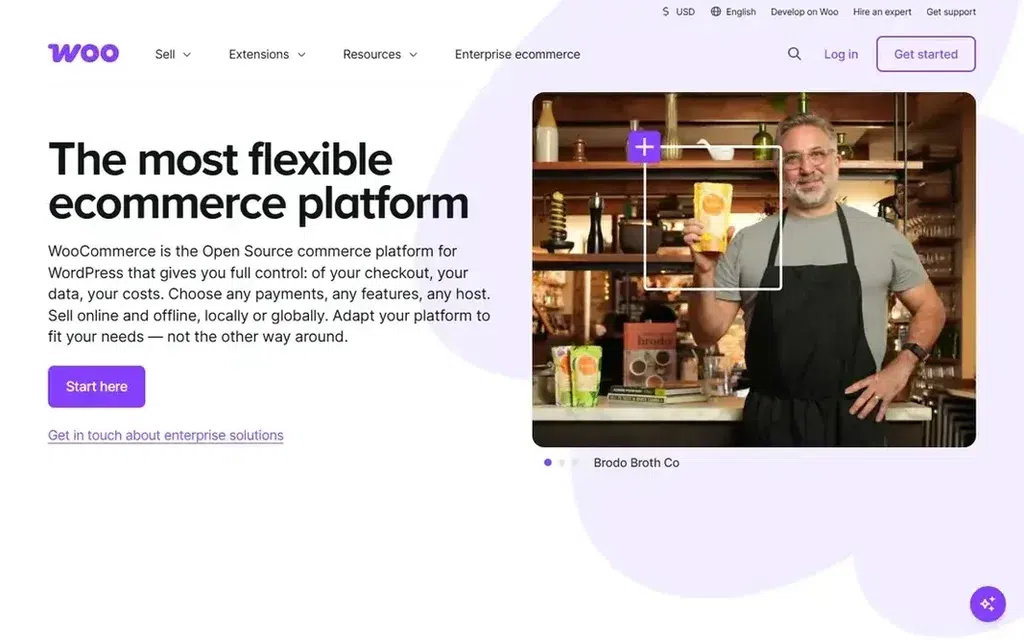
WooCommerce is aimed squarely at open-source control for merchants and developers. Since it is open source, it appeals to teams that want to own their stack, extend functionality and keep control over hosting and customization instead of renting a closed storefront system.
The main drawbacks: Needs more technical upkeep.
That freedom comes with responsibility: updates, hosting and extensions fall to you, so a developer or technical partner helps. On cost, WooCommerce starts like this: $29 per month. Free access: Not stated.
- Open-source ecommerce product
- Aimed at long-term business growth
- Extensions and hosting are your responsibility
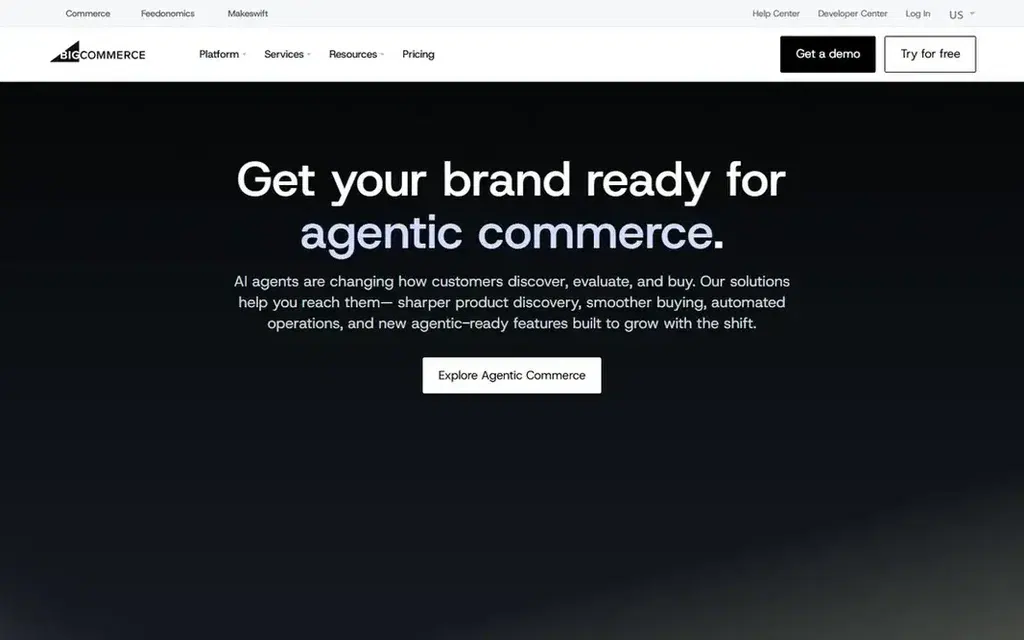
In short, BigCommerce is for scalable multichannel commerce foundations. BigCommerce describes commerce made for momentum, powering buying experiences across brands, regions and channels from a single, scalable foundation.
This comparison lists no price for BigCommerce; ask the vendor. As for free access: Not stated.
Where it falls short: Can be more than small sellers need.
- Focus on modern buying experiences
- Aimed at brands
- Setup may need technical planning
Salesforce Commerce Cloud is designed for Commerce inside the Salesforce ecosystem. It makes most sense for bigger firms already invested in the Salesforce ecosystem and planning a connected, large-scale commerce operation.
Downsides: Overkill for small sellers.
- Supports large-scale buying experiences
- Enterprise commerce product
- Implementation demands specialist help

Pick Shopify if this describes you: all-in-one commerce for most sellers. AI features are part of the offering.
Where it falls short: Continuing subscription cost for sellers.
Sellers who prefer open-source control or who already run a WordPress site may want to weigh WooCommerce instead. As for the details, because Shopify is a hosted system, you work within its structure instead of owning the full codebase, which can matter to teams wanting deep customization. The starting price for Shopify: $19 per month. Free access: Free trial.
- AI features built into the product
- Merges storefront and business management tools
- Less control over the underlying codebase
Wix eCommerce is a good fit for configurable all-in-one store building. Wix eCommerce is an all-in-one ecommerce system for creating a completely configurable online store and selling everywhere.
Its website builder background means design adaptability is central, making it a reasonable fit for small and mid-size merchants who want visual control without managing separate hosting or code. Wix eCommerce does not show a starting price in this comparison, so check the vendor site for current pricing. Free access: Not stated.
Where it is weaker: Design freedom can slow first setup.
- Completely configurable site design
- All-in-one ecommerce system
- Fewer deep enterprise commerce controls
How we chose
For each of the 6 tools we noted price, free plan or trial, fit for online retail platforms and the main limit, using vendor pages and documentation. Where a price is missing, the vendor does not list one publicly or ties it to a quote. Always confirm before budgeting. The order reflects how well each tool fits the most common buying scenario for online retail platforms, then price clarity, then free plan access. It is a starting point, not a verdict.
What to confirm before you sign up
- Ask Adobe Commerce, BigCommerce, Salesforce Commerce Cloud and Wix eCommerce for a written quote, since no starting price is shown.
- Use real work to test the free trial from Shopify, rather than a demo project.
- Read the limits listed for Adobe Commerce first: needs significant technical resources.
- See whether BigCommerce offers onboarding or training, and whether it is included in the price.
- Ask Adobe Commerce whether prices are locked for the first term and what happens at renewal.
FAQ
Do these tools publish their prices?
Not all of them. Adobe Commerce, BigCommerce, Salesforce Commerce Cloud and Wix eCommerce publish no starting price, so expect a quote request for those. The rest, WooCommerce included, show a starting price, though seats and billing terms still change the final cost. For the full picture, the cards above cover all 6 entries of this online retail platforms list, including price, free plan and limits.
Is Adobe Commerce the right pick for everyone comparing online retail platforms?
No single tool suits every team. Adobe Commerce comes first because it fits enterprise B2B and B2C experiences, while WooCommerce suits open-source control for merchants and developers and BigCommerce suits scalable multichannel commerce foundations. Match the tool to your own size, budget and workflow before deciding.
Does any tool for online retail platforms here have a free plan?
A permanent free plan is not offered by Adobe Commerce, Wix eCommerce or the other tools here. Shopify offer a trial. Plan a short evaluation period instead.
When should I choose WooCommerce over a hosted product?
WooCommerce fits merchants and developers who want open-source control and long-term adaptability over their stack. The tradeoff is that hosting, updates and extensions become your responsibility, so technical support matters.
Can I try these options before paying?
Often, yes. Shopify offers a free trial. Use your own data and a real task during the test, and check what the free tier or trial limits before you rely on it. Prices, free plan details and limits for all 6 tools in this online retail platforms roundup sit on the individual cards above.
Sources
- https://business.adobe.com/products/magento/magento-commerce.html
- https://woocommerce.com
- https://www.bigcommerce.com
- https://www.salesforce.com/commerce
- https://www.shopify.com
- https://www.wix.com/ecommerce