Top 5 Network Detection and Response for Energy Utilities for 2026 (Prices and Free Plans)
Best network detection and response for energy utilities: 5 tools compared on price, free plans and fit. Caveats come with every verdict. Decide faster.
- Editor's choice
 Trend Micro Vision One
Layered protection with exposure management
Starts atSee websiteVisit trendmicro.comFull review - Great alternative
 Darktrace
Autonomous AI response to in-progress attacks
Starts atSee websiteVisit darktrace.comFull review - Also considerExtraHop RevealX
Deep network traffic visibility and analysis
Starts atSee websiteVisit extrahop.comFull review
Direct answer
For layered protection with exposure management, Trend Micro Vision One is where this list starts. Listed starting prices: CrowdStrike Falcon Insight XDR from $7.99 per device a month. Darktrace is the stronger choice for autonomous AI response to in-progress attacks, while ExtraHop RevealX suits deep network traffic visibility and analysis. The other 2 tools in the list cover narrower or pricier cases.
TL;DR:
- Trend Micro Vision One is the opening pick, best for layered protection with exposure management.
- Trend Micro Vision One, Palo Alto Networks Cortex XDR and the 3 others all need a premium plan or a trial, since no free plan is listed.
- Palo Alto Networks Cortex XDR suits SOC transformation with AI-driven correlation.
- CrowdStrike Falcon Insight XDR is the lowest-priced starter here at $7.99 per device per month.
- Check the limits for ExtraHop RevealX before you commit: less endpoint-centric than XDR systems.
Last checked November 2026. Prices and plan details were read from the vendors' own pages in November 2026; vendors change plans often, so confirm the current price on the vendor site before you buy.
Quick comparison
| Tool | Best for | Starts at | Free plan? | |
|---|---|---|---|---|
| Trend Micro Vision One | Layered protection with exposure management | See website | Not stated | Visit |
| Darktrace | Autonomous AI response to in-progress attacks | See website | Not stated | Visit |
| ExtraHop RevealX | Deep network traffic visibility and analysis | See website | Not stated | Visit |
| CrowdStrike Falcon Insight XDR | Unified endpoint, identity and cloud detection | $7.99 per device a month | Free trial | Visit |
 Palo Alto Networks Cortex XDR | SOC transformation with AI-driven correlation | See website | Not stated | Visit |
The 5 tools in detail
If you are comparing network detection and response for energy utilities, this page covers 5 tools in one place: what each is best for, what it costs to start, whether it has a free plan, and the main limit to know about.
Trend Micro Vision One is a good fit for layered protection with exposure management. Trend Micro Vision One is described as an enterprise AI cybersecurity product with layered protection, cyber risk exposure management and security operations support.
What to check first: Wide suite can be complicated to configure.
Beyond that, a wide product means configuration effort, and detection depth can differ between modules, so utilities should validate the specific coverage they need. Trend Micro Vision One does not show a starting price in this comparison, so check the vendor site for current pricing. On free options: Not stated.
- Cyber risk exposure management included
- Layered protection across several domains
- Detection depth varies by module
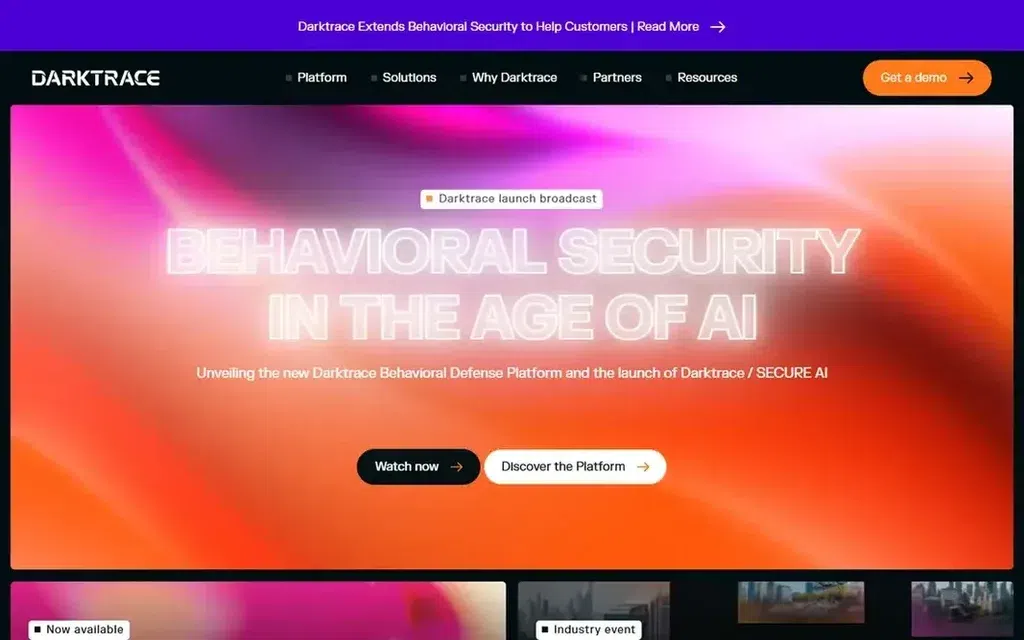
Darktrace is aimed squarely at autonomous AI response to in-progress attacks. That critical infrastructure emphasis makes it relevant to energy utilities that want self-learning behavioral detection across IT and converging environments, with response actions that can be applied rapidly when an attack is underway.
Where it is weaker: Behavioral learning takes time to mature.
Utilities with highly regulated change control should plan the rollout carefully. More specifically, autonomous interruption is capable but needs clear governance so legitimate operational activity is not disrupted, and behavioral baselines need time to mature. Pricing for Darktrace is not stated here, so ask the vendor for current figures. Free options: Not stated.
- Includes ransomware
- AI interrupts in-progress attacks in seconds
- Autonomous response needs careful governance
ExtraHop RevealX
Best for: Deep network traffic visibility and analysis
ExtraHop RevealX was built for deep network traffic visibility and analysis. Energy utilities with complicated, segmented networks frequently value this passive approach since it can illuminate east-west traffic and unmanaged devices without relying solely on endpoint agents, making it a solid complement to endpoint-led detection platforms in a layered defense.
Limits to weigh: Visibility relies on traffic capture points.
ExtraHop RevealX does not show a starting price in this comparison, so check the vendor site for current pricing. As for free access: Not stated.
- Network visibility focus for complicated estates
- Traffic-based analysis without heavy agents
- Less endpoint-centric than XDR products
CrowdStrike Falcon Insight XDR
Best for: Unified endpoint, identity and cloud detection
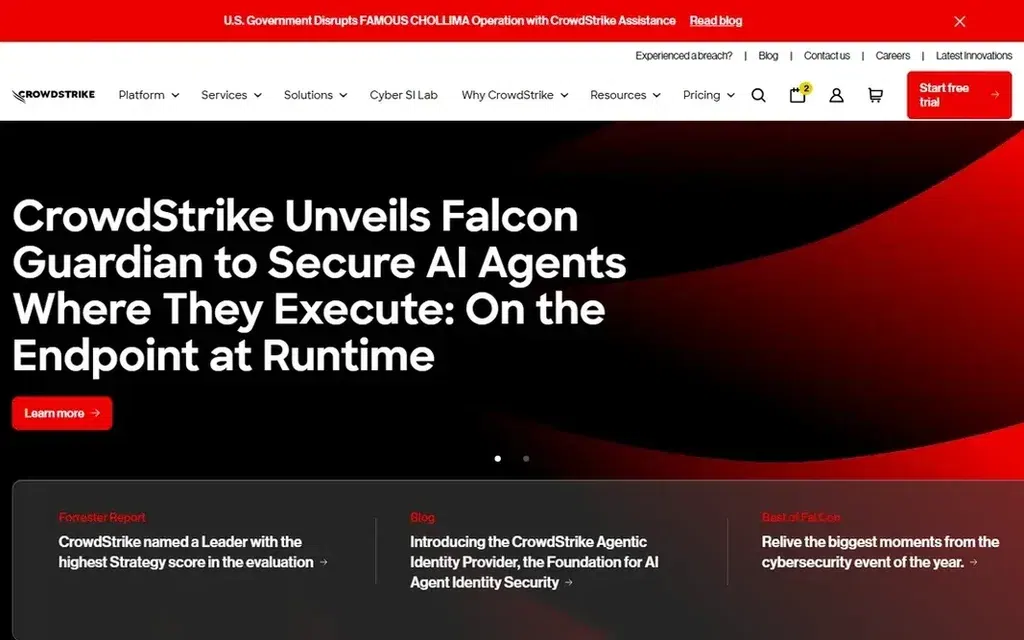
Choose CrowdStrike Falcon Insight XDR for unified endpoint, identity and cloud detection. The vendor positions it for protecting endpoints, cloud workloads, identities and data, with AI-native detection intended to stop breaches. Its strength is breadth across IT domains, so utilities with large unmanaged operational technology estates should confirm coverage for those segments before standardizing.
Beyond that, if your priority is passive network traffic analysis instead of endpoint-led detection, a network-focused tool may fit better. From a buyer's view, choose CrowdStrike when consolidating IT and cloud detection is the primary goal. On cost, CrowdStrike Falcon Insight XDR starts like this: $7.99 per device per month. Trial and free access: Free trial.
Trade-offs to know: Wide scope may need tuning for OT segments.
- Correlates endpoint
- Cloud-native product architecture
- Full value relies on broad telemetry coverage
Palo Alto Networks Cortex XDR
Best for: SOC transformation with AI-driven correlation

Palo Alto Networks Cortex XDR makes the most sense for SOC transformation with AI-driven correlation. Palo Alto Networks Cortex XDR is presented as an AI-driven system purpose-built for security operations center transformation. It aims to consolidate detection and response workflows so analysts work from correlated data rather than disconnected consoles.
For everyday use, smaller security teams may find the operational depth demanding. Energy utilities evaluating a broader SOC overhaul may find it attractive, especially where existing network security already comes from the same vendor and integration depth matters for quicker investigation and response. In practice, the product's value grows with the surrounding ecosystem, so utilities running mixed vendor estates should verify how much telemetry is ingested without friction. Check the vendor site for Palo Alto Networks Cortex XDR pricing; none is listed in this comparison. Free access: Not stated.
Points against: Maximum benefit commonly tied to vendor ecosystem.
- Designed for security operations center transformation
- AI-driven platform positioning
- Needs skilled analysts to tune detections
Our selection method
We compared the tools on published pricing, free plan or trial availability, feature coverage for network detection and response for energy utilities, and the limits each vendor documents. Treat prices as a snapshot: vendors change plans often, so check the vendor site for the figure that applies today. The sequence is a judgement call: typical use case first, then pricing transparency, then free access. Use the profiles to check fit.
What to check before you buy
- Get a written quote from Trend Micro Vision One, Darktrace, ExtraHop RevealX and Palo Alto Networks Cortex XDR; the list shows no starting price for them.
- Take the trial from CrowdStrike Falcon Insight XDR and push a live task through it before you pay.
- Before choosing Trend Micro Vision One, weigh its main limit: wide suite can be complex to configure.
- Pick one real project and run it in ExtraHop RevealX first; a small pilot shows fit faster than a checklist.
- The entry price of Trend Micro Vision One is only the starting point; model the full cost with seats and extras.
FAQ
Can these tools monitor operational technology networks?
Multiple vendors state coverage for critical infrastructure and converged environments, but depth varies. Confirm passive monitoring support and sensor placement for your OT segments, and validate that detection does not interfere with industrial protocols before relying on it.
Can I try these tools before paying?
Often, yes. CrowdStrike Falcon Insight XDR offers a free trial. Use your own data and a real task during the test, and check what the free tier or trial limits before you rely on it.
Do these tools publish their prices?
Not all of them. Trend Micro Vision One, Darktrace, ExtraHop RevealX and Palo Alto Networks Cortex XDR publish no starting price, so expect a quote request for those. The rest, CrowdStrike Falcon Insight XDR included, show a starting price, though seats and billing terms still change the final cost.
How should an utility evaluate autonomous response features?
Ask how response actions are scoped, what approvals are required and how false positives are handled. Autonomous containment can be valuable during active attacks, but regulated environments need clear governance, logging and rollback paths before enabling it broadly.
Why does network detection and response matter for energy utilities?
Utilities face threats that cross IT, cloud and operational environments, and attackers commonly move laterally through networks. NDR tools surface suspicious traffic and behavior that endpoint tools alone may miss, giving analysts earlier warning and better context for response.
How are the tools for network detection and response for energy utilities ordered?
The order follows typical fit for network detection and response for energy utilities, with Trend Micro Vision One first and Palo Alto Networks Cortex XDR last, then price clarity and free access. It is editorial judgement, not a score, so another team could rank the tools differently.
Sources
- https://www.trendmicro.com
- https://darktrace.com
- https://www.extrahop.com
- https://www.crowdstrike.com
- https://www.paloaltonetworks.com/cortex