Native Advertising Software for Startups in 2026: The 5 Best Options Side by Side
Best native advertising software for startups, compared. 5 tools with published prices, free plans and limits. The catches are listed up front. Plain facts.
- Editor's choice
 MGID
Native performance and programmatic reach
Starts atPricing on requestVisit mgid.comFull review - Great alternative
 Outbrain
Direct response and content monetization
Starts atPricing on requestVisit outbrain.comFull review - Also consider
 Taboola
Wide publisher reach with performance focus
Starts atPricing on requestVisit taboola.comFull review
Direct answer
This list puts MGID first for native performance and programmatic reach. If your case is different, Outbrain suits direct response and content monetization and Taboola suits wide publisher reach with performance focus. The full list of 5 tools follows, with free plan facts. None of these vendors publish plan prices, so pricing is on request for every option.
TL;DR:
- The list opens with MGID, aimed at native performance and programmatic reach.
- Outbrain comes with a trade-off: performance varies by vertical and creative.
- AdRoll fits multichannel campaigns in one dashboard.
- No starting price is shown for any of the 5 tools, MGID and AdRoll included, so plan time for sales calls.
Last checked November 2026. Pricing on request: vendors did not publish plan prices when this guide was last checked (November 2026), so ask each vendor for a written quote.
Quick comparison
| Tool | Best for | Starts at | Free plan? | |
|---|---|---|---|---|
| MGID | Native performance and programmatic reach | Pricing on request | Not stated | Visit |
| Outbrain | Direct response and content monetization | Pricing on request | Not stated | Visit |
| Taboola | Wide publisher reach with performance focus | Pricing on request | Not stated | Visit |
 StackAdapt | Programmatic control across channels | Pricing on request | Not stated | Visit |
 AdRoll | Multichannel campaigns in one dashboard | Pricing on request | Not stated | Visit |
The best native advertising software for startups
If you are comparing native advertising software for startups, this page covers 5 tools in one place: what each is best for, what it costs to start, whether it has a free plan, and the main limit to know about.
MGID was built for native performance and programmatic reach. MGID describes itself as a native performance and programmatic advertising system. Its stated vision is to help consumers engage positively with content and promoted ads alike.
Limits to weigh: Needs active campaign monitoring.
As for the details, programmatic native inventory can vary in quality, so continuing monitoring and placement checks matter. Startups looking for programmatic access to native inventory can use it to reach audiences across publisher sites, especially when the goal is to pair promoted content with performance-oriented buying instead of a single premium placement. Pricing for MGID is not stated here, so ask the vendor for current figures. On free options: Not stated.
- Positioned for advertiser and publisher goals
- Native performance and programmatic focus
- Quality varies across publisher inventory
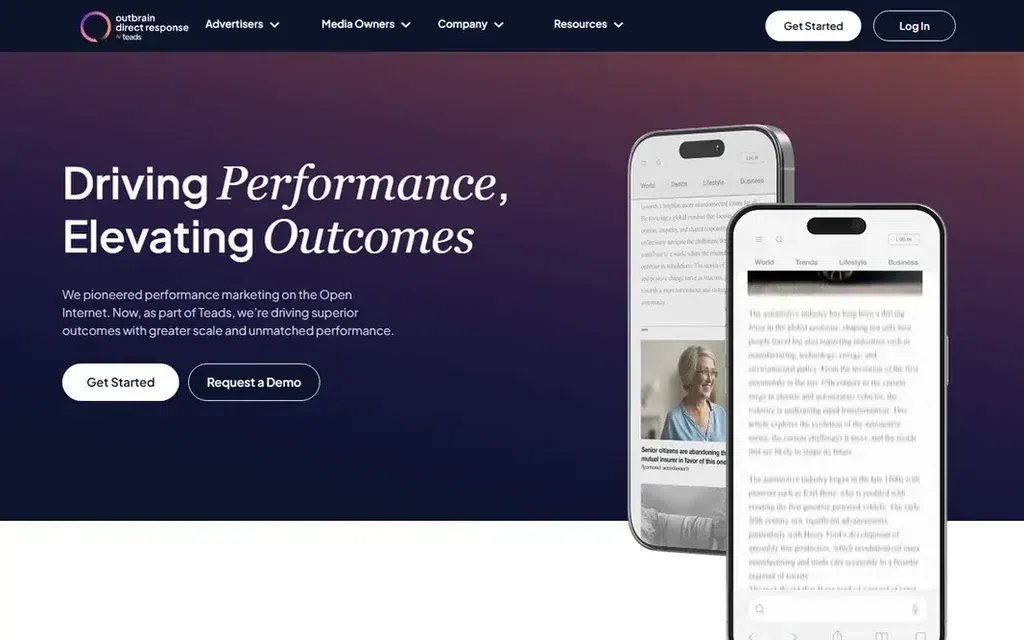
For direct response and content monetization, Outbrain is a natural candidate. Outbrain is a native advertising network centered on direct response, based on its homepage, which also positions it for monetizing content.
The main drawbacks: Needs continuing content production.
If your team cannot produce and refresh promoted content on a regular basis, a product with more solid automation or broader channel coverage may be a better match. As for the details, advertisers use it to drive raised outcomes through promoted content placements, whereas publishers use it to earn from their pages. Check the vendor site for Outbrain pricing; none is listed in this comparison. Free access: Not stated.
- Content monetization for publishers
- Direct Response focus for advertisers
- Performance varies by vertical and creative
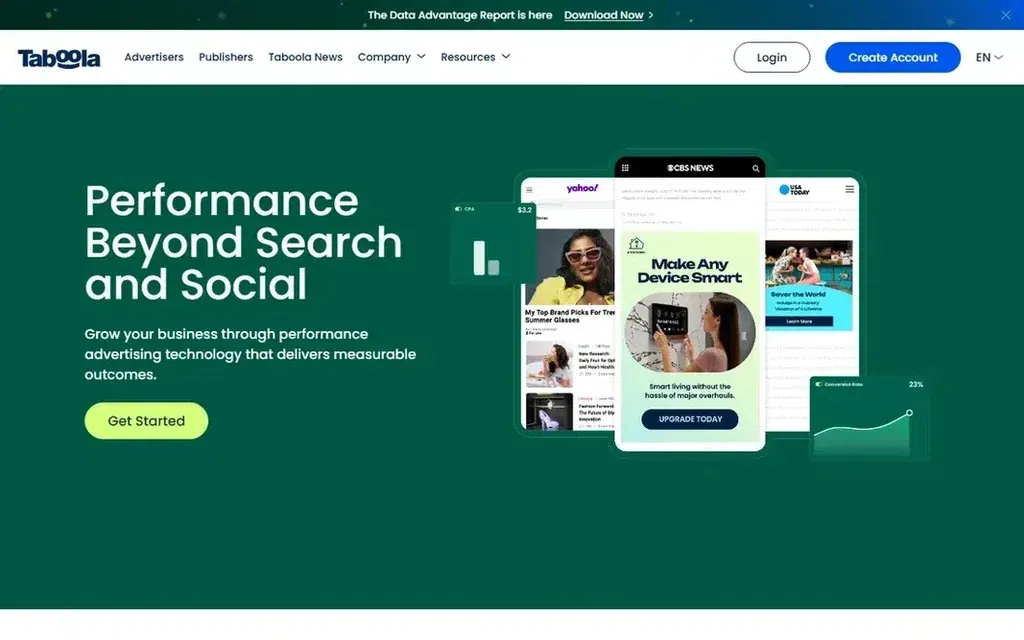
For wide publisher reach with performance focus, Taboola is a natural candidate. Taboola is a native advertising platform that places promoted content across publisher sites. Its homepage flags Realize for advertisers seeking measurable results beyond search and social, plus DeeperDive answers that help publishers recapture engagement lost to AI search.
Where it is weaker: Setup may need campaign expertise.
Also, running native campaigns at scale generally needs creative testing and budget adaptability, which can strain very small teams. If you need a more straightforward self-serve entry or tighter control over niche placements, compare lighter platforms before committing. Taboola shows no starting price here, so confirm the cost on the vendor site. As for free access: Not stated.
- Broad publisher network for native placements
- Gen AI answers feature for publishers
- Spend thresholds can challenge small teams
Where StackAdapt fits: programmatic control across channels. The breadth of features can overwhelm teams without programmatic experience, and native is only one part of the product.
Watch-outs: Native is part of a wider toolkit.
On top of that, if you want a narrow, native-only tool with a short ramp-up time, a dedicated network may be simpler to adopt. StackAdapt does not show a starting price in this comparison, so check the vendor site for current pricing. As for free access: Not stated.
Upsides: channels and measurement together.
- Multi-channel programmatic buying
- Audiences, creative
- More complicated for beginners

AdRoll is designed for multichannel campaigns in one dashboard. Its homepage describes running campaigns across channels in a single dashboard, powered by years of machine learning experience.
If native placement quality and publisher reach are your top priority, a focused native system may deliver more control. AdRoll does not show a starting price in this comparison, so check the vendor site for current pricing. Trial and free access: Not stated.
Points against: Native is one channel among multiple.
- Multichannel ads from one dashboard
- Account-based marketing features
- Less specialized for publisher placements
How the list was put together
Questions to settle before buying
- Request quotes from MGID, AdRoll and the others; the list shows no fixed prices.
- Read the limits listed for MGID first: quality varies across publisher inventory.
- Test the integrations you rely on with MGID before committing; some connectors sit on upper tiers.
- Pick one real project and run it in Outbrain first; a small pilot shows fit faster than a checklist.
- Ask AdRoll whether prices are locked for the first term and what happens at renewal.
FAQ
Is MGID the right pick for everyone comparing native advertising software for startups?
No single tool suits every team. MGID comes first because it fits native performance and programmatic reach, while Outbrain suits direct response and content monetization and Taboola suits broad publisher reach with performance focus. Match the tool to your own size, budget and workflow before deciding.
Do these tools publish their prices?
No. None of the tools, from MGID to AdRoll, shows a fixed starting price here, so budget time for quotes.
Can I try these tools before paying?
Not by default. None of the tools, from MGID to AdRoll, lists a free plan or a free trial here, so ask each vendor for a demo before committing.
What should a startup look for in native advertising software?
Prioritize ease of launch, clear performance reporting and targeting that matches your audience. Also check content policies and whether the system supports the channels you already use, so native ads fit your existing workflow.
How are the tools for native advertising software for startups ordered?
MGID sits first and AdRoll last because the order follows typical fit for native advertising software for startups, then price clarity and free access. It is a judgement call, so read each profile for fit and limits.
Sources
- https://www.mgid.com
- https://www.outbrain.com
- https://www.taboola.com
- https://www.stackadapt.com
- https://www.adroll.com