Best Account-Based Advertising Software in 2026: 8 Tools Compared
We compared the best account-based advertising software on targeting, intent data, measurement and CRM links, so B2B teams can reach key accounts well.
- Editor's choice
 Demandbase
Full account programs
Starts atSee websiteVisit demandbase.comFull review - Great alternative
 6sense
Intent-led targeting
Starts atSee websiteVisit 6sense.comFull review - Also consider
 Terminus
Mid-size B2B teams
Starts atSee websiteVisit terminus.comFull review
TL;DR:
- Demandbase and 6sense lead for full account-based programs that combine ads, intent and sales insight.
- Terminus and RollWorks suit mid-size B2B teams that want account ads without enterprise complexity.
- Madison Logic and ZoomInfo Advertising help teams that already buy intent or contact data.
- LinkedIn Campaign Manager is the most direct route to professional audiences by job and company.
- Adobe Marketo Engage fits teams that want ads tied closely to nurture and marketing automation.
Quick comparison
| Tool | Best for | Starts at | Free plan? | |
|---|---|---|---|---|
| Demandbase | Full account programs | See website | No | Visit |
| 6sense | Intent-led targeting | See website | No | Visit |
| Terminus | Mid-size B2B teams | See website | Free trial | Visit |
 RollWorks | Account ads at scale | See website | Free trial | Visit |
 Madison Logic | B2B media and intent | See website | No | Visit |
 ZoomInfo Advertising | Data-led account ads | See website | Free trial | Visit |
 LinkedIn Campaign Manager | Professional audiences | See website | No | Visit |
 Adobe Marketo Engage | Ads plus nurture | See website | No | Visit |
The best account-based advertising software
Account-based advertising shows ads to people at chosen companies, rather than to a broad audience. The tools below help B2B teams pick accounts, reach buying groups and measure pipeline effect.
We also weighed how easy each tool is to learn, since a account-based advertising software tool that staff avoid using rarely delivers value. The picks below balance depth with day-to-day usability, and we note where a tool needs more setup or training than a busy team may want to give it.
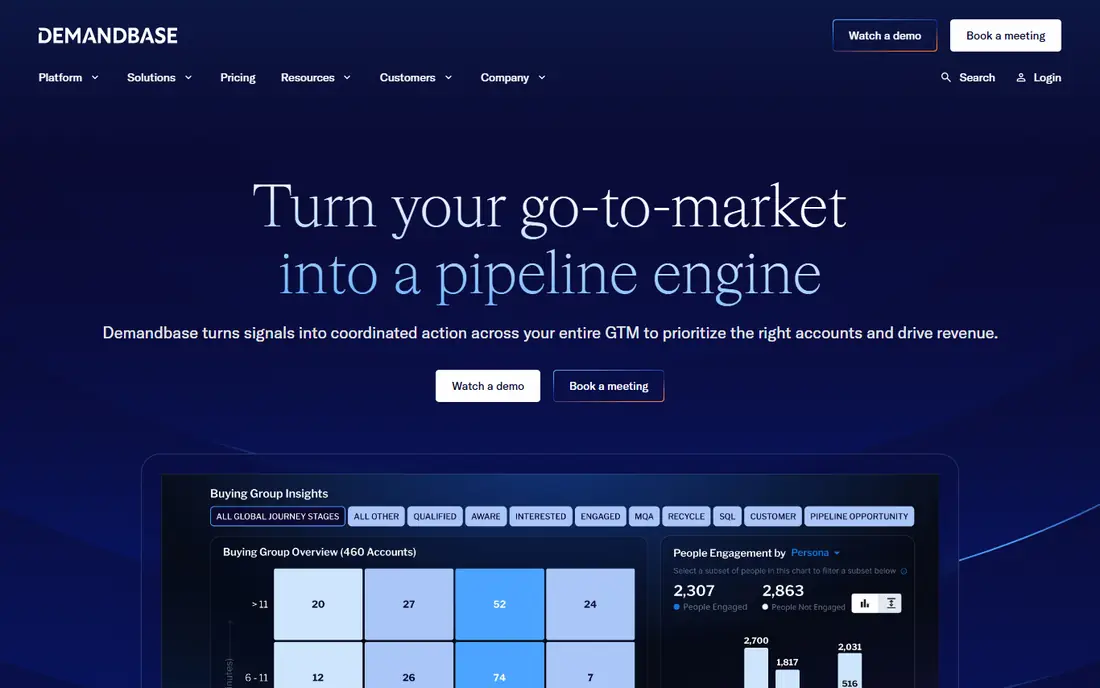
Demandbase is a leading account-based platform that joins advertising, intent signals and account data. Marketing teams can build account lists, run display and social ads to those accounts, and pass engaged accounts to sales with context. Measurement links ad exposure to pipeline, not just clicks.
Pricing and setup suit larger B2B teams with a clear account list. Smaller teams may find it heavy, but firms running serious account programs get a joined-up system.
- Account targeting and ads
- Intent data
- Sales insight tools
- Enterprise pricing
- Setup needs planning
6sense uses intent data and account identification to show which accounts are researching relevant topics. Teams can target ads to in-market accounts, alert sales when interest rises, and prioritize outreach by buying stage. That focus helps teams spend on accounts most likely to buy soon.
The platform works best with clean CRM data and a defined account list. Cost reflects its enterprise scope, so it suits B2B firms with meaningful deal sizes.
- Strong intent signals
- Account identification
- Sales alerts
- Enterprise cost
- Needs CRM and data hygiene
Terminus helps mid-size B2B teams run account-based ads, measure engagement across channels and connect results to CRM records. Onboarding is lighter than the largest platforms, which helps teams without a dedicated operations staff.
Data depth is narrower than Demandbase or 6sense in some areas. For teams that want a practical account ads program without enterprise overhead, Terminus is a good middle path.
- Account ads and engagement
- Useful reports
- Easier onboarding
- Smaller data scope than leaders
- Some features need higher plans
RollWorks, from NextRoll, focuses on account-based advertising with playbooks that guide teams from account list to campaign to sales handoff. It links to common CRMs and ad channels, and reports show account reach and engagement.
It fits B2B firms with clear ideal accounts and a sales team ready to follow up. Firms with very broad or consumer audiences will get less from its account focus.
- Account targeting
- Playbooks for teams
- CRM and ad links
- Best for B2B SaaS-style firms
- Pricing varies by scope
Madison Logic combines B2B media, intent data and content programs for account-based campaigns. Teams can reach buying groups across publisher sites and measure engagement by account. Content syndication options help firms that also need lead programs.
It feels more managed than self-serve, so teams that want full hands-on control should check workflow options early. For firms that want media expertise bundled with the platform, it is a strong option.
- B2B media reach
- Intent-driven campaigns
- Content syndication links
- Managed-service feel
- Less self-serve control
ZoomInfo Advertising builds on ZoomInfo company and contact data to target ads at chosen accounts and buying groups. Teams that already use ZoomInfo for prospecting get a smoother path, since account lists and data stay in one place.
Data coverage is strongest in North America, so global teams should check their regions. For data-led B2B teams, the shared account foundation is a real advantage.
- Strong company and contact data
- Account targeting
- Intent signals
- Data quality varies by region
- Pricing is quote-based
LinkedIn Campaign Manager lets advertisers target by company, job title, seniority, industry and skills, which fits account-based work well. Account lists can be uploaded for matched audiences, and reports show engagement by company.
Costs per click run higher than many display channels, so budgets need care. For B2B teams that must reach specific roles at specific firms, LinkedIn remains the most direct channel.
- Precise job and company targeting
- Large professional audience
- Clear reports
- Higher cost per click
- Limited off-LinkedIn reach
Adobe Marketo Engage ties advertising to nurture, scoring and sales handoff. Teams can run account campaigns, score engagement and move warm accounts into nurture flows without switching systems. CRM links keep sales and marketing on shared account records.
Setup is complex and pricing suits larger teams. Firms already using Marketo or Adobe tools get the most value, since ads become part of a wider automation program.
- Marketing automation depth
- Account scoring
- CRM links
- Complex setup
- Enterprise pricing
How we picked these
We compared official product pages, pricing information and public reviews for tools that support account-based advertising as a core use. We kept tools still sold in 2026 that target chosen accounts, measure account engagement and link to CRM or sales tools. We dropped general ad platforms with no account targeting and pure data tools with no ad delivery.
For account-based advertising software, we also checked whether vendors publish clear documentation, support options and security information. Tools with vague pricing or missing support pages scored lower, even when their feature lists looked strong. That check matters because buyers often learn about limits only after purchase, when switching costs are already high.
What to check before you buy
Start with your account list
Account advertising only works with a good list. Define your ideal accounts, check data quality and agree the list with sales before you pick a platform. A weak list wastes even the best targeting.
Check intent data sources
Ask where intent signals come from, how often they update and how they map to your accounts. Transparent sources beat vague claims, especially when sales will act on the alerts.
Measure pipeline, not just clicks
Ask how the tool links ad exposure to opportunities and revenue. Click reports alone can mislead, since account programs aim to move a buying group, not one visitor.
Review channel coverage
Some tools focus on display, others add social, video or publisher sites. Match channel coverage to where your buyers actually spend time, and check minimum spend rules.
Check support and updates
Support quality matters as much as features, especially when a tool is used every day. Check support hours, response times and whether help is offered by chat, email or phone on the plan you will buy. Read the documentation for a task you will do often, and look at how often the vendor ships fixes and improvements. A tool with stale docs and slow support can cost more in lost time than a slightly higher subscription.
Plan the switch from your current tool
Moving tools takes more than signing up. List the data you must move, such as templates, customer records or past reports, and test an export before you cancel the old tool. Run the new tool alongside the old one during a trial, and train a small group first so they can help colleagues. A planned switch avoids lost work and gives staff time to learn new habits.
Budget for the full first year
Price the first year in full, not just the monthly rate. Add seats for every user, any required add-ons and the cost of training or setup help. Check whether annual billing saves money and whether that saving is worth the commitment. A clear first-year total makes plans easier to compare and avoids surprise renewals.
Ask about data ownership and exit options
Before you commit, ask who owns your data, how you can export it and what happens if you cancel. Check contract length, renewal terms and whether prices change after an introductory period. Clear exit options protect you if the tool no longer fits, and they also signal a vendor that is confident in keeping customers by quality rather than by lock-in.
FAQ
What is account-based advertising software?
Account-based advertising software shows ads to people at specific target companies. It helps B2B teams reach buying groups, build awareness at key accounts and support sales outreach.
How is it different from normal B2B ads?
Normal B2B ads often target broad job or interest groups. Account-based ads start from a named account list, so spend focuses on firms your team has chosen to win.
Do I need intent data?
Intent data helps, but it is not required to start. A clean account list and good creative can run a useful program, while intent data helps prioritize which accounts to push first.
How much should I budget?
Budgets vary by account count, channels and deal size. Ask vendors for minimum spend rules and typical costs per account, and start with a pilot list before scaling.
How long does it take to get value from account-based advertising software?
That depends on setup and team size. Simple tools can show value within a week, while enterprise platforms may need a month or more for setup, data migration and training. A focused pilot with one team and clear goals gives the fastest honest answer.
What mistakes do buyers often make with account-based advertising software?
Common mistakes include buying for a feature list instead of a daily workflow, skipping a trial with real data, and undercounting users who will need access. Another frequent error is ignoring support and exit terms until a problem appears. A short trial and a clear list of must-have tasks prevent most of these errors.