Best Advertising Platforms for Small Businesses in 2026: 10 Platforms Compared
Find the best advertising platforms for small businesses in 2026. We compare Google, Meta, TikTok, LinkedIn, and more on cost, reach, and ease of use.
- Editor's choice
 Google Ads
High-intent search buyers
Starts atSee websiteVisit ads.google.comFull review - Great alternative
 Meta Ads
Local and visual products
Starts atSee websiteVisit meta.comFull review - Also consider
 Microsoft Advertising
Cheaper search clicks
Starts atSee websiteVisit ads.microsoft.comFull review
TL;DR:
- Google Ads is the best starting point for businesses whose customers already search for what they sell.
- Meta Ads offers the cheapest way to reach local buyers on Facebook and Instagram, with campaigns from $1 per day for impressions.
- TikTok Ads suits visual products aimed at younger buyers, but it needs native-style video creative to work.
- LinkedIn Ads is the best B2B option, yet its high click costs mean it only pays for high-value leads.
- Start with one or two platforms and prove cost per lead before spreading a small budget across five channels.
Quick comparison
| Tool | Best for | Starts at | Free plan? | |
|---|---|---|---|---|
| Google Ads | High-intent search buyers | See website | No | Visit |
| Meta Ads | Local and visual products | See website | No | Visit |
| Microsoft Advertising | Cheaper search clicks | See website | No | Visit |
 TikTok Ads | Younger video audiences | $50 per day | No | Visit |
 LinkedIn Ads | B2B lead generation | $10 per day | No | Visit |
 Pinterest Ads | Discovery and shopping ideas | See website | No | Visit |
 Snapchat Ads | Young mobile audiences | See website | No | Visit |
 X Ads | Real-time and news audiences | See website | No | Visit |
 Amazon Ads | Brands selling on Amazon | $1 per day | No | Visit |
 Yelp Ads | Local service businesses | See website | No | Visit |
The best advertising platforms for small businesses
Small businesses do not need every ad platform. They need one or two channels where their buyers already spend time, with budgets they can control and results they can read. We compared entry costs, targeting, formats, and ease of use across the major platforms to shortlist ten worth considering.
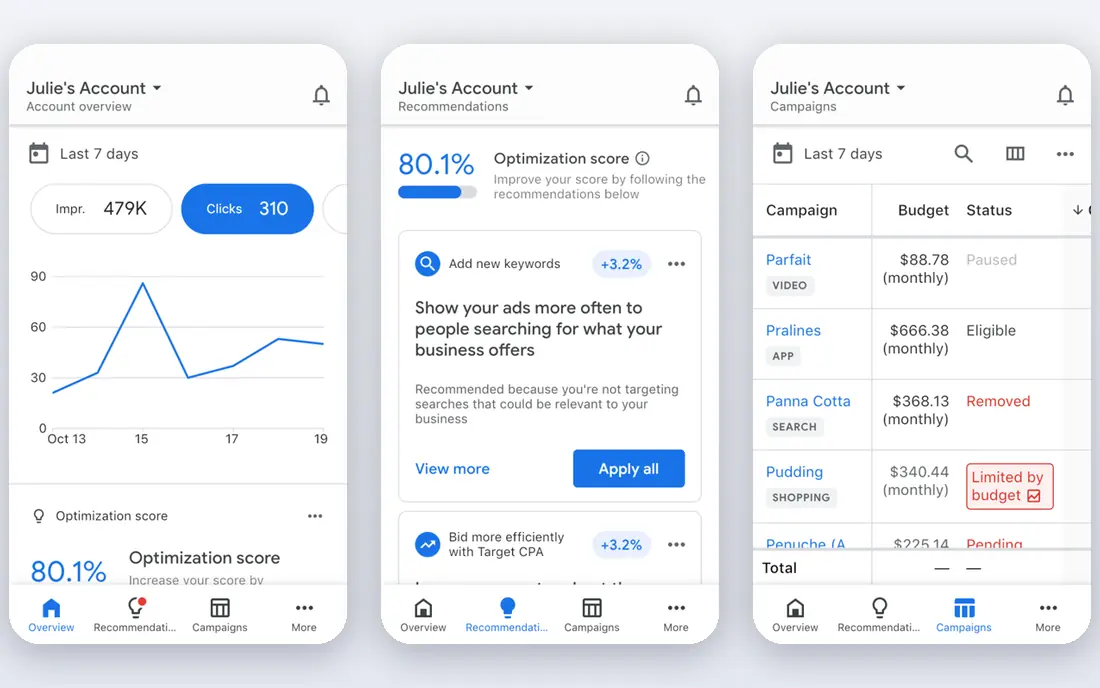
Google Ads is our pick for most small businesses because it captures demand that already exists. When someone searches for a plumber, a lawyer, or a product, a well-built search campaign puts your business in front of them at that moment. Shopping and Performance Max campaigns extend that reach to product listings, YouTube, and Display.
The honest catch is cost in competitive markets. Clicks in legal, finance, and home services can run several dollars each, so landing pages and conversion tracking matter as much as the ads. Set a daily budget cap, start with exact and phrase match keywords, and expand only when cost per lead looks healthy.
- Reaches buyers at the moment of search
- Search, shopping, video, and Performance Max formats
- No deposit required
- Competitive keywords can be expensive
- Performance Max gives less control than manual campaigns

Meta Ads, covering Facebook and Instagram, is the best value channel for many local and visual businesses. Impression campaigns can start at $1 per day, with conversion campaigns from $5 per day in third-party pricing guides, and the targeting covers interests, behaviors, and local areas. Reels and Stories formats suit products that look good on camera.
The downside is creative demand. Audiences tire of the same image quickly, so you need a steady flow of new photos and short videos. If you cannot produce fresh creative regularly, results will fade even with a good budget.
- Facebook, Instagram, and Messenger reach
- Campaigns from $1 per day for impressions
- Strong retargeting tools
- Costs rise for narrow audiences
- Creative fatigue sets in fast without fresh ads
Microsoft Advertising is the simplest way to add search volume beyond Google. It covers Bing, Yahoo, and AOL search, and third-party benchmarks put its clicks roughly 30 to 40 percent below Google in many categories. You can import Google Ads campaigns directly, which makes setup fast.
The catch is volume. Microsoft search is smaller than Google, so it works best as a second channel rather than a replacement. For B2B and desktop-heavy audiences, though, that smaller pool can still deliver quality leads at a lower cost.
- Bing, Yahoo, and partner search reach
- Often cheaper clicks than Google
- Easy Google Ads import
- Smaller search volume than Google
- Audience skews older and desktop-heavy
TikTok Ads suits brands with products that show well in short video, especially for buyers under 35. Campaigns start at $50 per day, with ad groups from $20 per day, and formats include in-feed video, Spark Ads that boost creator posts, and shopping campaigns. A product that demos well in 15 seconds can scale fast here.
The honest weakness is creative fit. Ads that look like TV commercials tend to flop, while casual, creator-style videos perform. If you cannot make native-feeling video, or your buyers are older, TikTok will waste budget that Google or Meta would use better.
- Huge short-video reach
- Spark Ads use creator content
- Shopping integrations for stores
- $50 per day campaign minimum
- Polished ads underperform against native-style video
LinkedIn Ads is the best platform for small businesses selling to other businesses. You can target by job title, company size, industry, and seniority, which no other platform matches, and lead forms capture details without sending people off-site. For a consulting firm or software company, that precision is worth paying for.
The catch is price. Clicks commonly run $6 to $15 or more, so LinkedIn only pays when each lead is worth hundreds or thousands of dollars. Small businesses selling low-priced products should skip it and use Meta or Google instead.
- Targeting by job title, company, and seniority
- Lead forms built in
- Strong for high-value B2B
- Click costs are high, often $6 to $15 or more
- $10 per day or $100 lifetime minimum
Pinterest Ads works well for businesses whose products people plan around: home decor, fashion, food, weddings, travel, and crafts. Users save pins while planning purchases, so ads feel closer to shopping than to scrolling. Click costs are often lower than on Meta or LinkedIn, and shopping pins send buyers straight to product pages.
The limitation is category fit. If you sell emergency plumbing or legal services, Pinterest buyers are not in that mindset. For visual, planning-driven products, though, it is an underused channel with good returns.
- Buyers in planning and discovery mode
- Shopping pins link to products
- Lower click costs than many social platforms
- Audience skews toward home, fashion, food, and lifestyle
- Weaker for urgent services
Snapchat Ads reaches a young, mobile-first audience that is hard to find elsewhere, and its AR lenses and filters can make a local brand memorable. Video ads run in Stories and Spotlight, and the platform suits entertainment, fashion, food, and app businesses aimed at teens and young adults.
The downside is scope. If your buyers are over 40, Snapchat will deliver little. Attribution is also less direct than on search or Meta, so treat it as an awareness channel and judge it on reach and store visits rather than last-click sales.
- Reaches younger mobile users
- AR lenses and filters stand out
- Video-first formats
- Audience is narrow by age
- Tracking and attribution are weaker than Google or Meta
X Ads, formerly Twitter Ads, suits brands tied to live events, news, sports, tech, and finance, where conversations happen in real time. Promoted posts, video, and carousel formats let small businesses join trending topics and reach interest-based audiences cheaply in many categories.
The honest catch is brand safety. Some advertisers worry about what content their ads appear next to, and X has a smaller audience than Meta or TikTok. Test with a small budget and check placement reports before scaling.
- Real-time conversation targeting
- Text, video, and carousel formats
- Good for news-driven products
- Brand safety concerns for some advertisers
- Audience is smaller than Meta or TikTok
Amazon Ads is essential for any small business selling on Amazon. Sponsored Products put your listings in search results where buyers are ready to purchase, and the platform technically allows campaigns from $1 per day, with $10 per day recommended in third-party guides. That purchase intent is hard to match elsewhere.
The limitation is obvious: if you do not sell on Amazon, this channel does not apply. Amazon Ads also rewards listings with good reviews, competitive prices, and stock availability, so fix the listing before raising ad spend.
- Targets shoppers at the point of purchase
- Sponsored Products from $1 per day technically
- Strong for product sales
- Only pays for brands selling on Amazon
- $10 per day is the recommended starting point
Yelp Ads suits local service businesses such as restaurants, salons, dentists, and home services, where buyers compare nearby options and read reviews. Ads boost your profile in search results and on competitor pages, and Yelp tracks calls, direction requests, and website visits from the ads.
The catch is reputation. If your review rating is weak, paying for more profile views will not fix the problem, and costs vary a lot by city and category. Improve reviews and photos first, then use Yelp Ads to turn that profile into calls.
- Reaches people actively choosing local services
- Profiles show reviews and photos
- Call and direction tracking
- Costs vary by category and market
- Value depends heavily on review ratings
How we picked these
We compared official platform pages and independent 2026 pricing guides for the major advertising platforms. We favored platforms with self-serve tools, published or widely reported minimum spends, and real small-business adoption, and we included search, social, video, shopping, and local channels so readers can match a platform to their buyers.
How to choose an advertising platform for a small business
Start with your buyers, not with the platform that is trending.
Follow the buying intent
If buyers search for your product, start with Google Ads or Microsoft Advertising. If they discover products while scrolling, start with Meta, TikTok, or Pinterest. If they choose local services by reviews, add Yelp. Intent decides the channel more than any feature list.
Set a test budget you can read
A $100 test spread across five platforms teaches you nothing. Pick one or two platforms, set a daily budget you can sustain for four weeks, and judge cost per lead or cost per sale, not clicks alone. A realistic monthly floor for search is $500 to $800, and for Meta $300 to $500, in third-party small-business guides.
Fix tracking before spending
Install conversion tracking, call tracking where relevant, and a simple landing page for each campaign. Without tracking, you cannot tell a good platform from a bad one, and you will keep funding the channel that shouts loudest rather than the one that sells.
Refresh creative on social
Social platforms reward fresh creative. Plan two or three new images or videos per month for Meta, TikTok, or Pinterest, and retire ads whose costs rise for two weeks straight. Search ads need less creative work but more keyword and landing page care.
FAQ
What are the best advertising platforms for small businesses?
Google Ads and Meta Ads are the best starting pair for most small businesses: Google captures search demand, and Meta reaches local and visual buyers cheaply. Add TikTok, LinkedIn, or Amazon Ads when your buyers and products fit those channels.
What is the best platform for small business advertising on a small budget?
Meta Ads offers the lowest entry point, with impression campaigns from $1 per day, and Google Ads has no deposit requirement. A realistic monthly test budget is $300 to $500 on Meta or $500 to $800 on Google Search.
How much should a small business spend on advertising?
It depends on margins and lead value. Third-party guides put realistic monthly floors at $500 to $800 for Google Search, $300 to $500 for Meta, and $200 to $400 for Microsoft Advertising. Start small, prove cost per lead, then scale what works.
Is Google Ads or Meta Ads better for a small business?
Google Ads is better when buyers search for your product or service, since it captures high intent. Meta Ads is better for discovery, local awareness, and visual products that buyers do not yet know they want. Many businesses run both.
Do small businesses need LinkedIn Ads?
Only if they sell high-value B2B products or services. LinkedIn clicks cost $6 to $15 or more, so it pays when each lead is worth hundreds of dollars. Consumer businesses should usually skip it.
How do I know if my ads are working?
Track cost per lead, cost per sale, and return on ad spend, not just clicks or impressions. Run each platform for at least four weeks with proper conversion tracking before judging it, and compare channels on the same outcome.