The 6 Best Metric Store Software for Large Enterprises in 2026, Ranked
Best metric store software for large enterprises in 2026: 6 tools with starting prices, free plans and limits. Short verdicts, no fluff. Quick to scan.
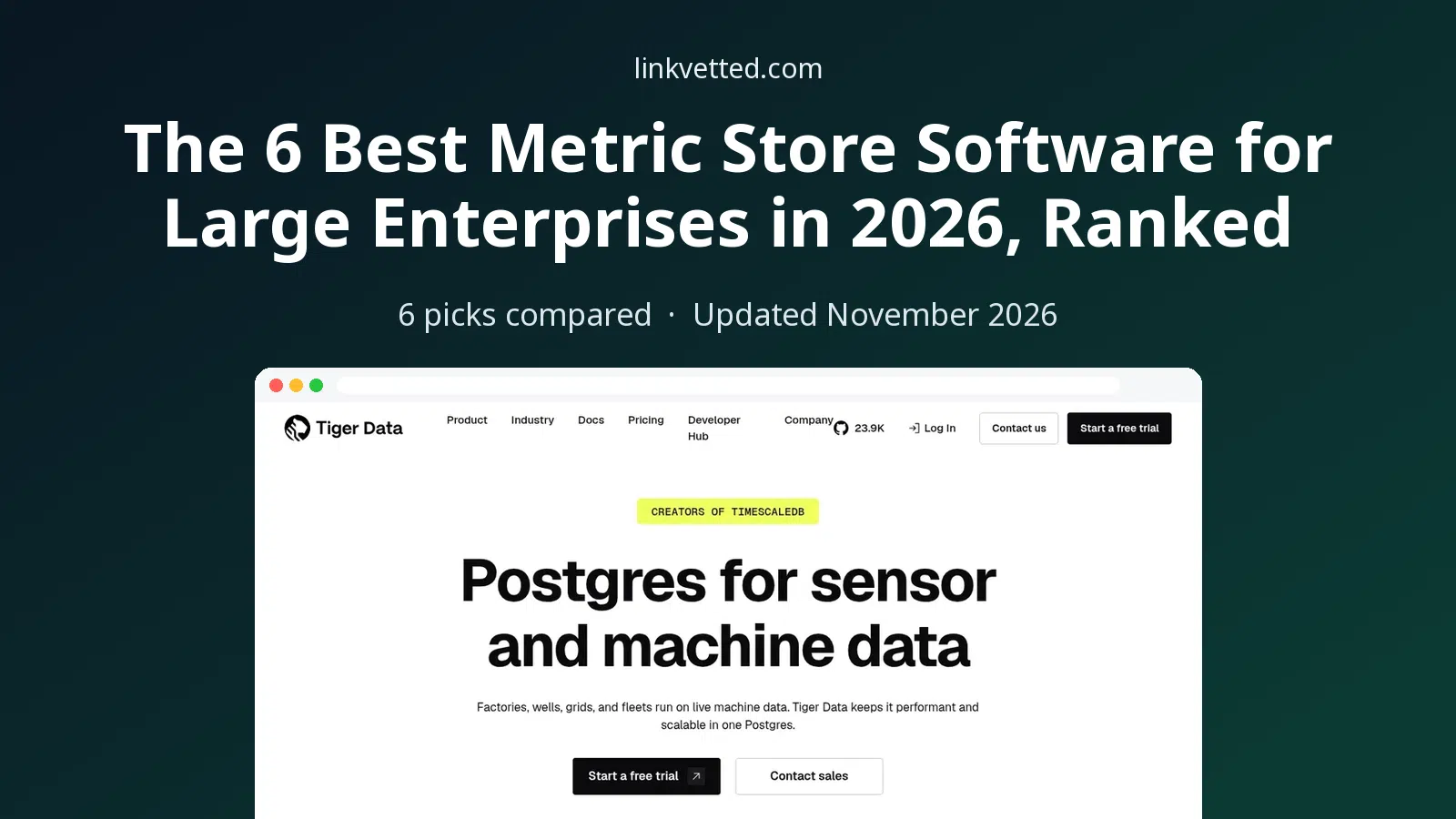
- Editor's choiceTimescaleDB
Time series on PostgreSQL foundations
Starts at$30 a monthVisit timescale.comFull review - Great alternative
 New Relic
AI-assisted root cause analysis
Starts at$10 per user a monthVisit newrelic.comFull review - Also consider
 Grafana Cloud
Open standards with reduced lock-in
Starts at$19 a monthVisit grafana.comFull review
Direct answer
Start with TimescaleDB if you need time series on PostgreSQL foundations. Listed starting prices: TimescaleDB from $30 a month, New Relic from $10 per user a month and Grafana Cloud from $19 a month. Alternatives: New Relic for AI-assisted root cause analysis, and Grafana Cloud for open standards with reduced lock-in. The full list of 6 tools follows, with prices and free plan facts.
TL;DR:
- TimescaleDB is the opening pick, best for time series on PostgreSQL foundations.
- For dedicated high-volume time series storage, InfluxDB is worth a look.
- Before buying Datadog, weigh this: costs scale with usage.
- A free plan is available from 4 of the 6 tools: New Relic, Grafana Cloud, Amazon CloudWatch, InfluxDB.
- The lowest published monthly entry price here is $8 per committer per month, from Datadog.
Last checked November 2026. Prices and plan details were read from the vendors' own pages in November 2026; vendors change plans often, so confirm the current price on the vendor site before you buy.
Quick comparison
| Tool | Best for | Starts at | Free plan? | |
|---|---|---|---|---|
| TimescaleDB | Time series on PostgreSQL foundations | $30 a month | Free trial | Visit |
| New Relic | AI-assisted root cause analysis | $10 per user a month | Yes | Visit |
| Grafana Cloud | Open standards with reduced lock-in | $19 a month | Yes | Visit |
 Datadog | Managed cloud monitoring across apps and services | $8 per committer a month | Free trial | Visit |
 Amazon CloudWatch | AWS-native monitoring and observability | See website | Yes | Visit |
| InfluxDB | Dedicated high-volume time series storage | $18,000 a year | Yes | Visit |
Metric Store Software for Large Enterprises profiles
This LinkVetted guide covers 6 metric store software for large enterprises. Each profile lists a starting price, free plan details, strengths and drawbacks, so you can drop poor fits quickly.
TimescaleDB
Best for: Time series on PostgreSQL foundations
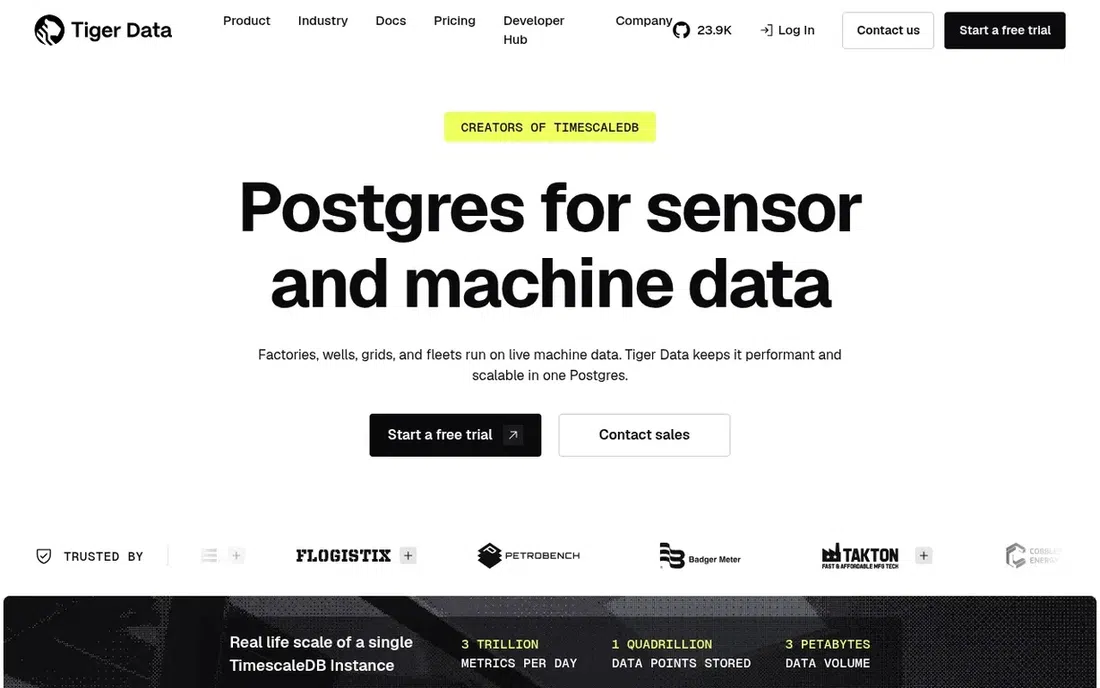
TimescaleDB is aimed squarely at time series on PostgreSQL foundations. TimescaleDB is a time-series PostgreSQL product from the creators of TimescaleDB, positioned for enterprises processing very large volumes of metrics daily.
Worth adding: since it builds on PostgreSQL, effective use relies on database administration skills and capacity planning. It is a data platform instead of a complete monitoring product, so teams wanting built-in dashboards, alerting and integrations may pair it with other tools or choose a bundled observability service. Price to start with TimescaleDB: $30 per month. As for free access: Free trial.
Where it falls short: Requires PostgreSQL knowledge.
- Built on PostgreSQL
- Familiar SQL interface
- Not a full observability suite
New Relic targets AI-assisted root cause analysis. New Relic is an AI-powered observability product that correlates telemetry across your entire stack so teams can isolate root causes and cut mean time to repair. Beyond that, if your priority is a database you operate straight, a dedicated time series store may suit you better.
Where it is weaker: Platform-centric approach.
New Relic is oriented toward observability outcomes instead of raw metric storage control. So teams with strict data residency or custom storage requirements should evaluate carefully. New Relic cost at the entry level: $10 per user per month. New Relic has a free plan.
- Correlates telemetry across the stack
- Unified observability system
- Less suited to raw storage control
Where Grafana Cloud fits: open standards with reduced lock-in. Organizations needing a single purpose-built metric database with full operational control may look at a dedicated time series store instead.
Reasons to shortlist it: Brings together metrics.
Where it falls short: Managed service trade-offs.
It appeals to teams already familiar with Grafana dashboards and visualization workflows. Starting cost for Grafana Cloud: $19 per month. Grafana Cloud has a free plan.
- Logs and traces
- Avoids vendor lock-in
- Feature depth varies by signal
Datadog was built for managed cloud monitoring across apps and services. As a hosted system, Datadog hands you less direct control over the underlying storage layer, and usage-based costs can grow as telemetry volumes rise.
Datadog pricing: $8 per committer per month. As for free access: Free trial.
Downsides: Less control over underlying storage.
- Cloud monitoring as a service
- Wide integration coverage
- Costs scale with usage
Amazon CloudWatch serves AWS-native monitoring and observability. Amazon CloudWatch is a monitoring and observability service designed for DevOps engineers, developers, site reliability engineers, IT managers and product owners.
The main drawbacks: Best value inside AWS.
CloudWatch is most natural inside AWS, so organizations with multi-cloud or on-premises estates may find it less uniform across environments. In daily use, if you need a vendor-neutral metric store that spans diverse infrastructure, a dedicated or open-source choice may fit better. Check the vendor site for Amazon CloudWatch pricing; none is listed in this comparison. A free plan is available with Amazon CloudWatch.
- Serves DevOps and SRE teams
- Integrated with AWS services
- Cross-cloud use is less natural
InfluxDB
Best for: Dedicated high-volume time series storage
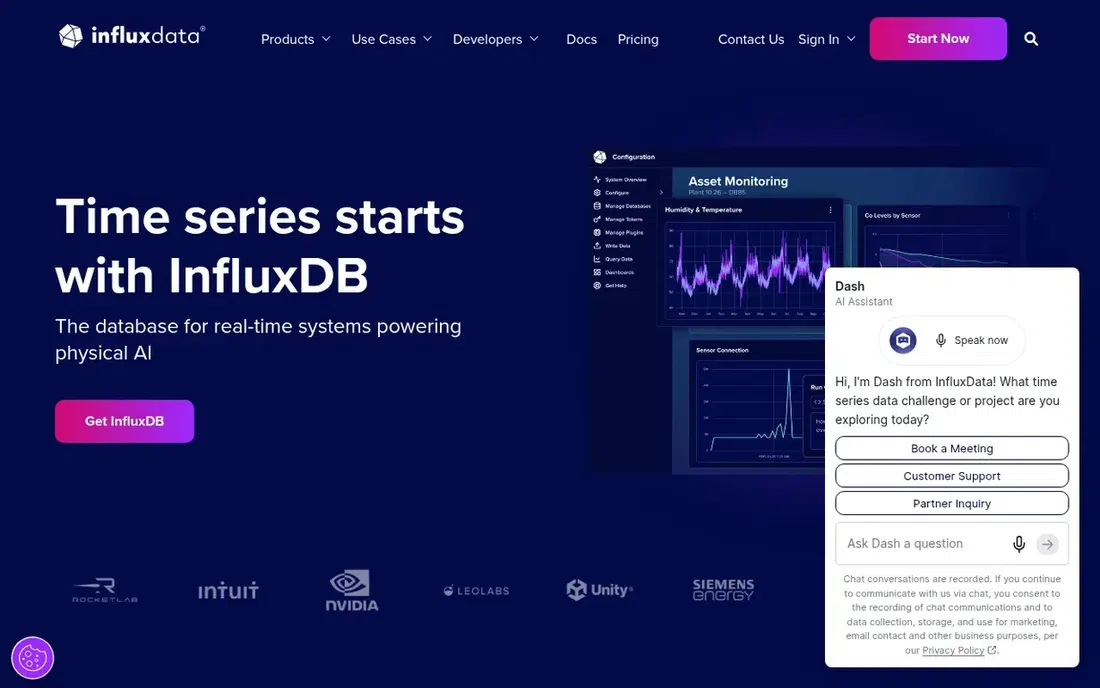
InfluxDB serves dedicated high-volume time series storage. Running InfluxDB well takes operational knowledge, and it does not include logs or traces the way broader observability systems do. On top of that, InfluxDB is a time series database from InfluxData built for storing and analyzing metrics and event data at scale.
It performs well for teams building custom dashboards, alerting and analytics on top of high-ingest time series data. As for the details, if you need an all-in-one suite with built-in integrations, a managed observability product may be a better fit than a standalone database. InfluxDB starts at: $18,000 per year. InfluxDB has a free plan.
Watch-outs: Requires operational expertise.
- Built around time series data
- Suits high-ingest metric workloads
- Less wide than full observability suites
How we compared the tools
LinkVetted looked at what each vendor publishes: pricing, plan limits, feature coverage for metric store software for large enterprises and stated drawbacks. No hands-on testing is claimed. Seat minimums, billing terms and add-ons can move the real cost, so the starting prices here are a guide and not a quote. We ordered the tools by general fit, then by how clearly pricing is shown, then by free access. A buyer with unusual needs may reorder them.
A buyer's checklist
- Ask Amazon CloudWatch for a written quote, since no starting price is shown.
- Look at free plan limits closely: New Relic, Grafana Cloud, Amazon CloudWatch and InfluxDB have one, and the caps decide whether it is usable for real work.
- Run a trial of TimescaleDB and Datadog with real work before paying for a year; your own workflow is the best test.
- Before choosing TimescaleDB, weigh its main limit: needs PostgreSQL knowledge.
- Price InfluxDB for your actual team size; headline prices rarely include add-ons or overage.
- Look at the help docs and support options for TimescaleDB before you commit.
FAQ
Should an enterprise pick a dedicated metric database or a full observability suite?
A full observability suite like Datadog, New Relic or Grafana Cloud brings logs, traces and integrations in one place, which suits teams wanting fewer moving parts.
Which options for metric store software for large enterprises have a free plan?
On this list, New Relic, Grafana Cloud, Amazon CloudWatch and InfluxDB include a free plan. Caps on seats, usage or features are common, so test the free plan against your real workload. Several others offer a trial instead.
How does Amazon CloudWatch compare for multi-cloud environments?
CloudWatch is tightly integrated with AWS and suits organizations running most workloads there. For multi-cloud or on-premises estates, a vendor-neutral system or an open-source metric store may supply more consistent coverage across environments.
Do these tools publish their prices?
Not all of them. Amazon CloudWatch publishes no starting price, so expect a quote request for it. The rest, TimescaleDB included, show a starting price, though seats and billing terms still change the final cost.
What is the cheapest option for metric store software for large enterprises in this list?
On published monthly entry prices, Datadog is the lowest here at $8 per committer per month. Entry price is only part of the cost, because seats, add-ons and billing terms can change the total. All 6 picks in this metric store software for large enterprises comparison list a starting price, free plan details and the main limits on their cards above.
Is TimescaleDB the right pick for everyone comparing metric store software for large enterprises?
No single tool suits every team. TimescaleDB comes first because it fits time series on PostgreSQL foundations, while New Relic suits AI-assisted root cause analysis and Grafana Cloud suits open standards with reduced lock-in. Match the tool to your own size, budget and workflow before deciding.
Sources
- https://www.timescale.com
- https://newrelic.com
- https://grafana.com
- https://www.datadoghq.com
- https://aws.amazon.com/cloudwatch
- https://www.influxdata.com