Best Medical Simulation Software in 2026: Prices, Free Plans and 6 Picks
Best medical simulation software in 2026: 6 contenders with entry costs and free tiers. Includes honest limits for each tool. Reviewed in November 2026.
- Editor's choiceLimbs & Things
Realistic anatomical task trainers
Starts atPricing on requestVisit limbsandthings.comFull review - Great alternative3D Systems Simbionix
Procedure rehearsal and medical device simulation
Starts atPricing on requestVisit 3dsystems.comFull review - Also considerLaerdal SimMan
Manikin-based clinical and resuscitation training
Starts atPricing on requestVisit laerdal.comFull review
Direct answer
Limbs & Things is the first pick on this list for realistic anatomical task trainers. 3D Systems Simbionix is better for procedure rehearsal and medical device simulation, and Laerdal SimMan is better for Manikin-based clinical and resuscitation training. The other 3 tools in the list cover narrower or pricier cases. None of these vendors publish plan prices, so pricing is on request for every option.
TL;DR:
- Limbs & Things is the opening pick, best for realistic anatomical task trainers.
- SimX fits virtual reality clinical training.
- One limit worth knowing about 3D Systems Simbionix: simulation is one part of a bigger portfolio.
- Neither Limbs & Things nor SimX, nor any of the other 4 tools, has a permanent free plan; trials and quotes are the norm.
- Every tool from Limbs & Things to SimX works by quote, with no list price shown.
Last checked November 2026. Pricing on request: vendors did not publish plan prices when this guide was last checked (November 2026), so ask each vendor for a written quote.
Quick comparison
| Tool | Best for | Starts at | Free plan? | |
|---|---|---|---|---|
| Limbs & Things | Realistic anatomical task trainers | Pricing on request | Not stated | Visit |
| 3D Systems Simbionix | Procedure rehearsal and medical device simulation | Pricing on request | Not stated | Visit |
| Laerdal SimMan | Manikin-based clinical and resuscitation training | Pricing on request | Not stated | Visit |
| Simulab | Task trainers for procedural skills | Pricing on request | Not stated | Visit |
| Surgical Science | Virtual reality surgical simulation | Pricing on request | Not stated | Visit |
| SimX | Virtual reality clinical training | Pricing on request | Not stated | Visit |
The best medical simulation software
Short on time? The summary and table above give the quick view of 6 tools for medical simulation software, and the profiles that follow give the detail behind each entry.
Limbs & Things
Best for: Realistic anatomical task trainers
Limbs & Things was built for realistic anatomical task trainers. Limbs & Things is a healthcare simulation manufacturer that states a commitment to improving patient outcomes by facilitating realistic learning experiences. Its products are physical anatomical trainers used for practical procedural practice across clinical skills labs and training programs.
As for the details, educators who value tactile realism in skills practice are the natural audience for this kind of offering. The catalog leans toward physical trainers instead of digital simulation software, so programs seeking scenario software or VR should look elsewhere. Pricing for Limbs & Things is not stated here, so ask the vendor for current figures. On free options: Not stated.
The main drawbacks: Primarily physical products.
- Manufacturer of medical simulation supplies
- Supports practical procedural training
- Software features are restricted
3D Systems Simbionix
Best for: Procedure rehearsal and medical device simulation
Choose 3D Systems Simbionix for procedure rehearsal and medical device simulation. General nursing or classroom simulation programs may be better served by a dedicated simulation vendor.
The main drawbacks: Simulation is one part of a bigger portfolio.
Worth adding: since simulation is one part of a much bigger portfolio, buyers should confirm the specific simulation products and support available for their region. Also, 3D Systems Simbionix sits within 3D Systems, a company known for 3D printing, software and medical devices across industrial, healthcare and dental markets. 3D Systems Simbionix shows no starting price here, so confirm the cost on the vendor site. Free options: Not stated.
- Procedure-focused simulation heritage
- Backed by a wide 3D printing and medical device company
- Not geared toward general clinical education
Laerdal SimMan
Best for: Manikin-based clinical and resuscitation training
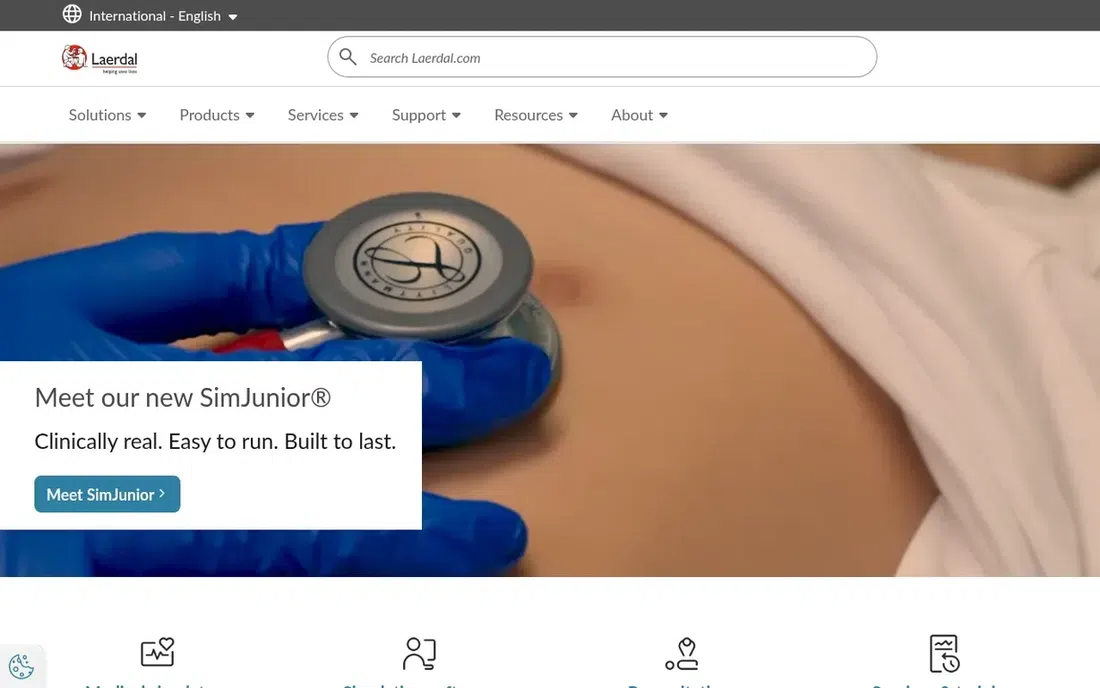
Laerdal SimMan is designed for Manikin-based clinical and resuscitation training. Laerdal SimMan is part of Laerdal Medical's healthcare simulation and resuscitation training line, which the company describes as a world leader in the field.
This comparison lists no price for Laerdal SimMan; ask the vendor. Trial and free access: Not stated.
Watch-outs: Hardware-centered approach.
- Merges simulators with education and training resources
- Resuscitation training focus
- Virtual reality choices are restricted here
Simulab
Best for: Task trainers for procedural skills
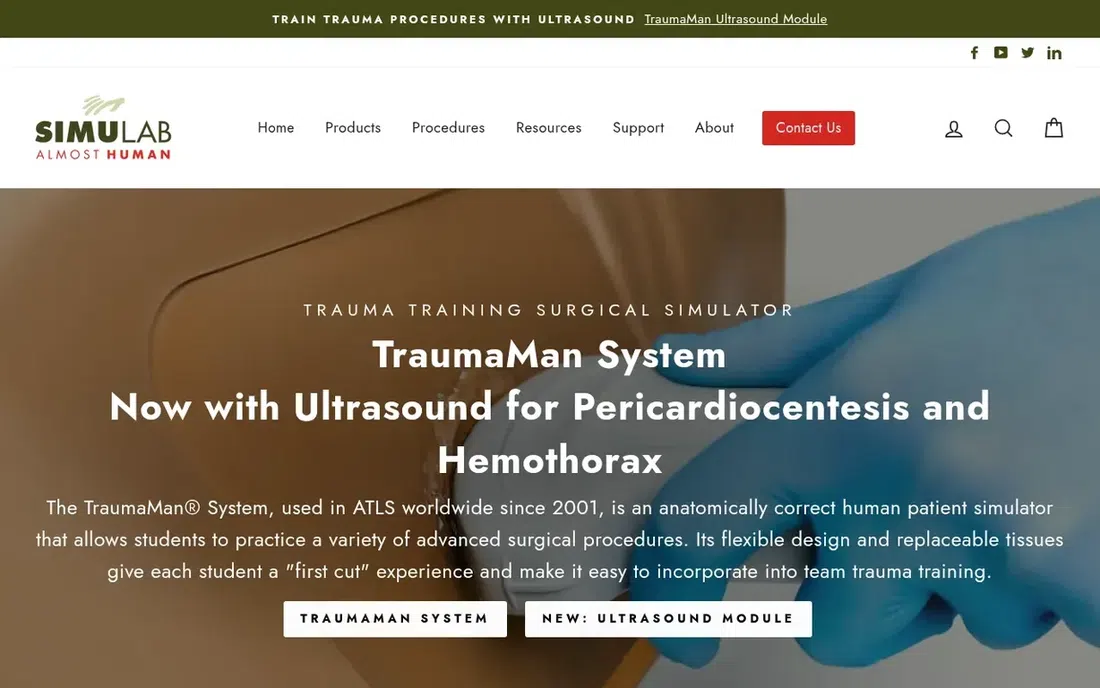
Where Simulab fits: task trainers for procedural skills. Programs assembling a skills lab frequently use task trainers like these alongside broader simulation systems.
For everyday use, Simulab Corporation builds healthcare simulation products, with an emphasis on task trainers that let learners practice specific procedures repeatedly. In daily use, if your program needs full-scale patient simulation with physiological modeling or a virtual reality curriculum, a broader system may be a better fit. No starting price is listed for Simulab here; confirm pricing on the vendor site. Trial and free access: Not stated.
Where it falls short: Restricted software depth.
- Concentrated on healthcare simulation
- Useful for repeatable skills practice
- Narrower than full patient simulator suites
Surgical Science
Best for: Virtual reality surgical simulation
Where Surgical Science fits: virtual reality surgical simulation. Teams building a surgical skills curriculum commonly consider VR simulators like these alongside physical task trainers.
Watch-outs: Specialized hardware may be required.
As for the details, since the focus is surgical simulation, general nursing or emergency training programs may find broader products more relevant. In daily use, buyers should confirm which procedures and modules are supported before selecting it for a curriculum. Surgical Science shows no starting price here, so confirm the cost on the vendor site. Free access: Not stated.
- Handy for psychomotor skill practice
- Procedure-focused training
- Surgical focus narrows the audience
SimX
Best for: Virtual reality clinical training
SimX is a good fit for virtual reality clinical training. SimX describes itself as a virtual reality medical simulation training product offering patient simulators for nurses, physicians, first responders and other learners.
It suits programs that want immersive, scenario-based training in virtual reality, including teams exploring remote or multiplayer clinical scenarios. SimX does not show a starting price in this comparison, so check the vendor site for current pricing. On free options: Not stated.
Main advantages: physicians and first responders.
Honest limits: Needs VR hardware.
- Supports remote and immersive training
- VR patient simulator system
- Less suited to physical skills practice
How these tools were picked
Selection started from tools commonly considered for medical simulation software, then narrowed to 6 that have clear pricing information or a clear quote process. Prices and plan limits come from vendor pages and can change, so confirm them on the vendor site before you buy. The sequence is a judgement call: typical use case first, then pricing transparency, then free access. Use the profiles to check fit.
What to check before you buy
- Request quotes from Limbs & Things, SimX and the others; the list shows no fixed prices.
- Before choosing Limbs & Things, weigh its main limit: primarily physical products.
- Let daily users try Limbs & Things on real work; their feedback beats any feature checklist.
- Look at the help docs and support options for SimX before you commit.
- Check the integration list for Laerdal SimMan against the tools you run today, and note which ones need a higher plan.
FAQ
Is Limbs & Things the right pick for everyone comparing medical simulation software?
No single tool suits every team. Limbs & Things comes first because it fits realistic anatomical task trainers, while 3D Systems Simbionix suits procedure rehearsal and medical device simulation and Laerdal SimMan suits Manikin-based clinical and resuscitation training. Match the tool to your own size, budget and workflow before deciding.
Can I try these options before paying?
Not by default. None of the tools, from Limbs & Things to SimX, lists a free plan or a free trial here, so ask each vendor for a demo before committing.
How do task trainers differ from full simulators?
Task trainers for example those from Simulab and Limbs & Things focus on a single procedure or body region for repeated practice. Full simulators support broader scenarios involving physiology, teamwork and decision-making.
How are the tools for medical simulation software ordered?
Limbs & Things sits first and SimX last because the order follows typical fit for medical simulation software, then price clarity and free access. It is a judgement call, so read each profile for fit and limits.
What should I check before buying a simulation system?
Confirm supported specialties, hardware needs, content customization and local support. A demonstration mapped to your curriculum goals is the most dependable way to judge fit.
Does any tool for medical simulation software here have a free plan?
A permanent free plan is not offered by Limbs & Things, SimX or the other tools here. Plan a short evaluation period instead.
Sources
- https://www.limbsandthings.com
- https://www.3dsystems.com
- https://www.laerdal.com
- https://www.simulab.com
- https://www.surgical-science.com
- https://www.simxvr.com