Best Medical Coding Software in 2026: 8 Tools Compared
Compare detailed the best medical coding software for accurate ICD-10, CPT and HCPCS coding, encoder tools, audits and AI-assisted code suggestions in 2026.
- Editor's choice
 Optum EncoderPro
Full encoder for professional coders
Starts atSee websiteVisit optum.comFull review - Great alternative
 TruCode
Cloud encoder with strong edits
Starts atSee websiteVisit trucode.comFull review - Also consider
 AAPC Codify
Individual coders and small practices
Starts atSee websiteVisit aapc.comFull review
TL;DR:
- Encoder tools such as Optum EncoderPro and TruCode remain the core choice for coders who need current code sets and edit checks in one place.
- AAPC Codify suits individual coders and small practices that want a lower-cost, well-organised code lookup tool.
- AI-assisted tools such as Nym Health and RapidClaims help larger organisations with volume, but human review stays essential for final codes.
- Medical coding affects payment and compliance, so buyers should confirm code-set updates, audit trails and EHR links before committing.
Quick comparison
| Tool | Best for | Starts at | Free plan? | |
|---|---|---|---|---|
| Optum EncoderPro | Full encoder for professional coders | See website | Free trial | Visit |
| TruCode | Cloud encoder with strong edits | See website | Free trial | Visit |
| AAPC Codify | Individual coders and small practices | See website | Free trial | Visit |
 Find-A-Code | Fast code lookup and reference | See website | Free trial | Visit |
 Nym Health | AI-assisted autonomous coding | See website | No | Visit |
 Medicodio | AI coding assistance for practices | See website | Free trial | Visit |
 RapidClaims | AI coding and denial support | See website | No | Visit |
 3M CodeFinder | Enterprise coding reference | See website | No | Visit |
The best medical coding software
Medical coding turns clinical notes into ICD-10, CPT and HCPCS codes that drive billing and compliance. The tools below range from classic encoders to AI-assisted platforms, and all should be checked against current code sets and payer rules. This article is general information only, not billing or compliance advice.
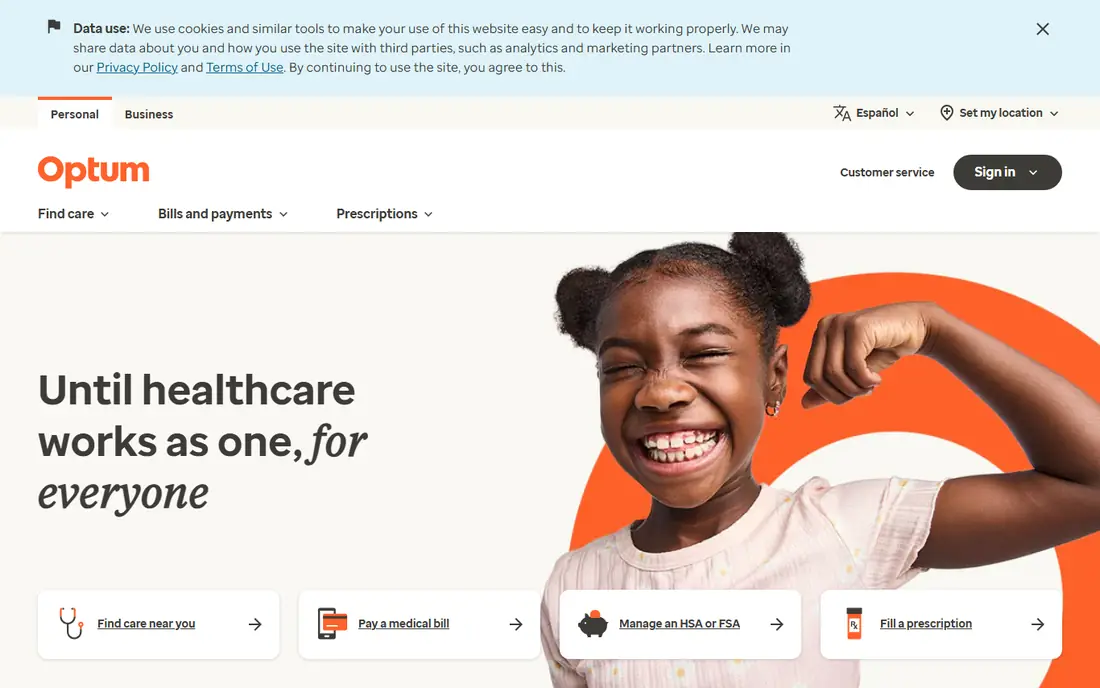
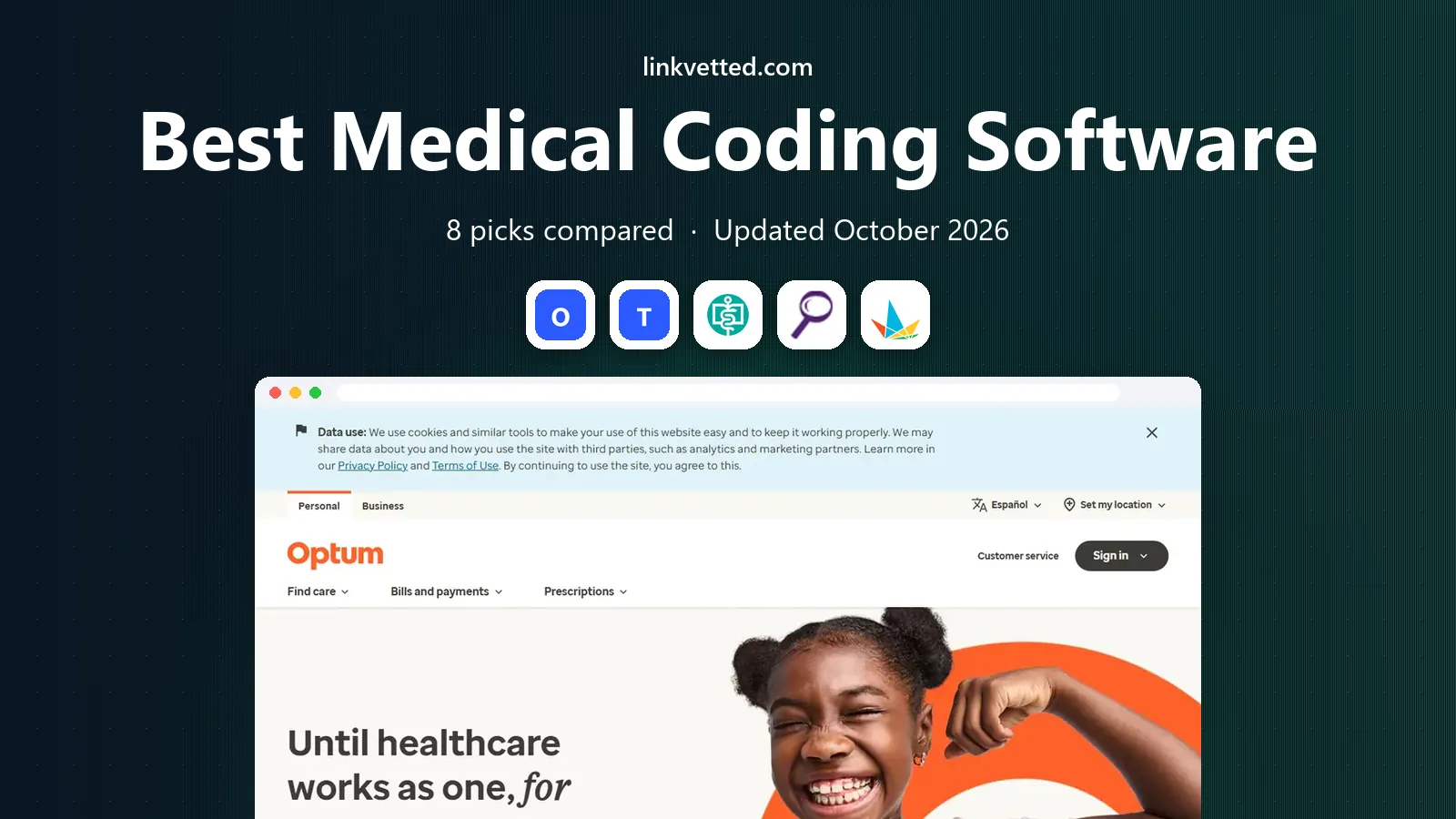
Optum EncoderPro is a long-standing encoder used by hospitals, practices and coding teams across the US. It brings ICD-10-CM, CPT and HCPCS content together with coding references, anatomy illustrations and edit checks that flag conflicts before a claim goes out. Coders can search by keyword, code or clinical term, which speeds up routine encounters.
Pricing is quote-based, so small practices should request a firm figure that includes the code sets they need. The interface is functional rather than modern, and training helps new coders use the full reference library. For teams that want a proven, complete encoder, EncoderPro remains a safe default.
- Broad code sets and references
- Edit checks
- Widely used in US practices
- Quote-based pricing
- Interface feels dated in places
TruCode offers a cloud encoder that combines code search, references and edit logic in a browser, so coders can work from any approved workstation. It supports inpatient and outpatient coding workflows and connects to EHR and revenue systems through standard integration paths. Teams value the edit checks that catch missing modifiers and code conflicts early.
Pricing is quote-based, and integration effort depends on the host system, so buyers should confirm scope and timeline in writing. TruCode suits mid-size to large coding teams that want a modern cloud encoder without managing desktop installs. Smaller teams should compare its quote with Codify before deciding.
- Cloud-based access
- Strong encoder edits
- Integrates with common EHR and billing systems
- Quote-based pricing
- Setup and integration time varies
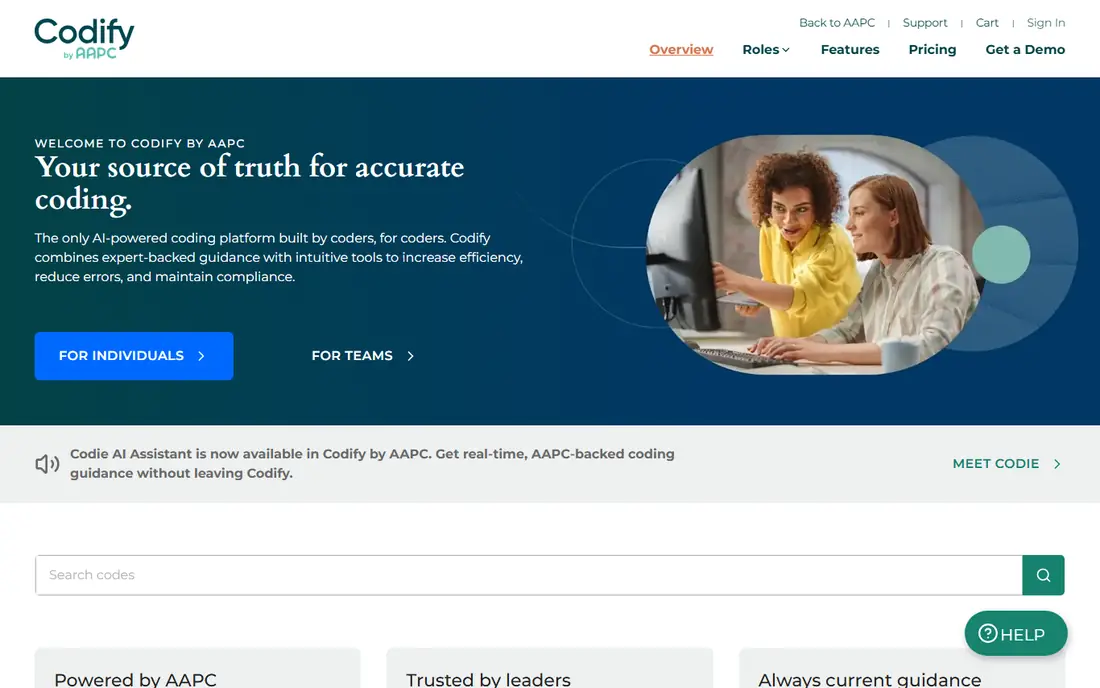
AAPC Codify is built around fast, clear code lookup for professional coders. Users search codes, check lay descriptions, view parent and child codes and follow cross-references without wading through a heavy enterprise interface. AAPC members and certified coders will find the content familiar, and small practices can start without an enterprise contract.
Large hospitals may need deeper workflow, audit and integration tools than Codify offers on its own. Pricing and tier details should be confirmed on the AAPC site, since plans change. For solo coders, students and small practices, Codify is a practical, focused encoder.
- Clean lookup workflow
- AAPC code content
- Accessible for solo coders
- Less depth for large enterprise teams
- Some features need higher tiers
Find-A-Code is a code lookup and reference tool that covers ICD-10, CPT, HCPCS and related sets, with search tools that help coders confirm a code quickly. It suits practices that need reliable reference access alongside an existing EHR or billing system, rather than a full coding workflow suite.
It is not a replacement for a complete encoder or claim scrubber in a large hospital. Buyers should confirm that the plan they choose includes the current-year code sets and any state or payer-specific content they need. For quick, accurate lookups, Find-A-Code does its job well.
- Fast search across code sets
- Useful reference notes
- Lower friction for quick checks
- Not a full revenue-cycle platform
- Verify current code-set coverage
Nym Health uses AI to read clinical documentation and assign codes, with explanations and audit trails that let coders review the reasoning. It targets emergency, outpatient and other high-volume settings where routine charts dominate and speed matters. Providers use it to cut coding backlogs while keeping a human in the loop for complex or ambiguous cases.
This is an enterprise product with quote-based pricing and implementation work, so it does not fit a solo practice. AI coding also needs ongoing audit, since documentation quality affects accuracy. For large organisations with volume pressure, Nym offers a credible automation path, provided review and compliance controls stay strong.
- Automates routine chart coding
- Audit trails
- Built for high-volume providers
- Enterprise pricing
- Human review still required for complex cases
Medicodio provides AI-assisted coding that suggests codes from clinical documentation and lets coders accept, edit or reject each suggestion. It suits practices and coding teams that want to speed up routine work without handing full control to automation. A trial lets teams test suggestions against their own charts before paying.
As a newer vendor, Medicodio buyers should ask for customer references, audit data and details on code-set updates. Poor or vague notes will still produce weak suggestions, so coder review stays essential. For teams open to AI help with clear oversight, Medicodio is worth a trial.
- AI code suggestions from notes
- Coder review workflow
- Aims to cut manual lookup time
- Newer vendor, so check references
- Accuracy depends on note quality
RapidClaims combines AI coding with tools that analyse denials and coding patterns, helping revenue teams find why claims fail and fix the root cause. Dashboards show coding output, denial reasons and follow-up work, which suits practices that manage both coding and collections. Pricing is quote-based and geared to organisations with meaningful claim volume.
Small practices with low volume may find the platform more than they need. Buyers should confirm which code sets, payers and EHR links are covered, and run a pilot on real claims. For revenue-focused teams, the denial insight adds value beyond code suggestions alone.
- AI coding plus denial analysis
- Workflow dashboards
- Aimed at revenue teams
- Quote-based pricing
- Best value at higher claim volumes
3M CodeFinder, part of the 3M health information portfolio, gives coders access to coding references and tools used widely in US hospitals. It suits large health systems that already use 3M products for documentation, grouping or quality reporting, since content and support sit inside a familiar vendor relationship.
Solo practices will find it heavy and quote-based, and may prefer Codify or Find-A-Code. Enterprise buyers should confirm exactly which CodeFinder modules are included, since 3M sells several related products. For hospital coding teams, its depth and support record justify a quote request.
- Long-standing 3M coding content
- Strong reference depth
- Enterprise support
- Quote-based pricing
- Often sold as part of a larger 3M health suite
How we picked these
We compared official product pages, code-set coverage, workflow descriptions and integration claims, and favoured tools that are still sold and supported in 2026. We avoided tools that only offer a code list with no encoder logic, and we used See website where vendors publish no public list price, rather than guessing a figure.
Buying checks for coding teams
Confirm code-set update timing first. A tool that lags on annual ICD-10 and CPT updates creates denials and compliance risk, no matter how fast its search feels. Ask how updates arrive, whether they are included in the price, and how far back historical codes remain searchable.
Test on your own charts
Run a pilot on a sample of your real encounters, including tricky cases, and compare suggested codes with your senior coders. Check edit behaviour, modifier handling and audit trails during that pilot. A tool that shines on simple visits but fails on complex ones will cost more in rework than it saves.
FAQ
What does medical coding software actually do?
It helps coders turn clinical documentation into ICD-10, CPT and HCPCS codes, checks those codes for conflicts, and links them to billing. Encoder tools add references and edits, while AI tools suggest codes that a coder reviews before submission.
Is AI medical coding safe to use without review?
No. AI suggestions should always be reviewed by a qualified coder, especially for complex, high-value or ambiguous cases. Documentation quality, payer rules and compliance duties mean human oversight stays essential.
Do small practices need a full encoder?
Many small practices do well with Codify or Find-A-Code plus their EHR billing tools. Larger teams, hospitals and high-volume clinics benefit more from full encoders such as EncoderPro or TruCode.
How often do code sets change?
ICD-10-CM and CPT sets update annually, with additional updates during the year, and payer rules change on their own schedules. Choose a vendor that includes timely updates in the subscription and states the update process clearly.
Can coding software work with my EHR?
Many encoders integrate with common EHR and billing systems, but the exact link, cost and timeline vary. Confirm integration scope, testing support and ongoing maintenance before signing.