Choosing Marketplace Software for Enterprise in 2026: 6 Options Compared
6 tools for the best marketplace software for enterprise, compared on pricing, free plans and best-fit use. Caveats come with every verdict. Details below.
- Editor's choice
 Adobe Commerce
Composable B2B and B2C experiences
Starts atSee websiteVisit business.adobe.comFull review - Great alternativeOracle Commerce
Commerce inside the Oracle CX suite
Starts atSee websiteVisit oracle.comFull review - Also consider
 Salesforce Commerce Cloud
Commerce within the Salesforce ecosystem
Starts atSee websiteVisit salesforce.comFull review
Direct answer
This list puts Adobe Commerce first for Composable B2B and B2C experiences. Listed starting prices: Mirakl from $699 a month. Oracle Commerce is better for Commerce inside the Oracle CX suite, and Salesforce Commerce Cloud is better for Commerce within the Salesforce ecosystem. Prices, free plans and limits for all 6 tools follow.
TL;DR:
- Number one here is Adobe Commerce, a fit for Composable B2B and B2C experiences.
- Adobe Commerce, BigCommerce Enterprise and the 4 others all need a premium plan or a trial, since no free plan is listed.
- The lowest published monthly entry price here is $699 per month, from Mirakl.
- For SaaS ecommerce on your terms, BigCommerce Enterprise is worth a look.
- One limit worth knowing about Mirakl: marketplace-centric instead of full storefront suite.
Last checked November 2026. Prices and plan details were read from the vendors' own pages in November 2026; vendors change plans often, so confirm the current price on the vendor site before you buy.
Quick comparison
| Tool | Best for | Starts at | Free plan? | |
|---|---|---|---|---|
| Adobe Commerce | Composable B2B and B2C experiences | See website | Not stated | Visit |
| Oracle Commerce | Commerce inside the Oracle CX suite | See website | Not stated | Visit |
| Salesforce Commerce Cloud | Commerce within the Salesforce ecosystem | See website | Not stated | Visit |
 Mirakl | Dedicated marketplace operating layer | $699 a month | No | Visit |
 commercetools | API-first composable commerce infrastructure | See website | Free trial | Visit |
 BigCommerce Enterprise | SaaS ecommerce on your terms | See website | Not stated | Visit |
Every option for marketplace software for enterprise explained
LinkVetted compared 6 tools for marketplace software for enterprise. The goal is a practical shortlist: published prices, free plan facts, best-fit use cases and honest limits for every entry.
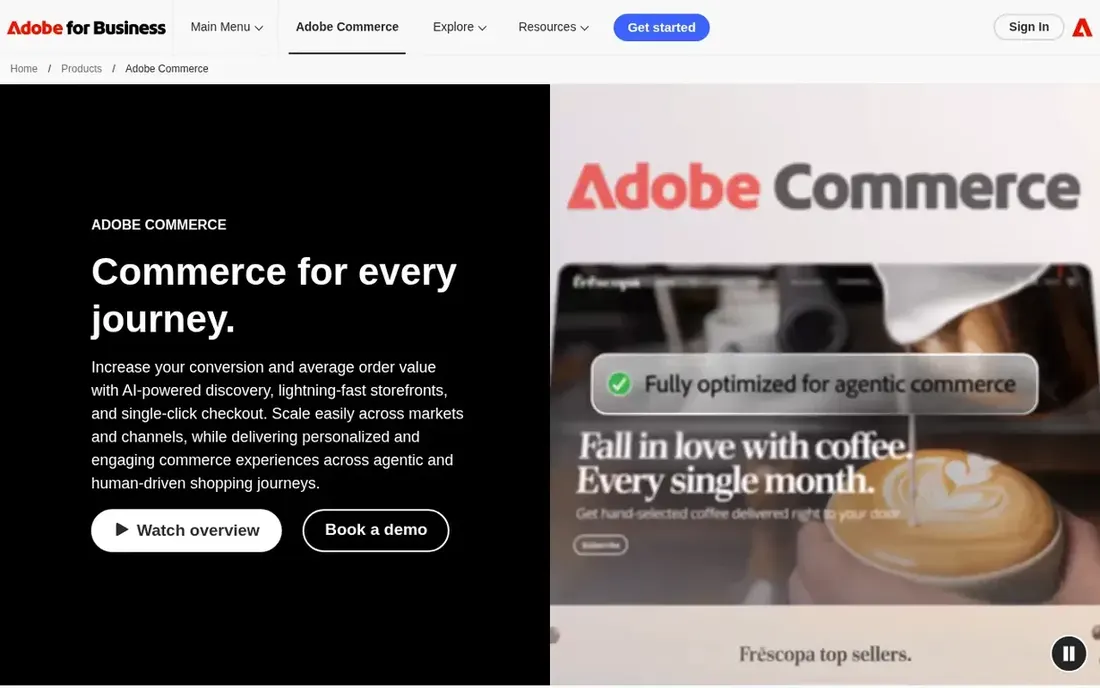
For Composable B2B and B2C experiences, Adobe Commerce is a natural candidate. Adobe Commerce, known as Magento, is described as an AI-powered composable ecommerce system for B2B and B2C that aims to drive growth and conversions through personalized experiences at global scale.
It fits enterprises with complicated catalogs, several brands or mixed business models that require adaptability in how storefronts and services are assembled. This comparison lists no price for Adobe Commerce; ask the vendor. On free options: Not stated.
Downsides: Wide system scope can mean heavier implementation.
- Composable ecommerce architecture
- Personalization positioned at global scale
- Needs internal or partner expertise
Oracle Commerce
Best for: Commerce inside the Oracle CX suite
Oracle Commerce was built for Commerce inside the Oracle CX suite. Oracle Commerce sits within Oracle Customer Experience, which connects business data across marketing, sales, commerce and service.
Drawbacks to consider: Best value within the Oracle stack.
Organizations outside the Oracle ecosystem may find the fit less natural, and suite breadth can add implementation complexity. This comparison lists no price for Oracle Commerce; ask the vendor. Trial and free access: Not stated.
- Connected with Oracle customer experience tools
- Enterprise-grade suite context
- Suite breadth can add complexity
Salesforce Commerce Cloud is aimed squarely at Commerce within the Salesforce ecosystem. It suits organizations already standardizing on Salesforce applications and looking to keep commerce close to marketing, sales and service operations.
Compare against standalone commerce products before deciding. No starting price is listed for Salesforce Commerce Cloud here; confirm pricing on the vendor site. Free access: Not stated.
Limits to weigh: Ecosystem alignment matters for value.
- Enterprise-oriented commerce tooling
- Suited to connected customer data
- Implementation relies on partner expertise
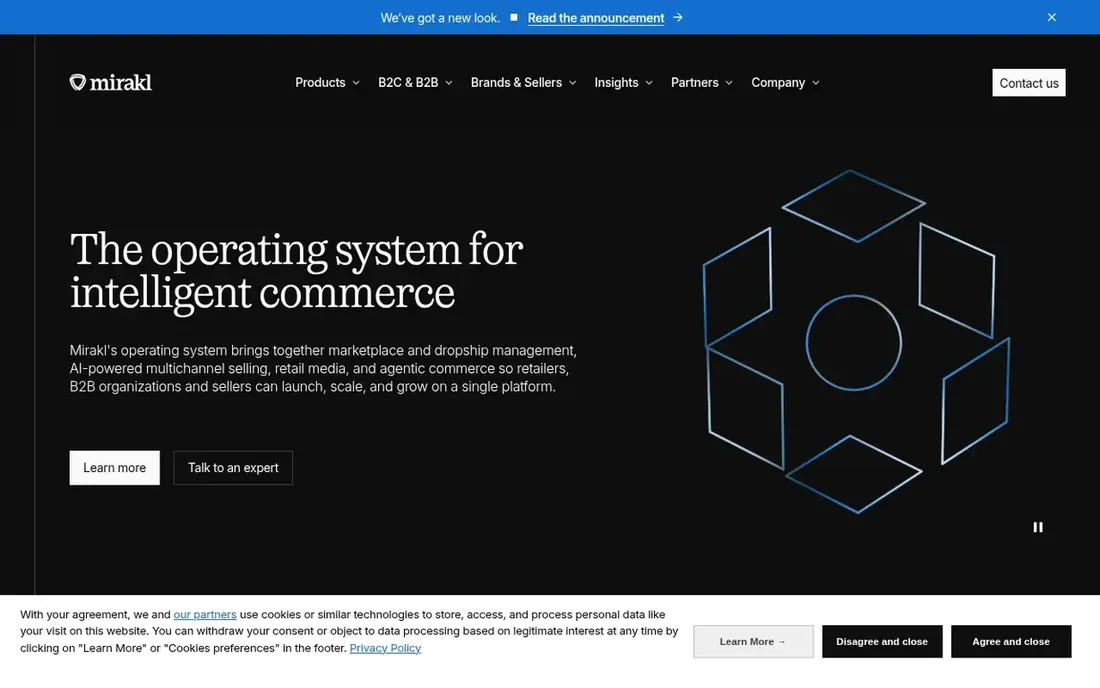
Mirakl serves dedicated marketplace operating layer. Integration effort with your existing commerce and back-office systems should be scoped early.
It suits enterprises that want a dedicated layer to handle sellers, gives you and catalog connections instead of rebuilding a whole storefront stack. What you pay to start with Mirakl: $699 per month. Mirakl has no permanent free option.
Where it falls short: Needs integration planning with existing systems.
- Built around marketplace operations
- Sellers and catalog data
- Marketplace-centric instead of full storefront suite
commercetools serves API-first composable commerce infrastructure. commercetools positions itself as enterprise commerce infrastructure for AI agents, letting teams build and operate commerce experiences across online, in-store, in-chat and agent-to-agent channels from one unified engine.
Where it falls short: Not a turnkey storefront from day one.
Where commercetools stands out: in-store and agent channels. As for the details, choose it when architectural adaptability and multi-channel reach outweigh time to launch. As for the details, the composable model puts more assembly work on your team, from front-end builds to integrations. commercetools shows no starting price here, so confirm the cost on the vendor site. Free plan details: Free trial.
- Designed for online
- API-first architecture
- Needs engineering capacity to assemble
Think of BigCommerce Enterprise for SaaS ecommerce on your terms. BigCommerce Enterprise describes a modern SaaS ecommerce product that should fit the business instead of forcing the business to fit it. Teams commonly consider it when they want SaaS operations without a rigid template approach.
Points against: Deep customization may need development work.
In practice, consider composable infrastructure if seller management is central to your model. In daily use, highly bespoke marketplace models may exceed what a SaaS core manages cleanly. This comparison lists no price for BigCommerce Enterprise; ask the vendor. Free options: Not stated.
- Suits B2B and B2C selling
- Enterprise-focused feature set
- Marketplace capabilities vary by configuration
Selection criteria
A buyer's checklist
- Ask Adobe Commerce, Oracle Commerce, Salesforce Commerce Cloud and others for a written quote, since no starting price is shown.
- Use real work to test the free trial from commercetools, rather than a demo project.
- Before choosing Adobe Commerce, weigh its main limit: wide system scope can mean heavier implementation.
- Before you load data into Mirakl, check what an export looks like and who can run it.
- List the apps you already depend on and check that BigCommerce Enterprise supports each one on the plan you would buy.
FAQ
How are the tools for marketplace software for enterprise ordered?
Adobe Commerce sits first and BigCommerce Enterprise last because the order follows typical fit for marketplace software for enterprise, then price clarity and free access. It is a judgement call, so read each profile for fit and limits.
Do these tools publish their prices?
Not all of them. Adobe Commerce, Oracle Commerce, Salesforce Commerce Cloud and others publish no starting price, so expect a quote request for those. The rest, Mirakl included, show a starting price, though seats and billing terms still change the final cost.
Can I try these tools before paying?
Often, yes. commercetools offers a free trial. Use your own data and a real task during the test, and check what the free tier or trial limits before you rely on it.
What distinguishes marketplace software from a standard ecommerce system?
Marketplace software concentrates on connecting operators, sellers and gives you, whereas a standard ecommerce product centers on a single merchant selling its own catalog. Plenty of enterprises combine both, using a commerce system for storefronts and a marketplace layer for external sellers.
What is the cheapest option for marketplace software for enterprise in this list?
On published monthly entry prices, Mirakl is the lowest here at $699 per month. Entry price is only part of the cost, because seats, add-ons and billing terms can change the total. Prices, free plan details and limits for all 6 tools in this marketplace software for enterprise roundup sit on the individual cards above.
Sources
- https://business.adobe.com/products/magento/magento-commerce.html
- https://www.oracle.com/commerce
- https://www.salesforce.com/commerce
- https://www.mirakl.com
- https://commercetools.com
- https://www.bigcommerce.com/enterprise