Best Low-Code Platforms for Enterprise Use in 2026: Prices, Free Plans and 5 Picks
Best Low-Code platforms for enterprise use in 2026: 5 contenders with entry costs and free tiers. Read the caveats before you buy. Pick with confidence.
- Editor's choice
 Appian
AI-powered process orchestration across systems
Starts atPricing on requestVisit appian.comFull review - Great alternative
 Mendix
Workflows and agents for a hybrid workforce
Starts atPricing on requestVisit mendix.comFull review - Also consider
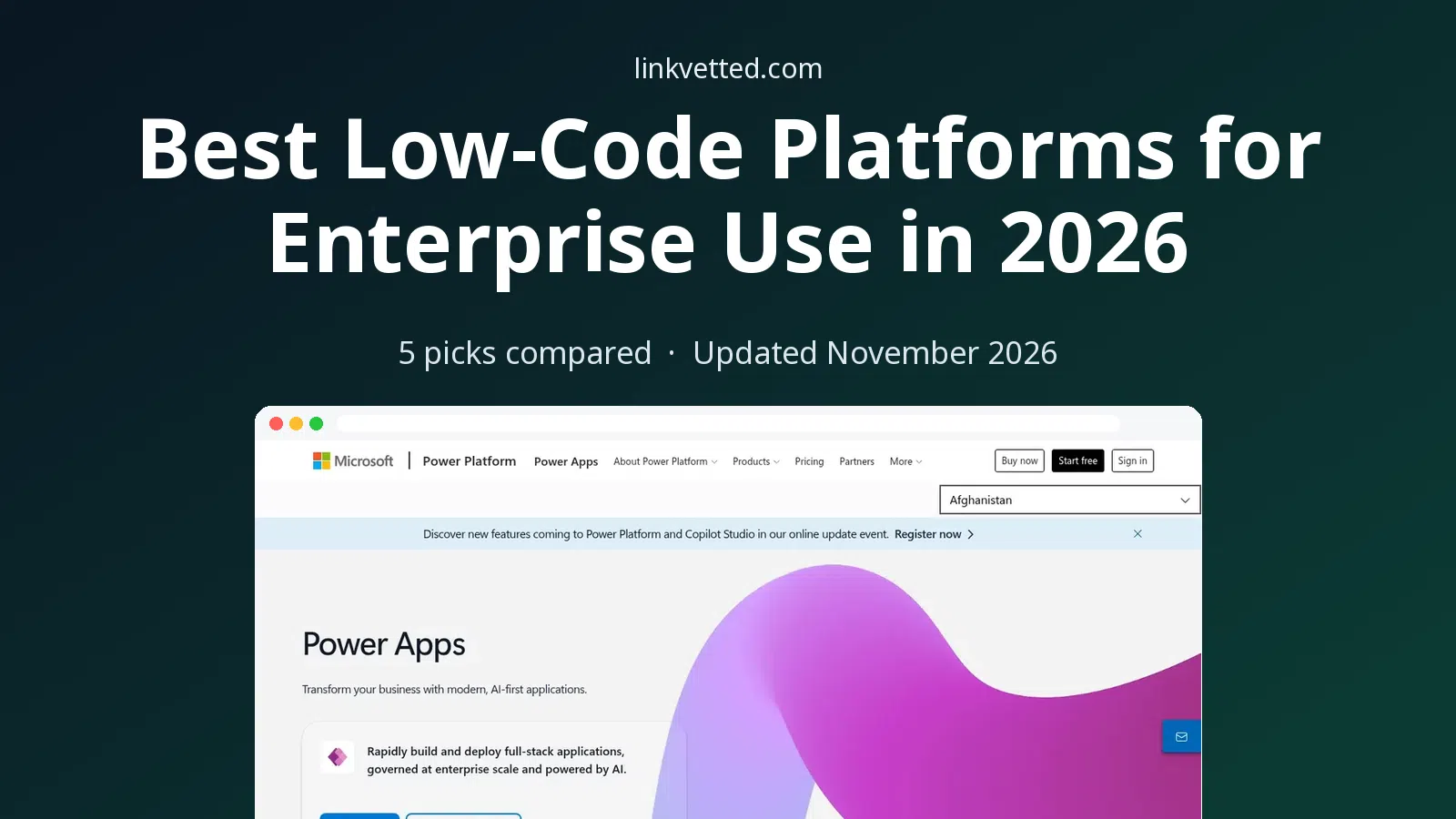
 Microsoft Power Apps
Microsoft-centric enterprises building business apps
Starts atPricing on requestVisit powerapps.microsoft.comFull review
Direct answer
Appian comes first here, mainly for AI-powered process orchestration across systems. Look at Mendix for workflows and agents for a hybrid workforce, and at Microsoft Power Apps for Microsoft-centric enterprises building business apps. The other 2 tools in the list cover narrower or pricier cases. None of these vendors publish plan prices, so pricing is on request for every option.
TL;DR:
- Top of the list is Appian, which targets AI-powered process orchestration across systems.
- What to know about Mendix first: governance features may need configuration.
- For enterprise transformation and workflow automation, Pega Platform is worth a look.
- Just one of the 5 tools, Microsoft Power Apps, has a free plan.
- Every tool from Appian to Pega Platform works by quote, with no list price shown.
Last checked November 2026. Pricing on request: vendors did not publish plan prices when this guide was last checked (November 2026), so ask each vendor for a written quote.
Quick comparison
| Tool | Best for | Starts at | Free plan? | |
|---|---|---|---|---|
| Appian | AI-powered process orchestration across systems | Pricing on request | Not stated | Visit |
| Mendix | Workflows and agents for a hybrid workforce | Pricing on request | Not stated | Visit |
| Microsoft Power Apps | Microsoft-centric enterprises building business apps | Pricing on request | Yes | Visit |
 OutSystems | Modernizing legacy systems with governed AI agents | Pricing on request | Not stated | Visit |
 Pega Platform | Enterprise transformation and workflow automation | Pricing on request | Not stated | Visit |
Low-Code Platforms for Enterprise Use compared in detail
This LinkVetted guide covers 5 options for Low-Code platforms for enterprise use. Each profile lists a starting price, free plan details, strengths and drawbacks, so you can drop poor fits quickly.
Appian works best for AI-powered process orchestration across systems. The system is oriented toward process automation and orchestration instead of general-purpose app building alone. Its process-first orientation means teams looking for a straightforward form builder or a purely data-centric app may find it mismatched.
Limits to weigh: Complicated orchestration needs planning.
Beyond that, consider other products if your priority is rapid departmental apps instead of cross-system process automation. More specifically, orchestrating many systems needs careful planning and governance. Pricing for Appian is not stated here, so ask the vendor for current figures. Free access: Not stated.
- Works without replacing existing systems
- Orchestrates AI agents, systems, people
- Process-first focus may not suit all app types
Mendix makes the most sense for workflows and agents for a hybrid workforce. The product handles a wide scope, so initial setup and governance configuration can take time.
Watch-outs: Wide scope can slow initial setup.
For everyday use, consider a narrower tool if you only need light forms or entry-level automation without workflow and agent governance. Mendix shows no starting price here, so confirm the cost on the vendor site. As for free access: Not stated.
- Supports modernizing existing systems
- One system for workflows, agents, applications
- Governance features may need configuration
Microsoft Power Apps
Best for: Microsoft-centric enterprises building business apps
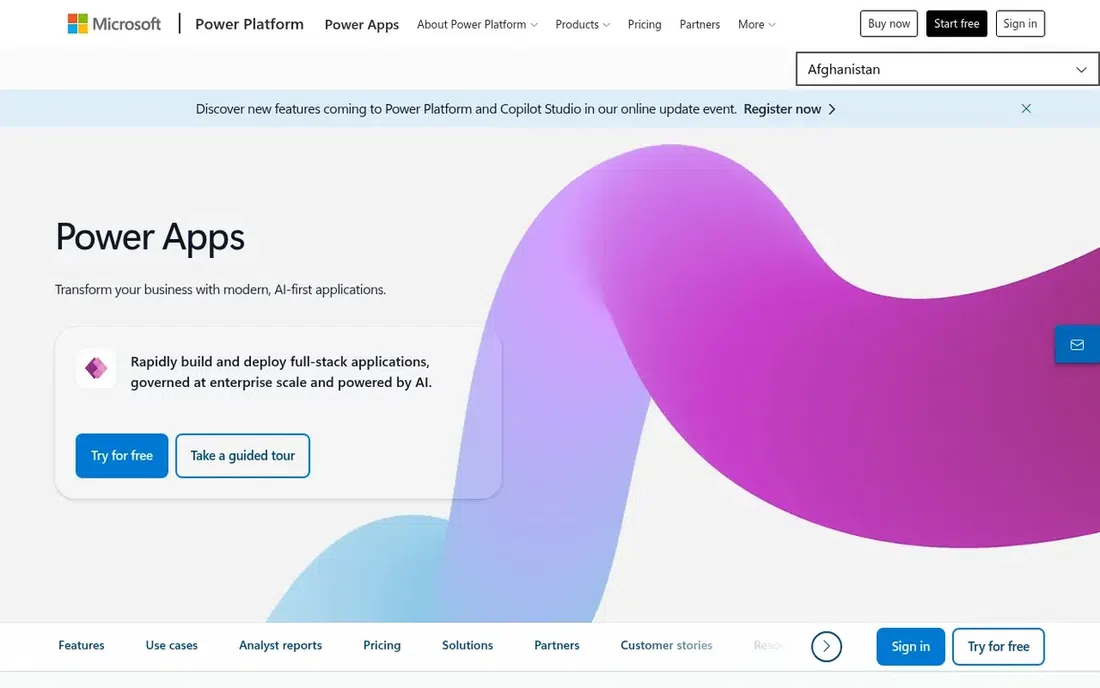
Microsoft Power Apps is built with Microsoft-centric enterprises building business apps in mind. Complicated apps with heavy custom logic can still need professional development. Microsoft Power Apps is a low-code app builder for creating custom business apps that simplify processes and boost productivity across an organization.
The system emphasizes connecting to business data and extending existing processes instead of replacing core systems. Its strengths are tied to the Microsoft ecosystem, so organizations outside that stack may find integration less natural. Consider other systems if you need deep process orchestration across many disparate systems or a purely standalone low-code environment. Microsoft Power Apps does not show a starting price in this comparison, so check the vendor site for current pricing. You can start on Microsoft Power Apps without paying.
Where it falls short: Advanced scenarios may need developer input.
- Low-code app builder for custom business apps
- Aims to simplify processes and boost productivity
- Best value inside the Microsoft ecosystem
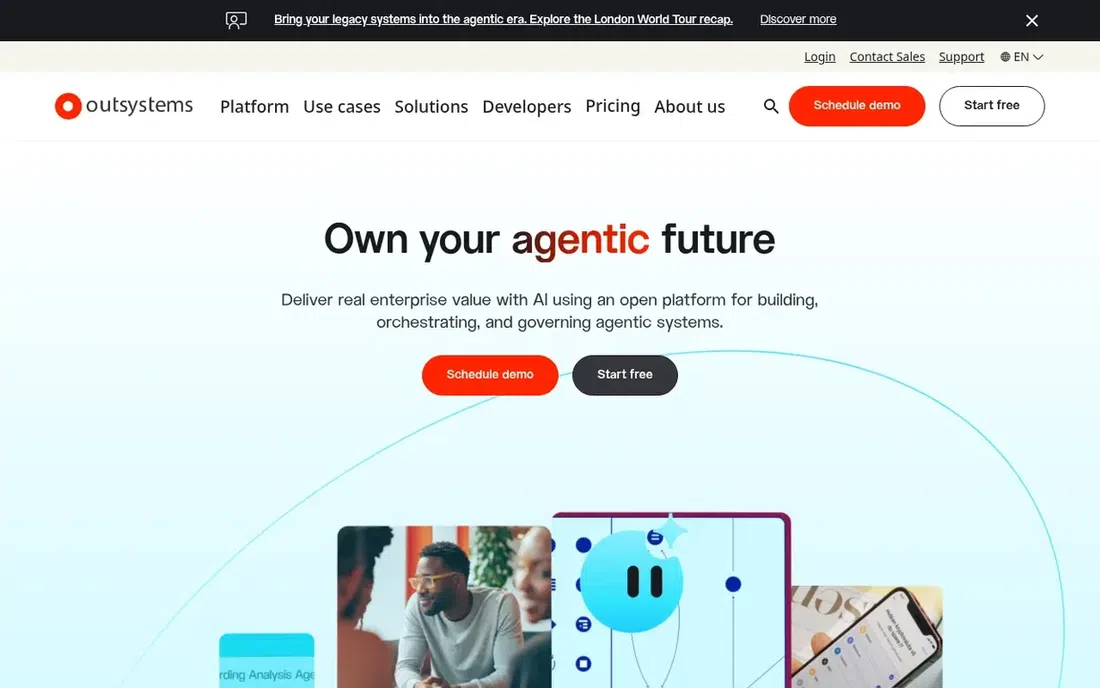
For Modernizing legacy systems with governed AI agents, OutSystems is a natural candidate. OutSystems helps enterprises modernize legacy systems and run custom apps and AI agents to meet the demands of customers and regulators.
Teams without trained developers may face a ramp-up time. The product targets strategic enterprise development instead of small departmental tools. OutSystems shows no starting price here, so confirm the cost on the vendor site. On free options: Not stated.
What to check first: System depth may need trained developers.
- Runs custom apps and AI agents
- Addresses customer and regulatory demands
- A good match for strategic enterprise applications
Think of Pega Platform for enterprise transformation and workflow automation. Specialized skills are frequently needed to realize its capabilities. In daily use, consider more straightforward low-code tools when the goal is a single departmental app instead of organization-wide transformation.
Trade-offs to know: Best fit for transformation initiatives.
For everyday use, Pega Platform is an AI-powered product for enterprise transformation. As for the details, organizations use it to reimagine work by automating workflows, personalizing customer experiences, and modernizing legacy systems. Pega Platform shows no starting price here, so confirm the cost on the vendor site. As for free access: Not stated.
- AI-powered product for enterprise transformation
- Automates workflows and modernizes legacy systems
- Enterprise scope can need specialized skills
Our selection method
LinkVetted used vendor pricing pages and product documentation as the base, then compared plans, free access and documented limits for 5 tools. Where a vendor does not publish a price, the entry says quote. Where a price depends on seats or billing term, the entry says so. The order reflects how well each tool fits the most common buying scenario for Low-Code platforms for enterprise use, then price clarity, then free plan access. It is a starting point, not a verdict.
Before you commit
- Ask each vendor, from Appian to Pega Platform, for a written quote; none of them publishes a starting price.
- Test the free plan from Microsoft Power Apps against your real workload before relying on it.
- Read the limits listed for Appian first: process-first focus may not suit all app types.
- Make sure Microsoft Power Apps lets you export your data in a format another tool can read.
- Ask Mendix which support channels and response times come with the plan you would buy.
FAQ
Do these tools publish their prices?
No. None of the tools, from Appian to Pega Platform, shows a fixed starting price here, so budget time for quotes.
Is Appian the right pick for everyone comparing Low-Code platforms for enterprise use?
No single tool suits every team. Appian comes first because it fits AI-powered process orchestration across systems, while Mendix suits workflows and agents for a hybrid workforce and Microsoft Power Apps suits Microsoft-centric enterprises building business apps. Match the tool to your own size, budget and workflow before deciding.
How are the tools for Low-Code platforms for enterprise use ordered?
Appian sits first and Pega Platform last because the order follows typical fit for Low-Code platforms for enterprise use, then price clarity and free access. It is a judgement call, so read each profile for fit and limits.
Can I try these tools before paying?
Often, yes. Microsoft Power Apps has a free plan. Use your own data and a real task during the test, and check what the free tier or trial limits before you rely on it. All 5 picks in this Low-Code platforms for enterprise use comparison list a starting price, free plan details and the main limits on their cards above.
Sources
- https://appian.com
- https://www.mendix.com
- https://powerapps.microsoft.com
- https://www.outsystems.com
- https://www.pega.com