Link Building Services for Small Business in 2026: The 6 Best Options Side by Side
A practical guide to the best link building services for small business in 2026, compared from vendor documentation and public sources by Shihab Mia.
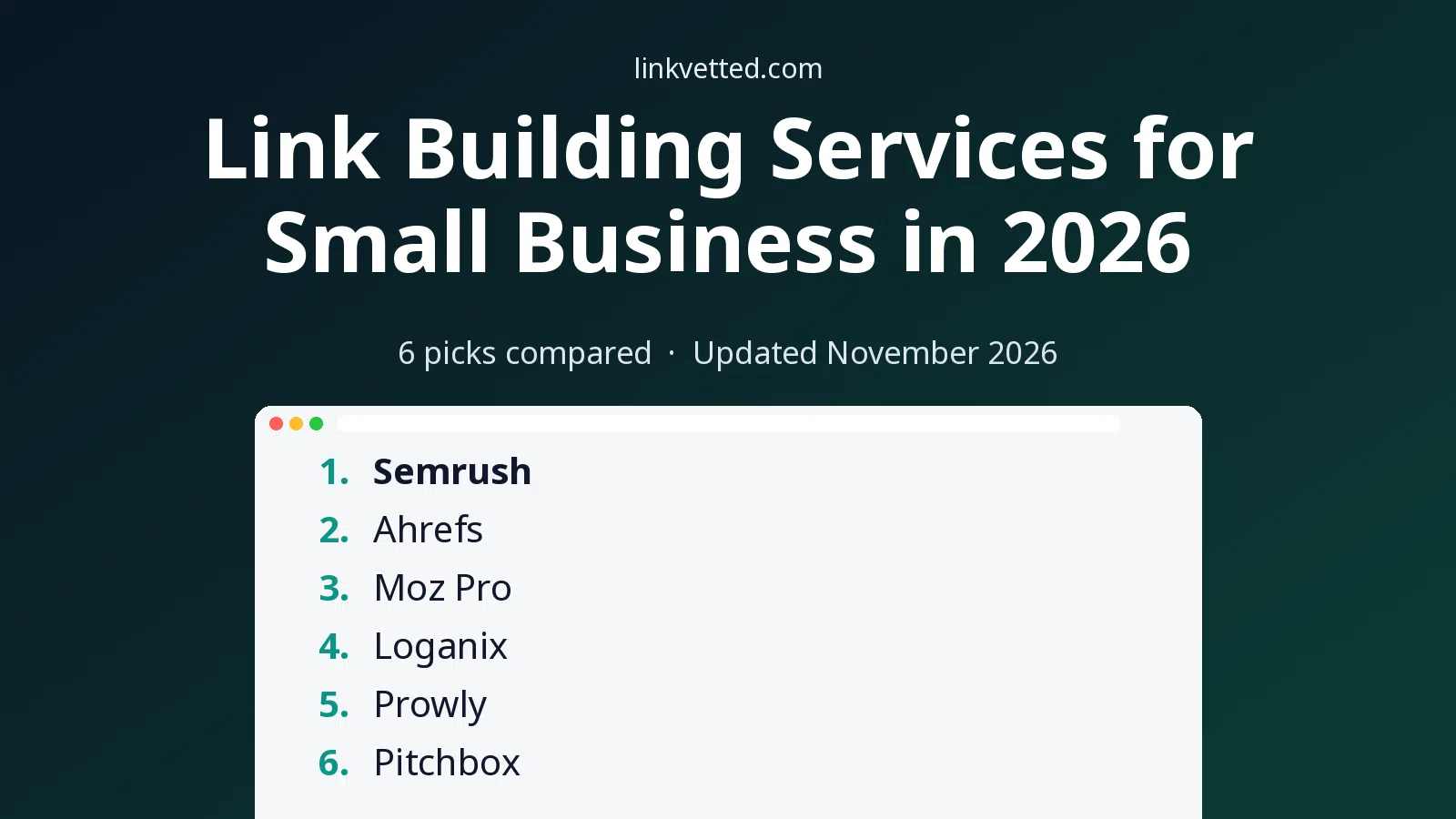
- Editor's choice
 Semrush
All-in-one link research and outreach
Starts atSee websiteVisit semrush.comFull review - Great alternative
 Ahrefs
Backlink research and prospect lists
Starts atSee websiteVisit ahrefs.comFull review - Also consider
 Moz Pro
Straightforward link tracking for beginners
Starts atSee websiteVisit moz.comFull review
Direct answer
My first pick for most small businesses is Semrush, because its link analytics and outreach workflow let a small team find prospects, check competitor backlinks and manage outreach in one place. For done-for-you link building, Loganix suits owners who want vetted placements without managing outreach. For digital PR and journalist-led links, Prowly fits businesses that can supply a story. The right choice depends on budget, time and whether you want software or a managed service.
TL;DR:
- Small businesses usually need either link software they run themselves or a managed service that handles prospecting and placement.
- Semrush works well as a starting point because it combines backlink data with outreach and competitor research.
- Loganix and similar services suit owners who do not have time to run outreach campaigns.
- Digital PR tools such as Prowly help when you have a story or expertise worth pitching to journalists.
- Always check how a vendor sources links and avoid any service that sells links from private blog networks.
Last checked November 2026. Plan prices are not quoted in this guide because they change often; see each vendor's own pricing page for current figures before you buy.
Quick comparison
| Tool | Best for | Starts at | Free plan? | |
|---|---|---|---|---|
| Semrush | All-in-one link research and outreach | See website | Free plan | Visit |
| Ahrefs | Backlink research and prospect lists | See website | No free plan | Visit |
| Moz Pro | Straightforward link tracking for beginners | See website | Free trial | Visit |
 Loganix | Done-for-you link building and citations | See website | Not stated | Visit |
 Prowly | Digital PR outreach to journalists | See website | Free trial | Visit |
 Pitchbox | Managing outreach campaigns at scale | See website | Not stated | Visit |
The best link building services for small business compared
I compared these tools from vendor documentation and public sources, including each company's own product pages and help docs. I did not run hands-on tests, so treat this as a starting map rather than a lab report. The aim is to help a small business owner pick the right type of service before spending money.
Semrush is an SEO platform with a backlink analytics section, a link building tool for managing prospects and outreach, and competitor research. For a small business, it means one subscription covers finding link opportunities, checking which sites link to competitors and tracking your own backlink profile. It fits owners who are willing to run their own outreach rather than pay for placements.
In practice, you would use the backlink gap view to see sites linking to competitors but not to you, then move those domains into the outreach tool and track replies. That workflow keeps prospecting and follow-up in one place, which matters when one person handles marketing. It also gives you data to judge whether a link prospect is worth contacting.
The limit is time. Semrush gives you the data and the workflow, but you still write the pitches and build the relationships. If you have no spare hours each week, a managed service may suit you better.
- Backlink analytics alongside competitor research
- built-in outreach tools
- broad SEO feature set
- Large interface can overwhelm new users
- higher tiers needed for full limits
Ahrefs is a well-known SEO toolset built around its backlink data. Small businesses use it to study competitor link profiles, find sites that link to several competitors, and export prospect lists. It is a research tool first, so it suits owners who already have a way to send pitches, such as email or a separate CRM.
For link building, the site explorer and link intersect features are the main draw. You can pull domains that link to two or three competitors and not to you, then filter by traffic or relevance before outreach. That filtering step saves wasted pitches and keeps your list focused on sites that actually publish in your niche.
Skip Ahrefs if you want an all-in-one outreach system or if you need a free tier to start. It is best treated as the research layer under a process you run elsewhere.
- Strong backlink index
- clear referring domain reports
- useful competitor link gaps
- No native outreach CRM
- paid plans only
Moz Pro is an SEO platform with link research and tracking features. It is often easier for a first-time user to read than larger suites, which helps a small business owner who is learning link building rather than hiring a specialist. The link explorer shows referring domains, anchor text and spam signals for a domain.
For small business link building, Moz is useful for checking a prospect before you pitch and for monitoring new and lost links over time. You can compare your profile with a competitor's and spot gaps worth targeting. It does not manage outreach for you, so pair it with email or a CRM.
The main limit is index size relative to bigger rivals, so some smaller sites may be missed. If deep link data is critical, compare it with Ahrefs or Semrush before committing.
- Clear link reports
- approachable interface
- useful spam score signals
- Link index smaller than some competitors
- fewer outreach features
Loganix is a search marketing service company that offers link building and local citation work, among other services. For a small business without a marketing team, a managed service removes the prospecting and pitching work. You brief the vendor, they source placements, and you review what was delivered.
This fits businesses that want links but cannot run outreach themselves. The trade-off is control: you are trusting the vendor's vetting process, so ask how they source sites and whether they use any networks. Review sample placements and the list of sites before you buy.
Skip it if you want to hand-pick every site or if you have in-house outreach capacity. Also avoid any provider that cannot explain where links come from.
- Managed link building and local citations
- clear service pages
- suits owners without outreach time
- Less control over individual placements
- you rely on vendor vetting
Prowly is a PR and media relations platform with a journalist database, pitch tools and contact management. For link building, it supports digital PR: you pitch a story, data point or expert comment to journalists, and coverage can earn links. It suits small businesses with something newsworthy, such as original data or a strong local angle.
The workflow is different from SEO outreach. You build a media list, send a pitch, and follow up. Links come as a by-product of coverage rather than a direct placement. That makes it slower but often more durable, because editorial links from real publications carry weight.
Skip Prowly if you have no story and no one to write pitches. It is not a link marketplace and will not deliver links on demand.
- Media database and pitch tools
- press release features
- contact management
- Built for PR, not pure SEO links
- needs a story worth pitching
Pitchbox is an outreach platform for managing blogger and publisher campaigns. It helps you build prospect lists, send personalised pitches, automate follow-ups and track results. For a small business running regular link campaigns, it can replace a spreadsheet and inbox setup.
It fits businesses that already have a prospect list and a pitch process and want to run more campaigns without losing track. You still need to find prospects and write pitches; Pitchbox manages the pipeline around them. That makes it a fit for a small agency or an in-house marketer running outreach weekly.
Skip it if you send a handful of pitches a month, since email and a simple CRM may be enough. It is also not a source of links itself.
- Prospect management and follow-ups
- campaign reporting
- team workflow
- Aimed at teams, not solo owners
- no link inventory of its own
How I chose
I picked these tools by looking at what a small business actually needs from link building: prospect research, outreach management, or a managed service that handles both. I read vendor documentation and public product pages, and I checked what each tool openly says it does. I did not run hands-on tests, so I have not verified deliverability, index accuracy or campaign results myself. Where a vendor does not clearly state a free plan or price, I have marked it as not stated or pointed to the website.
I also weighed limits. A tool that is powerful but needs a dedicated operator is a poor fit for a one-person business, and a managed service is a poor fit for an owner who wants control over every placement. I excluded any provider that markets private blog networks or bulk low-quality links, because those tactics carry risk and are not a sound basis for a small business. The list is a starting point for your own checks, not a ranking.
What to check before you buy
- Ask how the vendor or tool sources link prospects and whether any placements come from private blog networks.
- Confirm whether you are buying software, a managed service or both, since the work you must do differs.
- Check whether outreach emails and follow-ups are included or whether you write and send them yourself.
- Ask for sample placements or example reports so you can judge relevance and quality before paying.
- Confirm what happens if a link is removed, and whether there is any replacement policy.
- Match the plan to your actual capacity: a solo owner should not buy a team-scale outreach platform.
FAQ
Do small businesses need paid link building services?
Not always. If you have time, link research software plus your own outreach can work. Paid services help when you lack time or contacts. The key is to avoid buying links from networks and to focus on relevant sites in your niche.
Is it safe to buy links from a service?
It depends on how the service sources links. Editorial placements on relevant sites are different from links sold in bulk from private networks. Ask vendors to explain their sourcing and review sample sites before you commit.
How long before link building shows results?
Link building is slow. New links need time to be crawled and to have any effect, and results vary by niche and competition. Treat it as an ongoing process rather than a quick fix, and track referring domains over months rather than weeks.
Can I do link building myself with these tools?
Yes. Semrush, Ahrefs and Moz Pro all support DIY research and tracking. You still need to write pitches and build relationships. Tools help you find and organise prospects; they do not send personalised outreach for you unless you use a platform like Pitchbox.
What should a small business avoid in link building?
Avoid private blog networks, bulk link packages and any vendor that cannot name the sites it will use. Also avoid promises of specific rankings or fast results. Relevant, editorially given links are the goal, and quality matters more than volume.
Sources
- https://www.semrush.com
- https://ahrefs.com
- https://moz.com
- https://loganix.com
- https://prowly.com
- https://pitchbox.com