6 Large Language Models Software Worth Shortlisting in 2026
Best large language models software: 6 contenders ranked by fit, with entry costs and free tiers. Strengths and gaps are listed per tool. Easy to scan.
- Editor's choiceMeta Llama
Developers building on open models
Starts atSee websiteVisit llama.comFull review - Great alternativeCohere Command
Private, configurable enterprise AI
Starts atSee websiteVisit cohere.comFull review - Also consider
 Mistral AI
Open-weight models with deployment control
Starts at$14.99 a monthVisit mistral.aiFull review
Direct answer
This list puts Meta Llama first for developers building on open models. Listed starting prices: Mistral AI from $14.99 a month and Anthropic Claude from $17 a month. Cohere Command is the stronger choice for private, configurable enterprise AI, while Mistral AI suits open-weight models with deployment control. Details, prices and limits for the rest of the 6 tools are below.
TL;DR:
- Meta Llama sits first on this list: developers building on open models.
- Amazon Bedrock suits building generative AI apps on AWS.
- Cohere Command comes with a trade-off: less consumer-facing brand recognition.
- Mistral AI is the lowest-priced starter here at $14.99 per month.
- Free plans exist at 2 of 6 tools (Mistral AI, Anthropic Claude).
Last checked November 2026. Prices and plan details were read from the vendors' own pages in November 2026; vendors change plans often, so confirm the current price on the vendor site before you buy.
Quick comparison
| Tool | Best for | Starts at | Free plan? | |
|---|---|---|---|---|
| Meta Llama | Developers building on open models | See website | Not stated | Visit |
| Cohere Command | Private, configurable enterprise AI | See website | Not stated | Visit |
| Mistral AI | Open-weight models with deployment control | $14.99 a month | Yes | Visit |
 Anthropic Claude | Safety-focused assistant and API access | $17 a month | Yes | Visit |
| Microsoft Azure OpenAI Service | Enterprise deployments on Microsoft Azure | See website | Free trial | Visit |
 Amazon Bedrock | Building generative AI apps on AWS | See website | Not stated | Visit |
Our 6 picks for large language models software
Choosing large language models software usually comes down to price, fit and limits. This LinkVetted guide sets 6 tools side by side on those three points, with the facts kept short and checkable.
Meta Llama
Best for: Developers building on open models
Meta Llama is designed for developers building on open models. Meta Llama is a family of AI models and developer tools offered by Meta, with access described through its model API and related resources.
Points against: License terms need careful review.
Since the models are widely available, teams can run them through plenty of hosting arrangements or build custom applications on top. Confirm current model versions and usage terms on Meta's pages. This comparison lists no price for Meta Llama; ask the vendor. As for free access: Not stated.
- Open model family with wide developer tooling
- Model API and developer resources
- You manage hosting and tuning decisions
Cohere Command
Best for: Private, configurable enterprise AI
Cohere Command targets private, configurable enterprise AI. Cohere builds models and AI options targeted at enterprises, with messaging around private, secure and configurable deployments that automate processes, enable employees and turn fragmented data into actionable insights.
Downsides: Model lineup needs its own evaluation.
This comparison lists no price for Cohere Command; ask the vendor. Trial and free access: Not stated.
What users get: Aimed at automating processes and surfacing insight.
- Configurable models for business data
- Enterprise focus on private
- Less consumer-facing brand recognition
Choose Mistral AI for open-weight models with deployment control. Owning the deployment also means owning the operational work, from hardware planning to updates, which can outweigh savings for small teams. In practice, Mistral AI markets frontier open-weight models that customers own and control, with customization through Forge and deployment through Studio across on-premises, your own VPC or its cloud.
Points against: Self-hosting demands infrastructure skills.
What users get: On-prem. That combination appeals to organizations with data residency or sovereignty requirements, and to teams that want to fine-tune and host models themselves instead of rely entirely on a closed API. Organizations that prefer a completely managed assistant should weigh Anthropic Claude or Azure OpenAI. The starting price for Mistral AI: $14.99 per month. Mistral AI has a free plan.
- Frontier open-weight models you own
- VPC or hosted cloud choices
- Smaller ecosystem than the largest vendors
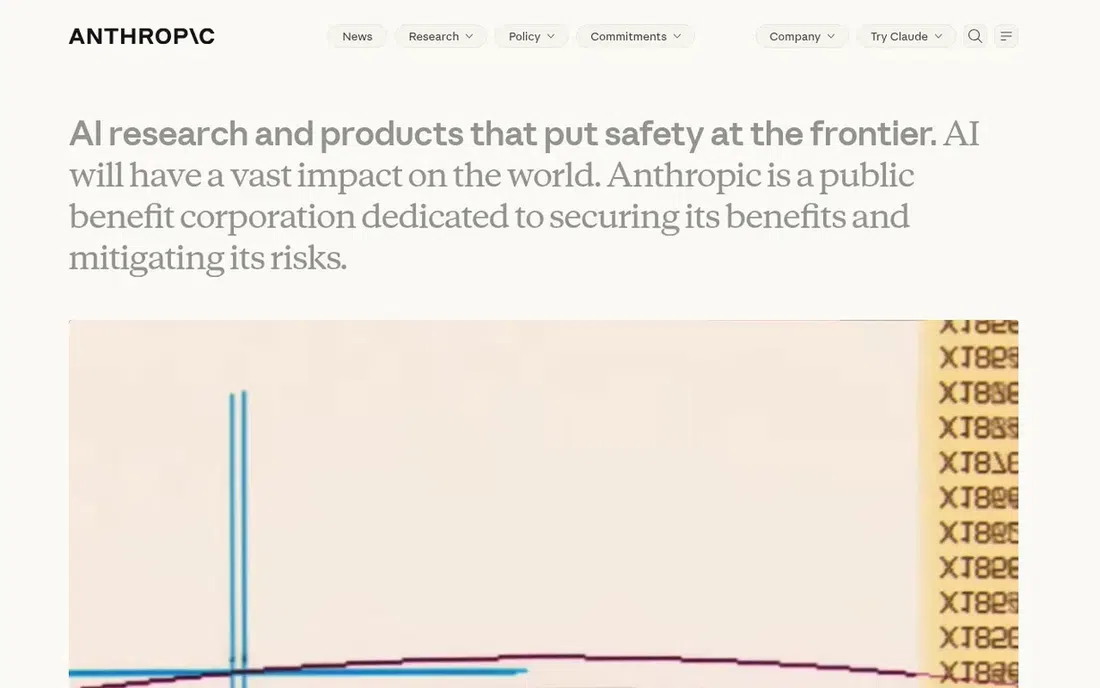
In short, Anthropic Claude is for safety-focused assistant and API access. Anthropic describes itself as an AI safety and research company working to build dependable, interpretable and steerable AI systems.
What Anthropic Claude does well: steerable AI systems.
Downsides: Model lineup changes need continuing review.
More specifically, confirm current model availability, context limits and region support on the vendor site before committing. For everyday use, Claude is its assistant, and the same organization supplies developer access for building on its models. Anthropic Claude pricing: $17 per month. Anthropic Claude offers a free plan.
- General-purpose assistant plus developer access
- Clear emphasis on dependable
- Fewer cloud-native deployment paths than hyperscalers
Microsoft Azure OpenAI Service
Best for: Enterprise deployments on Microsoft Azure
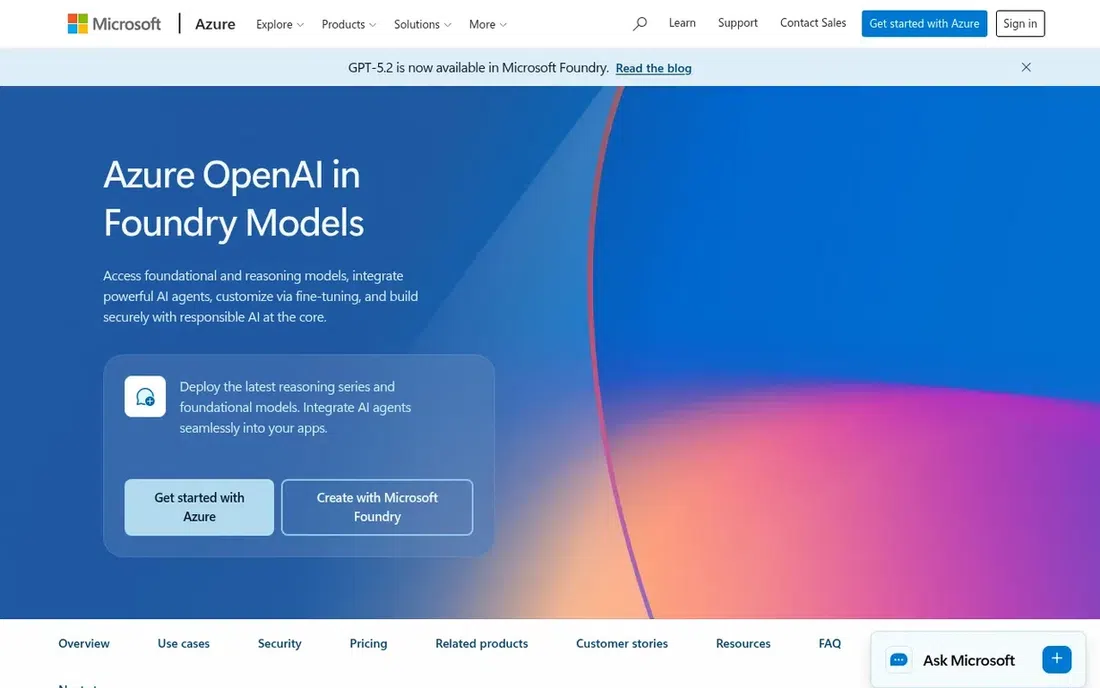
Pick Microsoft Azure OpenAI Service if this describes you: enterprise deployments on Microsoft Azure. Azure OpenAI in Foundry Models hands organizations access to OpenAI models through Microsoft's cloud, with fine-tuning, agent integration and enterprise-ready deployment described on the product page.
The main drawbacks: Tied to Azure account and governance setup.
From a buyer's view, the product assumes familiarity with Azure subscriptions, regions and access approvals, so smaller teams without a cloud footprint may find the setup heavy. Those wanting a more straightforward direct API should compare Anthropic Claude or Cohere Command. Check the vendor site for Microsoft Azure OpenAI Service pricing; none is listed in this comparison. Trial and free access: Free trial.
- Fine-tuning and agent integration
- Access to reasoning and multimodal models
- Configuration depth can slow initial rollout
Pick Amazon Bedrock if this describes you: building generative AI apps on AWS. It fits engineering organizations with established AWS practices that want to add model-backed features without standing up a separate vendor relationship.
This comparison lists no price for Amazon Bedrock; ask the vendor. Free options: Not stated.
Trade-offs to know: Needs AWS knowledge to operate well.
- Suits existing AWS security and billing
- Made for production-scale applications and agents
- Model choice and features shift over time
Our selection method
For each of the 6 tools we noted price, free plan or trial, fit for large language models software and the main limit, using vendor pages and documentation. Plan names, prices and limits change often. Treat the figures here as a starting point and verify them with the vendor. Tools are placed by general fit for large language models software, with price clarity and free access as tie-breakers. A different team can reasonably rank them differently.
What to check before you buy
- Ask Meta Llama, Cohere Command, Microsoft Azure OpenAI Service and Amazon Bedrock for a written quote, since no starting price is shown.
- Read the fine print on the free plans from Mistral AI and Anthropic Claude; seat, project and feature caps differ.
- Run a trial of Microsoft Azure OpenAI Service with real work before paying for a year; your own workflow is the best test.
- Before choosing Meta Llama, weigh its main limit: you deal with hosting and tuning decisions.
- Check the integration list for Meta Llama against the tools you run today, and note which ones need a higher plan.
- Look at the help docs and support options for Amazon Bedrock before you commit.
FAQ
When should I choose open-weight models?
Open-weight choices for example Mistral AI and Meta Llama make sense when you have to host models yourself, keep data in a specific environment or customize heavily. Teams without infrastructure capacity commonly prefer a managed service.
Which options for large language models software have a free plan?
Mistral AI and Anthropic Claude offer a free plan in this list. Free plans usually cap users, projects or features, so check the limits on the vendor page. One other tool offers a trial instead.
Can I try these options before paying?
Often, yes. Mistral AI and Anthropic Claude have a free plan and Microsoft Azure OpenAI Service offers a free trial. Use your own data and a real task during the test, and check what the free tier or trial limits before you rely on it.
How are the tools for large language models software ordered?
Meta Llama sits first and Amazon Bedrock last because the order follows typical fit for large language models software, then price clarity and free access. It is a judgement call, so read each profile for fit and limits.
What is the cheapest option for large language models software in this list?
On published monthly entry prices, Mistral AI is the lowest here at $14.99 per month. Entry price is only part of the cost, because seats, add-ons and billing terms can change the total. All 6 picks in this large language models software comparison list a starting price, free plan details and the main limits on their cards above.
Sources
- https://www.llama.com
- https://cohere.com
- https://mistral.ai
- https://www.anthropic.com
- https://azure.microsoft.com/en-us/products/ai-services/openai-service
- https://aws.amazon.com/bedrock