6 Managed Inference Platforms for LLMs Worth Shortlisting in 2026
Best managed Inference platforms for LLMs in 2026: 6 tools with starting prices, free plans and limits. Each entry gets a plain verdict. Skim the table first.
- Editor's choiceAzure AI Foundry
Cloud-native AI apps on Azure
Starts atSee websiteVisit azure.microsoft.comFull review - Great alternativeHugging Face Inference Endpoints
Deploying Hub models rapidly
Starts atSee websiteVisit huggingface.coFull review - Also consider
 Amazon Bedrock
Managed model access inside AWS
Starts atSee websiteVisit aws.amazon.comFull review
Direct answer
Azure AI Foundry leads the list, best for cloud-native AI apps on Azure. Listed starting prices: OpenRouter from $10 of credits and Replicate from $0.01 per thousand output tokens. Hugging Face Inference Endpoints is the stronger choice for Deploying Hub models rapidly, while Amazon Bedrock suits managed model access inside AWS. The full list of 6 tools follows, with prices and free plan facts.
TL;DR:
- Azure AI Foundry sits first on this list: cloud-native AI apps on Azure.
- One limit worth knowing about Hugging Face Inference Endpoints: tied to Hub model formats.
- For Azure AI Foundry, Hugging Face Inference Endpoints, Amazon Bedrock and Fireworks AI, you have to request a quote because no starting price is shown.
- OpenRouter is the only tool of the 6 with a free plan.
Last checked November 2026. Prices and plan details were read from the vendors' own pages in November 2026; vendors change plans often, so confirm the current price on the vendor site before you buy.
Quick comparison
| Tool | Best for | Starts at | Free plan? | |
|---|---|---|---|---|
| Azure AI Foundry | Cloud-native AI apps on Azure | See website | Not stated | Visit |
| Hugging Face Inference Endpoints | Deploying Hub models rapidly | See website | Not stated | Visit |
| Amazon Bedrock | Managed model access inside AWS | See website | Not stated | Visit |
| OpenRouter | Routing across numerous models | $10 of credits | Yes | Visit |
 Replicate | Running open-source models via API | $0.01 per thousand output tokens | Not stated | Visit |
 Fireworks AI | Specializing open models at scale | See website | Not stated | Visit |
The full managed Inference platforms for LLMs list
LinkVetted compared 6 managed Inference platforms for LLMs. The goal is a practical shortlist: published prices, free plan facts, best-fit use cases and honest limits for every entry.
Azure AI Foundry
Best for: Cloud-native AI apps on Azure
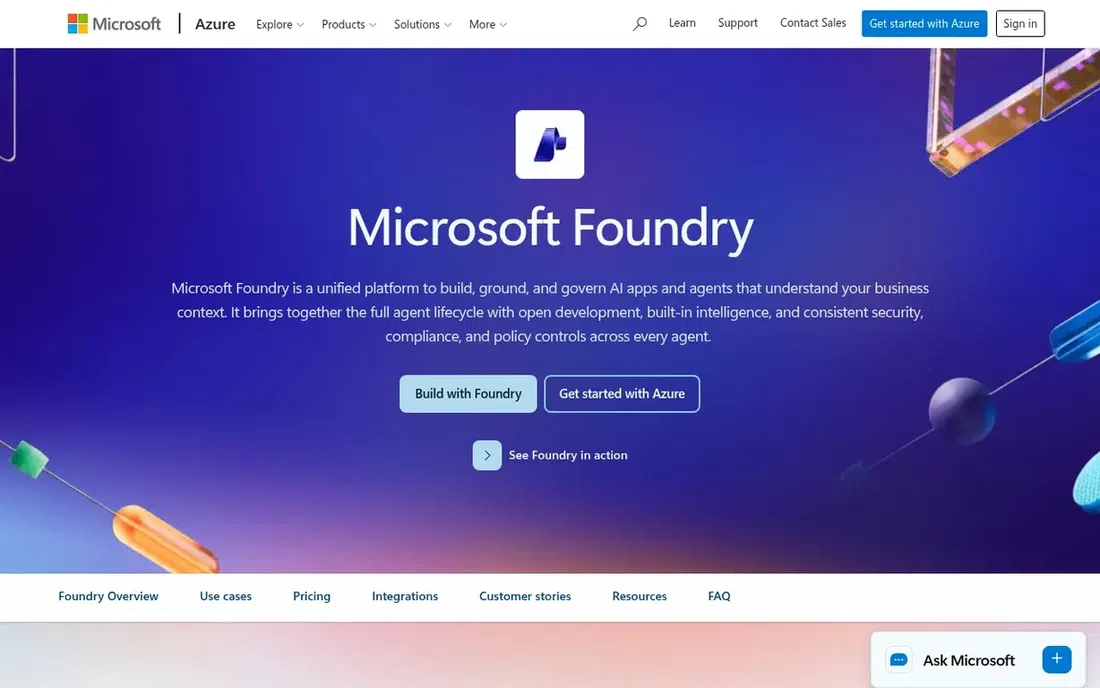
Azure AI Foundry is built with cloud-native AI apps on Azure in mind. Azure AI Foundry is Microsoft's AI app and agent factory, positioned to accelerate AI-driven, cloud-native development across industries.
The main drawbacks: Product breadth brings setup complexity.
As for the details, organizations building internal assistants or customer-facing AI features on Microsoft infrastructure are the clearest fit. Worth adding: like other hyperscaler systems, its advantages compound when you are already on Azure and shrink when you are not. Azure AI Foundry does not show a starting price in this comparison, so check the vendor site for current pricing. Free options: Not stated.
- Made for AI app and agent development
- Suits Azure-centric organizations
- Best fit assumes Azure adoption
Hugging Face Inference Endpoints
Best for: Deploying Hub models rapidly
Hugging Face Inference Endpoints is built with Deploying Hub models rapidly in mind. It fits teams already working with Hub models that want dedicated inference without building infrastructure.
It keeps model discovery and deployment close together. Hugging Face Inference Endpoints shows no starting price here, so confirm the cost on the vendor site. Free plan details: Not stated.
Where it falls short: Tied to Hub model formats.
- Managed endpoint approach
- Suits teams already using the Hub
- Less of a full app product
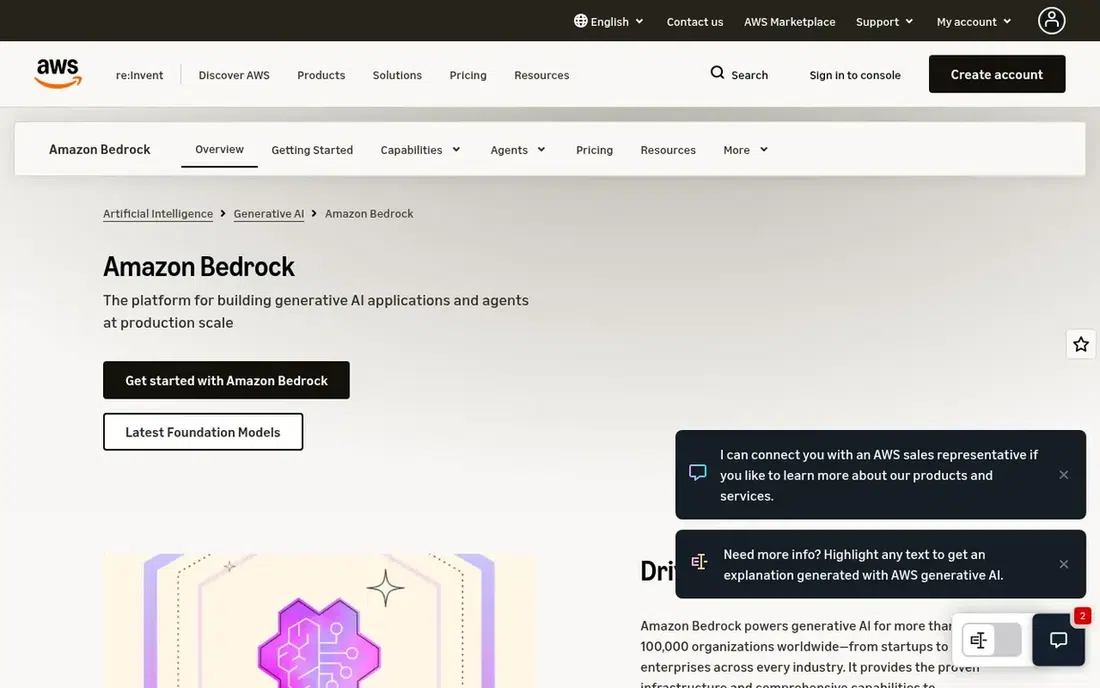
Amazon Bedrock targets managed model access inside AWS. Amazon Bedrock is AWS's product for building generative AI applications and agents at production scale.
What to check first: Less appealing for multi-cloud-first teams.
The primary limitation is gravity toward AWS: teams standardized on another cloud may find the integration overhead harder to justify. It is also a wide system instead of a narrow inference endpoint, so buyers wanting a minimal, single-purpose API may prefer a lighter choice like Replicate or OpenRouter. No starting price is listed for Amazon Bedrock here; confirm pricing on the vendor site. Trial and free access: Not stated.
- Aimed at production scale
- Supports generative AI applications and agents
- Deepest value assumes AWS usage
OpenRouter
Best for: Routing across numerous models
Choose OpenRouter for routing across plenty of models. OpenRouter bills itself as the unified interface for every model, helping you find the best models and prices for your prompts.
It suits teams that want one integration whereas experimenting across providers, or products that route requests to different models by task. OpenRouter cost at the entry level: $10 of credits. Free access exists with OpenRouter.
Where it falls short: Less control over underlying infrastructure.
- Single integration point
- Unified interface for numerous models
- Layers on a layer between you and providers
Replicate works best for running open-source models via API. Replicate lets you run open-source machine learning models with a cloud API, keeping the workflow straightforward: pick a model and call it.
It is a leaner service than full cloud AI products, so organizations needing deep identity, networking and governance integration may outgrow it. More specifically, for tightly managed enterprise inference, Amazon Bedrock or Azure AI Foundry are more natural suits. On cost, Replicate starts like this: $0.01 per thousand output tokens. On free options: Not stated.
Limits to weigh: Less enterprise system depth.
- Cloud API for open-source models
- Straightforward run-with-an-API model
- Customization options are narrower
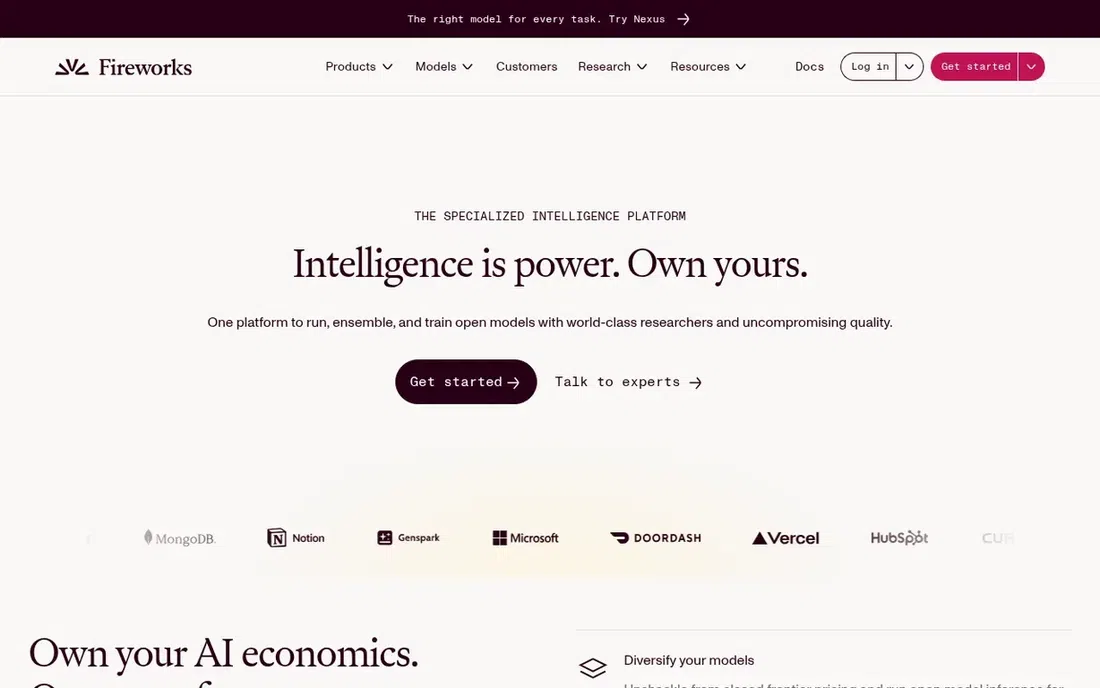
Choose Fireworks AI for specializing open models at scale. Fireworks AI presents a state of the art training and inference system meant to take you beyond the frontier by transforming open models into specialized intelligence.
In daily use, product teams with clear tuning goals get the most from it. Its focus on open models and specialization means less breadth than a hyperscaler marketplace, and results rely on your own data and tuning work. Check the vendor site for Fireworks AI pricing; none is listed in this comparison. Trial and free access: Not stated.
Watch-outs: Narrower ecosystem than hyperscalers.
- Merges training and inference
- Aims at specialized intelligence
- Specialization work needs ML effort
How we chose
For each of the 6 tools we noted price, free plan or trial, fit for managed Inference platforms for LLMs and the main limit, using vendor pages and documentation. Prices and plan limits come from vendor pages and can change, so confirm them on the vendor site before you buy. Position on the page reflects fit for a typical buyer first, with price clarity and free access breaking ties. Treat it as a guide, not a ruling.
What to check before you buy
- Ask Azure AI Foundry, Hugging Face Inference Endpoints, Amazon Bedrock and Fireworks AI for a written quote, since no starting price is shown.
- Look at the free plan from OpenRouter closely: its caps decide whether it is usable for real work.
- Before choosing Azure AI Foundry, weigh its main limit: best fit assumes Azure adoption.
- Ask Fireworks AI about contract length, onboarding fees and user minimums before you sign.
- Check how data leaves Amazon Bedrock: formats, limits and whether exports are available on every plan.
FAQ
How do model routers like OpenRouter differ from direct products?
A router hands you one interface across plenty of models and providers, which helps with experimentation and task-based routing. Also, the tradeoff is abstraction and dependency on the router layer compared with more setup work.
Is Azure AI Foundry the right pick for everyone comparing managed Inference platforms for LLMs?
No single tool suits every team. Azure AI Foundry comes first because it fits cloud-native AI apps on Azure, while Hugging Face Inference Endpoints suits Deploying Hub models quickly and Amazon Bedrock suits managed model access inside AWS. Match the tool to your own size, budget and workflow before deciding.
Do these tools publish their prices?
Not all of them. Azure AI Foundry, Hugging Face Inference Endpoints, Amazon Bedrock and Fireworks AI publish no starting price, so expect a quote request for those. The rest, OpenRouter included, show a starting price, though seats and billing terms still change the final cost.
Can I try these tools before paying?
Often, yes. OpenRouter has a free plan. Use your own data and a real task during the test, and check what the free tier or trial limits before you rely on it.
Which managed Inference platforms for LLMs have a free plan?
OpenRouter is the only tool in this list with a free plan. Free plans usually cap users, projects or features, so check the limits on the vendor page.
Sources
- https://azure.microsoft.com/en-us/products/ai-foundry
- https://huggingface.co/inference-endpoints
- https://aws.amazon.com/bedrock
- https://openrouter.ai
- https://replicate.com
- https://fireworks.ai