6 Best Artificial Intelligence Platforms for 2026
Compare 6 picks for the best artificial intelligence platform, with prices, free plans and who each fits. Every tool lists pros and cons. Easy to scan.
- Editor's choice
 Google Cloud Vertex AI
Unified ML and generative AI on Google Cloud
Starts atSee websiteVisit cloud.google.comFull review - Great alternative
 Databricks
Lakehouse-based data and AI engineering
Starts atSee websiteVisit databricks.comFull review - Also consider
 OpenAI Platform
Production APIs for frontier AI models
Starts atSee websiteVisit platform.openai.comFull review
Direct answer
Google Cloud Vertex AI comes first here, mainly for unified ML and generative AI on Google Cloud. Alternatives: Databricks for Lakehouse-based data and AI engineering, and OpenAI Platform for production APIs for frontier AI models. The remaining 3 options are covered below with prices and limits.
TL;DR:
- Number one here is Google Cloud Vertex AI, a fit for unified ML and generative AI on Google Cloud.
- A fair warning about OpenAI Platform: pay-as-you-go with no free level.
- For end-to-end machine learning on AWS infrastructure, Amazon SageMaker is worth a look.
- Every tool from Google Cloud Vertex AI to Amazon SageMaker works by quote, with no list price shown.
- Google Cloud Vertex AI, Amazon SageMaker and the 4 others all need a premium plan or a trial, since no free plan is listed.
Quick comparison
| Tool | Best for | Starts at | Free plan? | |
|---|---|---|---|---|
| Google Cloud Vertex AI | Unified ML and generative AI on Google Cloud | See website | Free trial | Visit |
| Databricks | Lakehouse-based data and AI engineering | See website | Free trial | Visit |
| OpenAI Platform | Production APIs for frontier AI models | See website | No | Visit |
 Anthropic | Claude API for long-context and coding workloads | See website | No | Visit |
 Azure Machine Learning | Enterprise machine learning in Microsoft-centric organizations | See website | Free trial | Visit |
 Amazon SageMaker | End-to-end machine learning on AWS infrastructure | See website | No | Visit |
Artificial Intelligence Platform, one by one
Choosing artificial intelligence platform usually comes down to price, fit and limits. This LinkVetted guide sets 6 tools side by side on those three points, with the facts kept short and checkable.
Google Cloud Vertex AI
Best for: Unified ML and generative AI on Google Cloud
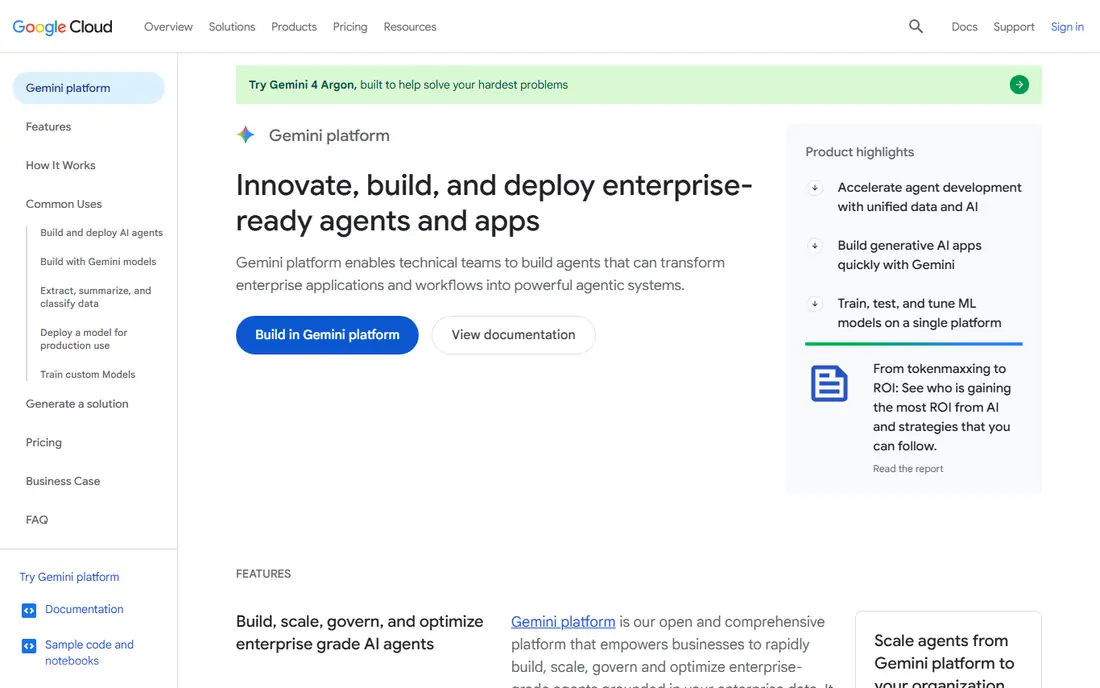
Pick Google Cloud Vertex AI if this describes you: unified ML and generative AI on Google Cloud. For teams on GCP, it is the path of least resistance from prototype to production.
The usual cloud caveat applies: the meter runs on everything, and generative workloads can burn through budget quick without quotas and billing alerts in place. No starting price is listed for Google Cloud Vertex AI here; confirm pricing on the vendor site. As for free access: Free trial.
The main drawbacks: Costs can surprise teams that do not set budgets.
- Tight integration with Gemini models
- Solid MLOps tooling
- Ties you to Google Cloud pricing
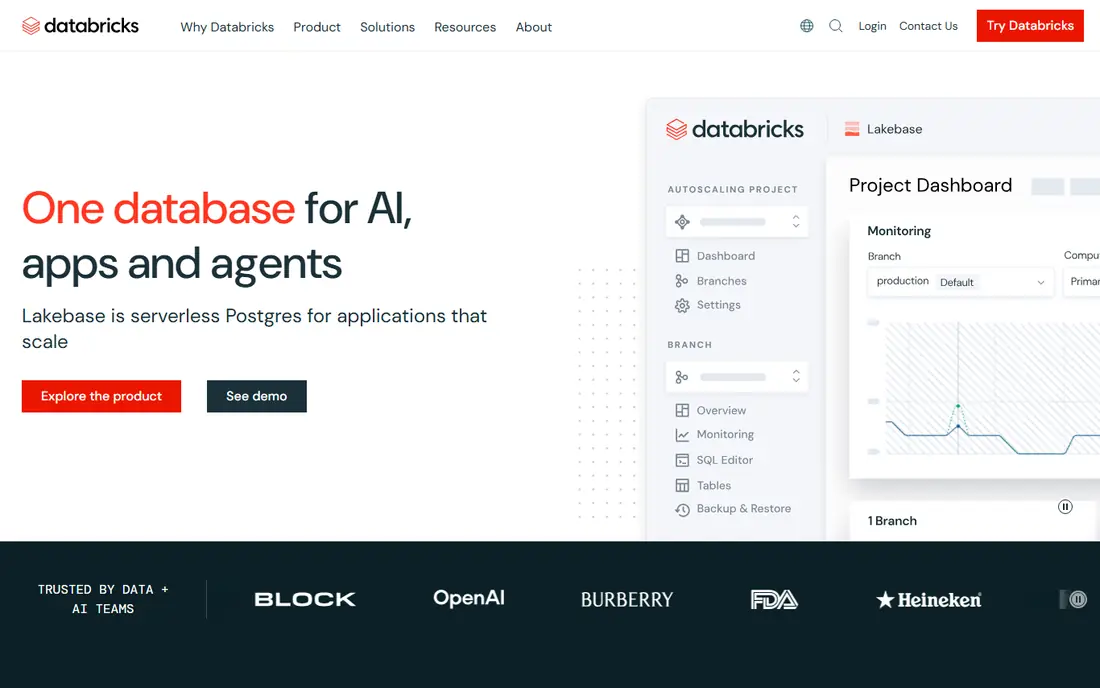
Databricks is built with Lakehouse-based data and AI engineering in mind. Databricks grew out of Apache Spark and the data lakehouse architecture. It has spent the last few years turning that data system into an AI system.
Limits to weigh: Overkill if you just need an API.
The downside is pricing opacity: Databricks bills on compute consumption, and teams routinely report sticker shock without careful cost monitoring. It shines for data-heavy organizations and is unnecessary for anyone who just wants to call a model. Beyond that, the acquisition of MosaicML gave it credible large-model training, and its agent and serving products keep expanding. Check the vendor site for Databricks pricing; none is listed in this comparison. Trial and free access: Free trial.
- Brings together data engineering and AI in one system
- Capable Apache Spark foundation
- Usage-based pricing is hard to forecast
OpenAI Platform makes the most sense for production APIs for frontier AI models. Time from signup to a working prototype is measured in hours, and billing is pure usage-based with no contracts.
Token pricing varies by model, so check the pricing page for the models you plan to use. You get frontier models behind a well-documented REST API, with fine-tuning, assistants, batch processing, and image and audio models in the same account. Pricing for OpenAI Platform is not stated here, so ask the vendor for current figures. No free plan comes with OpenAI Platform.
Limits to weigh: Switching costs grow over time.
- The largest external ecosystem
- The most solid general-purpose models available via API
- Pricing changes with new model releases
Pick Anthropic if this describes you: Claude API for long-context and coding workloads. Claude models deal with very long contexts well, perform strongly on coding and agentic tasks, and the API, docs, and prompt tooling are clean and developer-friendly. If your product leans on document analysis, code generation, or careful instruction-following, Claude deserves the evaluation.
Upsides: long documents.
As for the details, the ecosystem of external tools is smaller than OpenAI's but expanding rapidly. The Workbench makes prompt iteration noticeably smoother. No starting price is listed for Anthropic here; confirm pricing on the vendor site. No free plan comes with Anthropic. Watch-outs: Newer ecosystem.
- Clear documentation
- Solid performance on reasoning, coding
- Smaller model catalog than OpenAI
Azure Machine Learning
Best for: Enterprise machine learning in Microsoft-centric organizations
For enterprise machine learning in Microsoft-centric organizations, Azure Machine Learning is a natural candidate. Azure Machine Learning is the enterprise pick for organizations standardized on Microsoft. It provides the full lifecycle, from designer-based no-code modeling to code-first pipelines, with the governance, role-based access, and compliance tooling that regulated industries need.
Where Azure Machine Learning stands out: Capable security, compliance.
Trade-offs to know: The studio portal can feel bloated. An Azure free account offers credits to try it, and billing is consumption-based after that. It is less beloved by researchers than SageMaker or Vertex, and the portal carries the weight of years of accumulated features. But for IT departments that require auditability and Azure Active Directory integration from day one, it is the pragmatic choice. On top of that, contract terms are generally enterprise agreements, so expect a sales conversation instead of self-serve signup at scale. Check the vendor site for Azure Machine Learning pricing; none is listed in this comparison. As for free access: Free trial.
- Governance controls
- Connects with Azure data services
- Documentation at times lags new features
Amazon SageMaker is a good fit for end-to-end machine learning on AWS infrastructure. SageMaker, now branded Amazon SageMaker AI, is the full-lifecycle ML system for teams already on AWS. It handles data preparation, training, tuning, deployment, and monitoring in one managed service, and it plugs into S3, Redshift, and the rest of the AWS data stack without friction.
The main drawbacks: The ramp-up time is steep for teams new to AWS.
As for the details, if your data lives on AWS and your team knows it, this is the natural choice. As for the details, there is no permanent free level for the core service, so experimentation costs money from day one. On top of that, billing is usage-based across instance types, training hours, and endpoints, so check the AWS pricing page carefully before committing. The price of that completeness is complexity. Pricing for Amazon SageMaker is not stated here, so ask the vendor for current figures. Amazon SageMaker has no free plan.
- Managed notebooks, training, deployment
- Deep integration with the AWS data stack
- Pricing is notoriously hard to predict
How these tools were picked
Pricing pages, product documentation and feature lists were the main sources, and every entry carries at least one honest drawback. Figures are shown as the vendors publish them. Billing terms, seat minimums and add-ons can change the real cost. We ordered the tools by general fit, then by how clearly pricing is shown, then by free access. A buyer with unusual needs may reorder them.
A buyer's checklist
- Confirm the entry price with every vendor: no tool from Google Cloud Vertex AI to Amazon SageMaker shows a fixed starting price.
- Run a trial of Google Cloud Vertex AI, Databricks and Azure Machine Learning with real work before paying for a year; your own workflow is the best test.
- Before choosing Google Cloud Vertex AI, weigh its main limit: ties you to Google Cloud pricing.
- Confirm the exact Google Cloud Vertex AI plan that includes your must-have features.
- Involve the people who will use Amazon SageMaker daily; a short pilot beats a long feature checklist.
FAQ
Does any tool for artificial intelligence platform here have a free plan?
A permanent free plan is not offered by Google Cloud Vertex AI, Amazon SageMaker or the other tools here. Google Cloud Vertex AI, Databricks, Azure Machine Learning offer a trial. Plan a short evaluation period instead.
Is Google Cloud Vertex AI the right pick for everyone comparing artificial intelligence platform?
No single tool suits every team. Google Cloud Vertex AI comes first because it fits unified ML and generative AI on Google Cloud, while Databricks suits Lakehouse-based data and AI engineering and OpenAI Platform suits production APIs for frontier AI models. Match the tool to your own size, budget and workflow before deciding.
Which product is best for a regulated industry?
Google Cloud Vertex AI is the pick this page puts first, mainly for unified ML and generative AI on Google Cloud. If your situation differs, Databricks suits Lakehouse-based data and AI engineering, and OpenAI Platform suits production APIs for frontier AI models. Compare price and limits before you decide.
How much does an AI system cost?
Model APIs are usage-based, so a prototype can cost a handful of dollars whereas production workloads run into thousands a month. From a buyer's view, enterprise AutoML systems are usually annual contracts priced by quote.
Do these tools publish their prices?
No. None of the tools, from Google Cloud Vertex AI to Amazon SageMaker, shows a fixed starting price here, so budget time for quotes.
Can I try these tools before paying?
Often, yes. Google Cloud Vertex AI, Databricks and Azure Machine Learning offer a free trial. Use your own data and a real task during the test, and check what the free tier or trial limits before you rely on it.