Best AI Event Intelligence Company in 2026: 8 Companies Compared
Compare the best AI event intelligence company options that turn event data into demand forecasts, travel insight, and smarter event planning help today.

- Editor's choice
 PredictHQ
Demand forecasting from events
Starts atSee websiteVisit predicthq.comFull review - Great alternative
 Zartico
Destination event impact
Starts atSee websiteVisit zartico.comFull review - Also consider
 Cvent
Large event planning and management
Starts atSee websiteVisit cvent.comFull review
TL;DR:
- PredictHQ is the clearest demand intelligence choice, with ranked events across many categories, for hotels, travel, and retail planning.
- Zartico suits destination organizations that want event impact tied to visitor economy data in one platform.
- Cvent, Bizzabo, and RainFocus suit teams that run events and want registration, marketing, and reporting in one system.
- Check data coverage for your cities, update frequency, and how easily the data feeds your forecasting or planning tools.
Quick comparison
| Tool | Best for | Starts at | Free plan? | |
|---|---|---|---|---|
| PredictHQ | Demand forecasting from events | See website | No | Visit |
| Zartico | Destination event impact | See website | No | Visit |
| Cvent | Large event planning and management | See website | No | Visit |
 Bizzabo | Event marketing and attendee experience | See website | No | Visit |
 RainFocus | Enterprise event data and management | See website | No | Visit |
 Splash | Branded event pages and marketing | See website | No | Visit |
 InEvent | Hybrid and virtual events | See website | No | Visit |
 EventsAir | Conferences and meetings management | See website | No | Visit |
The best AI event intelligence companies
AI event intelligence covers two linked jobs, which are forecasting demand from real world events, and planning or running events with better data. PredictHQ leads on demand forecasting, while event platforms such as Cvent and Bizzabo use data to plan, market, and measure events. Pick the side that matches your goal, since a demand API and an event management platform solve different problems.
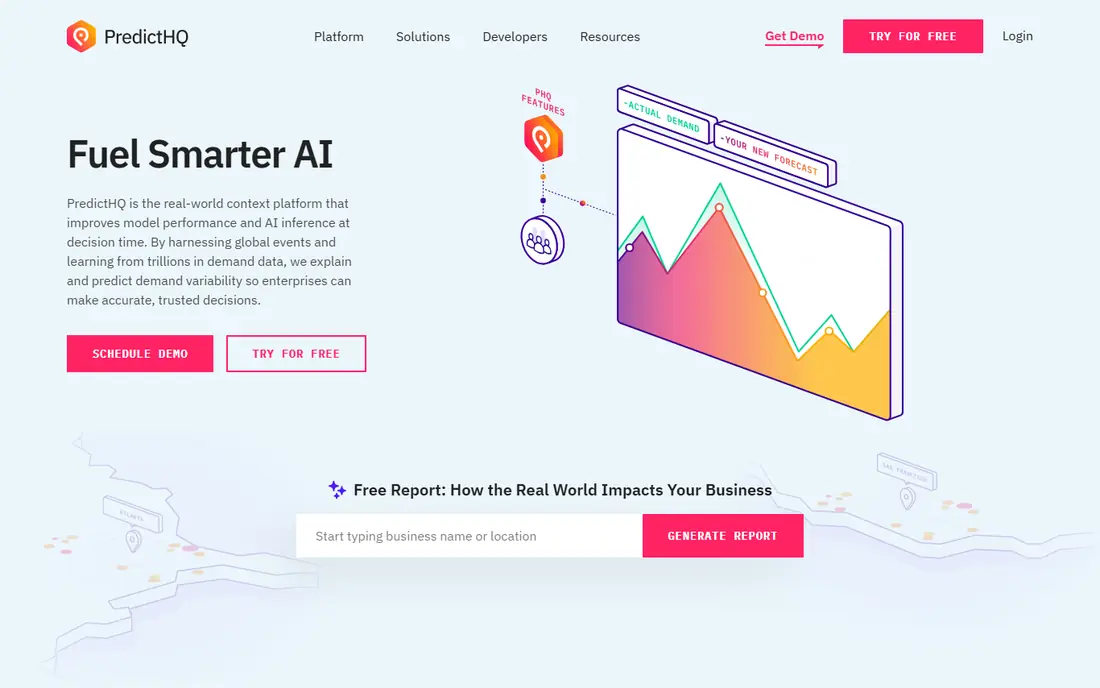
PredictHQ is the specialist name in this list, because its API aggregates, verifies, and ranks real world events by predicted impact. Hotels, airlines, retailers, and travel firms use it to explain demand swings and plan staffing, pricing, and inventory around concerts, sports, conferences, and disruptions.
On the practical side, PredictHQ fits best when you value demand forecasting from events over a long list of extras you may never open. The vendor pages we checked describe ranked event api across many categories in plain terms, and that focus shows in how the offer is presented. If you like a short setup path and a clear next step, this is a sensible place to start your shortlist.
The honest catch is enterprise pricing. That trade off does not make PredictHQ a poor choice, but it does mean you should confirm it against your own workload, budget, and support needs before you sign up. A short trial, a demo call, or a careful read of the pricing page will usually settle the question quickly.
- Ranked event API across many categories
- Historical and future events
- Demand impact signals
- Enterprise pricing
- Needs technical integration
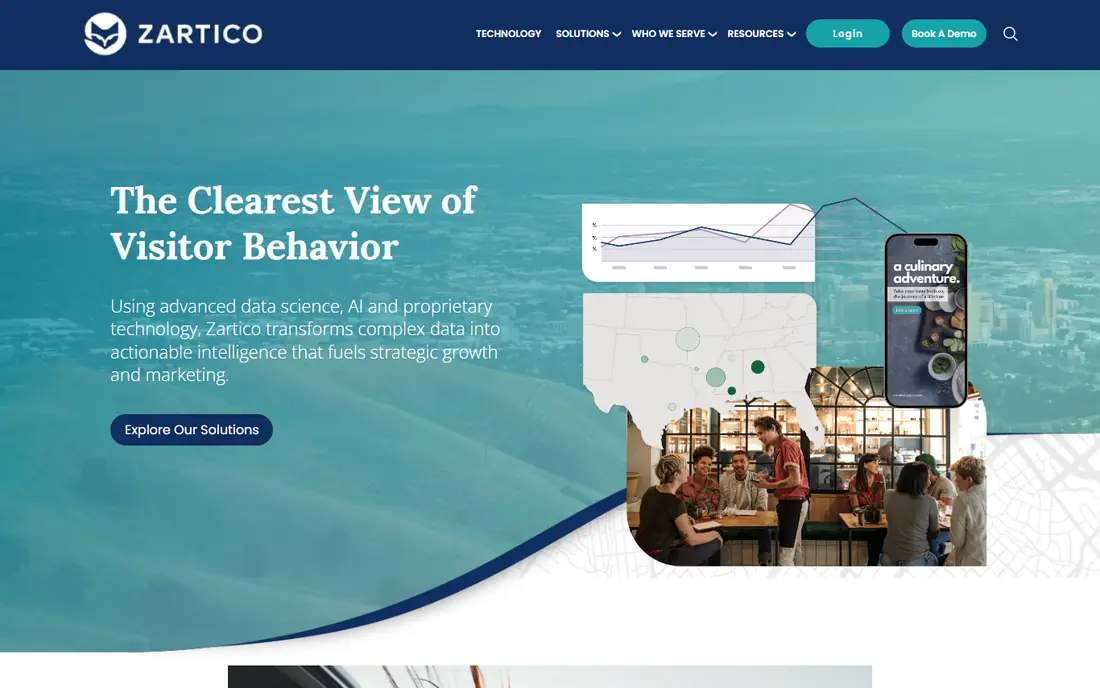
Zartico suits destination marketing organizations that want to see how local events affect visitors and the wider economy, not just hotel nights. The partnership with PredictHQ brings event data into its platform, which helps destinations compare festivals, conferences, and sports events on a common basis.
What stands out in day to day use, based on the official feature pages and public reviews we compared, is the emphasis on destination event impact. That emphasis lines up with destination intelligence platform, which matters more than a long feature list when you are choosing under time pressure. We would still check the current plan details before you commit, since vendors change tiers during the year.
Before you commit, weigh destination focus against what you gain. Every option on this list has a weakness, and the right pick is often the one whose weakness bothers you least. With Zartico, that means checking whether the limitation touches the work you do most often, or only an edge case you can work around.
- Destination intelligence platform
- Event data for visitor economy
- Benchmarking
- Destination focus
- Not a general event management tool
Cvent fits large organizations that run many events and need registration, venue sourcing, attendee management, and reporting in one place. The breadth is the strength for enterprise teams, and the setup effort is the trade off for smaller teams with a single annual event.
For buyers who want a clear reason to choose one name over another, Cvent makes its case through large event planning and management. The published material points to registration, venue sourcing, and marketing in one system as a central part of the offer, rather than a side note. That clarity helps when you are comparing several options and need to explain the choice to a colleague or a partner.
The main reason to pause is enterprise pricing and setup. If that limitation is central to your plans, look at another entry on this list first. If it is minor for your situation, the strengths above may still make Cvent the best fit, and you can plan around the gap from the start.
- Registration, venue sourcing, and marketing in one system
- Strong enterprise range
- Enterprise pricing and setup
- Smaller events may need less
Bizzabo appeals to marketing teams that want an event to feel like a campaign, with registration, email, app engagement, and reporting tied together. The analytics help show which sessions and channels worked, though pricing depends on event size and features.
A useful way to judge Bizzabo is to ask whether event marketing and attendee experience is the problem you actually need solved this month. If the answer is yes, then event marketing, registration, and engagement tools gives you a concrete reason to keep it on the list. If the answer is no, a simpler or cheaper option may serve you better, even if this name is more widely known.
No option here is perfect, and Bizzabo is no exception, because pricing varies by event scale. We include it because its strengths are real for the right buyer, not because it suits everyone. Match the weakness to your own use case, and the decision becomes much easier.
- Event marketing, registration, and engagement tools
- Analytics for event ROI
- Pricing varies by event scale
- Smaller teams should check tiers
RainFocus suits enterprises that run complex event programs and want one data platform behind registration, content, and reporting. The unified data model helps large teams avoid scattered spreadsheets, though the enterprise focus means small teams may find simpler tools faster.
On the practical side, RainFocus fits best when you value enterprise event data and management over a long list of extras you may never open. The vendor pages we checked describe unified event data platform in plain terms, and that focus shows in how the offer is presented. If you like a short setup path and a clear next step, this is a sensible place to start your shortlist.
The honest catch is enterprise focus. That trade off does not make RainFocus a poor choice, but it does mean you should confirm it against your own workload, budget, and support needs before you sign up. A short trial, a demo call, or a careful read of the pricing page will usually settle the question quickly.
- Unified event data platform
- Registration and content management
- Enterprise scale
- Enterprise focus
- May be more than small events need
Splash fits marketing teams that care most about beautiful event pages, RSVPs, and on brand promotion. The design flexibility helps for launches, dinners, and brand events, while firms needing deep venue or exhibitor management may need another tool alongside it.
What stands out in day to day use, based on the official feature pages and public reviews we compared, is the emphasis on branded event pages and marketing. That emphasis lines up with branded event pages, which matters more than a long feature list when you are choosing under time pressure. We would still check the current plan details before you commit, since vendors change tiers during the year.
Before you commit, weigh full event operations depth is lighter than cvent against what you gain. Every option on this list has a weakness, and the right pick is often the one whose weakness bothers you least. With Splash, that means checking whether the limitation touches the work you do most often, or only an edge case you can work around.
- Branded event pages
- RSVP and marketing tools
- Design flexibility
- Full event operations depth is lighter than Cvent
InEvent suits teams running hybrid or virtual events who need registration, live sessions, networking, and analytics in one platform. The hybrid focus helps when part of the audience is remote, though in person only teams may prefer a tool built mainly for venues.
For buyers who want a clear reason to choose one name over another, InEvent makes its case through hybrid and virtual events. The published material points to virtual and hybrid event platform as a central part of the offer, rather than a side note. That clarity helps when you are comparing several options and need to explain the choice to a colleague or a partner.
The main reason to pause is feature depth varies by plan. If that limitation is central to your plans, look at another entry on this list first. If it is minor for your situation, the strengths above may still make InEvent the best fit, and you can plan around the gap from the start.
- Virtual and hybrid event platform
- Registration and engagement
- Analytics
- Feature depth varies by plan
- Check virtual limits
EventsAir fits conference organizers who need registration, accommodation, program building, and onsite tools in one system. The depth for complex conferences is the draw, and new users should budget training time, since the range of features takes a while to learn.
A useful way to judge EventsAir is to ask whether conferences and meetings management is the problem you actually need solved this month. If the answer is yes, then conference registration, housing, and program tools gives you a concrete reason to keep it on the list. If the answer is no, a simpler or cheaper option may serve you better, even if this name is more widely known.
No option here is perfect, and EventsAir is no exception, because learning curve for new users. We include it because its strengths are real for the right buyer, not because it suits everyone. Match the weakness to your own use case, and the decision becomes much easier.
- Conference registration, housing, and program tools
- Long event industry history
- Learning curve for new users
- Pricing by quote
How we picked these
We compared official pricing pages, feature pages, and app store listings, and we checked public reviews for recurring complaints and praise. We kept only names that exist and work today, in October 2026, and that truly fit the topic, rather than names that only mention the topic in passing. We also favored options with clear pricing or a clear route to a quote, and we noted where pricing depends on your situation, so you can verify the current figure on the vendor site before you buy.
How to choose an AI event intelligence company
Separate demand data from event software
Demand intelligence, such as PredictHQ, tells you what events will affect your business. Event software, such as Cvent or Bizzabo, helps you run your own event. Some firms need both, but buying the wrong type first wastes budget. Write your main question down, then pick the tool built for that question.
Check coverage, freshness, and ranking
Ask which cities and categories are covered, how often unscheduled events update, and how the ranking or impact score is calculated. A list of events without impact signals is hard to act on at scale. Test the data on a past period you already understand, and see whether it explains the demand you actually saw.
Test integration before you commit
Demand data should feed your forecasting, pricing, or planning tool through an API or a clean export, not through manual copying. Event software should sync with your CRM, email, and payment tools. Run a small pilot with real data and real users before a full rollout.
Measure impact after launch
Set a baseline for forecast accuracy, staffing cost, hotel occupancy, or event registration before you start. Review after one full event cycle, and keep what improves the number. Event intelligence pays for itself only when decisions change, so track decisions, not just dashboards.
FAQ
### What is AI event intelligence?
AI event intelligence uses event data, such as concerts, sports, conferences, weather, and holidays, to forecast demand or to plan events better. Demand tools rank events by likely impact, while event platforms use data for marketing, registration, and reporting. The term covers both, so check which type a vendor actually sells.
### How does PredictHQ work?
PredictHQ aggregates events from many sources, verifies and enriches them, and ranks them by predicted impact through an API. Businesses can search by location, category, and date, and feed the data into forecasting or planning systems. Pricing is by quote and depends on usage and coverage.
### Do I need event intelligence for a small hotel or shop?
A small business may benefit if local events clearly drive busy and quiet periods, since better forecasts help with staffing and stock. A demand API may be more than a small shop needs, while a simple local events calendar plus past sales data may be enough. Start with your own sales history first.
### What is the difference between Cvent and PredictHQ?
Cvent helps you plan and run your own events, with registration, venue sourcing, and attendee tools. PredictHQ helps you forecast demand from events happening around your business, even events you do not run. Many large firms use both for different jobs.
### How accurate are event demand forecasts?
Accuracy depends on data quality, local history, and how the forecast model is built. Ranked event data helps explain past swings, but it cannot predict every disruption or local change. Test a vendor on your own past data, and treat forecasts as planning help, not guarantees.