6 Best Inventory Software with Online Store for 2026, Vetted and Compared
Best inventory software with online store: 6 contenders ranked by fit, with entry costs and free tiers. Plain-spoken summaries throughout. Prices checked.
- Editor's choiceQuickBooks Commerce
Firms already using QuickBooks
Starts at$11.40 per monthVisit quickbooks.intuit.comFull review - Great alternative
 Zoho Inventory
Simple online inventory and order handling
Starts atSee websiteVisit zoho.comFull review - Also consider
 Ordoro
Shipping and dropshipping task automation
Starts at$59 per monthVisit ordoro.comFull review
Direct answer
If you need firms already using QuickBooks, QuickBooks Commerce is the first tool to look at here. Listed starting prices: QuickBooks Commerce from $11.40 per month, Ordoro from $59 per month and Shopify from $19 per month. Zoho Inventory is the stronger choice for simple online inventory and order handling, while Ordoro suits shipping and dropshipping task automation. The other 3 tools in the list cover narrower or pricier cases.
TL;DR:
- Top of the list is QuickBooks Commerce, which targets firms already using QuickBooks.
- Starting prices begin at $11.40 per month with QuickBooks Commerce.
- Cin7 suits small business inventory and light ERP.
- None of the 6 tools, from QuickBooks Commerce to Cin7, has a free plan, so budget for a subscription or use a trial.
- A fair warning about Ordoro: not a storefront product.
Last checked November 2026. Prices and plan details were read from the vendors' own pages in November 2026; vendors change plans often, so confirm the current price on the vendor site before you buy.
Quick comparison
| Tool | Best for | Starts at | Free plan? | |
|---|---|---|---|---|
| QuickBooks Commerce | Firms already using QuickBooks | $11.40 per month | Free trial | Visit |
| Zoho Inventory | Simple online inventory and order handling | See website | Not stated | Visit |
| Ordoro | Shipping and dropshipping task automation | $59 per month | Free trial | Visit |
 Shopify | Sellers wanting store and inventory together | $19 per month | Free trial | Visit |
 NetSuite | Bigger operations needing ERP depth | See website | Not stated | Visit |
 Cin7 | Small business inventory and light ERP | $349 per month | No | Visit |
The 6 tools in detail
Short on time? The summary and table above give the quick view of 6 tools for inventory software with online store, and the profiles that follow give the detail behind each entry.
QuickBooks Commerce
Best for: Firms already using QuickBooks
QuickBooks Commerce is built with firms already using QuickBooks in mind. If you need a full storefront plus inventory from day one, a dedicated commerce product may be a better starting point.
Drawbacks to consider: Inventory depth may be restricted.
Beyond that, QuickBooks Commerce comes from the QuickBooks accounting ecosystem, which emphasizes organizing and managing a business with smart tools and quick setup. In practice, the commerce and inventory features available rely on your account and setup, so confirm they include your sales channels. QuickBooks Commerce cost at the entry level: $11.40 per month. On free options: Free trial.
- Quick setup positioning
- Smart tools for organizing business
- Commerce features vary by account
Choose Zoho Inventory for simple online inventory and order handling. Zoho Inventory is online inventory management software for handling inventory, orders, shipping, and warehouses. It can link with a broader set of business applications.
If you prefer a single commerce product that bundles storefront and inventory, a commerce-first tool may be more straightforward. More specifically, for deep financial or manufacturing requirements, you may have to pair it with other systems. Check the vendor site for Zoho Inventory pricing; none is listed in this comparison. Free plan details: Not stated.
Watch-outs: Advanced needs can need extras.
- Positioned as simple to use
- Warehouse management included
- May need other Zoho apps for full ERP
Pick Ordoro if this describes you: shipping and dropshipping task automation. Ordoro positions itself as an operational backbone for ecommerce merchants, simplifying and automating shipping, inventory, and dropshipping tasks.
Points against: Not a storefront product.
From a buyer's view, Ordoro is not a storefront or full ERP, so it works alongside other systems rather than replacing them. If you need financial management or a complete commerce product in one place, pair it with those tools or choose a broader suite. Entry price for Ordoro: $59 per month. Free access: Free trial.
- Dropshipping workflow support
- Automates shipping and inventory tasks
- Focus is operational, not full ERP

Shopify serves sellers wanting store and inventory together. Shopify is an all-in-one commerce platform that merges an online store with tools to manage products, orders, and inventory. On top of that, the product also promotes AI assistance for building and expanding a business.
What to check first: Full ERP depth is restricted.
Its inventory features include typical retail needs but may not match the depth of dedicated ERP or warehouse systems for complex multi-warehouse operations. More specifically, consider a specialized inventory or ERP tool if you need advanced manufacturing, accounting, or fulfillment logic beyond standard commerce workflows. Entry price for Shopify: $19 per month. Free options: Free trial. Reasons to shortlist it: AI features for building and expanding.
- Storefront and inventory in one system
- Tools to run numerous parts of a business
- Advanced needs may need extras
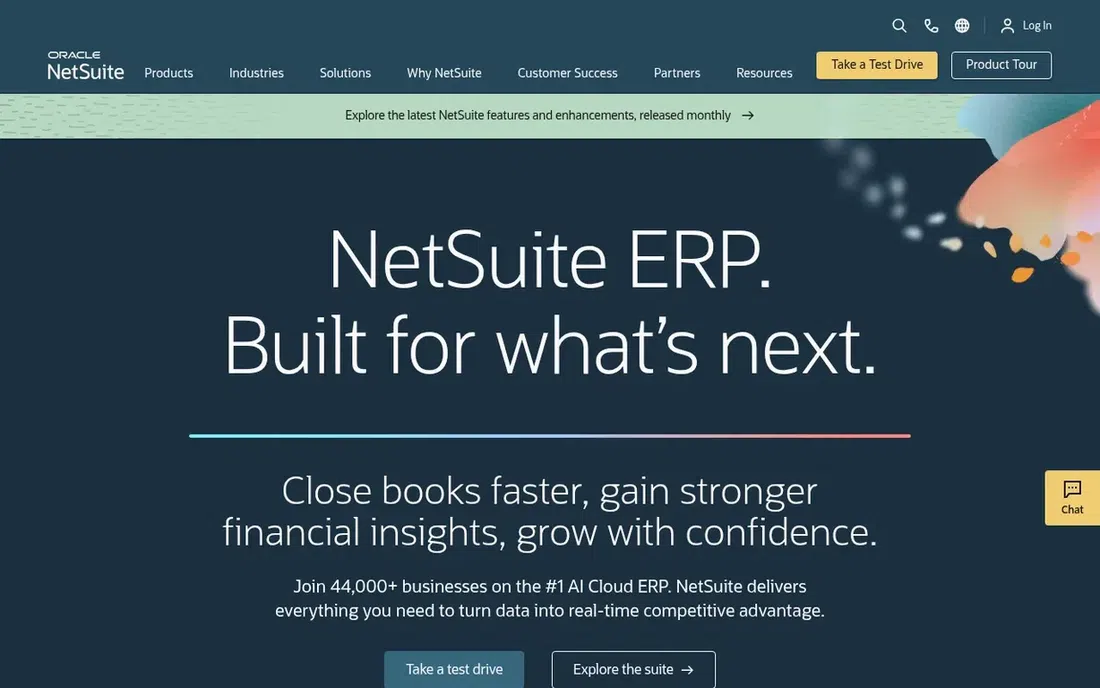
NetSuite works best for bigger operations needing ERP depth. The breadth of an ERP can be more than a small online store needs, and configuration takes effort.
Downsides: Setup likely needs planning.
As for the details, if you chiefly need straightforward stock tracking tied to a storefront, a lighter commerce or inventory tool may be simpler to adopt. Check the vendor site for NetSuite pricing; none is listed in this comparison. Free plan details: Not stated.
- Wide business management scope
- Merges financials, CRM, inventory
- Complicated for very small sellers
Pick Cin7 if this describes you: small business inventory and light ERP. It suits sellers who have outgrown spreadsheets and want a dedicated system to organize stock, orders, and related processes across sales channels.
Where it is weaker: Integration planning is needed.
What you pay to start with Cin7: $349 per month. No free plan comes with Cin7.
- Inventory management focus
- Small business ERP positioning
- Feature depth varies by setup
Selection criteria
Selection started from tools commonly considered for inventory software with online store, then narrowed to 6 that have clear pricing information or a clear quote process. Figures are shown as the vendors publish them. Billing terms, seat minimums and add-ons can change the real cost. The sequence is a judgement call: typical use case first, then pricing transparency, then free access. Use the profiles to check fit.
Questions to settle before buying
- Get a written quote from Zoho Inventory and NetSuite; the list shows no starting price for them.
- Take the trial from QuickBooks Commerce, Ordoro and Shopify and push a live task through it before you pay.
- Before choosing QuickBooks Commerce, weigh its main limit: Commerce features vary by account.
- Add up seats, add-ons and usage charges for QuickBooks Commerce before comparing it with cheaper entries.
- Read the plan comparison for Zoho Inventory carefully; key features often start on a higher tier.
FAQ
Do these tools publish their prices?
Not all of them. Zoho Inventory and NetSuite publish no starting price, so expect a quote request for those. The rest, QuickBooks Commerce included, show a starting price, though seats and billing terms still change the final cost.
Do I need an ERP or a lighter inventory tool?
Lighter tools like Zoho Inventory or Ordoro suit sellers centred on stock, orders, and shipping. Match the tool to your complexity, not the other way around.
Does any tool for inventory software with online store here have a free plan?
No tool in this list, QuickBooks Commerce and Cin7 included, has a permanent free plan. QuickBooks Commerce, Ordoro, Shopify offer a trial. Trials and quotes are the usual route, so plan a short evaluation period.
Is QuickBooks Commerce the right pick for everyone comparing inventory software with online store?
No single tool suits every team. QuickBooks Commerce comes first because it fits businesses already using QuickBooks, while Zoho Inventory suits easy online inventory and order handling and Ordoro suits shipping and dropshipping task automation. Match the tool to your own size, budget and workflow before deciding.
What should ecommerce sellers check before buying inventory software?
Confirm channel support, stock sync behavior, warehouse features, and shipping workflows. Verify these details on vendor sites since capabilities can change and configurations differ.
How are the tools for inventory software with online store ordered?
The order follows typical fit for inventory software with online store, with QuickBooks Commerce first and Cin7 last, then price clarity and free access. It is editorial judgement, not a score, so another team could rank the tools differently.
Sources
- https://quickbooks.intuit.com
- https://www.zoho.com/inventory
- https://www.ordoro.com
- https://www.shopify.com
- https://www.netsuite.com
- https://www.cin7.com