Best Ecommerce Inventory Management Software in 2026: 10 Tools Compared
Find the best ecommerce inventory management software in 2026. We compare 10 tools for ecommerce inventory, orders, and multi channel selling. See details.

- Editor's choice
 Cin7
Growing multi channel sellers
Starts atSee websiteVisit cin7.comFull review - Great alternative
 Linnworks
Marketplace heavy sellers
Starts atSee websiteVisit linnworks.comFull review - Also consider
 Veeqo
Amazon and Shopify sellers
Starts atSee websiteVisit veeqo.comFull review
TL;DR:
- The best inventory management software for ecommerce syncs stock across every channel in real time, so you do not oversell.
- Multi warehouse and bundle support matter more than fancy reports for growing sellers.
- Pricing often rises with orders or SKUs, so model your peak month, not an average month.
- A tool that fits your store platform and shipping workflow will save more time than one with extra features you never use.
- Start with your top channels and warehouses, and test a full order cycle before you migrate all stock.
Quick comparison
| Tool | Best for | Starts at | Free plan? | |
|---|---|---|---|---|
| Cin7 | Growing multi channel sellers | See website | Free trial | Visit |
| Linnworks | Marketplace heavy sellers | See website | Free trial | Visit |
| Veeqo | Amazon and Shopify sellers | See website | Free trial | Visit |
 Katana | Makers and small manufacturers | See website | Free trial | Visit |
 inFlow Inventory | Small businesses wanting simplicity | See website | Free trial | Visit |
 Zoho Inventory | Zoho users and small sellers | Free | Yes | Visit |
 Ordoro | US sellers wanting shipping plus inventory | See website | Free trial | Visit |
 ShipStation | Sellers focused on shipping | See website | Free trial | Visit |
 Unleashed | Growing product businesses | See website | Free trial | Visit |
 Brightpearl | Larger ecommerce operations | See website | Free trial | Visit |
The best ecommerce inventory management software
We compared official pricing, feature pages, and public reviews for the top inventory management software for ecommerce, focusing on tools that sellers use in 2026. The best ecommerce platform for inventory management in this guide is not always a store platform itself, but a system that keeps stock, orders, and shipping in sync across the channels you actually sell on.

Cin7 is a strong option for growing multi channel sellers. Its main strength is multi channel stock sync across stores and marketplaces. That matters because it saves time on the work you do every day, rather than adding another tool you have to manage. We compared its official feature pages, pricing, and public reviews, and it holds up as a real option for the buyers described here, not just a well known name.
We also noted warehouse tools plus B2B ordering in one system. The main catch is pricing and setup suit growing teams more than tiny sellers. Try the free tier or trial first and check that the limits match your volume before you pay.
- Multi channel sync
- Warehouse tools
- B2B features
- Pricing and setup suit growing teams
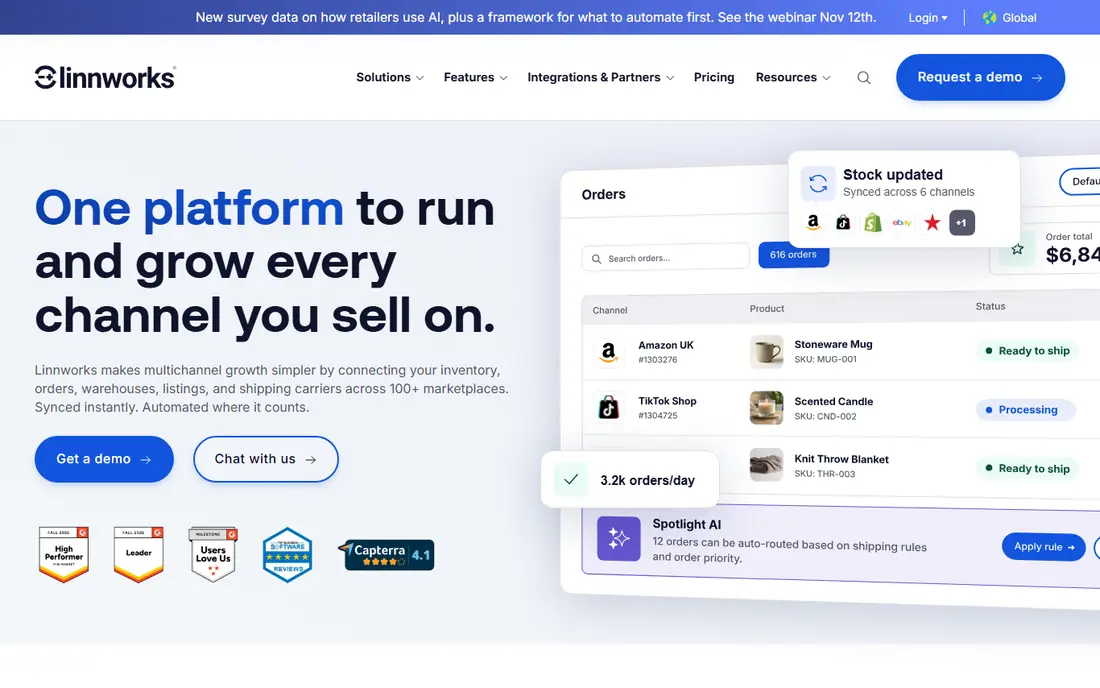
For marketplace heavy sellers, Linnworks deserves a close look. Its main strength is strong links to major marketplaces. That matters because it saves time on the work you do every day, rather than adding another tool you have to manage. We compared its official feature pages, pricing, and public reviews, and it holds up as a real option for the buyers described here, not just a well known name.
On the plus side, order automation that cuts manual work. The trade-off is the learning curve can be steep for new users. That balance suits many teams, but it is worth testing with your real workload first.
- Strong marketplace links
- Order automation
- Shipping tools
- Learning curve for new users
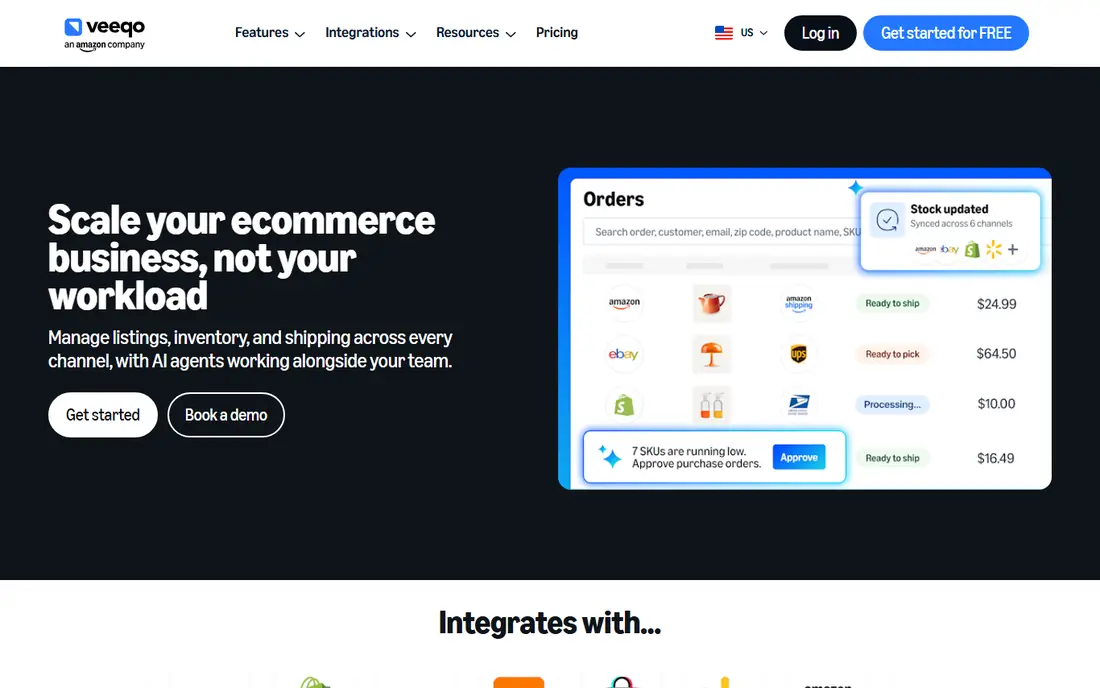
Veeqo works well when you need Amazon and Shopify sellers handled without a lot of setup. Its main strength is tools built for Amazon and Shopify selling. That matters because it saves time on the work you do every day, rather than adding another tool you have to manage. We compared its official feature pages, pricing, and public reviews, and it holds up as a real option for the buyers described here, not just a well known name.
Another point in its favour is shipping labels and forecasting in one place. Still, some features are tied closely to the Amazon ecosystem. A short trial with your own data will tell you more than any feature list can.
- Amazon and Shopify friendly
- Shipping labels
- Forecasting
- Some features tied to Amazon ecosystem
If your team fits makers and small manufacturers, Katana is worth shortlisting. Its main strength is inventory combined with manufacturing planning. That matters because it saves time on the work you do every day, rather than adding another tool you have to manage. We compared its official feature pages, pricing, and public reviews, and it holds up as a real option for the buyers described here, not just a well known name.
We found visual planning that shows raw materials and finished stock useful in practice. The downside is the manufacturing focus may be more than pure resellers need. If that limit is not a problem for you, it is a sensible choice.
- Manufacturing plus inventory
- Visual planning
- Shopify links
- Manufacturing focus may be too much for pure resellers
inFlow Inventory stands out for small businesses wanting simple inventory thanks to a focused feature set. Its main strength is simple inventory with barcode support. That matters because it saves time on the work you do every day, rather than adding another tool you have to manage. We compared its official feature pages, pricing, and public reviews, and it holds up as a real option for the buyers described here, not just a well known name.
It also offers reporting that is easy to read without training. The catch to watch is multi channel depth is less than enterprise rivals. Compare that limit against your busiest week, not an average week.
- Simple inventory
- Barcode support
- Good reporting
- Multi channel depth less than enterprise tools
Teams dealing with Zoho users and small sellers often land on Zoho Inventory for good reason. Its main strength is low cost plans linked to the wider Zoho suite. That matters because it saves time on the work you do every day, rather than adding another tool you have to manage. We compared its official feature pages, pricing, and public reviews, and it holds up as a real option for the buyers described here, not just a well known name.
Beyond the headline features, multi channel order handling at a friendly price. The drawback is advanced warehouse features are lighter than enterprise tools. For many buyers that is acceptable, but check it before signing up.
- Low cost plans
- Zoho links
- Multi channel orders
- Advanced warehouse features are lighter
Ordoro is built with US sellers wanting shipping plus inventory in mind, and that focus shows in daily use. Its main strength is inventory combined with shipping in one workflow. That matters because it saves time on the work you do every day, rather than adding another tool you have to manage. We compared its official feature pages, pricing, and public reviews, and it holds up as a real option for the buyers described here, not just a well known name.
We also liked dropshipping support and US carrier links. The honest weakness is global coverage is smaller than some rivals. Run a small pilot first to see whether it matters for your use case.
- Inventory plus shipping
- Dropshipping support
- US carriers
- Smaller global coverage than some rivals
When sellers focused on shipping is the priority, ShipStation is a practical place to start. Its main strength is excellent shipping tools with many carrier links. That matters because it saves time on the work you do every day, rather than adding another tool you have to manage. We compared its official feature pages, pricing, and public reviews, and it holds up as a real option for the buyers described here, not just a well known name.
In addition, order sync from stores and marketplaces. The limitation is inventory depth is lighter than dedicated inventory systems. That may be fine at first, yet it can matter as you grow.
- Excellent shipping tools
- Many carrier links
- Order sync
- Inventory depth is lighter than dedicated inventory tools
Unleashed appeals to growing product businesses who want clear pricing and a fast start. Its main strength is strong inventory control with batch and serial tracking. That matters because it saves time on the work you do every day, rather than adding another tool you have to manage. We compared its official feature pages, pricing, and public reviews, and it holds up as a real option for the buyers described here, not just a well known name.
A further strength is integrations with accounting and ecommerce tools. The catch is pricing suits growing teams more than very small sellers. Weigh that against the time it saves your team each week.
- Strong inventory control
- Batch and serial tracking
- Integrations
- Pricing suits growing teams
A good fit for larger ecommerce operations, Brightpearl keeps the core workflow simple. Its main strength is full retail operations covering inventory, orders, and accounting links. That matters because it saves time on the work you do every day, rather than adding another tool you have to manage. We compared its official feature pages, pricing, and public reviews, and it holds up as a real option for the buyers described here, not just a well known name.
Finally, automation that reduces manual data entry. The weakness is enterprise pricing and implementation suit larger teams. If you can live with that, the overall package is easy to recommend.
- Full retail operations
- Accounting links
- Automation
- Enterprise pricing and implementation
How we picked these
We checked channel coverage, warehouse support, bundle and kit handling, barcode scanning, shipping links, accounting integrations, and pricing based on orders or SKUs. We also looked at setup effort and whether a free plan or trial lets you test a real order cycle. Tools that only handled one channel, or that could not be verified as current products, were left out.
How to Choose Ecommerce Inventory Software
List every channel you sell on today, plus any you plan to add this year. The best ecommerce platforms inventory management buyers choose should sync Amazon, Shopify, eBay, Walmart, or your own site without manual spreadsheets. A tool that misses one key channel will create the overselling problem you are trying to solve.
Check warehouse and bundle handling. If you hold stock in more than one place, or sell kits and bundles, the system must track components and locations correctly. Test a bundle sale, a split shipment, and a return in the trial, because those edge cases reveal whether the tool fits your real operations.
Model pricing on peak volume. Some tools charge by orders, SKUs, or users, and a plan that looks cheap in a quiet month can spike during holidays. Use your busiest month from last year, add growth, and ask what happens when you exceed the limit. Clear overage rules matter more than a low starting price.
Test the full order cycle before migrating. Import a small set of products, sync stock to two channels, place test orders, print labels, and record a return. That end to end test shows integration gaps, shipping quirks, and reporting limits that a feature list hides. Migrate in stages once that test passes.
FAQ
What is the best inventory management software for ecommerce beginners?
Zoho Inventory, inFlow Inventory, and Katana are friendly starting points for smaller sellers, with clear interfaces and lower entry costs. They cover stock, orders, and basic multi channel selling well. Move to Cin7, Linnworks, or Brightpearl when channel count, warehouses, or order volume outgrow them.
What is the best ecommerce platform for inventory management at scale?
Larger sellers often choose Cin7, Linnworks, Veeqo, or Brightpearl, because they offer deeper multi channel sync, warehouse tools, and automation. Those systems cost more and need more setup, but they handle high volume and complex operations better. Test them with your peak order flow before committing.
Do I need separate inventory software if I use Shopify?
Shopify covers basic stock for one store well, but it struggles when you sell on several channels, hold stock in multiple warehouses, or manage bundles. Dedicated inventory software syncs those channels and prevents overselling. If you sell on one store only, Shopify alone may be enough for now.
How much does ecommerce inventory software cost?
Pricing varies by orders, SKUs, users, and features, which is why several entries here say See website. Some tools offer free tiers for very small sellers, while others are enterprise priced. Model your peak month and check overage fees before you compare headline prices.
Can inventory software handle dropshipping?
Yes, several tools here support dropshipping, including Ordoro and multi channel systems that route orders to suppliers. Check whether the tool automates purchase orders, tracks supplier stock, and handles returns for dropshipped items. Test that workflow in a trial, since dropshipping support varies in depth.
Sources
- https://www.cin7.com/pricing/
- https://www.linnworks.com/pricing
- https://www.veeqo.com/pricing
- https://katanamrp.com/pricing/
- https://www.inflowinventory.com/pricing
- https://www.zoho.com/inventory/pricing.html
- https://www.ordoro.com/pricing/
- https://www.shipstation.com/pricing/
- https://www.unleashedsoftware.com/pricing
- https://www.brightpearl.com/pricing