Best Inventory Software for Ecommerce Sellers for 2026: Our 6 Vetted Picks
6 best inventory software for ecommerce sellers, with entry costs, free tiers and the buyer each one serves. The weak spots sit next to the strengths. No hype.
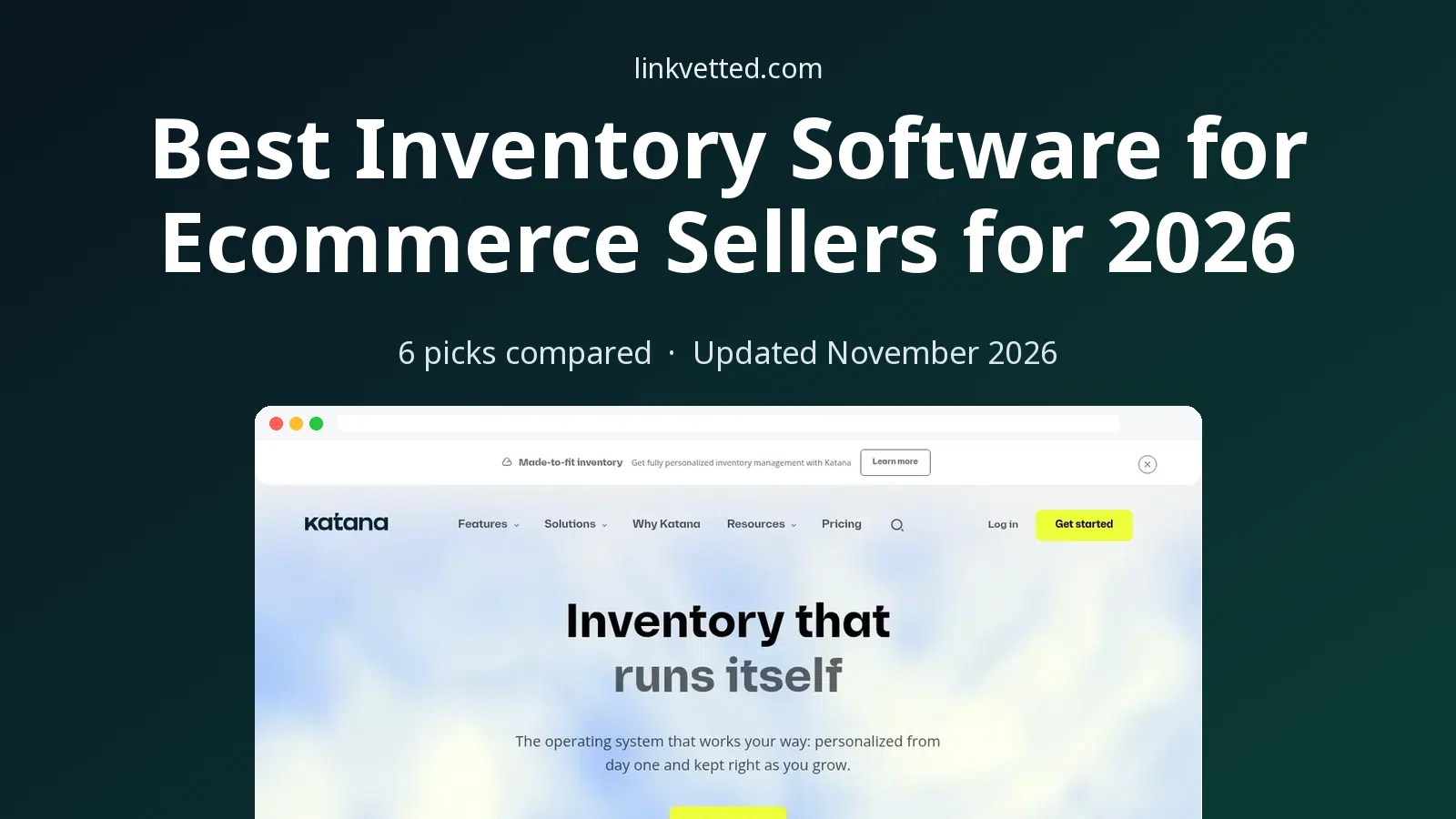
- Editor's choice
 Zoho Inventory
Order, shipping and warehouse handling
Starts atSee websiteVisit zoho.comFull review - Great alternativeKatana Cloud Inventory
Live stock, orders and production
Starts atSee websiteVisit katanamrp.comFull review - Also consider
 Odoo Inventory
Warehouse management and tracking
Starts atSee websiteVisit odoo.comFull review
Direct answer
If you need order, shipping and warehouse handling, Zoho Inventory is the first tool to look at here. Listed starting prices: Cin7 Core from $349 per month and Fishbowl Inventory from $229 per month. Look at Katana Cloud Inventory for live stock, orders and production, and at Odoo Inventory for warehouse management and tracking. All 6 tools are compared below on price, free plan and limits.
TL;DR:
- This list starts with Zoho Inventory, which is built for order, shipping and warehouse handling.
- Fishbowl Inventory fits QuickBooks and Xero users tracking stock.
- One limit worth knowing about Zoho Inventory: best value may rely on adopting other Zoho apps.
- Fishbowl Inventory has the lowest monthly starting price in this list: $229 per month.
Last checked November 2026. Prices and plan details were read from the vendors' own pages in November 2026; vendors change plans often, so confirm the current price on the vendor site before you buy.
Quick comparison
| Tool | Best for | Starts at | Free plan? | |
|---|---|---|---|---|
| Zoho Inventory | Order, shipping and warehouse handling | See website | Not stated | Visit |
| Katana Cloud Inventory | Live stock, orders and production | See website | Yes | Visit |
| Odoo Inventory | Warehouse management and tracking | See website | Not stated | Visit |
 Cin7 Core | Small business inventory with ERP features | $349 per month | No | Visit |
 SAP Business One | Small and midsize ERP inventory | See website | Not stated | Visit |
 Fishbowl Inventory | QuickBooks and Xero users tracking stock | $229 per month | Not stated | Visit |
Inventory Software for Ecommerce Sellers compared in detail
If you are comparing inventory software for ecommerce sellers, this page covers 6 tools in one place: what each is best for, what it costs to start, whether it has a free plan, and the main limit to know about.
Zoho Inventory works best for order, shipping and warehouse handling. Choose Zoho Inventory when a clear, approachable system for orders, shipping and stock is the priority.
Drawbacks to consider: Advanced needs may need extras.
No starting price is listed for Zoho Inventory here; confirm pricing on the vendor site. Trial and free access: Not stated.
- Part of the broader Zoho ecosystem
- Shipping and warehouses
- Best value may rely on adopting other Zoho apps
Katana Cloud Inventory
Best for: Live stock, orders and production
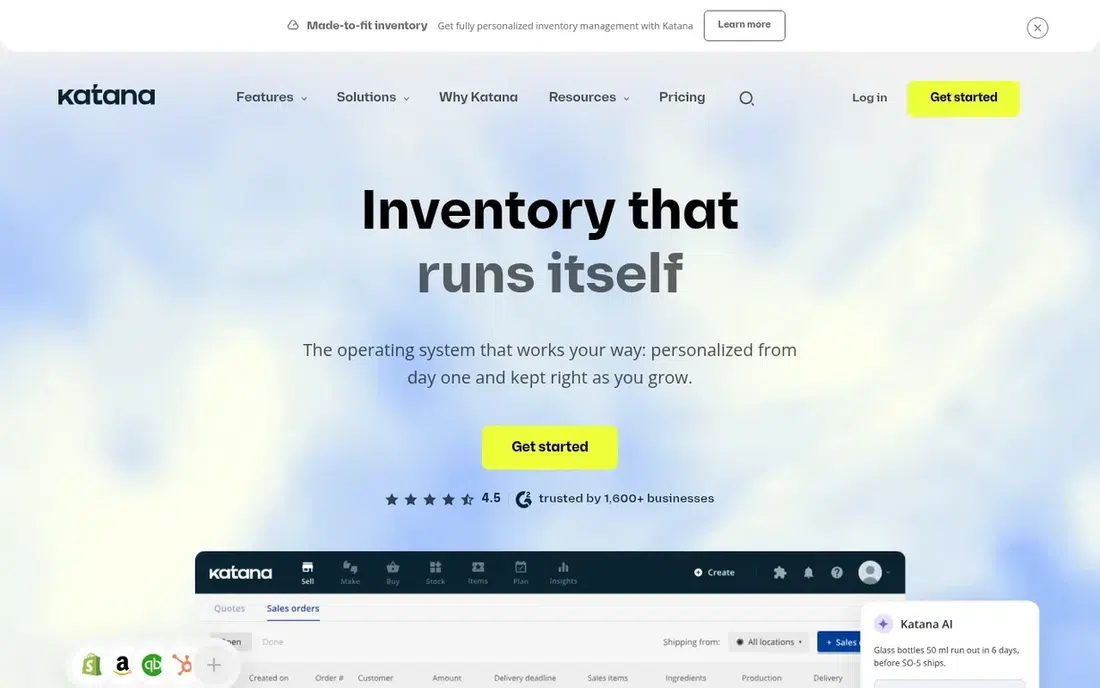
Katana Cloud Inventory is a good fit for live stock, orders and production. A cloud-first system also relies on stable internet access. Pick Katana when production and inventory have to move together in live.
What to check first: Production focus may exceed pure retail needs.
Katana Cloud Inventory is cloud inventory management software for product companies. Its homepage describes running stock, orders and production on one live system, with setup around how you work. No starting price is listed for Katana Cloud Inventory here; confirm pricing on the vendor site. You can start on Katana Cloud Inventory without paying.
- Runs stock
- Set up around how you work
- Cloud-only approach needs dependable connectivity
Choose Odoo Inventory for warehouse management and tracking. The modular design means some capabilities live in other Odoo apps, so the inventory app alone may not handle every requirement.
Watch-outs: Numerous features may need other Odoo apps.
Configuration can take effort to match your workflows. No starting price is listed for Odoo Inventory here; confirm pricing on the vendor site. Free plan details: Not stated.
- Modular approach to business apps
- Part of the wider Odoo app suite
- Configuration can take time to align with workflows
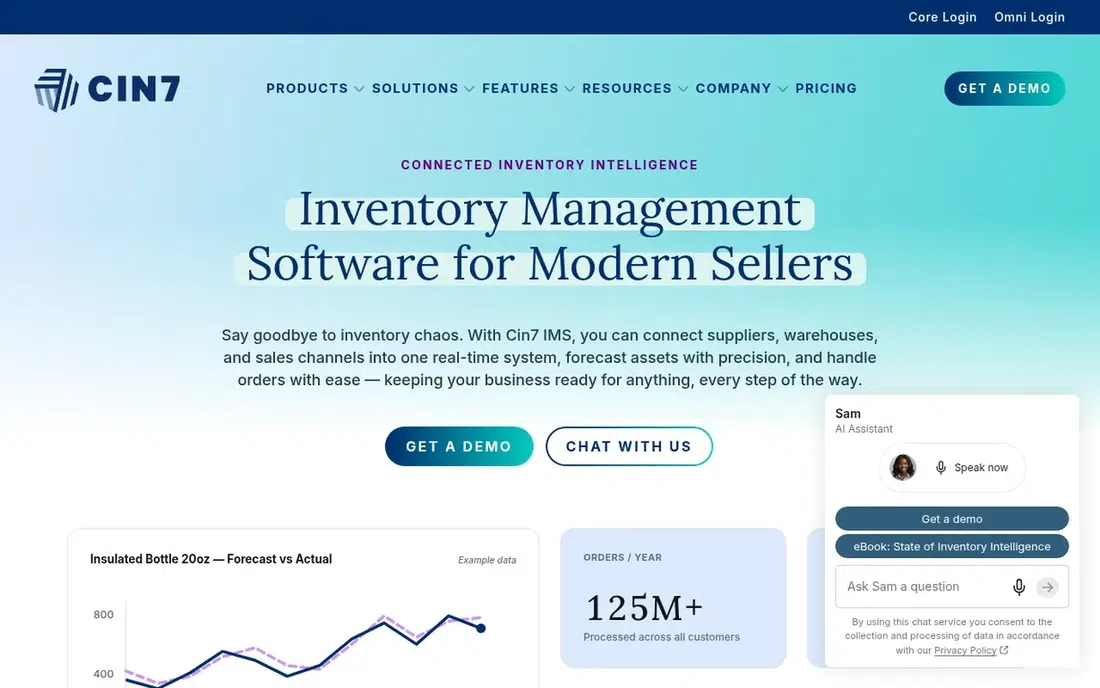
Cin7 Core is designed for small business inventory with ERP features. Cin7 Core positions itself as inventory management software with small business ERP capability. It is targeted at sellers who want stock control and core business processes in one place instead of stitching together separate tools.
Honest limits: Broader ERP scope may be more than simple sellers need.
In daily use, the homepage emphasizes simplifying inventory management, which suits ecommerce sellers looking for a central system as order volume and warehouse complexity grow. Since Cin7 Core leans toward ERP scope, very small sellers may find more capability than they need at the outset. Sellers who only want entry-level stock counts might prefer a lighter tool. What you pay to start with Cin7 Core: $349 per month. Cin7 Core has no free tier.
- Suited to expanding ecommerce operations
- Simplifies stock and order workflows
- Setup requires planning around your workflows
SAP Business One is built with small and midsize ERP inventory in mind. An ERP like SAP Business One is a substantial setup compared to a standalone inventory tool. It may be heavier than sellers who only need stock counts need.
Where it is weaker: ERP setup is a significant project.
More specifically, ecommerce sellers who want inventory tied directly to sales, purchasing and accounting, and who are ready for an ERP approach, are the fit. Choose it when you want accounting and inventory unified and can commit to an ERP implementation. In daily use, SAP Business One is described as ERP software for small and midsize companies, managing accounting, inventory, sales and purchasing in one complete system. In daily use, the single system aims to keep core operations connected. SAP Business One shows no starting price here, so confirm the cost on the vendor site. Free options: Not stated.
- Single system for core operations
- Pitched at small and midsize companies
- May be heavier than straightforward stock tracking needs
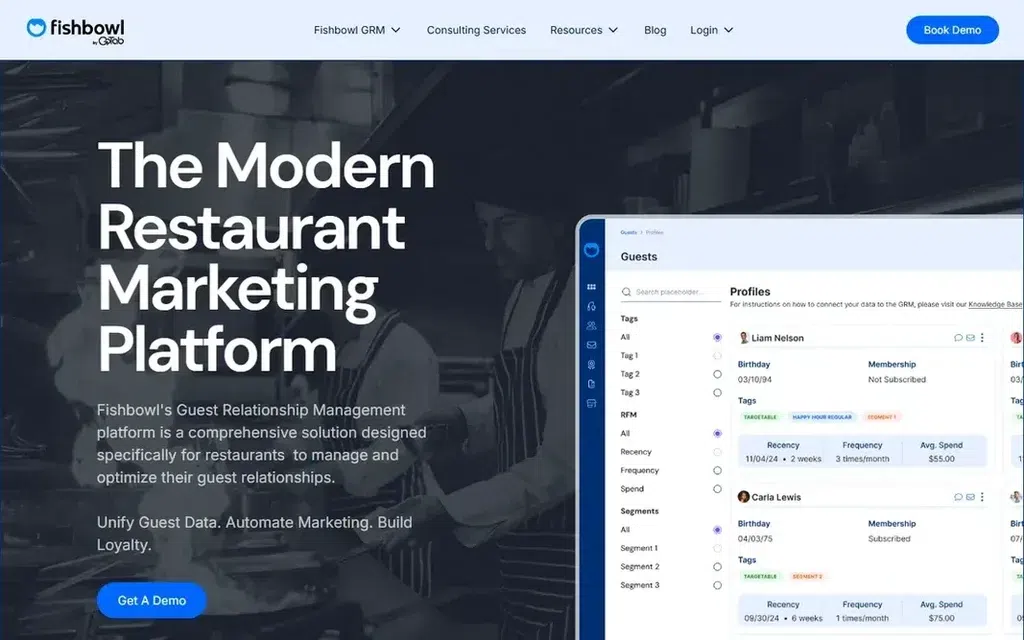
Fishbowl Inventory is aimed squarely at QuickBooks and Xero users tracking stock. Fishbowl Inventory is presented as inventory management software for QuickBooks and Xero users. Its homepage flags stock tracking, automatic reorders and warehouse management.
Honest limits: Integration focus may not suit other accounting stacks.
Also, the vendor provides a demo for evaluation. Also, consider it when accounting integration is central to your inventory workflow. Beyond that, ecommerce sellers who already keep books in QuickBooks or Xero and want inventory to stay close to accounting data are the clearest fit. On cost, Fishbowl Inventory starts like this: $229 per month. As for free access: Not stated.
- Tracks stock across locations
- Automates reorders and warehouse management
- Demo required before full evaluation
How these tools were picked
The comparison looks at four things: starting price, free access, how well the feature set matches inventory software for ecommerce sellers, and the main limit of each tool. Where a vendor does not publish a price, the entry says quote. Where a price depends on seats or billing term, the entry says so. Position on the page reflects fit for a typical buyer first, with price clarity and free access breaking ties. Treat it as a guide, not a ruling.
Before you commit
- Confirm the entry price on the vendor page. For Zoho Inventory, Katana Cloud Inventory, Odoo Inventory and SAP Business One that means a quote rather than a fixed price.
- Test the free plan from Katana Cloud Inventory against your real workload before relying on it.
- Read the limits listed for Zoho Inventory first: best value may rely on adopting other Zoho apps.
- Look at which plan of Katana Cloud Inventory unlocks the features you need; entry tiers are often cut down.
- Make sure Fishbowl Inventory lets you export your data in a format another tool can read.
FAQ
Which inventory software is a good match for a small ecommerce seller?
Zoho Inventory comes first here and is built for order, shipping and warehouse handling. Buyers with other needs may prefer Katana Cloud Inventory (for live stock, orders and production) or Odoo Inventory (for warehouse management and tracking). Compare costs and limits first.
Which options for inventory software for ecommerce sellers have a free plan?
Katana Cloud Inventory is the only tool in this list with a free plan. Free plans usually cap users, projects or features, so check the limits on the vendor page. All 6 picks in this inventory software for ecommerce sellers comparison list a starting price, free plan details and the main limits on their cards above.
What is the cheapest option for inventory software for ecommerce sellers in this list?
On published monthly entry prices, Fishbowl Inventory is the lowest here at $229 per month. Entry price is only part of the cost, because seats, add-ons and billing terms can change the total. For the full picture, the cards above cover all 6 entries of this inventory software for ecommerce sellers list, including price, free plan and limits.
Can I try these tools before paying?
Often, yes. Katana Cloud Inventory has a free plan. Use your own data and a real task during the test, and check what the free tier or trial limits before you rely on it. Prices, free plan details and limits for all 6 tools in this inventory software for ecommerce sellers roundup sit on the individual cards above.
Do these tools publish their prices?
Not all of them. Zoho Inventory, Katana Cloud Inventory, Odoo Inventory and SAP Business One publish no starting price, so expect a quote request for those. The rest, Cin7 Core included, show a starting price, though seats and billing terms still change the final cost.
Sources
- https://www.zoho.com/inventory
- https://katanamrp.com
- https://www.odoo.com/app/inventory
- https://www.cin7.com
- https://www.sap.com/products/erp/business-one.html
- https://www.fishbowlinventory.com