Choosing Internet of Things Management Software in 2026: 6 Options Compared
6 tools for the best internet of things management software, compared on pricing, free plans and best-fit use. Each pick lists its main limit. Plain facts.
- Editor's choice
 Particle
Integrated hardware and system for products
Starts at$299 a month per blockVisit particle.ioFull review - Great alternativeCisco IoT Control Center
Cellular IoT connectivity management
Starts atSee websiteVisit cisco.comFull review - Also consider
 Azure IoT Hub
Microsoft-centric device provisioning at scale
Starts atSee websiteVisit azure.microsoft.comFull review
Direct answer
Our first pick is Particle, best for integrated hardware and product for products. Listed starting prices: Particle from $299 a month per block. For a different need, Cisco IoT Control Center covers Cellular IoT connectivity management and Azure IoT Hub covers Microsoft-centric device provisioning at scale. All 6 tools are compared below on price, free plan and limits.
TL;DR:
- Particle takes the first slot, best suited to integrated hardware and product for products.
- 2 of 6 tools offer a free plan: Particle, AWS IoT Core.
- The main caution on AWS IoT Core: needs AWS cloud familiarity.
- Particle has the lowest monthly starting price in this list: $299 per month per block.
Last checked November 2026. Prices and plan details were read from the vendors' own pages in November 2026; vendors change plans often, so confirm the current price on the vendor site before you buy.
Quick comparison
| Tool | Best for | Starts at | Free plan? | |
|---|---|---|---|---|
| Particle | Integrated hardware and system for products | $299 a month per block | Yes | Visit |
| Cisco IoT Control Center | Cellular IoT connectivity management | See website | Not stated | Visit |
| Azure IoT Hub | Microsoft-centric device provisioning at scale | See website | Free trial | Visit |
 AWS IoT Core | AWS-native device connectivity and messaging | See website | Yes | Visit |
 Losant | Quick enterprise IoT option building | See website | Not stated | Visit |
| ThingWorx | Industrial IoT application development | See website | Not stated | Visit |
The best internet of things management software
If you are comparing internet of things management software, this page covers 6 tools in one place: what each is best for, what it costs to start, whether it has a free plan, and the main limit to know about.
Choose Particle for integrated hardware and platform for products. It appeals to product teams that want device hardware, connectivity and cloud management handled together instead of assembled from separate vendors, shortening the path from prototype to managed fleet.
More specifically, since Particle leans toward its own hardware and device ecosystem, organizations with established device supply chains may prefer a cloud gateway they can layer onto existing hardware. Entry price for Particle: $299 per month per block. Particle offers a free plan.
What to check first: Less fit for pure cloud-only estates.
- Pitched at connected products and machines
- Supports product teams end to end
- Hardware orientation may not suit all
Cisco IoT Control Center
Best for: Cellular IoT connectivity management
Cisco IoT Control Center was built for Cellular IoT connectivity management. It suits enterprises running connected fleets over cellular networks that want connectivity management and operational oversight from a networking vendor they may already depend on.
Limits to weigh: Enterprise networking context required.
From a buyer's view, evaluate it alongside your carrier relationships and network operations model. Cisco IoT Control Center does not show a starting price in this comparison, so check the vendor site for current pricing. Free plan details: Not stated.
- Focus on operating cost efficiency
- Network protection emphasis
- Centered on cellular connectivity
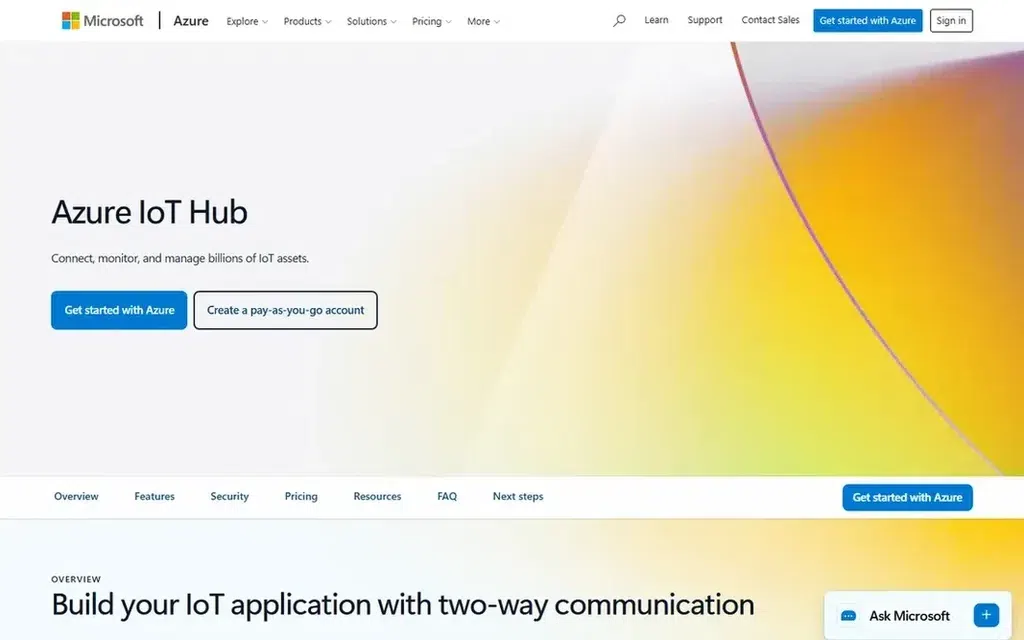
Azure IoT Hub targets Microsoft-centric device provisioning at scale. Azure IoT Hub is a cloud product for connecting, monitoring, provisioning and configuring IoT devices, positioned by Microsoft for large device estates.
Highlights: Connects with the Azure ecosystem.
No starting price is listed for Azure IoT Hub here; confirm pricing on the vendor site. Trial and free access: Free trial. Points against: Configuration depth demands expertise.
- Monitor and provision devices
- Connect
- Best value inside Azure environments
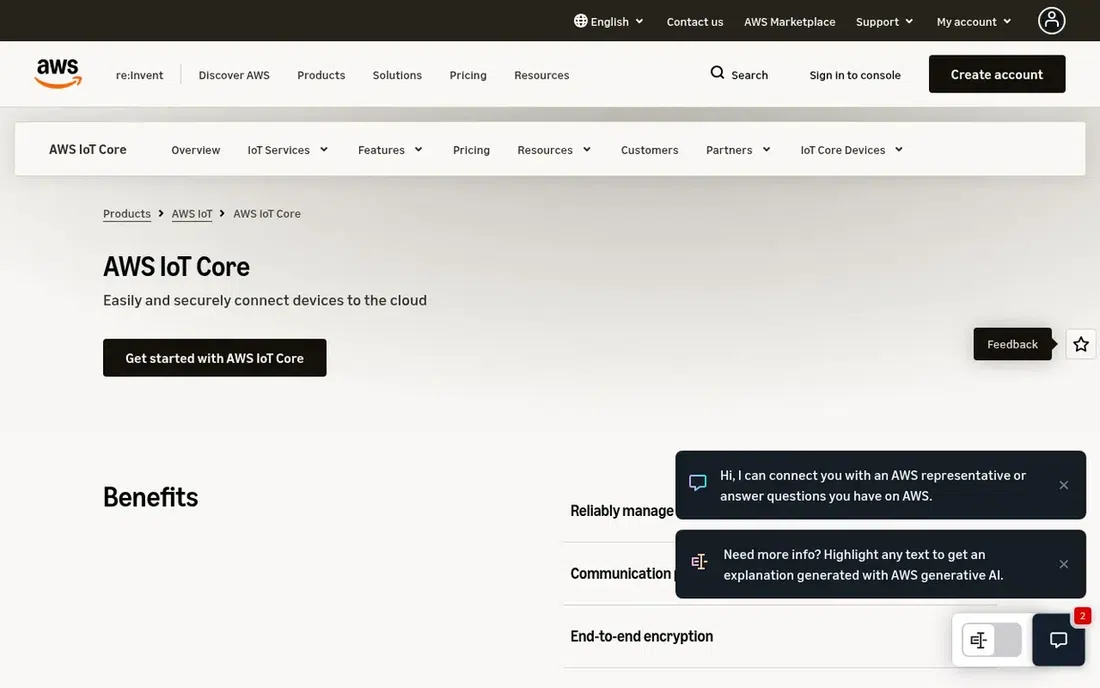
AWS IoT Core is designed for AWS-native device connectivity and messaging. If you need tightly bundled hardware and firmware tooling instead of a cloud gateway, a device-centric product may suit you better.
No starting price is listed for AWS IoT Core here; confirm pricing on the vendor site. A free plan is available with AWS IoT Core.
Drawbacks to consider: Needs AWS cloud familiarity.
- Suits existing AWS service workflows
- Device SDKs for typical hardware
- Wide service catalog can overwhelm newcomers
Losant is aimed squarely at fast enterprise IoT option building. It targets organizations that want a dedicated IoT management layer without assembling every component from scratch, and its positioning emphasizes speed from connected data to working applications.
What to check first: Enterprise positioning may not fit hobby use.
Pricing for Losant is not stated here, so ask the vendor for current figures. Free options: Not stated.
- Targeted at live connected options
- Positioned as simple to use
- Evaluate integration fit carefully
ThingWorx
Best for: Industrial IoT application development
ThingWorx makes the most sense for industrial IoT application development. Teams with modest requirements should weigh lighter cloud gateways before committing to an industrial product.
Points against: Industrial focus may exceed straightforward needs.
For everyday use, the system is oriented toward industrial application development, which can be heavier than needed for small consumer device fleets. From a buyer's view, ThingWorx is PTC's industrial IoT platform, widely known for supporting connected product and operations applications in manufacturing and industrial settings. This comparison lists no price for ThingWorx; ask the vendor. Free plan details: Not stated.
- Supports connected product and operations use cases
- Backed by PTC industrial software
- Implementation usually needs planning
How we chose
For each of the 6 tools we noted price, free plan or trial, fit for internet of things management software and the main limit, using vendor pages and documentation. Prices and plan limits come from vendor pages and can change, so confirm them on the vendor site before you buy. The order reflects how well each tool fits the most common buying scenario for internet of things management software, then price clarity, then free plan access. It is a starting point, not a verdict.
Questions to settle before buying
- Get a written quote from Cisco IoT Control Center, Azure IoT Hub, AWS IoT Core and others; the list shows no starting price for them.
- Check what the free option really includes: Particle and AWS IoT Core offer a free plan, and usage caps differ.
- Use real work to test the free trial from Azure IoT Hub, rather than a demo project.
- Read the limits listed for Particle first: hardware orientation may not suit all.
- Look at the help docs and support options for Losant before you commit.
- Ask ThingWorx about contract length, onboarding fees and user minimums before you sign.
FAQ
Which options for internet of things management software have a free plan?
Particle and AWS IoT Core offer a free plan in this list. Free plans usually cap users, projects or features, so check the limits on the vendor page. One other tool offers a trial instead.
Which choice fits cellular connected fleets?
Cisco IoT Control Center is built around cellular IoT management, making it a natural candidate for fleets running over mobile networks. Compare it with your carrier arrangements and the rest of your network operations tooling.
Is Particle the right pick for everyone comparing internet of things management software?
No single tool suits every team. Particle comes first because it fits integrated hardware and platform for products, while Cisco IoT Control Center suits Cellular IoT connectivity management and Azure IoT Hub suits Microsoft-centric device provisioning at scale. Match the tool to your own size, budget and workflow before deciding.
What is the cheapest option for internet of things management software in this list?
On published monthly entry prices, Particle is the lowest here at $299 per month per block. Entry price is only part of the cost, because seats, add-ons and billing terms can change the total. For the full picture, the cards above cover all 6 entries of this internet of things management software list, including price, free plan and limits.
Do these tools publish their prices?
Not all of them. Cisco IoT Control Center, Azure IoT Hub, AWS IoT Core and others publish no starting price, so expect a quote request for those. The rest, Particle included, show a starting price, though seats and billing terms still change the final cost.
Sources
- https://www.particle.io
- https://www.cisco.com/c/en/us/solutions/internet-of-things/iot-control-center.html
- https://azure.microsoft.com/en-us/products/iot-hub
- https://aws.amazon.com/iot-core
- https://www.losant.com
- https://www.ptc.com/en/products/thingworx