Best Hosting for SaaS Startups in 2026: Prices, Free Plans and 5 Picks
5 best hosting for SaaS startups, with entry costs, free tiers and the buyer each one serves. Each tool gets a one-line verdict. Last reviewed November 2026.
- Editor's choiceGoogle Cloud Platform
AI and data-heavy SaaS products
Starts atSee websiteVisit cloud.google.comFull review - Great alternative
 Heroku
Completely managed app hosting
Starts at$5 per monthVisit heroku.comFull review - Also consider
 DigitalOcean
More straightforward cloud for AI products
Starts at$4 a monthVisit digitalocean.comFull review
Direct answer
Google Cloud Platform leads the list, best for AI and data-heavy SaaS products. Listed starting prices: Heroku from $5 per month, DigitalOcean from $4 a month and Vercel from $20 a month. Heroku fits completely managed app hosting; DigitalOcean fits more straightforward cloud for AI products. Details, prices and limits for the rest of the 5 tools are below.
TL;DR:
- Number one here is Google Cloud Platform, a fit for AI and data-heavy SaaS products.
- DigitalOcean has the lowest monthly starting price in this list: $4 per month.
- Netlify fits quick app creation from prompt or code.
- Google Cloud Platform comes with a trade-off: service range can overwhelm new teams.
- Free plans exist at 3 of 5 tools (DigitalOcean, Vercel, Netlify).
Last checked November 2026. Prices and plan details were read from the vendors' own pages in November 2026; vendors change plans often, so confirm the current price on the vendor site before you buy.
Quick comparison
| Tool | Best for | Starts at | Free plan? | |
|---|---|---|---|---|
| Google Cloud Platform | AI and data-heavy SaaS products | See website | Not stated | Visit |
| Heroku | Completely managed app hosting | $5 per month | No | Visit |
| DigitalOcean | More straightforward cloud for AI products | $4 a month | Yes | Visit |
 Vercel | Frontend and app delivery for SaaS | $20 a month | Yes | Visit |
 Netlify | Quick app creation from prompt or code | $9 a month | Yes | Visit |
Hosting for SaaS Startups compared in detail
If you are comparing hosting for SaaS startups, this page covers 5 tools in one place: what each is best for, what it costs to start, whether it has a free plan, and the main limit to know about.
Google Cloud Platform
Best for: AI and data-heavy SaaS products
Google Cloud Platform is aimed squarely at AI and data-heavy SaaS products. Google Cloud presents AI and cloud computing services pitched at business challenges, including security, data management and hybrid or multi-cloud setups.
Like other large clouds, Google Cloud carries a ramp-up time, and startups without dedicated cloud skills may struggle to use it efficiently. Google Cloud Platform shows no starting price here, so confirm the cost on the vendor site. Trial and free access: Not stated.
Points against: Needs cloud expertise.
- Security and data management focus
- Hybrid and multi-cloud support
- Service range can overwhelm new teams
Heroku makes the most sense for completely managed app hosting. Heroku calls itself the cloud application product for developers, offering completely managed app hosting to build, deploy and scale on a long-established system.
SaaS startups that want to focus on code instead of servers are the natural audience, since the system deals with much of the operational work. Managed hosting means less control over the underlying environment, which can matter for startups with specialized compliance or networking needs. The starting price for Heroku: $5 per month. Heroku has no free tier.
What to check first: Less control over infrastructure.
- Deploy and scale workflow
- Completely managed app hosting
- Broad cloud services not the focus
DigitalOcean is a good fit for more straightforward cloud for AI products. DigitalOcean positions itself as an AI-native cloud, offering a unified stack for agents, inference and cloud aimed at control, performance and economics at scale. It appeals to teams that value straightforward infrastructure and predictable operations over an enormous catalog of services.
For everyday use, choose DigitalOcean when a focused cloud with AI support suits the product, and look to a broader cloud when plenty of specialized services are required. Worth adding: the service range is narrower than what AWS, Google Cloud or Azure offer, so startups with unusual infrastructure needs may have to combine providers. It is also less suited to teams that want a completely managed application product with minimal server involvement. What you pay to start with DigitalOcean: $4 per month. DigitalOcean has a free plan.
Honest limits: Advanced needs may need another provider.
- Economics at scale
- Focus on control and performance
- Smaller service catalog than major clouds
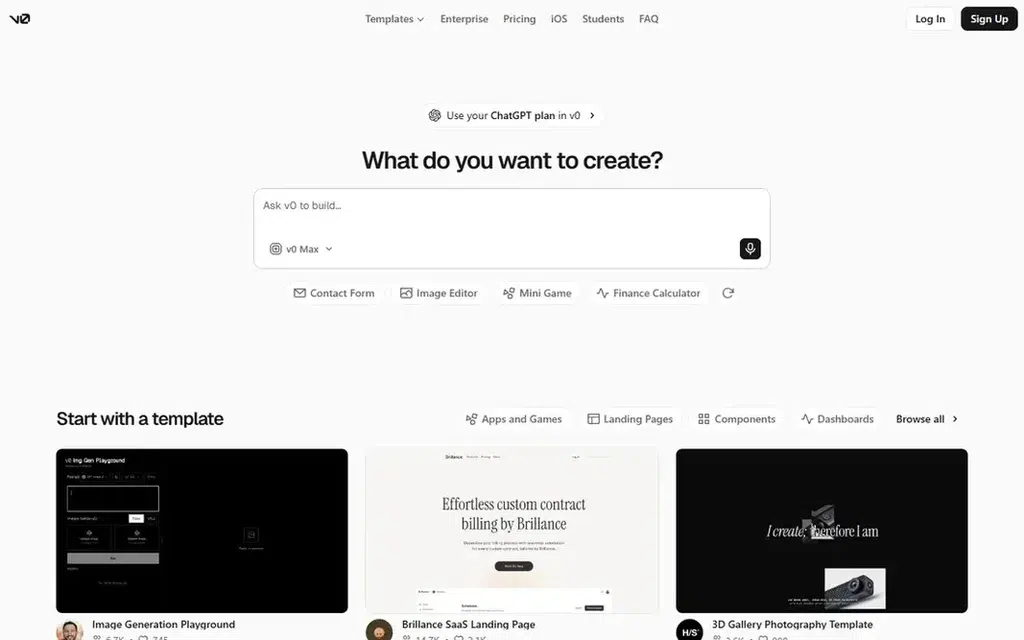
Vercel was built for Frontend and app delivery for SaaS. Vercel presents itself as agentic infrastructure, an autonomous stack for every app and agent. From a buyer's view, for SaaS startups, that makes it a natural home for the user-facing product: dashboards, marketing sites and API routes that require quick delivery and a developer-friendly workflow.
The main drawbacks: Complicated backends may need another provider.
Pick Vercel when the product is primarily a web app and delivery speed matters more than breadth of infrastructure services. Beyond that, startups with heavy data processing, custom networking or a broad set of managed cloud services may find a broader provider necessary alongside it. What you pay to start with Vercel: $20 per month. You can start on Vercel without paying.
- Capable fit for modern app stacks
- Agentic infrastructure positioning
- Wide cloud services are restricted
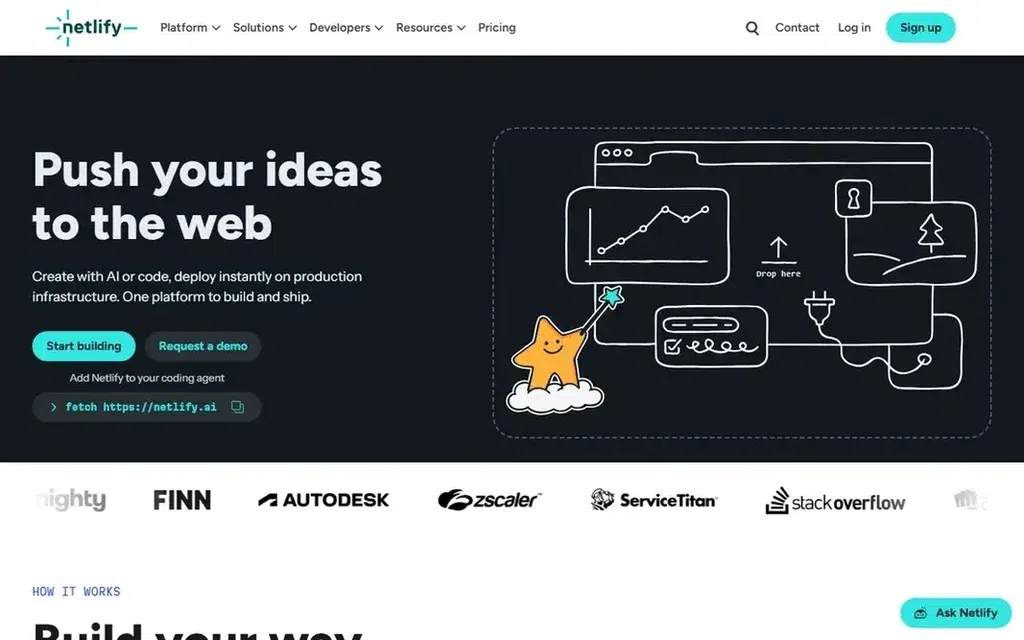
In short, Netlify is for quick app creation from prompt or code. Netlify describes itself as where apps come to life, letting teams start with a prompt, an agent or code and then produce, share and run the app at any scale.
The main drawbacks: Less suited to deep infrastructure control.
It does well for small teams that value speed and a managed workflow over deep control of the underlying infrastructure. Starting cost for Netlify: $9 per month. Netlify includes a free tier.
- Share and run apps
- Scales with the product
- Very complicated backends may outgrow it
How we built this list
For each of the 5 tools we noted price, free plan or trial, fit for hosting for SaaS startups and the main limit, using vendor pages and documentation. Figures are shown as the vendors publish them. Billing terms, seat minimums and add-ons can change the real cost. Order on the page follows fit for the typical buyer first, then price transparency and free access. Your own requirements should decide the final pick.
Before you commit
- Ask Google Cloud Platform for a written quote, since no starting price is shown.
- Look at free plan limits closely: DigitalOcean, Vercel and Netlify have one, and the caps decide whether it is usable for real work.
- Before choosing Google Cloud Platform, weigh its main limit: service range can overwhelm new teams.
- Ask Netlify which support channels and response times come with the plan you would buy.
- Verify that exporting from Heroku is possible on your plan and covers all your records.
FAQ
When should a SaaS startup choose AWS, Google Cloud or Azure?
These systems make sense when the product needs a wide catalog of cloud services, from compute and storage to data and AI tooling. They reward teams that can invest in cloud operations, and they scale as the business grows.
What is the cheapest option for hosting for SaaS startups in this list?
On published monthly entry prices, DigitalOcean is the lowest here at $4 per month. Entry price is only part of the cost, because seats, add-ons and billing terms can change the total. For the full picture, the cards above cover all 5 entries of this hosting for SaaS startups list, including price, free plan and limits.
Which options for hosting for SaaS startups have a free plan?
On this list, DigitalOcean, Vercel and Netlify include a free plan. Caps on seats, usage or features are common, so test the free plan against your real workload.
How are the tools for hosting for SaaS startups ordered?
Google Cloud Platform sits first and Netlify last because the order follows typical fit for hosting for SaaS startups, then price clarity and free access. It is a judgement call, so read each profile for fit and limits.
Is Google Cloud Platform the right pick for everyone comparing hosting for SaaS startups?
No single tool suits every team. Google Cloud Platform comes first because it fits AI and data-heavy SaaS products, while Heroku suits fully managed app hosting and DigitalOcean suits simpler cloud for AI products. Match the tool to your own size, budget and workflow before deciding.
How should a startup compare hosting costs?
Confirm the billing model on each vendor site and estimate growth scenarios. Predictability commonly matters as much as the underlying rate for early-stage teams.
Sources
- https://cloud.google.com
- https://www.heroku.com
- https://www.digitalocean.com
- https://vercel.com
- https://www.netlify.com