6 Best ERP Suites for Retail for 2026, Vetted and Compared
Compare 6 picks for the best ERP suites for retail, with prices, free plans and who each fits. Every profile names its biggest catch. Updated November 2026.
- Editor's choice
 Odoo
Open-source ERP with integrated apps
Starts atPricing on requestVisit odoo.comFull review - Great alternativeSAP S/4HANA Retail
Large enterprises needing modular, AI-driven ERP
Starts atPricing on requestVisit sap.comFull review - Also consider
 Epicor Prophet 21
Wholesale distribution inventory and orders
Starts atPricing on requestVisit epicor.comFull review
Direct answer
Odoo leads the list, best for open-source ERP with integrated apps. SAP S/4HANA Retail fits large enterprises needing modular, AI-driven ERP; Epicor Prophet 21 fits wholesale distribution inventory and orders. All 6 tools are compared below on fit, free plan and limits. None of these vendors publish plan prices, so pricing is on request for every option.
TL;DR:
- Top of the list is Odoo, which targets open-source ERP with integrated apps.
- Odoo, Infor CloudSuite Retail and the 4 others all sell by quote; expect sales conversations before you see a price.
- One limit worth knowing about Odoo: may need technical resources to customize.
- For industry-specific retail operations and supply chain, Infor CloudSuite Retail is worth a look.
- Only Odoo offers a free plan among these 6 tools.
Last checked November 2026. Pricing on request: vendors did not publish plan prices when this guide was last checked (November 2026), so ask each vendor for a written quote.
Quick comparison
| Tool | Best for | Starts at | Free plan? | |
|---|---|---|---|---|
| Odoo | Open-source ERP with integrated apps | Pricing on request | Yes | Visit |
| SAP S/4HANA Retail | Large enterprises needing modular, AI-driven ERP | Pricing on request | Not stated | Visit |
| Epicor Prophet 21 | Wholesale distribution inventory and orders | Pricing on request | Not stated | Visit |
| Microsoft Dynamics 365 Commerce | Unified commerce for midsized to large enterprises | Pricing on request | Not stated | Visit |
 NetSuite | Cloud ERP for accounting, inventory, and orders | Pricing on request | Not stated | Visit |
 Infor CloudSuite Retail | Industry-specific retail operations and supply chain | Pricing on request | Not stated | Visit |
ERP Suites for Retail profiles
This LinkVetted guide covers 6 options for ERP suites for retail. Each profile lists a starting price, free plan details, strengths and drawbacks, so you can drop poor fits quickly.
Odoo works best for open-source ERP with integrated apps. Odoo is an open-source ERP and CRM product that comes with eCommerce and CMS among its completely integrated apps. Also, Odoo offers a wide set of integrated applications that can be adapted to several business needs.
More specifically, if you value open-source adaptability and integrated apps, Odoo is worth considering. Customizing Odoo may require technical expertise, and support relies on how you deploy it. No starting price is listed for Odoo here; confirm pricing on the vendor site. Free access exists with Odoo.
Downsides: May need technical resources to customize.
- Open-source with cloud choice
- Modular and configurable
- Support choices vary by deployment
SAP S/4HANA Retail
Best for: Large enterprises needing modular, AI-driven ERP
For large enterprises needing modular, AI-driven ERP, SAP S/4HANA Retail is a natural candidate. It is positioned for fast-growth businesses that require to scale. In practice, choose SAP S/4HANA Retail when deep process coverage and scalability are essential.
Honest limits: Implementation can be lengthy.
On top of that, smaller retailers may find the product overkill. As for the details, the breadth of SAP can translate into longer implementation timelines and a need for experienced consultants. As for the details, retailers with complex supply chains and multi-entity operations may benefit from its depth. Check the vendor site for SAP S/4HANA Retail pricing; none is listed in this comparison. Trial and free access: Not stated.
- Modular ERP with built-in AI
- Built for fast-growth businesses
- Needs specialized expertise
Where Epicor Prophet 21 fits: wholesale distribution inventory and orders. It aims to boost visibility and efficiency across distribution. Beyond that, retailers focused solely on storefront operations might prefer a retail-specific suite.
Where it is weaker: Primarily for distributors, not pure retailers.
The option is built around the needs of distributors, including inventory management and order processing. Worth adding: retailers with a wholesale or distribution component may find it relevant. Also, Prophet 21 is made for wholesale distribution instead of pure retail. So it may not handle all retail-specific requirements like POS or merchandising. Evaluate whether its distribution-centric features align with your model. No starting price is listed for Epicor Prophet 21 here; confirm pricing on the vendor site. As for free access: Not stated.
- Simplifies inventory and purchasing
- Focus on wholesale distribution
- May lack some retail-specific features
Microsoft Dynamics 365 Commerce
Best for: Unified commerce for midsized to large enterprises
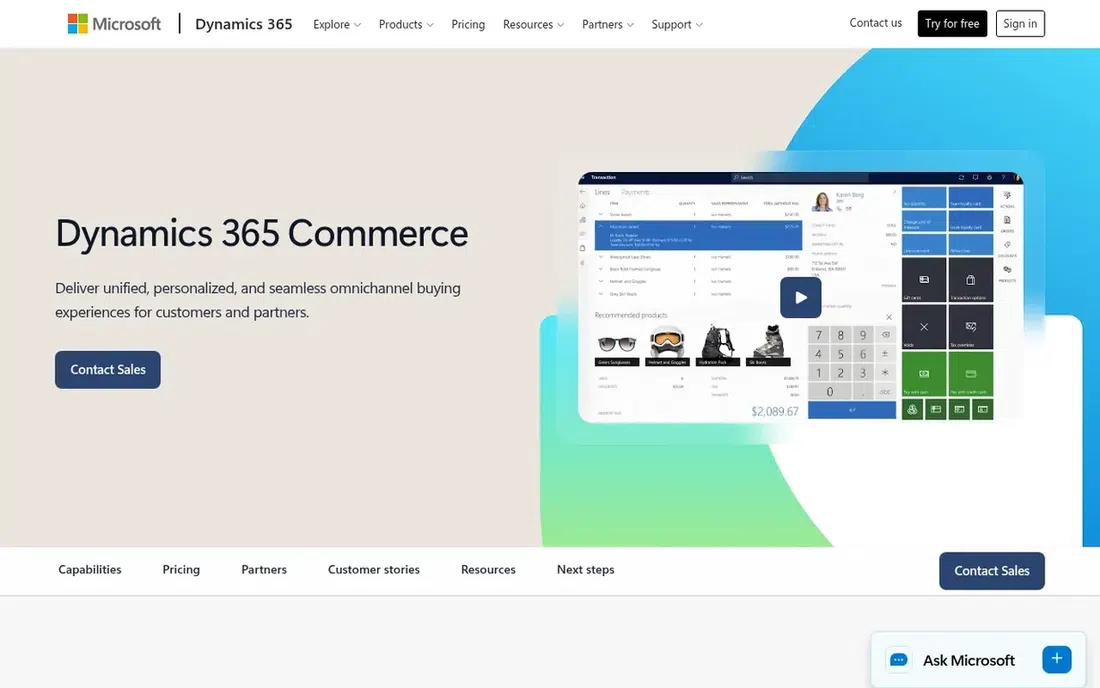
Microsoft Dynamics 365 Commerce is built with unified commerce for midsized to large enterprises in mind. It is made for midsized to large-enterprise customers and partners who want unified and personalized commerce. As for the details, if you prefer a more straightforward cloud ERP focused chiefly on accounting and inventory, NetSuite could be a better fit.
What to check first: Complicated configuration for some teams.
Consider Dynamics 365 Commerce when commerce and ERP integration is a priority. As for the details, smaller retailers with restricted IT staff might find it heavy for their needs. This comparison lists no price for Microsoft Dynamics 365 Commerce; ask the vendor. Free plan details: Not stated.
- Unified commerce and back office
- Scales for midsized to large enterprises
- Needs Microsoft ecosystem alignment
NetSuite serves cloud ERP for accounting, inventory, and orders. It is built to provide companies control over core operations.
Also, NetSuite may need customization for highly complicated retail scenarios, like advanced merchandising or POS integration. If your focus is core ERP with inventory and order management, NetSuite is a capable candidate. Pricing for NetSuite is not stated here, so ask the vendor for current figures. Free plan details: Not stated.
Honest limits: Continuing subscription cost considerations.
- Cloud-based with AI capabilities
- Supports procurement and supply chain
- May need customization for complicated retail
Infor CloudSuite Retail
Best for: Industry-specific retail operations and supply chain
Infor CloudSuite Retail was built for industry-specific retail operations and supply chain. The suite aims to address the particular challenges of retail operations instead of offering a generic ERP.
Beyond that, retailers with complicated supply chain and workforce needs may benefit from its industry-specific approach. Check the vendor site for Infor CloudSuite Retail pricing; none is listed in this comparison. Free access: Not stated.
Downsides: Less right for very small retailers.
- Optimizes supply chains and inventory
- Cloud-based for agility
- May need industry-specific configuration
How we built this list
The comparison looks at four things: starting price, free access, how well the feature set matches ERP suites for retail, and the main limit of each tool. Seat minimums, billing terms and add-ons can move the real cost, so the starting prices here are a guide and not a quote. The sequence is a judgement call: typical use case first, then pricing transparency, then free access. Use the profiles to check fit.
A buyer's checklist
- Ask each vendor, from Odoo to Infor CloudSuite Retail, for a written quote; none of them publishes a starting price.
- Look at the free plan from Odoo closely: its caps decide whether it is usable for real work.
- Before choosing Odoo, weigh its main limit: may require technical resources to customize.
- Read the plan comparison for Microsoft Dynamics 365 Commerce carefully; key features often start on a higher tier.
- The entry price of NetSuite is only the starting point; model the full cost with seats and extras.
FAQ
Which options for ERP suites for retail have a free plan?
Odoo is the only tool in this list with a free plan. Free plans usually cap users, projects or features, so check the limits on the vendor page. Each of the 6 options in this ERP suites for retail guide has its own card above with the price, free plan and limits.
Can I try these tools before paying?
Often, yes. Odoo has a free plan. Use your own data and a real task during the test, and check what the free tier or trial limits before you rely on it. All 6 picks in this ERP suites for retail comparison list a starting price, free plan details and the main limits on their cards above.
What is the typical implementation time for a retail ERP?
Implementation timelines vary widely based on scope, customization, and deployment model. Cloud options may be quicker to deploy than on-premise systems. It is best to discuss timelines straight with vendors and implementation partners based on your specific requirements.
How do cloud ERPs differ from on-premise for retail?
On-premise systems are installed locally and may offer more control but need more maintenance. Plenty of retail ERPs now offer cloud deployments with AI capabilities.
Is Odoo the right pick for everyone comparing ERP suites for retail?
No single tool suits every team. Odoo comes first because it fits open-source ERP with integrated apps, while SAP S/4HANA Retail suits large enterprises needing modular, AI-driven ERP and Epicor Prophet 21 suits wholesale distribution inventory and orders. Match the tool to your own size, budget and workflow before deciding.
What should a retailer look for in an ERP suite?
Supply chain and financial management are also key. The right ERP relies on your size, complexity, and whether you need retail-specific features or a general business suite.
Sources
- https://www.odoo.com
- https://www.sap.com/products/erp/s4hana.html
- https://www.epicor.com/en-us/products/erp/prophet-21
- https://www.microsoft.com/en-us/dynamics-365/products/commerce
- https://www.netsuite.com/portal/products/erp.shtml
- https://www.infor.com/industries/retail