6 Best ERP Suites for Healthcare for 2026, Vetted and Compared
Best ERP suites for healthcare in 2026: 6 tools with starting prices, free plans and limits. Cost notes and weak points included. Built for quick decisions.
- Editor's choice
 Workday Financial Management
Finance teams prioritizing control and transactional efficiency
Starts atPricing on requestVisit workday.comFull review - Great alternative
 SAP S/4HANA
Large organizations needing modular cloud ERP with built-in AI
Starts atPricing on requestVisit sap.comFull review - Also considerOracle Health ERP
Health systems wanting integrated clinical and financial data
Starts atPricing on requestVisit oracle.comFull review
Direct answer
Start with Workday Financial Management if you need Finance teams prioritizing control and transactional efficiency. If your case is different, SAP S/4HANA suits large organizations needing modular cloud ERP with built-in AI and Oracle Health ERP suits Health systems wanting integrated clinical and financial data. The full list of 6 tools follows, with free plan facts. None of these vendors publish plan prices, so pricing is on request for every option.
TL;DR:
- Top of the list is Workday Financial Management, which targets Finance teams prioritizing control and transactional efficiency.
- Check the limits for Infor CloudSuite Healthcare before you commit: industry focus may limit non-healthcare adaptability.
- A permanent free plan is missing from all 6 tools, Workday Financial Management and Epicor Kinetic included; plan for a trial or a premium start.
- Every tool from Workday Financial Management to Epicor Kinetic works by quote, with no list price shown.
- For discrete manufacturers serving healthcare supply needs, Epicor Kinetic is worth a look.
Last checked November 2026. Pricing on request: vendors did not publish plan prices when this guide was last checked (November 2026), so ask each vendor for a written quote.
Quick comparison
| Tool | Best for | Starts at | Free plan? | |
|---|---|---|---|---|
| Workday Financial Management | Finance teams prioritizing control and transactional efficiency | Pricing on request | Not stated | Visit |
| SAP S/4HANA | Large organizations needing modular cloud ERP with built-in AI | Pricing on request | Not stated | Visit |
| Oracle Health ERP | Health systems wanting integrated clinical and financial data | Pricing on request | Not stated | Visit |
| Infor CloudSuite Healthcare | Healthcare supply chain, scheduling, and interoperability needs | Pricing on request | Not stated | Visit |
 Microsoft Dynamics 365 Finance | Organizations wanting financial reporting and embedded analytics | Pricing on request | Not stated | Visit |
 Epicor Kinetic | Discrete manufacturers serving healthcare supply needs | Pricing on request | Not stated | Visit |
6 options for ERP suites for healthcare in detail
LinkVetted compared 6 tools for ERP suites for healthcare. The goal is a practical shortlist: published prices, free plan facts, best-fit use cases and honest limits for every entry.
Workday Financial Management
Best for: Finance teams prioritizing control and transactional efficiency
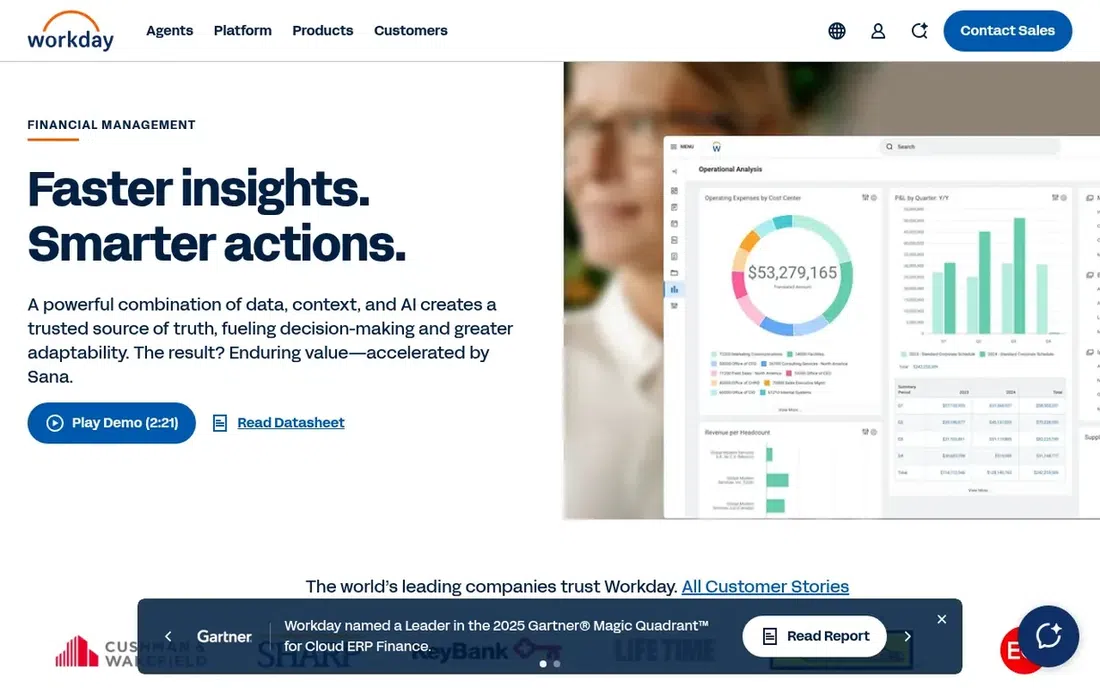
Workday Financial Management serves Finance teams prioritizing control and transactional efficiency. Providers seeking a single suite handling patient-facing operations alongside finance may have to pair it with specialized systems or look at a healthcare-packaged ERP.
Workday Financial Management does not show a starting price in this comparison, so check the vendor site for current pricing. On free options: Not stated.
Watch-outs: Finance-centric instead of clinical.
- Demo available to evaluate fit
- Focus on transactional efficiency and control
- Supply chain depth should be verified

Think of SAP S/4HANA for large organizations needing modular cloud ERP with built-in AI. SAP S/4HANA is presented as a modular ERP cloud option meant to bring built-in AI to core business processes so organizations can scale without limits.
The product's breadth can translate into longer scoping and configuration cycles, and healthcare-specific needs are usually addressed through partner options instead of a single healthcare package. Smaller providers or teams wanting a ready-made healthcare bundle may prefer a suite explicitly packaged for the industry. Check the vendor site for SAP S/4HANA pricing; none is listed in this comparison. On free options: Not stated.
What to check first: Wide system can be complicated to scope.
- Built-in AI for core processes
- Modular cloud ERP structure
- Healthcare tailoring comes through partners
Oracle Health ERP
Best for: Health systems wanting integrated clinical and financial data
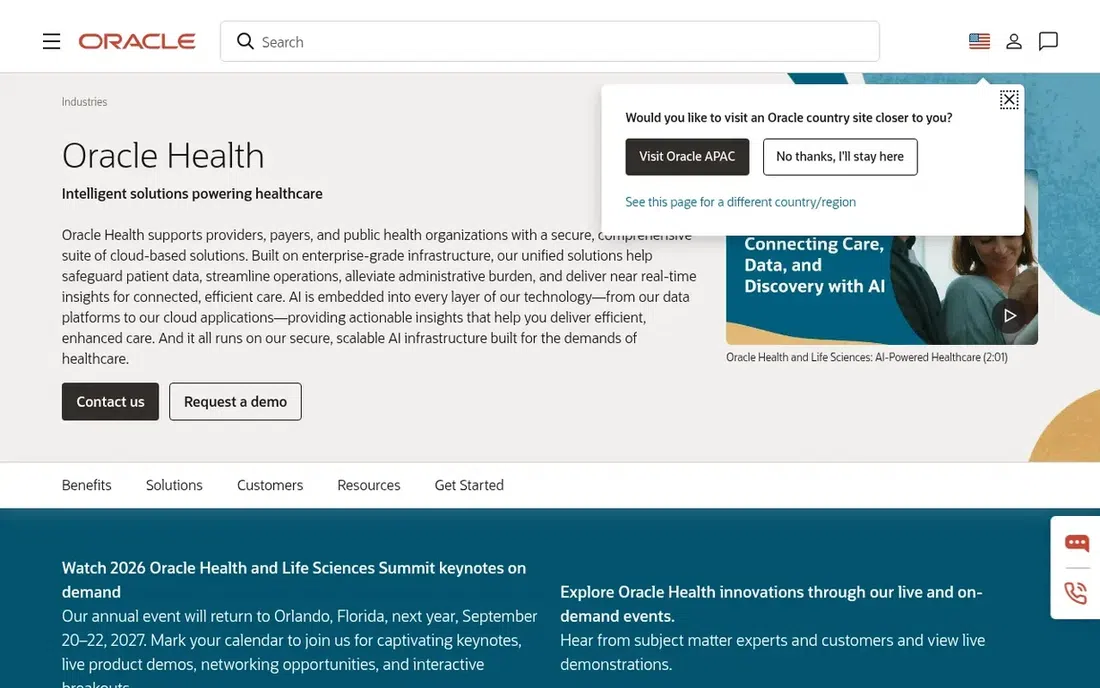
Oracle Health ERP serves Health systems wanting integrated clinical and financial data. Teams with purely financial requirements and no clinical connection may find a finance-led suite more straightforward, whereas organizations prioritizing healthcare-specific interoperability should confirm those details straight with the vendor.
Where it shines: Aim of people-centric experiences.
Beyond that, since the offering spans numerous capabilities, implementation scope and module fit deserve close review before committing. Worth adding: Oracle Health ERP is positioned around advancing how health happens, with secure and dependable options intended to deliver better healthcare insights and people-centric experiences. Pricing for Oracle Health ERP is not stated here, so ask the vendor for current figures. Trial and free access: Not stated. Points against: Wide scope may need careful scoping.
- Emphasis on secure
- Steady delivery
- Healthcare depth varies by module
Infor CloudSuite Healthcare
Best for: Healthcare supply chain, scheduling, and interoperability needs
Pick Infor CloudSuite Healthcare if this describes you: Healthcare supply chain, scheduling, and interoperability needs. Infor CloudSuite Healthcare includes cloud-based healthcare software including ERP, staff scheduling, healthcare interoperability, and supply chain management.
On top of that, since the suite is tailored to healthcare, organizations with substantial non-healthcare operations should check how well it extends to those areas. Infor CloudSuite Healthcare does not show a starting price in this comparison, so check the vendor site for current pricing. Free plan details: Not stated.
Where it is weaker: Module mix needs careful evaluation.
- Interoperability and supply chain tools
- Staff scheduling capabilities
- Industry focus may limit non-healthcare adaptability
Microsoft Dynamics 365 Finance
Best for: Organizations wanting financial reporting and embedded analytics
In short, Microsoft Dynamics 365 Finance is for organizations wanting financial reporting and embedded analytics. Microsoft Dynamics 365 Finance is presented as software to boost profitability with financial reporting, embedded analytics, and AI-driven insights.
For everyday use, the product centers on finance instead of a complete healthcare ERP, so supply chain, scheduling, and clinical integration needs must be addressed through extra options. Microsoft Dynamics 365 Finance shows no starting price here, so confirm the cost on the vendor site. Free options: Not stated.
Points against: Finance scope instead of full clinical ERP.
- Suits Microsoft-centered environments
- AI-driven insights positioning
- Healthcare additions may need partners
Epicor Kinetic is designed for discrete manufacturers serving healthcare supply needs. Epicor Kinetic is cloud manufacturing ERP that simplifies planning, production, and supply chain operations, helping discrete manufacturers link workflows and gain insight.
Points against: Restricted healthcare-specific features.
It suits healthcare suppliers and medical device or equipment manufacturers that require production-oriented ERP instead of a provider-focused suite, making it relevant to the healthcare supply ecosystem. Pricing for Epicor Kinetic is not stated here, so ask the vendor for current figures. On free options: Not stated.
- Planning and production support
- Supply chain workflow connection
- Not aimed at provider operations
How we chose
LinkVetted looked at what each vendor publishes: pricing, plan limits, feature coverage for ERP suites for healthcare and stated drawbacks. No hands-on testing is claimed. Prices and plan limits come from vendor pages and can change, so confirm them on the vendor site before you buy. Tools are placed by general fit for ERP suites for healthcare, with price clarity and free access as tie-breakers. A different team can reasonably rank them differently.
Questions to settle before buying
- Ask each vendor, from Workday Financial Management to Epicor Kinetic, for a written quote; none of them publishes a starting price.
- Read the limits listed for Workday Financial Management first: Finance-centric instead of clinical.
- Ask Infor CloudSuite Healthcare which support channels and response times come with the plan you would buy.
- Add up seats, add-ons and usage charges for Microsoft Dynamics 365 Finance before comparing it with cheaper entries.
- Read the plan comparison for SAP S/4HANA carefully; key features often start on a higher tier.
FAQ
Is Workday Financial Management the right pick for everyone comparing ERP suites for healthcare?
No single tool suits every team. Workday Financial Management comes first because it fits Finance teams prioritizing control and transactional efficiency, while SAP S/4HANA suits large organizations needing modular cloud ERP with built-in AI and Oracle Health ERP suits Health systems wanting integrated clinical and financial data. Match the tool to your own size, budget and workflow before deciding.
How are the tools for ERP suites for healthcare ordered?
The order follows typical fit for ERP suites for healthcare, with Workday Financial Management first and Epicor Kinetic last, then price clarity and free access. It is editorial judgement, not a score, so another team could rank the tools differently.
How should a smaller healthcare organization choose?
Smaller organizations commonly benefit from a consolidated cloud suite with straightforward financials and inventory, then add specialized tools when needed. Map your must-have functions first, then compare how much of that scope each suite includes without heavy customization.
Can I try these tools before paying?
Not by default. None of the tools, from Workday Financial Management to Epicor Kinetic, lists a free plan or a free trial here, so ask each vendor for a demo before committing.
Does any tool for ERP suites for healthcare here have a free plan?
A permanent free plan is not offered by Workday Financial Management, Epicor Kinetic or the other tools here. Plan a short evaluation period instead.
Sources
- https://www.workday.com/en-us/products/financial-management/overview.html
- https://www.sap.com/products/erp/s4hana.html
- https://www.oracle.com/health
- https://www.infor.com/industries/healthcare
- https://www.microsoft.com/en-us/dynamics-365/products/finance
- https://www.epicor.com/en-us/products/erp/kinetic