Top 5 ERP Software for Medical Clinics for 2026 (Prices and Free Plans)
Best ERP software for medical clinics, compared. 5 tools with published prices, free plans and limits. Each entry gets a plain verdict. Numbers first.
- Editor's choiceAthenahealth athenaOne
Ambulatory care clinical and financial workflows
Starts atPricing on requestVisit athenahealth.comFull review - Great alternative
 Odoo
Modular apps on one system
Starts atPricing on requestVisit odoo.comFull review - Also consider
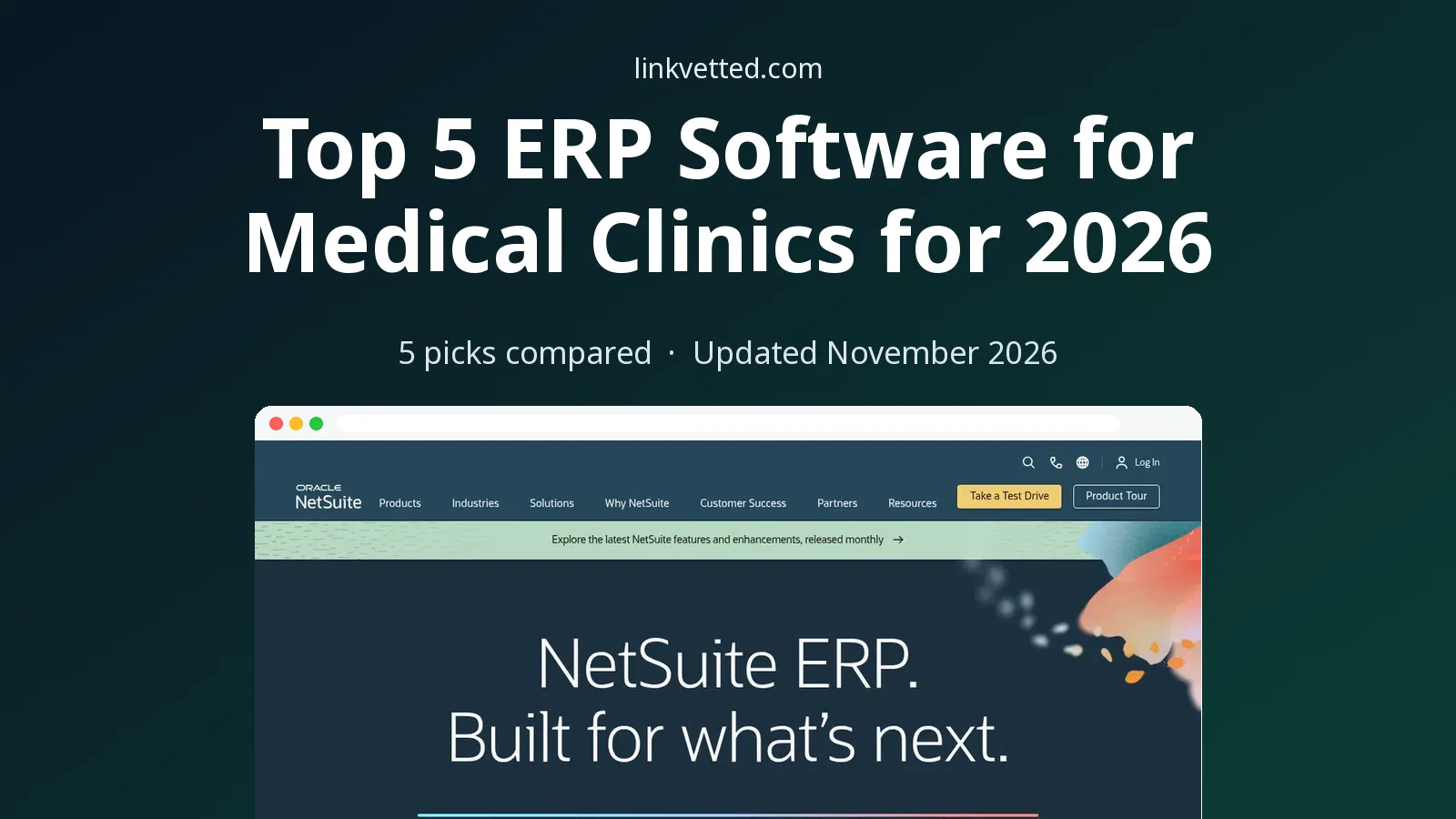
 Oracle NetSuite
Wide cloud ERP with built-in AI
Starts atPricing on requestVisit netsuite.comFull review
Direct answer
Start with Athenahealth athenaOne if you need ambulatory care clinical and financial workflows. If your case is different, Odoo suits modular apps on one product and Oracle NetSuite suits broad cloud ERP with built-in AI. Free plan facts and limits for all 5 tools follow. None of these vendors publish plan prices, so pricing is on request for every option.
TL;DR:
- Top of the list is Athenahealth athenaOne, which targets ambulatory care clinical and financial workflows.
- Acumatica Cloud ERP fits Cloud and mobile business visibility.
- Pricing across the list, from Athenahealth athenaOne to Acumatica Cloud ERP, is by quote only.
- Before buying Oracle NetSuite, weigh this: wide scope can mean heavier setup.
Last checked November 2026. Pricing on request: vendors did not publish plan prices when this guide was last checked (November 2026), so ask each vendor for a written quote.
Quick comparison
| Tool | Best for | Starts at | Free plan? | |
|---|---|---|---|---|
| Athenahealth athenaOne | Ambulatory care clinical and financial workflows | Pricing on request | Not stated | Visit |
| Odoo | Modular apps on one system | Pricing on request | Yes | Visit |
| Oracle NetSuite | Wide cloud ERP with built-in AI | Pricing on request | Not stated | Visit |
 SAP Business One | Small and midsize clinic operations | Pricing on request | Not stated | Visit |
| Acumatica Cloud ERP | Cloud and mobile business visibility | Pricing on request | Not stated | Visit |
Tool-by-tool breakdown
Short on time? The summary and table above give the quick view of 5 ERP software for medical clinics, and the profiles that follow give the detail behind each entry.
Athenahealth athenaOne
Best for: Ambulatory care clinical and financial workflows
Where Athenahealth athenaOne fits: ambulatory care clinical and financial workflows. Athenahealth athenaOne is a healthcare product and services offering for ambulatory care, targeted at connecting the healthcare ecosystem and reducing administrative complexity.
Downsides: Narrower general ERP scope.
Also, AthenaOne is built around healthcare delivery instead of wide ERP functions like manufacturing or general inventory, so organizations wanting a single system for all back-office operations may need complementary software. No starting price is listed for Athenahealth athenaOne here; confirm pricing on the vendor site. Free access: Not stated.
- Links clinical and financial services
- Concentrated on ambulatory care
- Best suited to ambulatory settings
Odoo is built with modular apps on one product in mind. Clinics that want to assemble a system from modular apps, like billing, inventory and customer management, can tailor it to their size and priorities.
Limits to weigh: Clinical depth varies by app.
This comparison lists no price for Odoo; ask the vendor. Odoo includes a free tier.
- Cloud or self-hosted deployment
- Open source choice available
- Numerous modules to configure
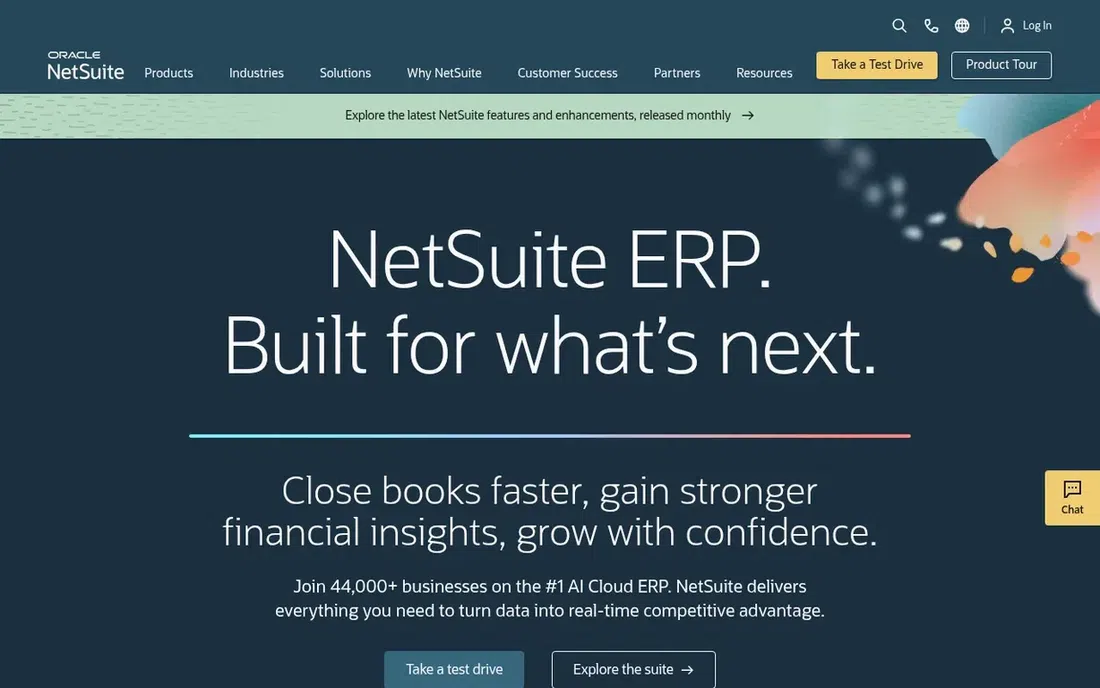
Where Oracle NetSuite fits: wide cloud ERP with built-in AI. For clinics that want a single system spanning back-office finance and broader operations, it supplies a broad feature footprint. It tends to fit bigger or multi-location organizations that can invest time in configuration.
Downsides: Not clinic-specific by default.
In daily use, since NetSuite is a general business product, clinical workflows like scheduling and charting are not its core focus. The breadth of features can complicate initial setup. Clinics wanting a purpose-built healthcare system may prefer a clinical-first choice, whereas those prioritizing unified finance and operations can keep NetSuite on the shortlist. Oracle NetSuite shows no starting price here, so confirm the cost on the vendor site. Free access: Not stated.
- Built-in AI for data-driven action
- Merges financials
- Wide scope can mean heavier setup
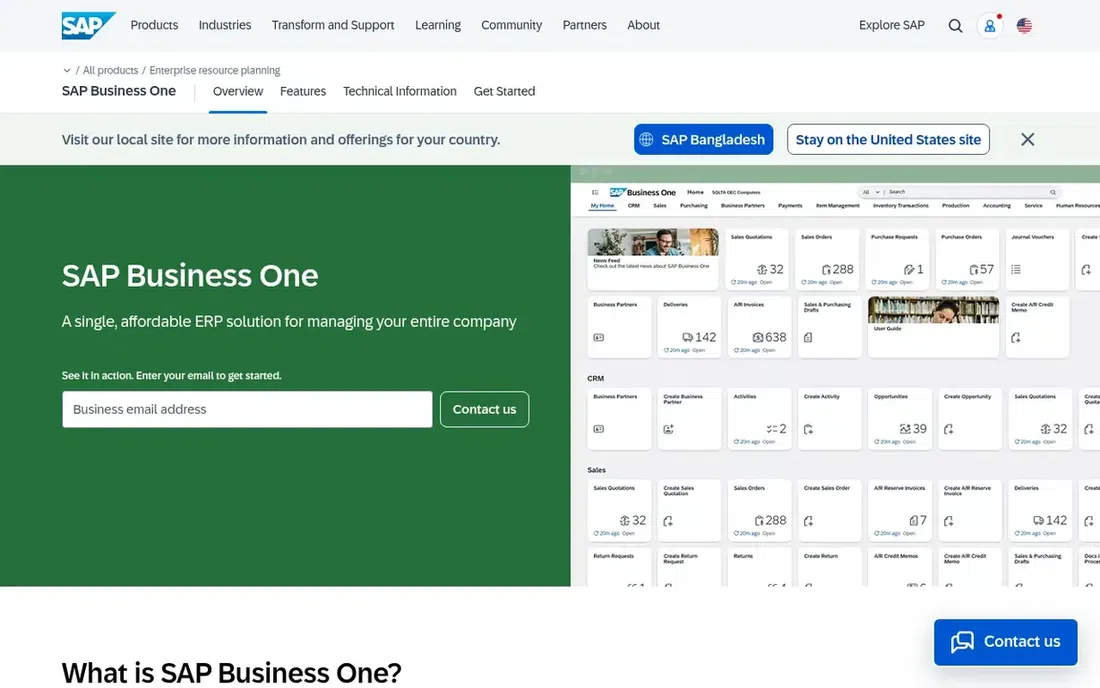
Where SAP Business One fits: small and midsize clinic operations. It fits organizations that want established ERP processes without moving to a large enterprise suite.
Worth adding: the system is built around general business operations instead of patient-facing care, so clinical scheduling and records would come from separate systems. This comparison lists no price for SAP Business One; ask the vendor. On free options: Not stated.
Upsides: Consolidates core back-office functions.
Where it is weaker: Implementation needs planning.
- Accounting, inventory
- Sales and purchasing in one system
- Restricted clinical features
Acumatica Cloud ERP
Best for: Cloud and mobile business visibility
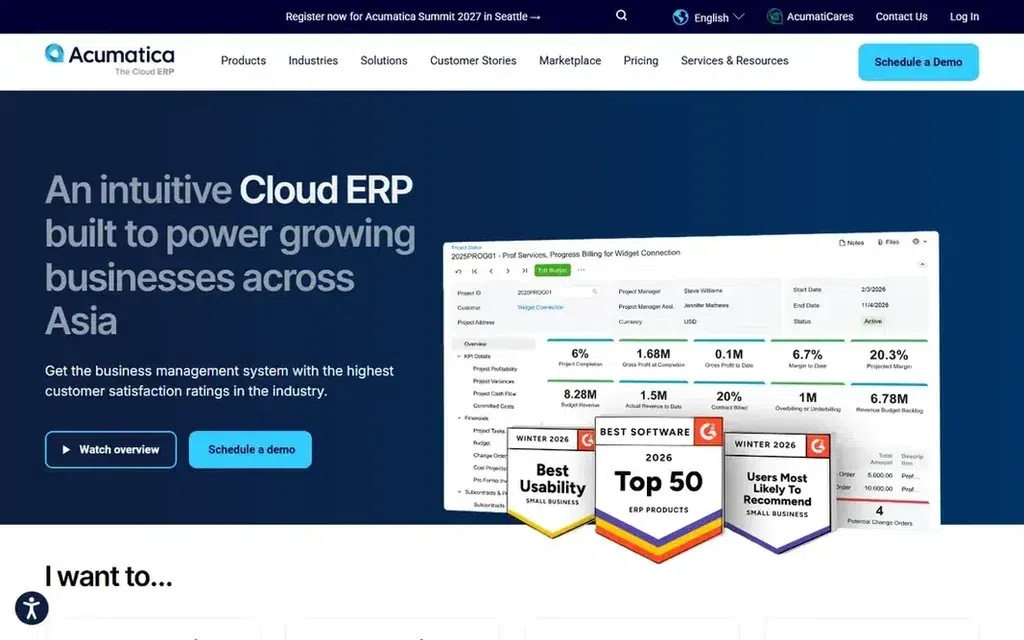
Think of Acumatica Cloud ERP for Cloud and mobile business visibility. Organizations wanting an out-of-the-box healthcare system may look elsewhere, whereas those prioritizing cloud access and live operational visibility can bundle it in their evaluation. In daily use, Acumatica is a general ERP, so clinic-specific capabilities like patient scheduling and clinical documentation are not its focus and would need complementary tools.
On top of that, clinics that want finance and operations data accessible across locations can evaluate it as an adaptable cloud foundation. Its licensing approach is described as customer-centric, which may appeal to teams planning incremental growth. This comparison lists no price for Acumatica Cloud ERP; ask the vendor. On free options: Not stated.
The main drawbacks: Needs module planning.
- Cloud and mobile technology focus
- Customer-centric licensing model
- General ERP instead of healthcare-specific
How these tools were picked
The comparison looks at four things: starting price, free access, how well the feature set matches ERP software for medical clinics, and the main limit of each tool. Where a vendor does not publish a price, the entry says quote. Where a price depends on seats or billing term, the entry says so. The sequence is a judgement call: typical use case first, then pricing transparency, then free access. Use the profiles to check fit.
Questions to settle before buying
- Ask each vendor, from Athenahealth athenaOne to Acumatica Cloud ERP, for a written quote; none of them publishes a starting price.
- Test the free plan from Odoo against your real workload before relying on it.
- Read the limits listed for Athenahealth athenaOne first: narrower general ERP scope.
- Look at which plan of Acumatica Cloud ERP unlocks the features you need; entry tiers are often cut down.
- Confirm minimum seats and billing terms with Odoo before you commit to an annual plan.
FAQ
How are the tools for ERP software for medical clinics ordered?
Athenahealth athenaOne sits first and Acumatica Cloud ERP last because the order follows typical fit for ERP software for medical clinics, then price clarity and free access. It is a judgement call, so read each profile for fit and limits.
What should clinics check before buying ERP software?
Confirm how billing and accounting link, whether inventory and purchasing handle your supplies, and what clinical integrations are available. Also verify deployment choices, reporting across locations and the effort required to configure the system for your workflows.
Is athenahealth athenaOne a full ERP replacement?
AthenaOne is oriented toward ambulatory care services and connecting clinical and financial workflows instead of wide ERP functions. Clinics with complex inventory or multi-entity finance may still need complementary systems, so map requirements before deciding.
Can I try these tools before paying?
Often, yes. Odoo has a free plan. Use your own data and a real task during the test, and check what the free tier or trial limits before you rely on it. Each of the 5 options in this ERP software for medical clinics guide has its own card above with the price, free plan and limits.
Can a general ERP like NetSuite or SAP Business One run a medical clinic?
General ERPs can manage clinic finance, inventory and purchasing well, but they usually do not bundle clinical charting or scheduling. For everyday use, plenty of clinics pair a general ERP with a clinical system, or choose a healthcare-focused system when clinical workflows are the priority.
Which options for ERP software for medical clinics have a free plan?
Odoo is the only tool in this list with a free plan. Free plans usually cap users, projects or features, so check the limits on the vendor page. All 5 picks in this ERP software for medical clinics comparison list a starting price, free plan details and the main limits on their cards above.
Sources
- https://www.athenahealth.com
- https://www.odoo.com
- https://www.netsuite.com
- https://www.sap.com/products/erp/business-one.html
- https://www.acumatica.com