5 Ecommerce Platform in US Worth Shortlisting in 2026
Searching for the best ecommerce platform in us? Here are 5 options with prices and free plans. The weak spots sit next to the strengths. Narrow your shortlist.

- Editor's choice
 Squarespace Commerce
Design-focused keeps for products and services
Starts atSee websiteVisit squarespace.comFull review - Great alternative
 Adobe Commerce
Enterprise B2B and B2C at global scale
Starts atSee websiteVisit business.adobe.comFull review - Also consider
 WooCommerce
WordPress users seeking open-source control
Starts at$29 a monthVisit woocommerce.comFull review
Direct answer
Start with Squarespace Commerce if you need design-focused keeps for products and services. Listed starting prices: WooCommerce from $29 a month and Shopify from $19 a month. For a different need, Adobe Commerce covers enterprise B2B and B2C at global scale and WooCommerce covers WordPress users seeking open-source control. The remaining 2 options are covered below with prices and limits.
TL;DR:
- Top of the list is Squarespace Commerce, which targets design-focused keeps for products and services.
- BigCommerce fits scalable commerce for expanding brands.
- What to know about Shopify first: can become costly as you add apps.
- The lowest published monthly entry price here is $19 per month, from Shopify.
- None of the 5 tools, from Squarespace Commerce to BigCommerce, has a free plan, so budget for a subscription or use a trial.
Last checked November 2026. Prices and plan details were read from the vendors' own pages in November 2026; vendors change plans often, so confirm the current price on the vendor site before you buy.
Quick comparison
| Tool | Best for | Starts at | Free plan? | |
|---|---|---|---|---|
| Squarespace Commerce | Design-focused keeps for products and services | See website | Not stated | Visit |
| Adobe Commerce | Enterprise B2B and B2C at global scale | See website | Not stated | Visit |
| WooCommerce | WordPress users seeking open-source control | $29 a month | Not stated | Visit |
 Shopify | All-in-one commerce for most firms | $19 a month | Free trial | Visit |
 BigCommerce | Scalable commerce for expanding brands | See website | Not stated | Visit |
Ecommerce Platform in Us compared in detail
If you are comparing ecommerce platform in us, this page covers 5 tools in one place: what each is best for, what it costs to start, whether it has a free plan, and the main limit to know about.
Squarespace Commerce is a good fit for design-focused keeps for products and services. It is recognised for its feature-rich templates and design-centric approach, making it a great fit for US creatives and small firms that prioritize aesthetics. From a buyer's view, if you need deep scalability or complicated B2B features, consider BigCommerce or Adobe Commerce.
The main drawbacks: Fewer advanced ecommerce features than some products.
The system is approachable and comes with tools to start an online store rapidly. Even so, Squarespace Commerce may lack some advanced ecommerce features and adaptability for highly customized keeps compared with products like Shopify or WooCommerce. Squarespace Commerce does not show a starting price in this comparison, so check the vendor site for current pricing. As for free access: Not stated.
- Beautiful templates with solid design focus
- Supports selling products, services, content
- Restricted adaptability for highly customized keeps
Adobe Commerce is designed for enterprise B2B and B2C at global scale. It is built for US enterprises that require a highly configurable and scalable option. Also, the product gives you solid features for managing complicated product catalogs and multi-channel commerce.
Points against: Requires significant technical expertise.
That said, Adobe Commerce needs significant technical expertise and can be complicated and expensive to implement. For everyday use, for more straightforward needs, consider Shopify or BigCommerce. Pricing for Adobe Commerce is not stated here, so ask the vendor for current figures. Free options: Not stated.
- Provides personalized experiences at global scale
- AI-powered composable ecommerce product
- Can be complicated and expensive to implement
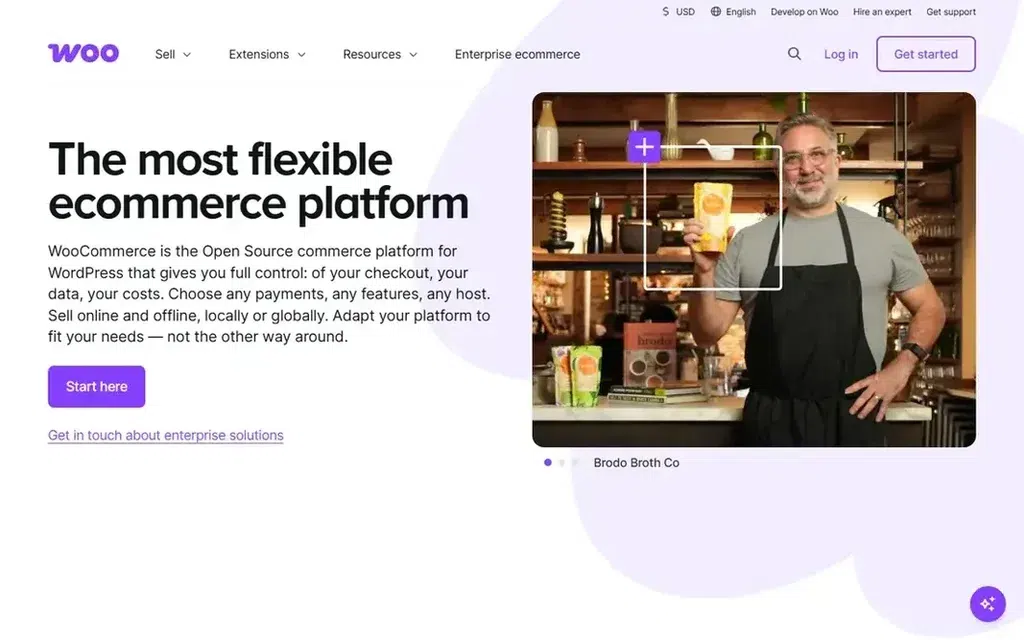
WooCommerce targets WordPress users seeking open-source control. WooCommerce is the open-source ecommerce product that helps merchants and developers build successful companies for the long term. It is well suited to US companies already using WordPress or those who want full control over their store's code and data.
Downsides: Needs more technical maintenance.
With a vast ecosystem of extensions, WooCommerce can be tailored to almost any requirement. That said, WooCommerce needs more technical maintenance and can become complicated as you add extensions. It may not be the best fit for companies without development resources. The starting price for WooCommerce: $29 per month. Free access: Not stated.
- Large community and extension library
- Open-source and highly configurable
- Can become complicated with plenty of extensions

Shopify was built for all-in-one commerce for most firms. Shopify is an all-in-one commerce system meant to help firms build and grow rapidly. It contains AI-powered tools and goes beyond entry-level ecommerce software by offering features to handle several aspects of your business.
Main advantages: AI-powered features for building and growth.
This makes it a solid fit for US merchants who want a unified option without needing to stitch together several systems. Even so, Shopify's broad app ecosystem can result in higher costs as you add functionality, and it supplies less direct control over code compared with open-source products. Consider alternatives like WooCommerce if you need full customization or BigCommerce for specific scalability needs. Price to start with Shopify: $19 per month. On free options: Free trial. Trade-offs to know: Less control over underlying code than open-source choices.
- Capable ecosystem and app support
- Full tools to run every part of your business
- Can become expensive as you add apps

BigCommerce is built with scalable commerce for expanding brands in mind. BigCommerce powers modern buying experiences across brands, regions, and channels from a single, scalable foundation. It is made for momentum, making it a good match for US companies that are expanding and need a product that can grow with them.
The main drawbacks: May have a steeper ramp-up time than more straightforward systems.
Also, the product supports both B2B and B2C operations, offering adaptability for diverse commerce models. In practice, Whereas BigCommerce is capable, it may have a steeper ramp-up time than more straightforward systems, and some features may need technical expertise. No starting price is listed for BigCommerce here; confirm pricing on the vendor site. Trial and free access: Not stated.
- Supports several brands, regions, channels
- Scalable foundation for modern buying experiences
- Some features may need technical knowledge
How the list was put together
LinkVetted used vendor pricing pages and product documentation as the base, then compared plans, free access and documented limits for 5 tools. Plan names, prices and limits change often. Treat the figures here as a starting point and verify them with the vendor. Tools are placed by general fit for ecommerce platform in us, with price clarity and free access as tie-breakers. A different team can reasonably rank them differently.
Questions to settle before buying
- Confirm the entry price on the vendor page. For Squarespace Commerce, Adobe Commerce and BigCommerce that means a quote rather than a fixed price.
- Take the trial from Shopify and push a live task through it before you pay.
- Before choosing Squarespace Commerce, weigh its main limit: restricted adaptability for highly customized keeps.
- Add up seats, add-ons and usage charges for Adobe Commerce before comparing it with cheaper entries.
- Let daily users try Squarespace Commerce on real work; their feedback beats any feature checklist.
FAQ
Can I try these tools before paying?
Often, yes. Shopify offers a free trial. Use your own data and a real task during the test, and check what the free tier or trial limits before you rely on it. For the full picture, the cards above cover all 5 entries of this ecommerce platform in us list, including price, free plan and limits.
How do I choose between hosted and open-source ecommerce systems?
Hosted products like Shopify manage hosting and security, offering simplicity. On top of that, open-source products like WooCommerce provide you more control but need you to run hosting and maintenance. Consider your team's technical capabilities and long-term adaptability needs.
What is the best ecommerce platform for small firms in the US?
The first pick on this list is Squarespace Commerce, because it suits design-focused keeps for products and services. Adobe Commerce is better for enterprise B2B and B2C at global scale, and WooCommerce for WordPress users seeking open-source control. Check price and limits against your own needs before choosing.
Which ecommerce system is best for B2B companies?
For most readers this guide would start with Squarespace Commerce, built for design-focused keeps for products and services. Adobe Commerce is the alternative for enterprise B2B and B2C at global scale, and WooCommerce for WordPress users seeking open-source control. The right answer depends on budget and workflow.
How are the tools for ecommerce platform in us ordered?
Squarespace Commerce sits first and BigCommerce last because the order follows typical fit for ecommerce platform in us, then price clarity and free access. It is a judgement call, so read each profile for fit and limits.
Does any tool for ecommerce platform in us here have a free plan?
No tool in this list, Squarespace Commerce and BigCommerce included, has a permanent free plan. Shopify offer a trial. Trials and quotes are the usual route, so plan a short evaluation period.
Sources
- https://www.squarespace.com/ecommerce
- https://business.adobe.com/products/magento/magento-commerce.html
- https://woocommerce.com
- https://www.shopify.com
- https://www.bigcommerce.com