The 6 Best Ecommerce Development Software in 2026, Ranked
Shortlisting the best ecommerce development software? 6 products compared on cost, free access and ideal buyer. The catches are listed up front. No hype.

- Editor's choice
 Adobe Commerce
Enterprise B2B and B2C experiences
Starts atSee websiteVisit business.adobe.comFull review - Great alternative
 Squarespace
Design-focused websites with commerce
Starts at$12 a monthVisit squarespace.comFull review - Also consider
 BigCommerce
Scalable multi-channel commerce foundations
Starts atSee websiteVisit bigcommerce.comFull review
Direct answer
If you need enterprise B2B and B2C experiences, Adobe Commerce is the first tool to look at here. Listed starting prices: Squarespace from $12 a month, Shopify from $19 a month and WooCommerce from $29 a month. Squarespace is the stronger choice for design-focused websites with commerce, while BigCommerce suits scalable multi-channel commerce foundations. Prices, free plans and limits for all 6 tools follow.
TL;DR:
- Adobe Commerce sits first on this list: enterprise B2B and B2C experiences.
- For open-source ecommerce for developers, WooCommerce is worth a look.
- Neither Adobe Commerce nor WooCommerce, nor any of the other 4 tools, has a permanent free plan; trials and quotes are the norm.
- Before buying Squarespace, weigh this: less depth for large catalogs.
Last checked November 2026. Prices and plan details were read from the vendors' own pages in November 2026; vendors change plans often, so confirm the current price on the vendor site before you buy.
Quick comparison
| Tool | Best for | Starts at | Free plan? | |
|---|---|---|---|---|
| Adobe Commerce | Enterprise B2B and B2C experiences | See website | Not stated | Visit |
| Squarespace | Design-focused websites with commerce | $12 a month | Free trial | Visit |
| BigCommerce | Scalable multi-channel commerce foundations | See website | Not stated | Visit |
 Shopify | All-in-one commerce for most firms | $19 a month | Free trial | Visit |
 Salesforce Commerce Cloud | Commerce within the Salesforce ecosystem | See website | Not stated | Visit |
 WooCommerce | Open-source ecommerce for developers | $29 a month | Not stated | Visit |
The best ecommerce development software
LinkVetted put together this guide to ecommerce development software for readers who want a clear shortlist without reading every vendor page. It compares 6 tools on starting price, free plans, who each one suits and where each one falls short.
Adobe Commerce works best for enterprise B2B and B2C experiences. Implementation and continuing operation usually demand specialized expertise, which can be heavy for smaller merchants. Adobe Commerce, formerly Magento, is an AI-powered composable ecommerce product for B2B and B2C firms delivering personalized experiences at global scale.
More specifically, Adobe Commerce is the more solid fit when global scale and deep customization are requirements. Firms wanting a more straightforward managed setup may prefer a hosted platform. Adobe Commerce shows no starting price here, so confirm the cost on the vendor site. As for free access: Not stated.
Drawbacks to consider: Better suited to bigger teams.
- Personalization at scale
- Composable architecture
- Complicated implementation
Squarespace is a good fit for design-focused websites with commerce. Squarespace is a website builder for creating a site and expanding a business, with customizable templates, AI website builder tools, and domain choices. In practice, choose Squarespace when a refined, design-led site with entry-level selling is the goal.
Squarespace gives you less depth for large product catalogs and advanced commerce workflows than dedicated ecommerce systems. Firms planning complicated operations may need a different system. Squarespace starts at: $12 per month. Free plan details: Free trial.
What to check first: Fewer advanced commerce controls.
- Domain and hosting choices
- Configurable templates
- Less depth for large catalogs

Think of BigCommerce for scalable multi-channel commerce foundations. It fits merchants who expect to grow across several markets and sales channels and need a system built to scale with that expansion.
Drawbacks to consider: Can be complicated for small keeps.
Pick BigCommerce when multi-region and multi-channel growth is a core part of your plan. Pricing for BigCommerce is not stated here, so ask the vendor for current figures. Free access: Not stated.
- Scalable foundation
- Multi-channel support
- Feature depth may need setup

In short, Shopify is for all-in-one commerce for most firms. Shopify is an all-in-one commerce system that merges store building with tools to handle numerous parts of a business.
Its homepage flags AI features and a quick path to building or growing a store. Also, companies with highly specialized technical requirements may prefer a more configurable system. Entry price for Shopify: $19 per month. On free options: Free trial.
Where it is weaker: App costs can add up.
- Quick setup
- AI and business tools
- Less control over hosting
Salesforce Commerce Cloud was built for Commerce within the Salesforce ecosystem. Choose it when commerce needs to integrate closely with existing Salesforce processes.
What to check first: Requires ecosystem commitment.
From a buyer's view, Salesforce Commerce Cloud is Salesforce's commerce offering, pitched at organizations that want shopping experiences connected to their broader customer data and systems. Pricing for Salesforce Commerce Cloud is not stated here, so ask the vendor for current figures. As for free access: Not stated.
- Connected commerce data
- Enterprise focus
- Implementation can be involved
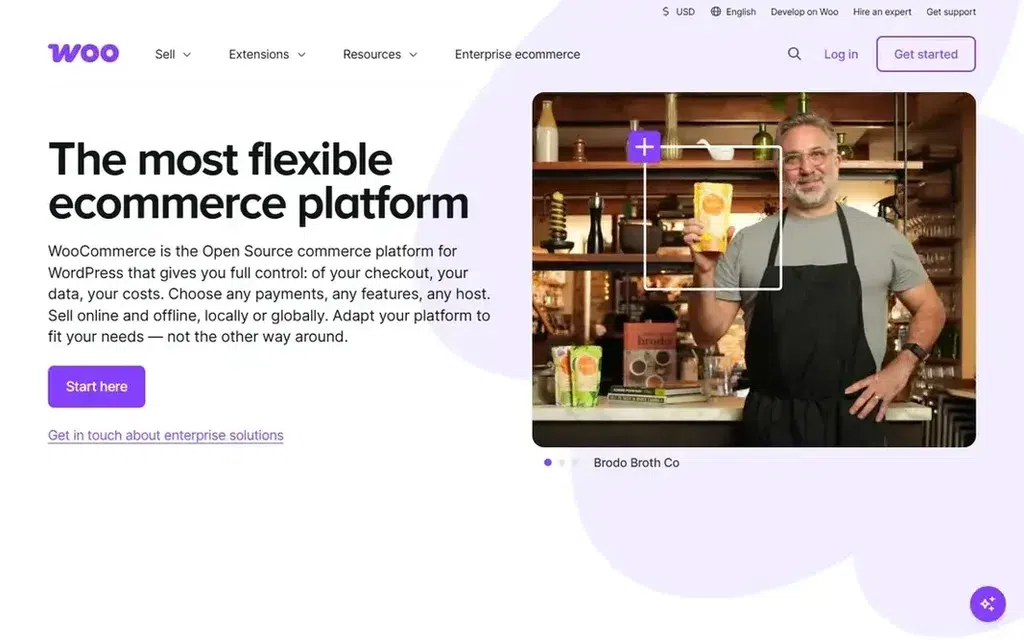
For open-source ecommerce for developers, WooCommerce is a natural candidate. WooCommerce describes itself as the open-source ecommerce product that helps merchants and developers build successful firms for the long term. It appeals to teams that want control over their stack and are comfortable managing hosting and extensions alongside the core product.
Trade-offs to know: Needs more technical upkeep.
Beyond that, open-source adaptability includes responsibility: updates, hosting, and integrations are largely in your hands. More specifically, choose WooCommerce when long-term control and developer involvement are priorities. Starting cost for WooCommerce: $29 per month. Free plan details: Not stated.
- Developer-friendly
- Open-source system
- Hosting is separate
How the list was put together
Selection started from tools commonly considered for ecommerce development software, then narrowed to 6 that have clear pricing information or a clear quote process. Where a vendor does not publish a price, the entry says quote. Where a price depends on seats or billing term, the entry says so. The sequence is a judgement call: typical use case first, then pricing transparency, then free access. Use the profiles to check fit.
A buyer's checklist
- Confirm the entry price on the vendor page. For Adobe Commerce, BigCommerce and Salesforce Commerce Cloud that means a quote rather than a fixed price.
- Use real work to test the free trial from Squarespace and Shopify, rather than a demo project.
- Read the limits listed for Adobe Commerce first: complicated implementation.
- Total up the real monthly cost of BigCommerce, including add-ons, extra users and usage-based fees.
- Look at the help docs and support options for Shopify before you commit.
FAQ
What is the cheapest option for ecommerce development software in this list?
On published monthly entry prices, Squarespace is the lowest here at $12 per month. Entry price is only part of the cost, because seats, add-ons and billing terms can change the total. Prices, free plan details and limits for all 6 tools in this ecommerce development software roundup sit on the individual cards above.
When does an enterprise commerce platform make sense?
Enterprise products like Adobe Commerce and Salesforce Commerce Cloud suit bigger organizations with complicated B2B or B2C needs and dedicated technical teams. Smaller companies frequently find more straightforward systems quicker to launch and simpler to maintain.
How do I evaluate a system before committing?
List your must-have features, sales channels, and integration needs, then compare them against each vendor's documented capabilities. Confirm current details on the vendor site and consider how much technical support your team will need.
How are the tools for ecommerce development software ordered?
Adobe Commerce sits first and WooCommerce last because the order follows typical fit for ecommerce development software, then price clarity and free access. It is a judgement call, so read each profile for fit and limits.
Does any tool for ecommerce development software here have a free plan?
No tool in this list, Adobe Commerce and WooCommerce included, has a permanent free plan. Squarespace, Shopify offer a trial. Trials and quotes are the usual route, so plan a short evaluation period.
Do these tools publish their prices?
Not all of them. Adobe Commerce, BigCommerce and Salesforce Commerce Cloud publish no starting price, so expect a quote request for those. The rest, Squarespace included, show a starting price, though seats and billing terms still change the final cost.
Sources
- https://business.adobe.com/products/magento/magento-commerce.html
- https://www.squarespace.com
- https://www.bigcommerce.com
- https://www.shopify.com
- https://www.salesforce.com/commerce
- https://woocommerce.com