Best Digital Adtech Software for 2026: Our 6 Vetted Picks
Best digital adtech software, compared. 6 tools with published prices, free plans and limits. Costs and caveats sit beside each pick. See the full list.
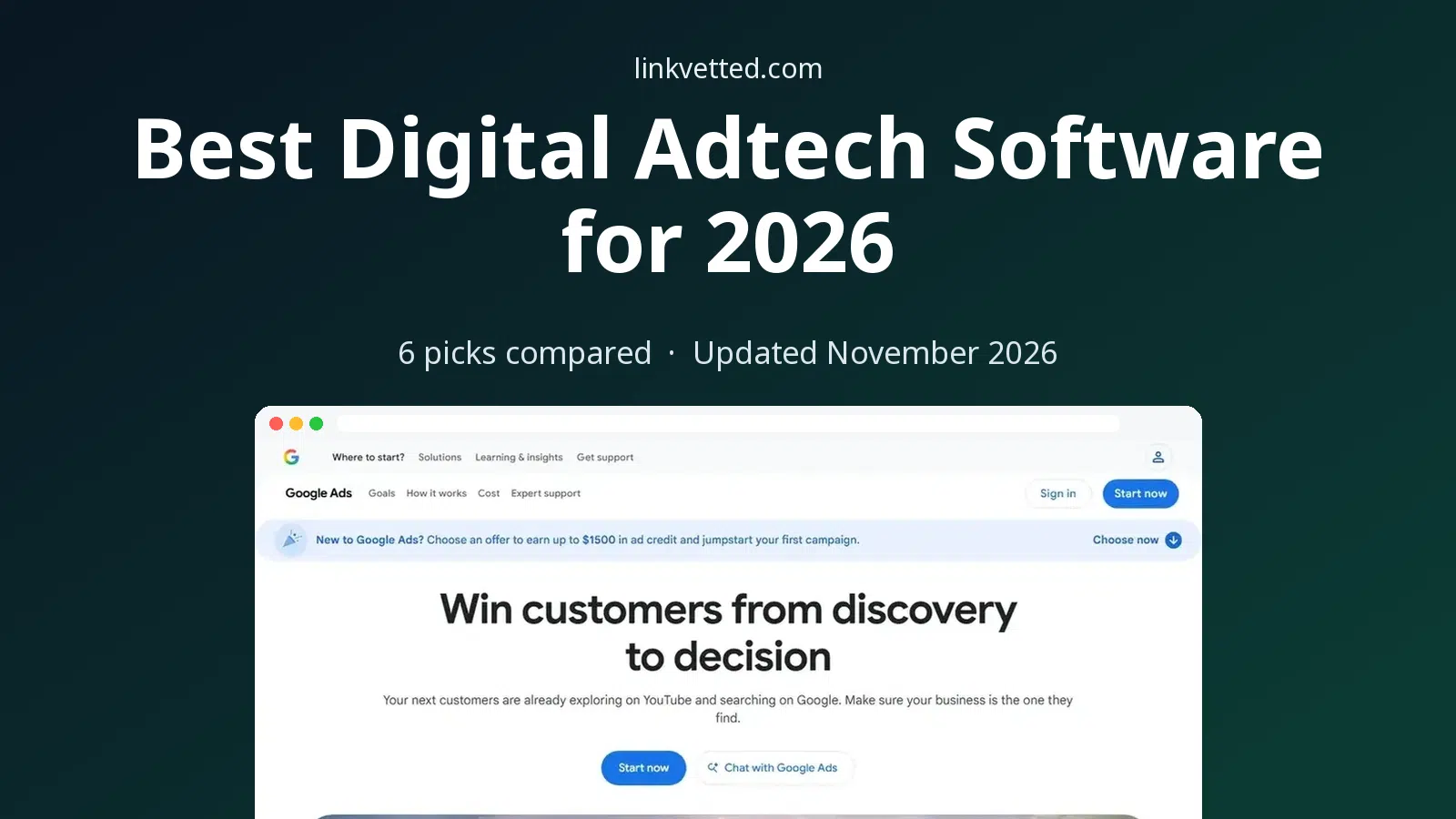
- Editor's choice
 Microsoft Advertising
Search, display, and video on Microsoft
Starts atPricing on requestVisit ads.microsoft.comFull review - Great alternative
 Criteo
Commerce media and retail intelligence
Starts atPricing on requestVisit criteo.comFull review - Also consider
 Google Ads
Search and YouTube campaigns
Starts atPricing on requestVisit ads.google.comFull review
Direct answer
If you need search, display, and video on Microsoft, Microsoft Advertising is the first tool to look at here. Criteo is better for commerce media and retail intelligence, and Google Ads is better for search and YouTube campaigns. Details and limits for the rest of the 6 tools are below. None of these vendors publish plan prices, so pricing is on request for every option.
TL;DR:
- The list opens with Microsoft Advertising, aimed at search, display, and video on Microsoft.
- Basis Technologies fits omnichannel media automation.
- Microsoft Advertising, Basis Technologies and the 4 others all sell by quote; expect sales conversations before you see a price.
- Microsoft Advertising, Basis Technologies and the 4 others all need a premium plan or a trial, since no free plan is listed.
- Check the limits for Criteo before you commit: primarily geared toward commerce advertisers.
Last checked November 2026. Pricing on request: vendors did not publish plan prices when this guide was last checked (November 2026), so ask each vendor for a written quote.
Quick comparison
| Tool | Best for | Starts at | Free plan? | |
|---|---|---|---|---|
| Microsoft Advertising | Search, display, and video on Microsoft | Pricing on request | Not stated | Visit |
| Criteo | Commerce media and retail intelligence | Pricing on request | Not stated | Visit |
| Google Ads | Search and YouTube campaigns | Pricing on request | Not stated | Visit |
 StackAdapt | AI-driven omnichannel orchestration | Pricing on request | Not stated | Visit |
 The Trade Desk | Programmatic omnichannel advertising | Pricing on request | Not stated | Visit |
 Basis Technologies | Omnichannel media automation | Pricing on request | Not stated | Visit |
The full digital adtech software list
LinkVetted put together this guide to digital adtech software for readers who want a clear shortlist without reading every vendor page. It compares 6 tools on starting price, free plans, who each one suits and where each one falls short.
Think of Microsoft Advertising for search, display, and video on Microsoft. It is aimed at advertisers who want to reach audiences on Bing, MSN, and partner sites with AI-driven tools targeted at maximizing return on investment.
In practice, advertisers seeking maximum scale from a single search system may have to combine it with others. More specifically, pick Microsoft Advertising when you want to extend search and display campaigns to Microsoft's ecosystem. Pricing for Microsoft Advertising is not stated here, so ask the vendor for current figures. As for free access: Not stated.
The main drawbacks: Smaller audience than some search networks.
- Advertise across search, display, video
- AI-driven tools to maximize ROI
- Interface may feel different from other systems
Criteo is designed for commerce media and retail intelligence. It is built for retailers and brands that want to make shopping moments smarter and more relevant.
Brands focused purely on upper-funnel awareness may find other tools more suitable. Check the vendor site for Criteo pricing; none is listed in this comparison. Trial and free access: Not stated.
Downsides: Primarily geared toward commerce advertisers.
- Focus on smarter shopping moments
- Commerce AI powers ad targeting
- Restricted fit for non-retail brand campaigns
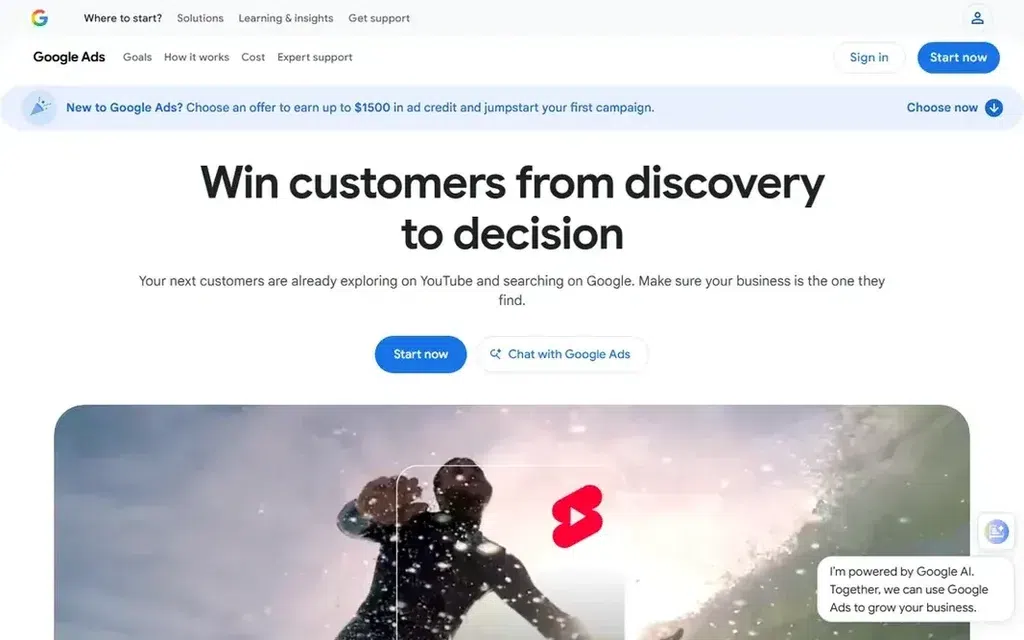
Google Ads makes the most sense for search and YouTube campaigns. Google Ads is a product for running campaigns across Google search and YouTube. It is aimed at companies that want to capture demand at the moment of search or build awareness through video.
Drawbacks to consider: Restricted native access to non-Google inventory.
If your strategy depends on external programmatic inventory or retail-specific placements, you may have to pair it with another tool. Also, the system concentrates on Google-owned properties, so it may not include every channel in a diversified media plan. In daily use, the homepage flags starting your first campaign and reaching new customers, making it a practical entry point for numerous advertisers who require a familiar interface and broad reach. Pricing for Google Ads is not stated here, so ask the vendor for current figures. Free options: Not stated.
- Reach customers across Google and YouTube
- Supports lead generation and new customer acquisition
- Broad network can complicate budget control
StackAdapt is a good fit for AI-driven omnichannel orchestration. StackAdapt is an AI advertising product that helps marketers orchestrate audiences, creative, channels, and measurement from one place. As a system centered on AI orchestration, it may take time to set up and learn.
For everyday use, with AI built into every stage, it fits teams that want to unify programmatic and other digital campaigns under a single workflow. Also, the homepage emphasizes end-to-end orchestration, making it a solid fit for data-driven marketers. Pricing for StackAdapt is not stated here, so ask the vendor for current figures. Free options: Not stated.
Honest limits: May need onboarding for full feature use.
- AI built into every advertising stage
- Orchestrate audiences, creative, channels
- Less known for search-native campaigns
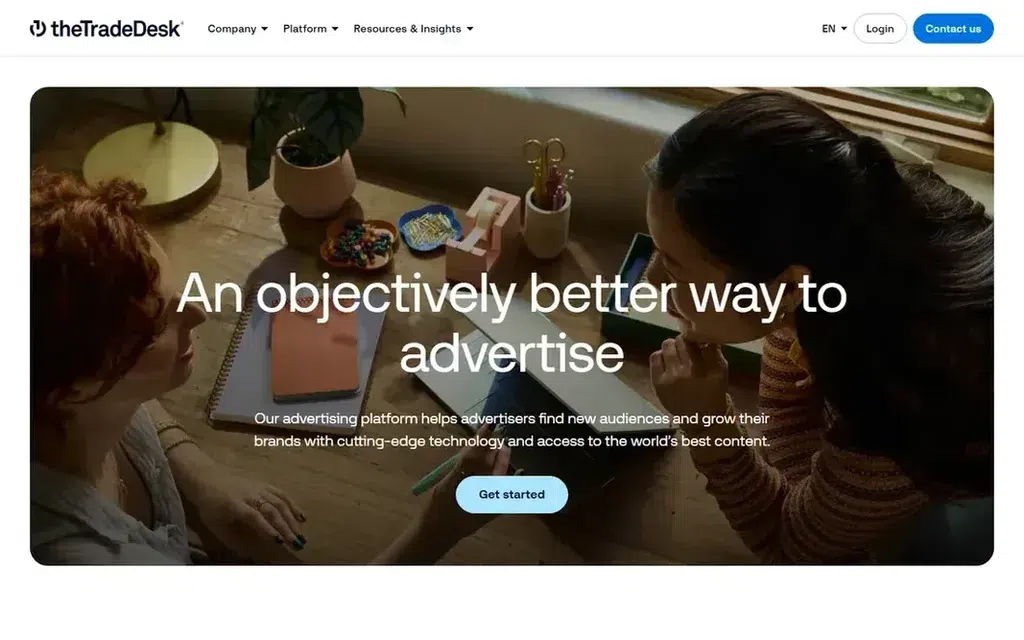
The Trade Desk is designed for programmatic omnichannel advertising. The Trade Desk is a demand-side product for programmatic advertising across several channels. It is designed for advertisers and agencies that want to run omnichannel campaigns with a focus on data and audience targeting.
Beyond that, consider The Trade Desk when you need advanced programmatic control across display, video, and connected TV. More specifically, the homepage positions it as an objectively better way to advertise, spanning brand building to performance marketing, which suits teams looking for a single programmatic hub. It also does not replace search-native products for direct response on search engines. This comparison lists no price for The Trade Desk; ask the vendor. Free plan details: Not stated.
Points against: Requires programmatic expertise.
- Data-driven buying approach
- Omnichannel product for unified campaigns
- Less suited to straightforward search-only campaigns
Think of Basis Technologies for omnichannel media automation. Advertisers centred on a single channel might prefer a more straightforward point option.
In daily use, choose Basis Technologies when you need end-to-end automation across several media types. Basis Technologies does not show a starting price in this comparison, so check the vendor site for current pricing. Free access: Not stated.
What works well: reconcile in one place. Watch-outs: Not centred on a single channel.
- Unified advertising automation product
- Handles programmatic, search, social
- Thorough setup may suit bigger teams
How we built this list
Each tool was reviewed on what its vendor publishes: price, plan limits, core features and stated drawbacks. We did not run hands-on tests. Treat prices as a snapshot: vendors change plans often, so check the vendor site for the figure that applies today. The order reflects how well each tool fits the most common buying scenario for digital adtech software, then price clarity, then free plan access. It is a starting point, not a verdict.
Before you commit
- Ask each vendor, from Microsoft Advertising to Basis Technologies, for a written quote; none of them publishes a starting price.
- Read the limits listed for Microsoft Advertising first: smaller audience than some search networks.
- Find out what support Google Ads includes on your plan, and whether onboarding help costs extra.
- Check the integration list for Criteo against the tools you run today, and note which ones need a higher plan.
- Check whether the features you need in StackAdapt sit on the entry plan or only on higher tiers.
FAQ
What is digital adtech software?
Digital adtech software refers to products that help you plan, buy, handle, and measure online advertising. Examples bundle demand-side products, search advertising tools, and commerce media systems.
Can I try these options before paying?
Not by default. None of the tools, from Microsoft Advertising to Basis Technologies, lists a free plan or a free trial here, so ask each vendor for a demo before committing.
Do these tools publish their prices?
No. None of the tools, from Microsoft Advertising to Basis Technologies, shows a fixed starting price here, so budget time for quotes.
Can I use several adtech products together?
For instance, you might use Google Ads for search and a programmatic system for display and video. For everyday use, just ensure your measurement approach accounts for cross-platform reporting.
Does any tool for digital adtech software here have a free plan?
No tool in this list, Microsoft Advertising and Basis Technologies included, has a permanent free plan. Trials and quotes are the usual route, so plan a short evaluation period.
Is Microsoft Advertising the right pick for everyone comparing digital adtech software?
No single tool suits every team. Microsoft Advertising comes first because it fits search, display, and video on Microsoft, while Criteo suits commerce media and retail intelligence and Google Ads suits search and YouTube campaigns. Match the tool to your own size, budget and workflow before deciding.
Sources
- https://ads.microsoft.com
- https://www.criteo.com
- https://ads.google.com
- https://www.stackadapt.com
- https://www.thetradedesk.com
- https://basis.net