Best Demand Forecasting Software in 2026: 8 Tools Compared
Compare the best demand forecasting software for retail, ecommerce and enterprise supply planning, with pricing, accuracy tips and honest trade-offs today.
- Editor's choice
 o9 Solutions
Enterprise integrated planning
Starts atSee websiteVisit o9solutions.comFull review - Great alternative
 RELEX Solutions
Retail forecast to replenishment
Starts atSee websiteVisit relexsolutions.comFull review - Also consider
 SAP IBP
SAP-based enterprise planning
Starts atSee websiteVisit sap.comFull review
TL;DR:
- Small retailers and Shopify sellers get the fastest value from Cogsy, Prediko and Inventory Planner by Sage.
- Mid-size distributors and manufacturers should shortlist Netstock and Forecast Pro for inventory-focused forecasting.
- Large enterprises with complex supply chains should look at o9 Solutions, RELEX Solutions and SAP IBP.
- Forecast accuracy depends on clean sales, promotion and lead time data, not only on the model you buy.
- Always test a tool on your own history before signing, and compare its forecast against a simple baseline.
Quick comparison
| Tool | Best for | Starts at | Free plan? | |
|---|---|---|---|---|
| o9 Solutions | Enterprise integrated planning | See website | No | Visit |
| RELEX Solutions | Retail forecast to replenishment | See website | No | Visit |
| SAP IBP | SAP-based enterprise planning | See website | No | Visit |
 Netstock | Mid-market inventory optimisation | See website | No | Visit |
 Forecast Pro | Statistical forecasting for planners | See website | Free trial | Visit |
 Cogsy | Shopify and ecommerce forecasting | $199 per month | Free trial | Visit |
 Prediko | Shopify predictive forecasting | $49 per month | Free trial | Visit |
 Inventory Planner by Sage | Sage and Shopify inventory planning | See website | Free trial | Visit |
The best demand forecasting software
Demand forecasting turns past sales, promotions, seasons and stock levels into a plan for what to buy, make or ship next. The tools below serve very different sizes of business, so match the tool to your order volume and system complexity.
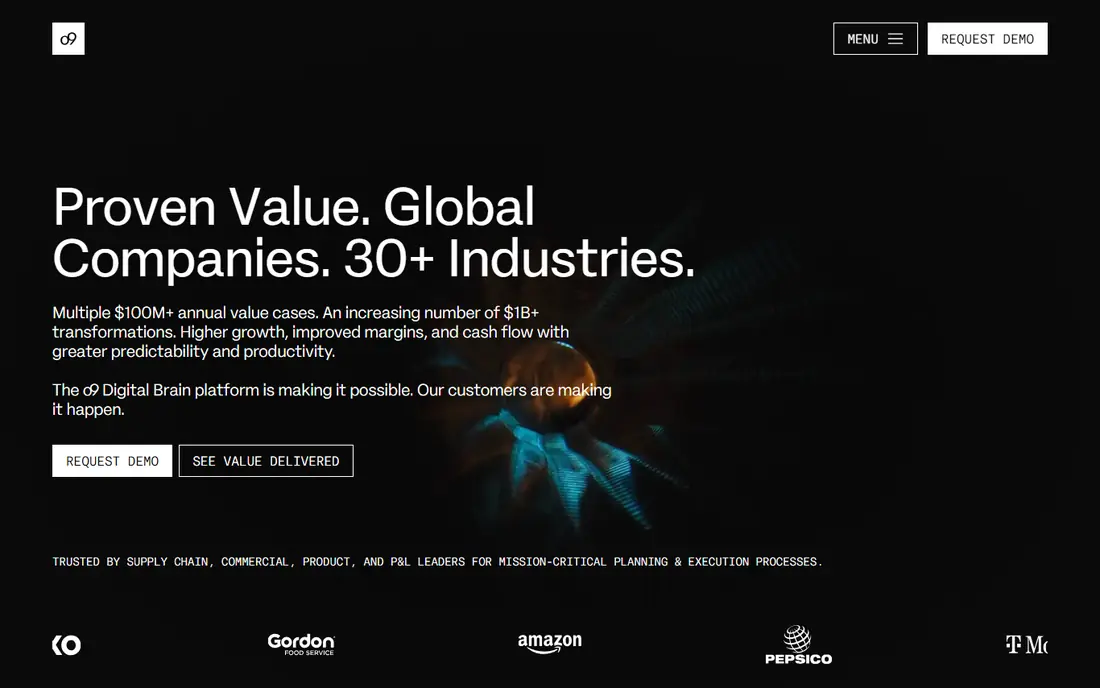
o9 Solutions is the heavyweight pick for global companies that plan demand, supply and finance from the same model. Its platform links signals across departments, so a demand change can flow into supply, inventory and financial views without rebuilding separate spreadsheets. Scenario tools let planners test promotions, price changes or supply shocks before committing.
The catch is commitment. This is not a quick software purchase, and pricing is quote-based for enterprise agreements. Smaller businesses will find it out of reach, and even large buyers should budget for change management. For enterprises replacing fragmented planning systems, it is a leading choice.
- Connected demand, supply and finance planning
- Fast scenario modelling
- Proven at large scale
- Enterprise pricing
- Implementation is a multi-month programme
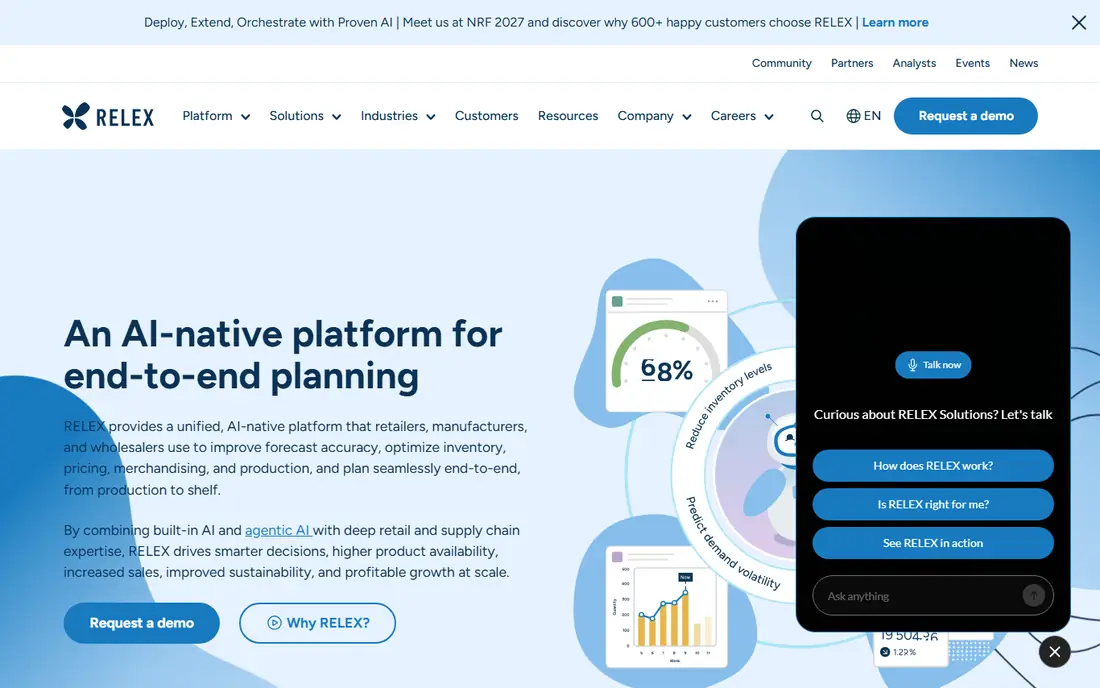
RELEX Solutions fits retailers and consumer goods companies that need forecasts at SKU and store level. It connects demand forecasts directly to replenishment, so the plan does not stop at a number in a report. Promotion, seasonality and weather-style drivers can be built into the model, which matters for grocery, fashion and other fast-moving categories.
The trade-off is scope and cost. RELEX is built for larger retail operations, and smaller sellers may find simpler tools faster to run. Retailers with many stores, many SKUs and frequent promotions will get the most value from its depth.
- SKU-level retail forecasting
- Forecast tied to replenishment
- Promotion handling
- Enterprise focus
- Setup needs clean retail and supply data
SAP Integrated Business Planning suits enterprises already running SAP for ERP and supply chain work. Demand forecasts sit inside a governed workflow, with versions, approvals and links to inventory and allocation decisions. That control matters when many planners touch the same forecast and finance needs a single agreed number.
Outside SAP, the case is weaker. Implementation is complex, licensing is enterprise-grade, and teams need SAP skills to get full value. For SAP shops, though, the integration depth is hard to match with a standalone forecasting tool.
- Deep SAP integration
- Governed forecast versions
- Supply and allocation planning
- Complex to implement
- Best value inside an SAP environment
Netstock targets mid-market distributors and manufacturers that need better stock decisions without an enterprise planning suite. It forecasts demand, sets stock policies and highlights overstock, shortages and slow movers. ERP integrations keep item, supplier and sales data in step, which reduces manual imports.
It is not a set-and-forget system. Planners still need to review exceptions, adjust for promotions and check supplier lead times. Teams that do that regular review work tend to see clearer inventory and service gains than teams that expect the model to run itself.
- Demand and supply planning in one tool
- ERP integrations
- Clear excess and shortage views
- Quote-based pricing
- Still needs planner input for exceptions
Forecast Pro is a planner-focused tool built around statistical forecasting. It suits supply chain teams that need accurate, auditable forecasts across many locations and items, and that value method choice over a broad planning suite. Users can compare models, adjust for events and build consensus forecasts.
The honest limit is breadth. Forecast Pro does demand well, but it is not a full supply chain suite with deep replenishment and production planning. Teams that mainly need a better forecast, rather than an end-to-end platform, will find that focus a strength.
- Strong statistical methods
- Good for multi-location forecasts
- Long track record
- Interface feels dated to some users
- Supply planning features are narrower than suites
Cogsy helps ecommerce teams answer the practical question behind every forecast: what should we order, and when. It forecasts demand, models scenarios, and factors in lead times so purchase orders land before stock runs out. That combination suits brands with seasonal peaks, long supplier lead times or growing SKU counts.
The price puts it out of reach for hobby stores, and sellers outside Shopify-style workflows should check integrations first. For established ecommerce brands, the avoided stockouts and overstock can justify the monthly cost quickly.
- Ecommerce demand forecasting
- Scenario planning
- Lead time and purchase planning
- Price is high for very small stores
- Best fit is Shopify-centred sellers
Prediko is a practical starting point for Shopify sellers who need forecasting without enterprise complexity. It predicts demand, suggests reorders and gives a clear view of stock coverage. The lower entry price makes it easier to test forecasting on a real catalogue before committing to a larger system.
Larger or multi-channel sellers may outgrow it as planning needs grow, and non-Shopify teams should verify fit. For a single-store brand moving from spreadsheets to a forecast, it is a sensible first step.
- Lower entry price for Shopify sellers
- Predictive forecasts
- Automated reorder suggestions
- Shopify focus limits other platforms
- Advanced planning is lighter than enterprise tools
Inventory Planner by Sage, formerly a standalone planning tool, now sits in the Sage family and serves inventory-heavy sellers. It offers advanced forecasting, purchase recommendations and coverage analysis, which helps teams balance service levels against cash tied up in stock. Sage and Shopify connections keep sales and inventory data current.
Pricing varies by plan and volume, so buyers should get a quote for their SKU and order levels. Teams that already use Sage products may find the fit smoother, while others should test the integration during the trial.
- Advanced forecasting and purchase suggestions
- Stock coverage analysis
- Sage links
- Pricing is custom for many plans
- Learning curve for new planners
How we picked these
We compared official product pages, pricing pages and integration lists, plus current 2026 comparisons that describe real planning use. We favoured tools that are still sold in October 2026, that handle demand signals such as seasonality and promotions, and that fit a clear buyer size. Where pricing is quote-based, we say so. We did not claim hands-on testing, and we weighted forecast method, inventory links and ease of use over feature lists alone.
How to choose the right forecasting tool
Start with your data, not the demo. A tool can only forecast well if it sees clean sales history, promotion dates, stock levels and supplier lead times. Gather those fields before a trial, and run the tool on a past period you already know, so you can judge its accuracy against what actually happened.
Match the tool to your size and channels
Small ecommerce sellers need fast setup, clear reorder advice and a price that fits a single store. Mid-size distributors need ERP links, stock policies and exception handling. Enterprises need governance, scenario planning and links to supply and finance. Buying a larger tool than you need usually slows adoption, while buying too small a tool forces a second migration within a year.
Test accuracy, exceptions and ownership
Ask how the tool handles new products with no history, promotions, out-of-stock periods and sudden demand spikes. Check who owns forecast overrides, how changes are logged, and whether planners can explain a forecast to sales or finance. A forecast nobody trusts will be ignored, however accurate the model claims to be.
Also plan for forecast review meetings, since a forecast only helps if sales, operations and finance agree on it. Set a regular review where planners present the forecast, sales flags promotions or lost deals, and operations flags supply limits. Record overrides and reasons, so the next forecast can be judged fairly and the team learns which adjustments helped. Without that routine, forecasts tend to be ignored or quietly replaced by gut feeling. A tool with clear version history and override notes makes this review far easier, and it is worth checking during a trial with a real past month.
FAQ
What is demand forecasting software?
It is software that turns past sales and related signals into a forecast of future demand, then helps teams plan inventory, purchasing and production. Good tools also show uncertainty, so planners can prepare for a range rather than a single number.
How accurate is demand forecasting software?
Accuracy varies by product type, data quality and forecast horizon. Stable, high-volume items forecast better than new or seasonal items. Test any tool on your own history and compare it with a simple moving average before you judge its claims.
Do small businesses need demand forecasting software?
Many small sellers start with spreadsheets, then move to a tool when SKU counts, channels or lead times make manual planning slow or error-prone. Shopify tools such as Prediko and Cogsy suit that transition point.
What data do I need to start?
At minimum, you need sales history by item and period, current stock, open orders and supplier lead times. Promotion dates, price changes and lost sales from stockouts will improve accuracy further.
Is AI forecasting better than statistical forecasting?
AI models can capture complex patterns, but they still need good data and planner oversight. Statistical tools such as Forecast Pro remain strong for many planners, especially when forecasts must be explained and audited.