Best AI Demand Forecasting Tools in 2026: 8 Tools Compared
We compared the best ai demand forecasting tools for retail, manufacturing and distribution, covering accuracy, planning depth and pricing for all teams.
- Editor's choice
 o9 Solutions
Enterprise planning with a digital twin
Starts atSee websiteVisit o9solutions.comFull review - Great alternative
 Kinaxis Maestro
Concurrent planning and scenarios
Starts atSee websiteVisit kinaxis.comFull review - Also consider
 RELEX Solutions
Retail and grocery forecasting
Starts atSee websiteVisit relex.comFull review
TL;DR:
- The best ai demand forecasting tools turn sales history, promotions and external signals into SKU-level forecasts your planners can trust.
- Enterprise platforms suit complex networks with volatile demand, while mid-market tools suit simpler reorder and replenishment logic.
- Probabilistic forecasting helps most for spiky or intermittent demand, where a single point forecast can mislead inventory decisions.
- Most enterprise forecasting pricing is by quote and runs into six figures per year, so budget for implementation as well as licenses.
- Forecast accuracy only improves if data is clean, so fix sales history, promotion records and product hierarchies before you buy.
Quick comparison
| Tool | Best for | Starts at | Free plan? | |
|---|---|---|---|---|
| o9 Solutions | Enterprise planning with a digital twin | See website | No | Visit |
| Kinaxis Maestro | Concurrent planning and scenarios | See website | No | Visit |
| RELEX Solutions | Retail and grocery forecasting | See website | No | Visit |
 Blue Yonder | Large retail and CPG networks | See website | No | Visit |
 SAP Integrated Business Planning | SAP-centric enterprises | See website | No | Visit |
 Oracle Demand Management | Oracle-based supply chains | See website | No | Visit |
 ToolsGroup SO99+ | Spiky and long-tail demand | See website | No | Visit |
 Netstock | Mid-market ERP replenishment | $900 per month | Free trial | Visit |
The best ai demand forecasting tools
AI demand forecasting tools use machine learning and statistical models to predict future demand from sales history, seasonality, promotions and external factors. The best tools explain their forecasts, handle promotions and new products, and feed replenishment, pricing and inventory decisions. The list below covers enterprise platforms and one mid-market option.
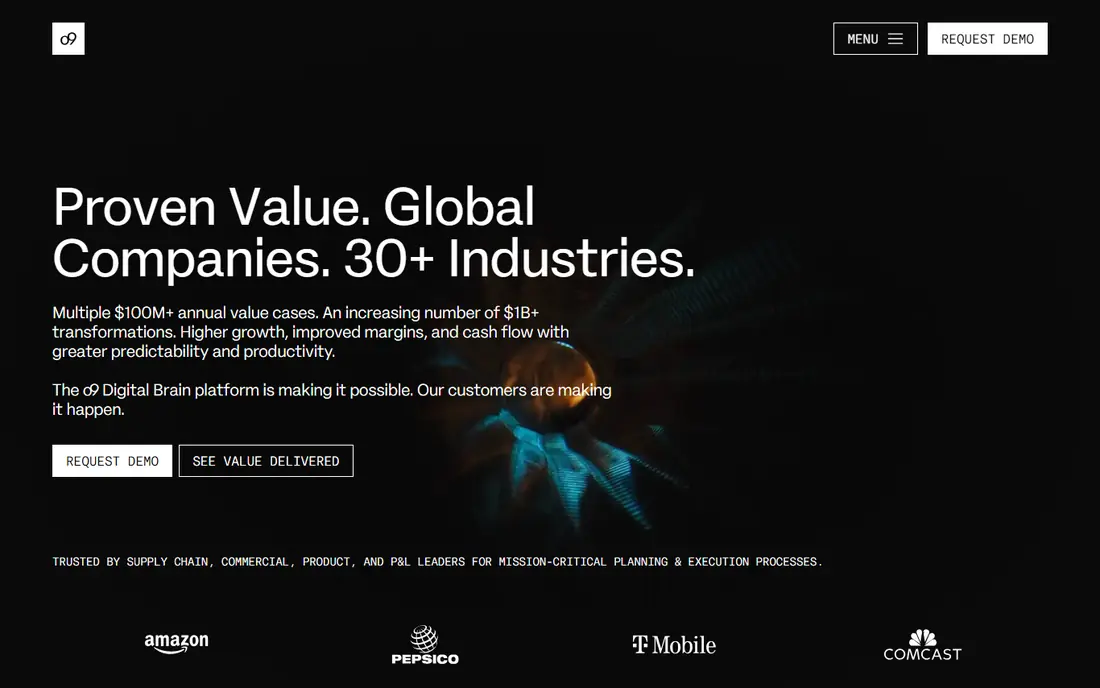
o9 Solutions, often called o9, builds a digital twin of your planning operation: demand, supply, inventory and finance in one model. That lets planners run what-if scenarios quickly, such as a demand spike against material limits, and see the effect across the network rather than in one spreadsheet. Its AI models draw on POS data, promotions, weather and other external signals.
The scope is also the downside. A full o9 rollout is a major project with implementation time and change management, and pricing is by quote for enterprise buyers. For a large company with complex, connected planning decisions, that unified model is the point. For a smaller team with straightforward reorder logic, o9 is more than you need.
- One planning model for demand, supply and finance
- Fast scenario runs
- Broad data inputs
- Quote-only pricing
- Wide scope means a longer rollout
Kinaxis Maestro, formerly RapidResponse, is built for plans that change often. When demand, inventory or supply shifts, planners can replan concurrently across the network and test scenarios in a sandbox before committing. The forecasting engine explains which factors moved a forecast, such as seasonality, promotions or POS trends, rather than giving a number with no reason.
Pricing is by quote and can run well into six figures per year for large deployments, with extras for advanced modeling tools. Implementation is also demanding, especially with large or messy data sets. For a manufacturer or distributor facing frequent disruption, that concurrent replanning speed is worth the cost. For a stable, simple demand pattern, a lighter tool will do.
- Real-time concurrent planning
- Strong scenario sandbox
- Explainable forecast drivers
- Quote-only pricing
- Implementation is demanding for large data sets
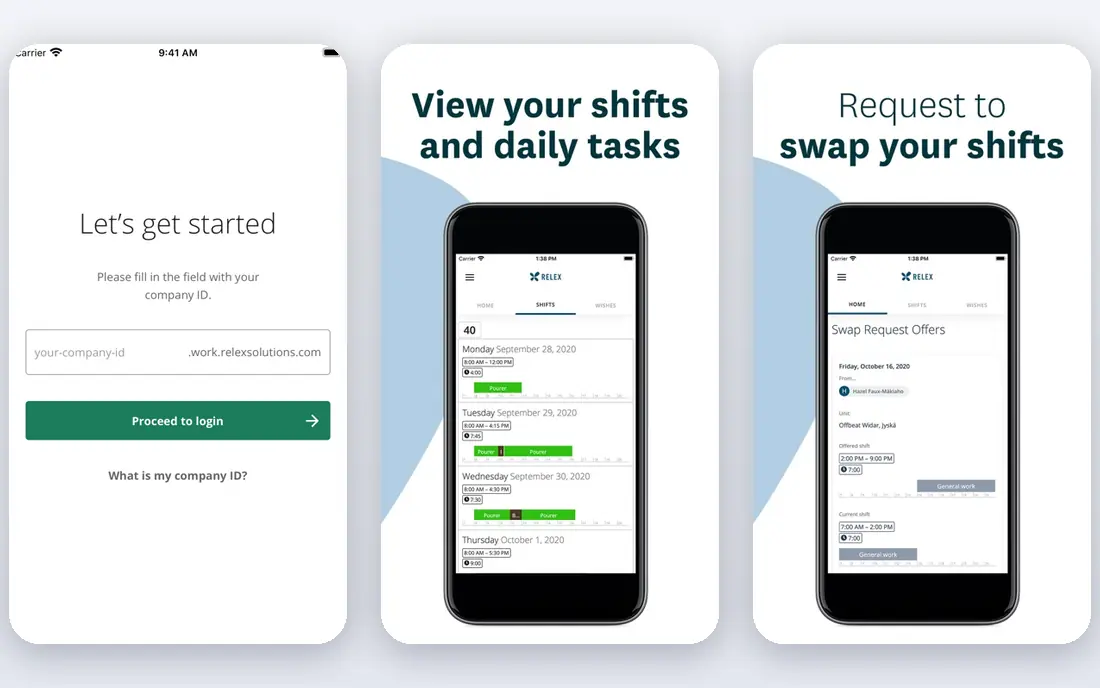
RELEX Solutions is built for retail-shaped problems: thousands of SKUs across many stores, promotions that move demand sharply, and fresh products with spoilage risk. Its AI forecasting handles promotion uplift, batch-level perishability and store-level demand, then feeds automated replenishment so shelves stay stocked without excess waste. Grocery and specialty retail teams benefit most from that depth.
Pricing is by quote for enterprise retail buyers, and the platform scope is larger than a small chain needs. A single-store retailer should look at a mid-market tool instead. For a mid-to-large retail chain, RELEX retail focus gives it an edge over general planning platforms that treat retail as one use case among many.
- Retail-shaped forecasting
- Promotion and fresh product strengths
- Automated replenishment
- Quote-only pricing
- Scope can exceed what a small team needs
Blue Yonder covers demand sensing, forecasting and replenishment at scale for large retail and consumer goods networks. Its machine learning models sense demand shifts from POS and other signals across item-location networks, then feed inventory and supply decisions. That scale suits companies with many stores, warehouses and product lines.
The setup is complex and rewards clean data, a dedicated planning team and a longer implementation. Pricing is by quote, and smaller teams will find the platform heavy. For a global retailer or CPG company that needs demand sensing across a large network, Blue Yonder scale and planning breadth are hard to match with a mid-market tool.
- Machine learning demand sensing at scale
- End-to-end planning
- Broad retail and CPG coverage
- Quote-only pricing
- Needs clean data and a complex setup
SAP Integrated Business Planning, or SAP IBP, is the natural choice for companies already running SAP. It integrates demand planning with sales and operations planning, inventory and supply, using the same data model as S/4HANA. That native fit cuts integration work and keeps planning data consistent across finance, supply and sales.
The cost is resources. SAP IBP needs skilled staff, a solid SAP foundation and a quoted enterprise price, and it is heavier to run than a standalone forecasting tool. A company not on SAP should not adopt SAP just for forecasting. A company already on SAP will find IBP the path of least resistance for integrated planning.
- Native fit with S/4HANA
- Integrated sales and operations planning
- AI-assisted forecasting
- Quote-only pricing
- Resource-heavy to run
Oracle Demand Management, part of Oracle Fusion Cloud Supply Chain Management, gives Oracle-based companies forecasting inside their ERP. It uses AI-assisted models for demand sensing, handles promotions and seasonality, and supports scenario planning for supply and inventory decisions. Keeping forecasting inside the ERP reduces data movement and reconciliation.
Like SAP IBP, it rewards a mature Oracle estate and a dedicated planning team. Pricing is by quote, and a company not on Oracle should compare standalone tools before committing to an ERP platform for forecasting alone. For an Oracle shop, the native fit and integrated scenarios make it a strong default.
- ERP-native forecasting
- Scenario planning
- AI-assisted demand sensing
- Quote-only pricing
- Needs mature data and a dedicated team
ToolsGroup SO99+ stands out for probabilistic forecasting. Instead of a single point forecast, it outputs a demand distribution, showing the probability of different outcomes. That matters for intermittent, lumpy or long-tail demand, where a point forecast can mislead safety stock and service level decisions. It pairs forecasting with inventory optimization, so the forecast feeds directly into stock policy.
Pricing is by quote, and the models work best with detailed, clean history. Teams with short or messy history will get less value until data improves. For a distributor or manufacturer with a large catalog and spiky demand, ToolsGroup probabilistic approach is a genuine differentiator, not just a marketing label.
- Probabilistic forecasting
- Inventory optimization
- Strong for intermittent demand
- Quote-only pricing
- Works best with detailed history
Netstock is the mid-market option on this list. It connects to common ERPs, classifies items by value and demand pattern, and generates replenishment recommendations with clear dashboards. Pricing starts at 900 dollars per month, which is far below enterprise platform quotes, and a trial lets a team test it on real ERP data.
The trade is depth. Netstock does not match o9 or Kinaxis on complex scenario planning or multi-echelon optimization, and value depends on a good ERP connection. For a small or midsize distributor or manufacturer that needs better replenishment without an enterprise project, Netstock is the most practical starting point on this list.
- Published entry price
- ERP-native replenishment
- ABC classification and dashboards
- Less depth for complex enterprise scenarios
- ERP fit matters
How we picked these
We compared official product pages, documentation and public reviews for AI demand forecasting tools that are still sold in October 2026. We favored tools with machine learning forecasting, promotion handling, scenario planning and a clear path from forecast to replenishment or inventory policy. We mixed enterprise platforms with a mid-market option so the list fits a distributor and a global manufacturer.
How to choose without buying too much platform
Start with demand complexity, not vendor size. Count your SKUs, locations, promotion frequency and demand volatility, and check how often plans change. A stable, simple pattern needs a mid-market tool. A volatile, multi-location pattern with frequent promotions justifies an enterprise platform. Buying the larger platform for a simple pattern wastes money and staff time.
Clean data before you sign
Forecast accuracy depends on history. Fix sales history for out-of-stocks, returns and one-off bulk orders, record promotions with dates and depth, and keep product hierarchies consistent. Run a backtest: ask each vendor to forecast a past period from data before that period, and compare accuracy by SKU group. A vendor that will not backtest on your data should not get a shortlist place.
Plan for implementation and ownership
Ask for a realistic implementation timeline, data requirements and staffing plan, and get the total cost for year one and year three. Enterprise tools need a planning owner, not just a license, and benefits only arrive when planners trust and use the forecast. Pilot on one product family or region first, measure forecast accuracy and stock outcomes, then expand.
FAQ
What is AI demand forecasting software?
AI demand forecasting software uses machine learning and statistical models to predict future product demand from sales history, seasonality, promotions and external factors. Modern tools generate forecasts per SKU or store and feed them into replenishment, pricing and inventory decisions. The best tools also explain which factors moved each forecast.
How much does AI demand forecasting software cost?
Enterprise platforms are quote-only and typically run into six figures per year, plus implementation. Mid-market options publish entry prices, such as Netstock from 900 dollars per month. Always ask for a three-year total, including implementation, support and any data or integration fees.
What is the difference between probabilistic and traditional forecasting?
Traditional forecasting outputs a single number per item, called a point forecast. Probabilistic forecasting outputs a full demand distribution, showing the probability of each outcome, which feeds risk-adjusted inventory decisions. Probabilistic methods help most for intermittent or long-tail demand, where point forecasts mislead.
Which AI demand forecasting tool is best for small business?
Netstock is the most practical small and midsize choice on this list, thanks to its published price and ERP-native replenishment. Shopify brands with simpler needs may also look at smaller forecasting apps, but they should check ERP and store integration before buying. Enterprise platforms are usually too costly and complex for a small business.
Which AI demand forecasting tool is best for retail and grocery?
RELEX Solutions is built for retail and grocery, with promotion and fresh-product forecasting strengths. Blue Yonder covers retail at larger scale with end-to-end planning. Both are quote-only enterprise platforms, so a midsize retailer should pilot one product family before committing to a full rollout.
How long does implementation take?
Implementation varies from weeks for a mid-market tool to many months for an enterprise platform. Data cleaning, ERP integration and planner training are the main drivers, not license setup. Ask each vendor for a timeline based on your data quality and SKU count, and pilot before a full rollout.