Best AI-Driven Event Demand Forecasting Platform in 2026: 8 Platforms Compared
We compared event demand tools on data, forecasts, and integrations to find the best ai-driven event demand forecasting platform for hotels and venues.
- Editor's choice
 PredictHQ
Ranked global event data for forecasts
Starts atSee websiteVisit predicthq.comFull review - Great alternative
 IDeaS
Hotel revenue forecasting
Starts atSee websiteVisit ideas.comFull review - Also consider
 Duetto
Hotel pricing and demand analytics
Starts atSee websiteVisit duettocloud.comFull review
TL;DR:
- PredictHQ stands out for ranked global event data for forecasts, with a starting point of see website.
- IDeaS stands out for hotel revenue forecasting, with a starting point of see website.
- Duetto stands out for hotel pricing and demand analytics, with a starting point of see website.
- Amadeus Demand360 stands out for market benchmarking and demand insight, with a starting point of see website.
- We compared official pricing, feature pages, and public reviews, and we did not claim hands-on testing for any product in this list.
Quick comparison
| Tool | Best for | Starts at | Free plan? | |
|---|---|---|---|---|
| PredictHQ | Ranked global event data for forecasts | See website | Free trial | Visit |
| IDeaS | Hotel revenue forecasting | See website | No | Visit |
| Duetto | Hotel pricing and demand analytics | See website | No | Visit |
 Amadeus Demand360 | Market benchmarking and demand insight | See website | No | Visit |
 Cendyn | Hotel sales and revenue insight | See website | No | Visit |
 RainFocus | Enterprise event demand and marketing | See website | No | Visit |
 Cvent | Venue and event demand planning | See website | No | Visit |
 Bizzabo | Event experience and demand insight | See website | No | Visit |
The best AI-driven event demand forecasting platforms
We reviewed each option below against the same checks: does it truly fit best ai-driven event demand forecasting platform, what does it cost, and what is the honest trade-off. Our pick for most readers depends on team size and budget, so read the best-for line first.
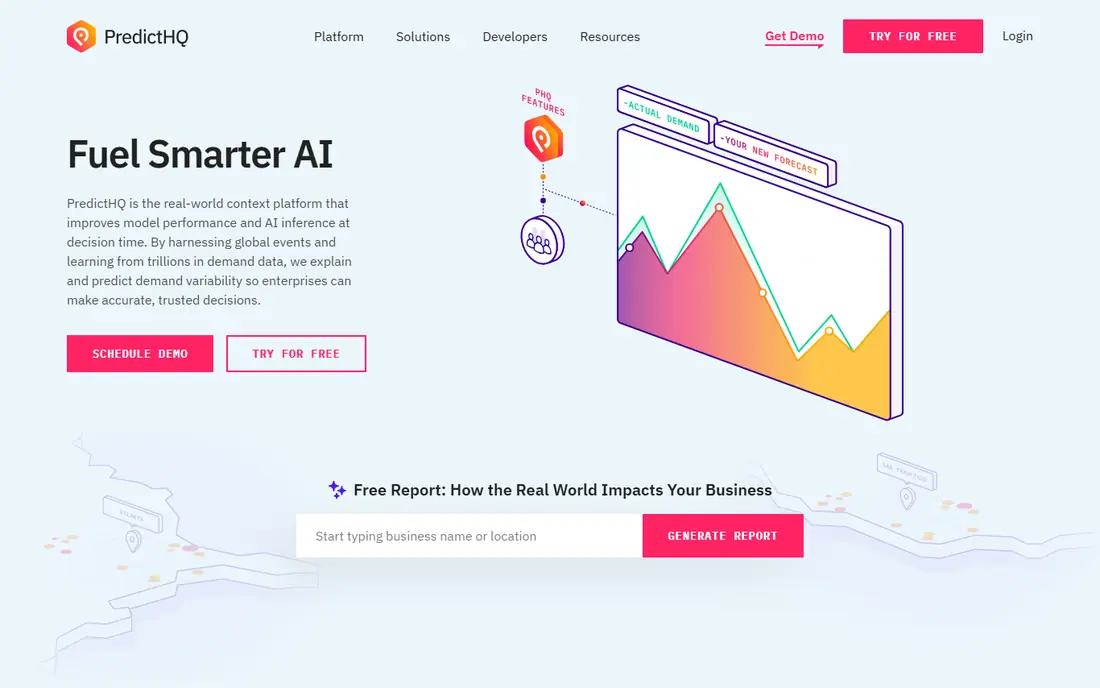
PredictHQ is the data layer behind many event demand forecasts.
It aggregates and verifies millions of events, then ranks each by predicted impact on demand. Teams can feed that ranked data into pricing, staffing, and revenue models.
It is not a finished forecasting dashboard on its own. Buyers need analysts or a revenue system that can turn event signals into decisions.
- Verified events in many cities
- Impact ranking
- API and data warehouse delivery
- No published pricing
- Needs a forecasting model to use well
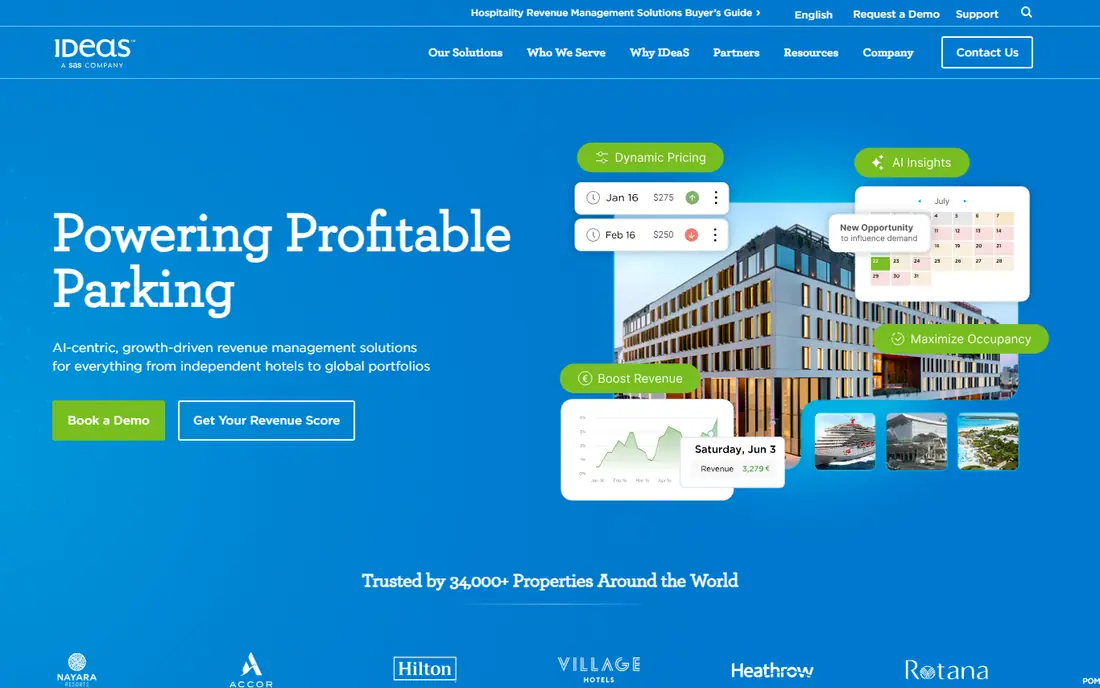
IDeaS fits hotels that want forecasts tied directly to room pricing.
Its revenue system forecasts demand by segment and suggests prices, using historical patterns and market signals. That link from forecast to price is the main value.
Smaller properties may find the cost and setup heavy. It makes most sense for hotels with enough rooms and rate complexity to justify automation.
- Revenue management system
- Demand forecasting
- Pricing automation
- Enterprise pricing
- Implementation is a project, not a quick install
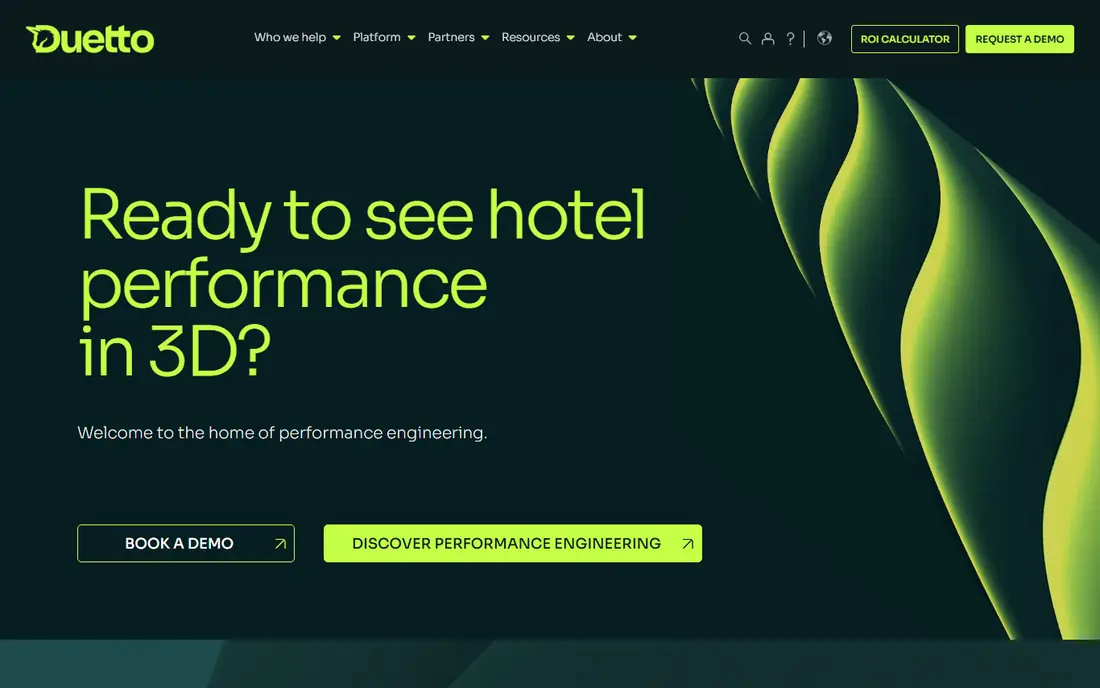
Duetto helps revenue teams price rooms from real demand signals.
Its platform combines booking pace, market data, and event signals into pricing guidance. Integrations with property and booking systems keep data current.
Forecast quality depends on data quality. Hotels with messy rate or inventory data should clean those feeds before judging the forecast.
- Open pricing
- Demand analytics
- Integrations with property systems
- Quote-based pricing
- Needs clean property data to perform
Amadeus Demand360 suits hotels that benchmark against a competitive set.
It shows forward reservations and market trends, so revenue teams can see demand shifts before they hit their own books. Many property system integrations support that view.
It is a market intelligence tool, not a full revenue system. Pair it with pricing tools if you need automated rate changes.
- Forward-looking market data
- Competitor benchmarking
- Broad integrations
- No transparent pricing
- Enterprise sales process
Cendyn works for hotels that tie group and event demand to revenue decisions.
Its tools connect sales, CRM, and revenue data, so group bookings and event demand sit in the same view as transient bookings. That helps teams avoid double counting demand.
The product range is broad. Buyers should scope the exact modules for forecasting and confirm what is included in the quote.
- Sales and revenue tools
- Event and group demand data
- CRM links
- Quote-based pricing
- Product breadth needs scoping
RainFocus fits large organizations running many events each year.
It centralizes event registration, attendance, and engagement data, which feeds demand planning for future events. Marketing automation can act on that insight.
Small event teams will find it heavy and costly. It earns its price when event volume and data complexity are high.
- Event data and registration insight
- Marketing automation
- Analytics
- Enterprise pricing
- Best for large event programs
Cvent helps venues and planners plan demand from sourcing through attendance.
Its sourcing tools show venue demand patterns, while registration and analytics track how events perform. That end-to-end view helps planners forecast staffing and space.
Module pricing can grow fast. Buyers should list the forecasting and analytics modules they need and get a bundled quote.
- Venue sourcing
- Registration
- Event analytics
- Quote-based pricing
- Modules add cost quickly
Bizzabo suits event teams that want demand insight inside the event platform.
Registration data, session interest, and audience behavior feed planning for repeat events. Integrations with CRM and marketing tools keep that data useful after the event.
It is not a pure forecasting engine. Teams that need deep statistical forecasting should pair it with a dedicated data or revenue tool.
- Registration and event apps
- Audience analytics
- Integrations
- Quote-based pricing
- Forecasting is part of a broader suite
How we picked these
We started with products that genuinely fit best ai-driven event demand forecasting platform and are available today. We compared official feature pages, pricing pages, and app store listings, and we checked public reviews for recurring strengths and complaints. We favored tools with clear pricing or a clear quote process, real integrations, and a track record of serving the audience named in each best-for line.
We did not claim hands-on testing, and we did not invent ratings, user counts, or awards. Where a vendor does not publish a price, we wrote See website and advised readers to request a full quote that includes any per-user, per-device, or usage fees. That approach keeps the comparison honest when pricing models differ as much as they do in this category.
What to check before you buy
Start with the problem you need to solve this quarter, not the longest feature list. Write down your top three requirements before you look at demos, and use that short list to keep every vendor comparison honest and focused on outcomes. List the must-have integrations, the devices or channels you support, and the number of users or devices you will actually pay for. Ask each vendor for a written quote that separates subscription, usage, and implementation costs.
Trial and rollout
Run a short pilot with real users and real data, and measure the outcome you care about, such as response time, adoption, or forecast accuracy. Check privacy controls, data export options, and what happens to your data if you cancel. A tool that is hard to leave is a tool that needs extra scrutiny before you sign.
Cost and support
Compare total cost over a year, including seats, devices, usage, and support tiers. Ask about onboarding help, response times, and whether key features such as single sign-on or audit logs need a higher plan. The cheapest headline price is rarely the cheapest full-year cost.
We also checked whether each vendor publishes a clear privacy policy, data processing terms, and security documentation. A tool that handles employee data, customer messages, financial records, or device controls should explain how it stores data, who can access it, and how long it keeps it. If that documentation is hard to find, treat it as a warning sign and ask the vendor directly before you sign a contract.
Red flags to avoid
Be cautious with tools that hide pricing behind a demo, refuse a trial, or will not explain how to export your data. Watch for per-user fees that jump sharply at the next tier, usage charges that are hard to forecast, and features such as single sign-on or audit logs that only appear on the most expensive plan. If a vendor cannot name its support hours, its data location, or its cancellation terms in writing, keep looking. A clear contract and a clean exit path matter as much as a strong feature list, especially when the tool will hold data your team relies on every day.
FAQ
What is best ai-driven event demand forecasting platform?
A best ai-driven event demand forecasting platform helps buyers compare tools that solve one specific job, rather than buying a general product and hoping it fits. Look for the best-for line, the starting price, and the honest weakness for each option before you shortlist.
How much does best ai-driven event demand forecasting platform cost?
Costs range from free plans for small teams to quoted enterprise contracts for large organizations. Always ask for a full-year quote that includes users, devices, usage, and any required add-ons.
Can I try these tools before paying?
Many tools in this list offer a free plan or a free trial, while enterprise tools usually offer a demo and a pilot. Use the trial with real data and real users, and check export options before you commit.
Which option is best for a small team?
Small teams usually do best with a low entry price, a free plan, and simple setup. Start with the budget picks in this list, and move to an enterprise tool only when volume or compliance demands it.
Do I need to switch tools as I grow?
Not always. Some tools scale from a free plan to enterprise tiers, while others are best as a first step. Check user limits, pricing jumps, and data export before you build a long-term workflow around any one product.