Top 6 Data Warehouse Solutions for Enterprise for 2026 (Prices and Free Plans)
Best data warehouse solutions for enterprise, compared. 6 tools with published prices, free plans and limits. Each entry gets a plain verdict. No hype.
- Editor's choice
 Google BigQuery
Autonomous AI-driven data analytics
Starts atPricing on requestVisit cloud.google.comFull review - Great alternativeDatabricks Lakehouse Platform
Unified data, analytics, and AI
Starts atPricing on requestVisit databricks.comFull review - Also considerMicrosoft Azure Synapse Analytics
Unified SQL and big data analytics
Starts atPricing on requestVisit azure.microsoft.comFull review
Direct answer
Google BigQuery leads the list, best for autonomous AI-driven data analytics. Databricks Lakehouse Platform is the stronger choice for unified data, analytics, and AI, while Microsoft Azure Synapse Analytics suits unified SQL and big data analytics. The remaining 3 options are covered below with pricing notes and limits. None of these vendors publish plan prices, so pricing is on request for every option.
TL;DR:
- Google BigQuery sits first on this list: autonomous AI-driven data analytics.
- Teradata Vantage is the one to check for autonomous enterprise knowledge platform.
- A fair warning about Databricks Lakehouse Platform: requires data engineering skills.
- Pricing across the list, from Google BigQuery to Teradata Vantage, is by quote only.
Last checked November 2026. Pricing on request: vendors did not publish plan prices when this guide was last checked (November 2026), so ask each vendor for a written quote.
Quick comparison
| Tool | Best for | Starts at | Free plan? | |
|---|---|---|---|---|
| Google BigQuery | Autonomous AI-driven data analytics | Pricing on request | Not stated | Visit |
| Databricks Lakehouse Platform | Unified data, analytics, and AI | Pricing on request | Not stated | Visit |
| Microsoft Azure Synapse Analytics | Unified SQL and big data analytics | Pricing on request | Not stated | Visit |
 Amazon Redshift | Completely managed cloud data warehousing | Pricing on request | Not stated | Visit |
| IBM Db2 Warehouse | In-memory processing at scale | Pricing on request | Not stated | Visit |
| Teradata Vantage | Autonomous enterprise knowledge product | Pricing on request | Not stated | Visit |
Data Warehouse Solutions for Enterprise, one by one
LinkVetted compared 6 tools for data warehouse solutions for enterprise. The goal is a practical shortlist: published prices, free plan facts, best-fit use cases and honest limits for every entry.
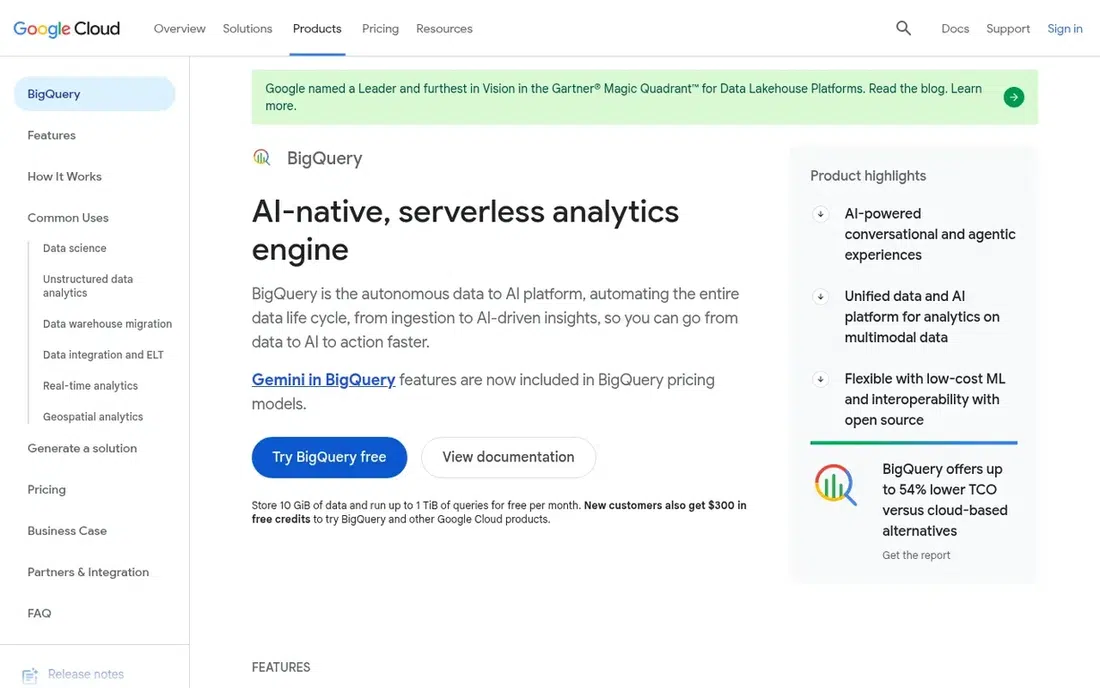
Choose Google BigQuery for autonomous AI-driven data analytics. Google BigQuery is described as an autonomous data and AI system that automates the whole data life cycle, helping enterprises move from data to AI to action quicker.
Limits to weigh: Google Cloud dependency.
Worth adding: BigQuery is tightly coupled to Google Cloud, which may limit adaptability for multi-cloud or on-premises strategies. From a buyer's view, if your enterprise standardizes on another cloud or needs hybrid deployment, evaluate other choices. No starting price is listed for Google BigQuery here; confirm pricing on the vendor site. As for free access: Not stated. What users get: AI-ready analytics.
- Automates data life cycle
- Autonomous data product
- Less a good match for on-premises
Databricks Lakehouse Platform
Best for: Unified data, analytics, and AI
Databricks Lakehouse Platform serves unified data, analytics, and AI. Databricks gives you a unified product for data, analytics, and AI, simplifying ETL, data warehousing, governance, and AI on its Data + AI Platform.
The product can need significant data engineering expertise and careful governance to avoid complexity. If your team lacks specialized skills or prefers a traditional warehouse, consider a more managed choice. No starting price is listed for Databricks Lakehouse Platform here; confirm pricing on the vendor site. Free plan details: Not stated.
Limits to weigh: Can be complicated to govern.
- Supports ETL and governance
- AI-centric approach
- Needs data engineering skills
Microsoft Azure Synapse Analytics
Best for: Unified SQL and big data analytics
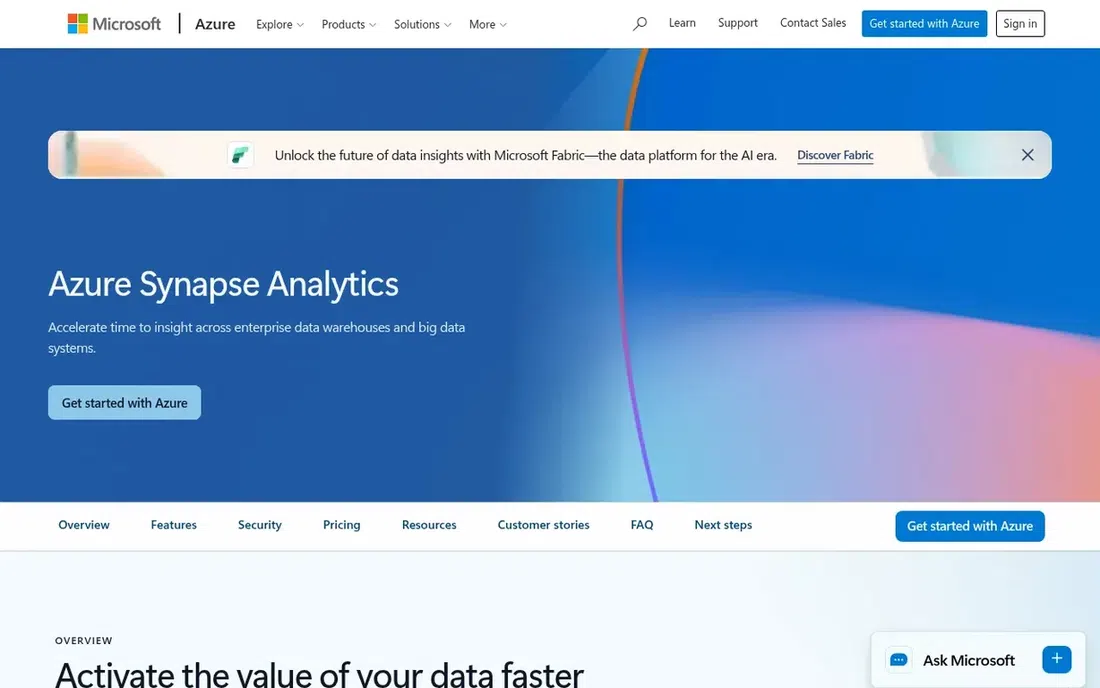
Microsoft Azure Synapse Analytics targets unified SQL and big data analytics. Synapse can involve complicated configuration and is most useful for Azure-centric environments.
Where it falls short: Azure-centric architecture.
Organizations without Azure investments or with more straightforward warehousing needs may find other options more straightforward. Beyond that, Microsoft Azure Synapse Analytics brings together enterprise SQL data warehousing and big data analytics services to accelerate time to insight. Microsoft Azure Synapse Analytics shows no starting price here, so confirm the cost on the vendor site. On free options: Not stated.
- Microsoft ecosystem alignment
- Big data analytics services
- Complicated service configuration
Choose Amazon Redshift for completely managed cloud data warehousing. Amazon Redshift is a quick, completely managed cloud data warehouse that eases and cuts the cost of analyzing all your data.
Redshift is cloud-only and may not suit organizations with strict on-premises requirements or those heavily invested in other cloud products. Consider alternatives if you need multi-cloud portability or deep integration with non-AWS services. This comparison lists no price for Amazon Redshift; ask the vendor. As for free access: Not stated.
What to check first: Cloud-only deployment.
- Quick query performance
- Economical scaling
- Needs AWS ecosystem familiarity
IBM Db2 Warehouse
Best for: In-memory processing at scale
IBM Db2 Warehouse targets in-memory processing at scale. IBM Db2 Warehouse is built on the SQL engine of IBM and queries data from several sources for advanced in-memory processing at a massive scale.
Also, if you are not invested in IBM or need a completely managed cloud-native warehouse, other choices may be more suitable. Db2 Warehouse may need tuning and is closely tied to IBM technologies, which can limit adaptability. IBM Db2 Warehouse does not show a starting price in this comparison, so check the vendor site for current pricing. Free access: Not stated.
Where it falls short: IBM ecosystem dependency.
- Queries several sources
- Advanced in-memory processing
- May need tuning
Teradata Vantage
Best for: Autonomous enterprise knowledge product
For autonomous enterprise knowledge product, Teradata Vantage is a natural candidate. Teradata Vantage is described as the AI product for the autonomous era, connecting and scaling across any environment.
Teradata options can demand specialized expertise and may be less transparent in pricing. Organizations seeking light or completely managed cloud-only warehousing might prefer alternatives with more straightforward operations. Teradata Vantage does not show a starting price in this comparison, so check the vendor site for current pricing. On free options: Not stated.
Limits to weigh: Less transparent pricing.
- Enterprise-grade
- Scales across environments
- May need specialized skills
How the list was put together
The comparison looks at four things: starting price, free access, how well the feature set matches data warehouse solutions for enterprise, and the main limit of each tool. Figures are shown as the vendors publish them. Billing terms, seat minimums and add-ons can change the real cost. The sequence is a judgement call: typical use case first, then pricing transparency, then free access. Use the profiles to check fit.
Before you commit
- Ask each vendor, from Google BigQuery to Teradata Vantage, for a written quote; none of them publishes a starting price.
- Before choosing Google BigQuery, weigh its main limit: Google Cloud dependency.
- Confirm that Amazon Redshift connects to the apps your team already uses, on the plan you would actually buy.
- Make sure IBM Db2 Warehouse lets you export your data in a format another tool can read.
- Add up seats, add-ons and usage charges for Microsoft Azure Synapse Analytics before comparing it with cheaper entries.
FAQ
Can I try these tools before paying?
Not by default. None of the tools, from Google BigQuery to Teradata Vantage, lists a free plan or a free trial here, so ask each vendor for a demo before committing.
Do these tools publish their prices?
No. None of the tools, from Google BigQuery to Teradata Vantage, shows a fixed starting price here, so budget time for quotes.
Does any tool for data warehouse solutions for enterprise here have a free plan?
A permanent free plan is not offered by Google BigQuery, Teradata Vantage or the other tools here. Plan a short evaluation period instead.
Which data warehouse is a good match for SAP-heavy enterprises?
For most readers this guide would start with Google BigQuery, built for autonomous AI-driven data analytics. Databricks Lakehouse Platform is the alternative for unified data, analytics, and AI, and Microsoft Azure Synapse Analytics for unified SQL and big data analytics. The right answer depends on budget and workflow.
Is Google BigQuery the right pick for everyone comparing data warehouse solutions for enterprise?
No single tool suits every team. Google BigQuery comes first because it fits autonomous AI-driven data analytics, while Databricks Lakehouse Platform suits unified data, analytics, and AI and Microsoft Azure Synapse Analytics suits unified SQL and big data analytics. Match the tool to your own size, budget and workflow before deciding.
Can these options handle both data warehousing and AI workloads?
Multiple choices, including Google BigQuery, Databricks Lakehouse Platform, and Teradata Vantage, are positioned to support AI and advanced analytics alongside warehousing. The fit relies on your existing ecosystem and the skills of your data teams.
Sources
- https://cloud.google.com/bigquery
- https://www.databricks.com
- https://azure.microsoft.com/en-us/products/synapse-analytics
- https://aws.amazon.com/redshift
- https://www.ibm.com/products/db2-warehouse
- https://www.teradata.com