5 Data Lake Platforms for Security Operations Worth Shortlisting in 2026
5 best data Lake platforms for security operations, with entry costs, free tiers and the buyer each one serves. The catches are listed up front. No hype.
- Editor's choiceGoogle Cloud Storage
Adaptable redundancy for security data
Starts atPricing on requestVisit cloud.google.comFull review - Great alternativeAmazon S3
Scalable object storage for security data
Starts atPricing on requestVisit aws.amazon.comFull review - Also considerDatabricks Lakehouse Platform
Unified security analytics and AI
Starts atPricing on requestVisit databricks.comFull review
Direct answer
If you need adaptable redundancy for security data, Google Cloud Storage is the first tool to look at here. Amazon S3 is better for scalable object storage for security data, and Databricks Lakehouse Platform is better for unified security analytics and AI. The other 2 tools in the list cover narrower or pricier cases. None of these vendors publish plan prices, so pricing is on request for every option.
TL;DR:
- Top of the list is Google Cloud Storage, which targets flexible redundancy for security data.
- Google Cloud Storage, Palo Alto Networks Cortex XSIAM and the 3 others all need a premium plan or a trial, since no free plan is listed.
- The main caution on Amazon S3: Storage only, no built-in analytics.
- Google Cloud Storage, Palo Alto Networks Cortex XSIAM and the 3 others all sell by quote; expect sales conversations before you see a price.
- For AI-driven security operations automation, Palo Alto Networks Cortex XSIAM is worth a look.
Last checked November 2026. Pricing on request: vendors did not publish plan prices when this guide was last checked (November 2026), so ask each vendor for a written quote.
Quick comparison
| Tool | Best for | Starts at | Free plan? | |
|---|---|---|---|---|
| Google Cloud Storage | Adaptable redundancy for security data | Pricing on request | Not stated | Visit |
| Amazon S3 | Scalable object storage for security data | Pricing on request | Not stated | Visit |
| Databricks Lakehouse Platform | Unified security analytics and AI | Pricing on request | Not stated | Visit |
| Azure Data Lake Storage | Secure big data analytics in Azure | Pricing on request | Free trial | Visit |
| Palo Alto Networks Cortex XSIAM | AI-driven security operations automation | Pricing on request | Not stated | Visit |
Data Lake Platforms for Security Operations profiles
LinkVetted put together this guide to data Lake platforms for security operations for readers who want a clear shortlist without reading every vendor page. It compares 5 tools on starting price, free plans, who each one suits and where each one falls short.
Google Cloud Storage
Best for: Adaptable redundancy for security data
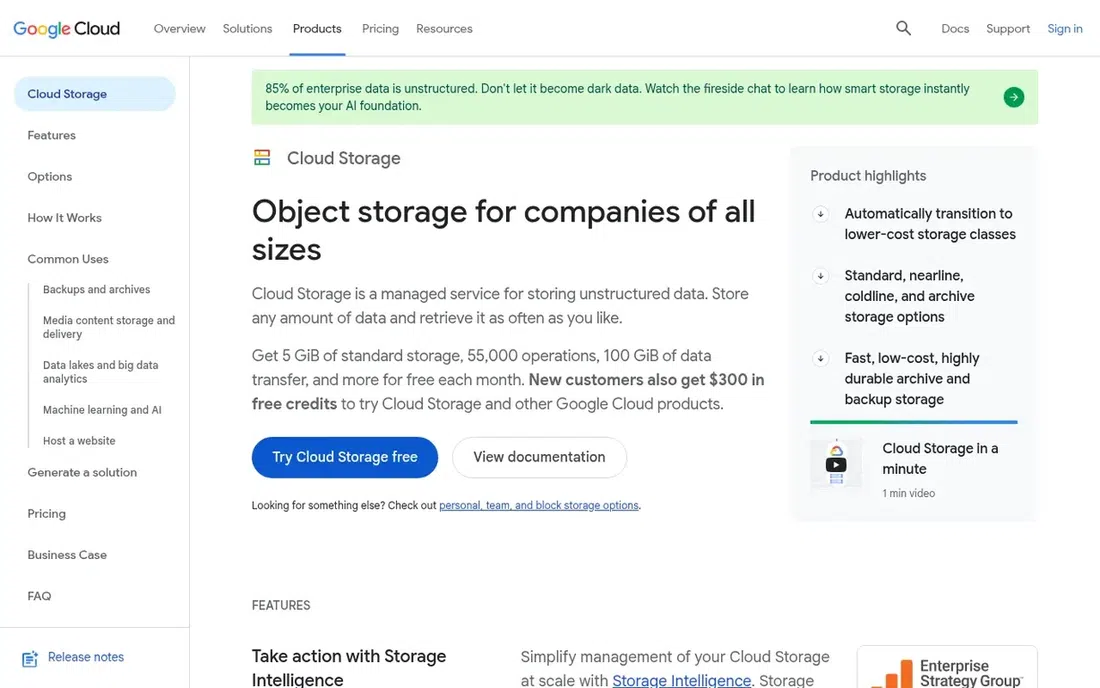
Where Google Cloud Storage fits: flexible redundancy for security data. Google Cloud Storage lets you store data with several redundancy choices, virtually anywhere. Its global infrastructure supports compliance and data residency needs, and it links up with Google Cloud's analytics and security services.
For teams already invested in Google Cloud, it gives you smooth integration. Like other object storage services, Google Cloud Storage does not supply native SIEM or security analytics features. It is best used as a storage layer alongside analytics products. No starting price is listed for Google Cloud Storage here; confirm pricing on the vendor site. As for free access: Not stated.
Watch-outs: Requires integration with other tools.
- Solid durability and security
- Global storage availability
- No built-in security analytics
Amazon S3
Best for: Scalable object storage for security data
Amazon S3 is a good fit for scalable object storage for security data. Amazon S3 is cloud object storage known for its scalability, data availability, security, and performance.
Watch-outs: Needs extra services for processing.
This comparison lists no price for Amazon S3; ask the vendor. As for free access: Not stated.
- High data availability and security
- A strong match for data lakes and backups
- Storage only, no built-in analytics
Databricks Lakehouse Platform
Best for: Unified security analytics and AI
Think of Databricks Lakehouse Platform for unified security analytics and AI. It eases ETL, data warehousing, governance, and AI on a single platform, making it a good match for security operations teams that want to build advanced analytics and machine learning models on their security data.
For teams seeking a more straightforward storage layer without integrated analytics, a pure object storage service like Amazon S3 might be a better fit. This comparison lists no price for Databricks Lakehouse Platform; ask the vendor. Free access: Not stated.
Downsides: Can need specialized skills.
- Supports data-centric AI workflows
- Eases ETL and governance
- May be complicated for small teams
Azure Data Lake Storage
Best for: Secure big data analytics in Azure
Where Azure Data Lake Storage fits: secure big data analytics in Azure. It is built to deal with large volumes of data and is well suited to security operations teams that require to store and analyze security logs, telemetry, and other data within the Azure ecosystem. It integrates with Azure analytics services for advanced threat detection.
Worth adding: the service is tightly coupled with the Azure ecosystem, which may be a limitation for multi-cloud or non-Azure environments. It also needs setup and configuration to optimize for security operations. Choose Azure Data Lake Storage for Azure-centric security analytics. Check the vendor site for Azure Data Lake Storage pricing; none is listed in this comparison. As for free access: Free trial.
Watch-outs: Needs configuration for security use cases.
- Optimized for big data analytics
- Secure cloud product
- Azure ecosystem dependency
Palo Alto Networks Cortex XSIAM
Best for: AI-driven security operations automation
Palo Alto Networks Cortex XSIAM is built with AI-driven security operations automation in mind. Palo Alto Networks Cortex XSIAM is a security analytics product that automates and enhances security operations using AI. It is built for organizations looking to use AI and automation to simplify security workflows and cut manual effort in threat analysis.
Cortex XSIAM may work best for organizations already using Palo Alto Networks products, and integration with external tools can add complexity. In daily use, choose Cortex XSIAM for advanced AI-driven automation in security operations. This comparison lists no price for Palo Alto Networks Cortex XSIAM; ask the vendor. Free plan details: Not stated.
What to check first: May need adoption of Palo Alto ecosystem.
- Accelerates incident response
- Boosts threat detection
- Can be complicated to plug into existing tools
What went into this list
We compared the tools on published pricing, free plan or trial availability, feature coverage for data Lake platforms for security operations, and the limits each vendor documents. Seat minimums, billing terms and add-ons can move the real cost, so the starting prices here are a guide and not a quote. Order on the page follows fit for the typical buyer first, then price transparency and free access. Your own requirements should decide the final pick.
A buyer's checklist
- Request quotes from Google Cloud Storage, Palo Alto Networks Cortex XSIAM and the others; the list shows no fixed prices.
- Use real work to test the free trial from Azure Data Lake Storage, rather than a demo project.
- Read the limits listed for Google Cloud Storage first: no built-in security analytics.
- Before rolling out Databricks Lakehouse Platform, verify the integrations your workflow depends on.
- Ask Amazon S3 about contract length, onboarding fees and user minimums before you sign.
FAQ
Can I try these tools before paying?
Often, yes. Azure Data Lake Storage offers a free trial. Use your own data and a real task during the test, and check what the free tier or trial limits before you rely on it.
Can I use several systems together for security operations?
Yes, plenty of organizations combine a data lake for storage with a SIEM for analytics. For example, you can store security logs in Amazon S3 and analyze them with Splunk or Databricks.
How are the tools for data Lake platforms for security operations ordered?
The order follows typical fit for data Lake platforms for security operations, with Google Cloud Storage first and Palo Alto Networks Cortex XSIAM last, then price clarity and free access. It is editorial judgement, not a score, so another team could rank the tools differently.
What role does AI play in security data lake systems?
Systems like Databricks Lakehouse Platform and Cortex XSIAM incorporate AI to help security teams analyze data more efficiently and cut manual effort.
Does any tool for data Lake platforms for security operations here have a free plan?
A permanent free plan is not offered by Google Cloud Storage, Palo Alto Networks Cortex XSIAM or the other tools here. Azure Data Lake Storage offer a trial. Plan a short evaluation period instead.
Do these tools publish their prices?
No. None of the tools, from Google Cloud Storage to Palo Alto Networks Cortex XSIAM, shows a fixed starting price here, so budget time for quotes.
Sources
- https://cloud.google.com/storage
- https://aws.amazon.com/s3
- https://www.databricks.com
- https://azure.microsoft.com/en-us/products/storage/data-lake-storage
- https://www.paloaltonetworks.com/cortex/cortex-xsiam