Best Data Privacy Management Software in 2026: 8 Tools Compared
We compared the best data privacy management software for 2026, from enterprise suites to mid-market tools, to help teams automate consent and requests.
- Editor's choice
 OneTrust
Enterprise-wide privacy programs
Starts atSee websiteVisit onetrust.comFull review - Great alternative
 DataGrail
Mid-market request automation
Starts atSee websiteVisit datagrail.ioFull review - Also consider
 Osano
Approachable privacy for growing companies
Starts at$199 per monthVisit osano.comFull review
TL;DR:
- The best data privacy management software depends on whether your main job is consent, data subject requests, data discovery, or full program governance.
- OneTrust leads on breadth for enterprises, DataGrail leads on mid-market request automation, and Osano leads on approachable pricing and setup.
- Most enterprise pricing is quote-based and modular, so compare implementation time and module scope, not just the licence quote.
- A tool that only routes tickets is not automation. Ask whether deletion and access actually execute in connected systems.
Quick comparison
| Tool | Best for | Starts at | Free plan? | |
|---|---|---|---|---|
| OneTrust | Enterprise-wide privacy programs | See website | No | Visit |
| DataGrail | Mid-market request automation | See website | No | Visit |
| Osano | Approachable privacy for growing companies | $199 per month | Yes | Visit |
 Securiti | Data intelligence plus privacy | See website | Free trial | Visit |
 Transcend | Developer-led privacy infrastructure | See website | Free trial | Visit |
 TrustArc | Enterprise governance and assurance | See website | No | Visit |
 BigID | Data discovery and classification | See website | Free trial | Visit |
 Ketch | Consent and preference management | See website | Free trial | Visit |
The best data privacy management software
The best privacy software and best data privacy management platforms in 2026 cover consent banners, data maps, subject requests, vendor risk, and assessments, but no single tool does every job equally well. These eight tools all operate in October 2026, and they split into enterprise suites, automation-first tools, and consent specialists.
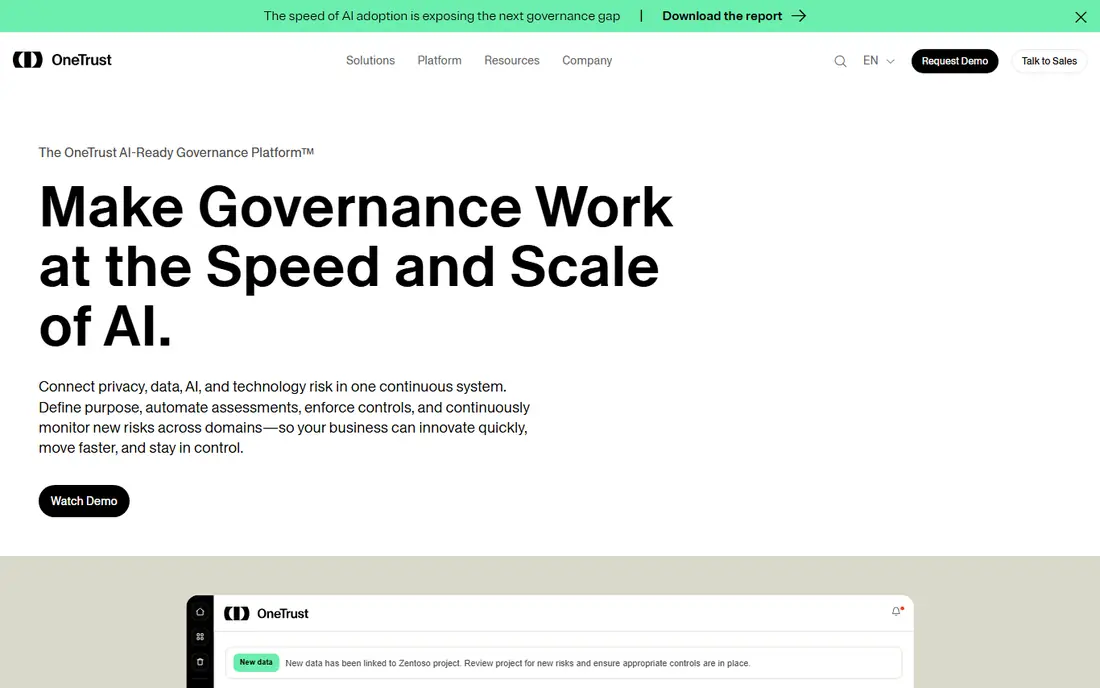
OneTrust is the enterprise default for full privacy programs. Its modules cover consent management, data subject requests, data mapping, assessments, vendor risk, and AI governance, with templates and regulatory intelligence for many jurisdictions. Large global companies use it to run one program across regions, with reporting that satisfies legal and audit teams.
The cost and complexity are the trade-offs. Modules are priced separately, so the total grows as you add consent, requests, and risk tools, and implementation takes planning and staff time. For a multinational with a dedicated privacy team, that breadth is worth it. For a mid-size company with one privacy owner, a lighter tool may deliver faster value.
- Broadest suite across consent, requests, governance, and risk
- Large template library
- Strong regulatory coverage
- Modular pricing stacks up
- Complex setup
- Smaller teams can find it heavy
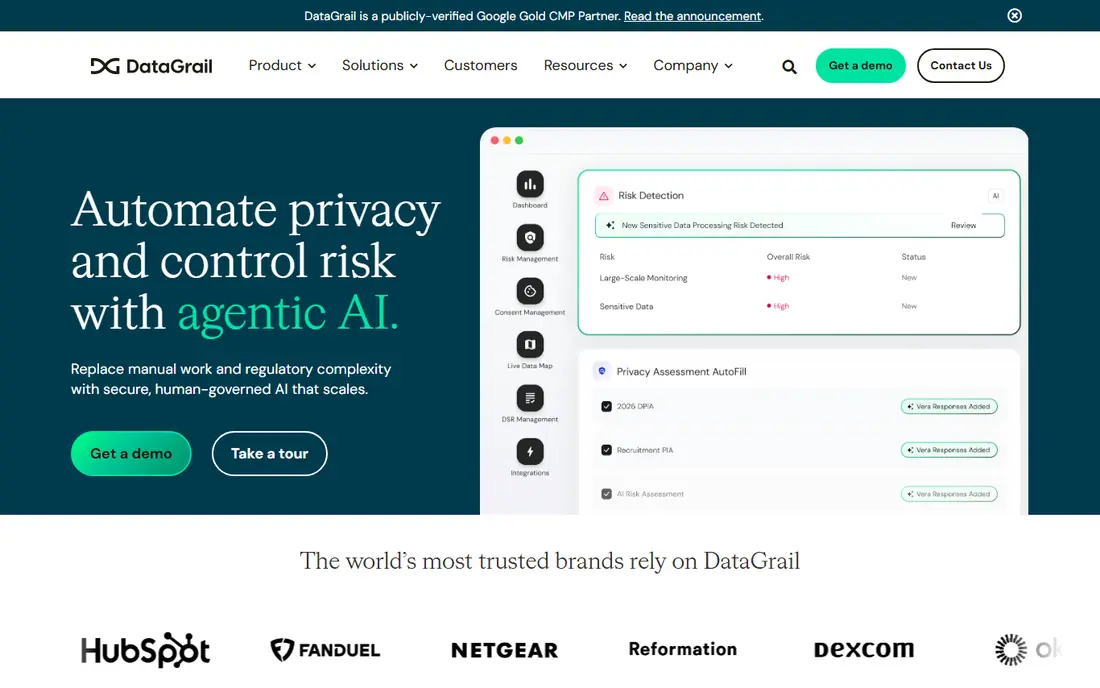
DataGrail is our pick for mid-market companies drowning in data subject requests. It connects to common SaaS systems, builds a live data map from those connections, and automates access and deletion workflows across them. Setup is faster than an enterprise suite, and the interface is built for privacy managers rather than consultants.
The limit is coverage. If a key system has no connector, that part of a request still needs manual work, and deep discovery across unstructured data is thinner than at BigID or Securiti. Buyers should list their top ten systems by personal data volume and confirm connector coverage before signing, because those systems decide real automation.
- Fast setup for mid-market teams
- Strong SaaS integrations for requests
- Live data mapping
- Automation depth depends on connected systems
- Enterprise discovery is thinner than BigID
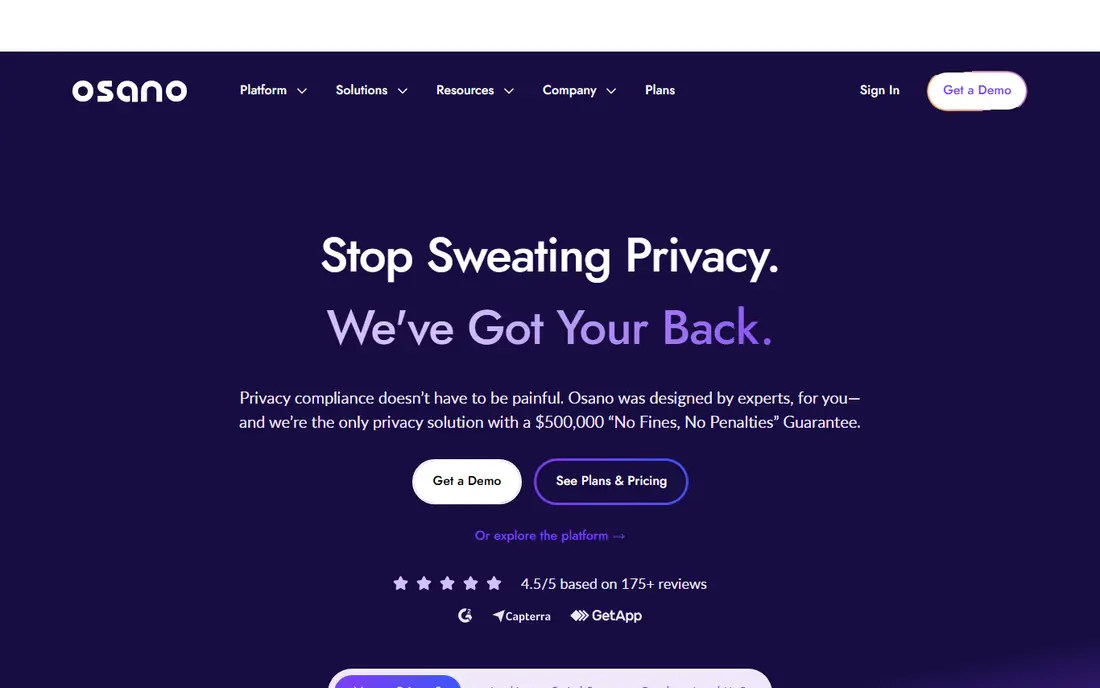
Osano suits growing companies that want privacy tools without an enterprise sales cycle. Its free tier covers one domain and limited visitors, and its Plus plan at 199 dollars per month adds domains, templates, and representative services. Consent banners, data subject requests, vendor monitoring, and assessments sit in one approachable dashboard.
The watch items are scale and fit. Per-domain pricing rises with site count, and depth beyond consent and basic request workflows trails OneTrust or Securiti. Some Shopify users have also reported conflicts with Shopify native consent handling, so Shopify stores should test Osano on a staging store before launch. For a typical small to mid-size website portfolio, Osano is a practical starting point.
- Published pricing with a free tier
- Easy consent and request tools
- Vendor monitoring and assessments
- Depth trails enterprise suites
- Per-domain pricing scales with site count
- Shopify consent conflicts reported by some users
Securiti approaches privacy from data intelligence. It discovers and classifies personal data across systems, then uses that map to automate subject requests, consent, and AI governance from the same foundation. For organizations with heavy AI use or sprawling data estates, that discovery-first model solves the hardest problem first: knowing where personal data actually lives.
The price and effort reflect that ambition. Securiti is quote-based, implementation needs data and engineering input, and smaller teams may need partner support. Companies whose main problem is a cookie banner should not buy Securiti. Companies whose main problem is unknown data across dozens of systems should shortlist it.
- Native data discovery across structured and unstructured data
- Automated request fulfillment
- AI governance features
- Quote-based enterprise pricing
- Implementation complexity
- Smaller teams may need partner help
Transcend is built for engineering-led organizations that want privacy as code. Its platform automates data subject requests, consent signals, and deletion across connected systems through APIs, so fulfillment actually executes rather than stopping at a ticket. Developers can encode privacy logic into systems and data pipelines, which suits companies with large engineering teams.
Non-technical teams will struggle. Transcend expects engineering time for setup and maintenance, and its interface reflects that audience. A privacy manager without developer support should prefer DataGrail or Osano. A company with engineers who already own data infrastructure will find Transcend a natural fit.
- Code-first privacy automation
- Strong deletion execution across systems
- Engineering-friendly APIs
- Needs strong technical resources
- Less friendly for non-technical privacy managers
- Quote-based pricing
TrustArc pairs a privacy platform with managed services and regulatory intelligence, a heritage that appeals to heavily regulated sectors. Its tools cover assessments, data mapping, consent, and vendor risk, while its advisory side helps companies interpret changing rules and prepare for audits. Certification programs add assurance for partners and customers who ask for proof.
The trade is automation depth. Compared with Transcend or Securiti, TrustArc is less API-first, and deployments can lean on services rather than self-serve configuration. For a regulated enterprise that values guidance and assurance alongside software, that mix is a strength. For a tech team that wants pure automation, an API-first tool may fit better.
- Deep regulatory intelligence
- Managed services and advisory heritage
- Certification programs
- Quote-based pricing
- Automation depth trails API-first rivals
- Implementation can be service-heavy
BigID leads on finding personal and sensitive data. Its machine learning discovery scans structured databases and unstructured files, classifies what it finds, and maps risk across the estate. That foundation supports privacy requests, AI governance, and data minimization, especially for companies that do not know where sensitive data sits.
BigID is not a full privacy suite on its own. Consent management and request workflows are thinner than at OneTrust or DataGrail, so many buyers pair BigID discovery with another tool for requests and consent. If discovery is your blocker, BigID is the pick. If requests are your blocker, start with DataGrail or Transcend instead.
- Best-in-class discovery for structured and unstructured data
- Strong AI governance use
- Classification at scale
- Quote-based pricing
- Primarily a discovery platform, not a full privacy suite
- Needs data team involvement
Ketch focuses on consent and preference as infrastructure. Its platform collects, stores, and enforces consent signals across websites, apps, and downstream systems, so marketing and data teams can respect choices consistently. That programmatic approach suits digital-first companies where consent touches many tools and vendors.
Ketch does not replace a full privacy suite. Data mapping, assessments, and deep request automation need other tools or add-ons, and pricing becomes custom at scale. For a company whose main pain is consent across channels, Ketch is a strong specialist. For a company that needs one platform for everything, OneTrust or Securiti may fit better.
- Programmatic consent and preference infrastructure
- Strong for marketing and data teams
- Flexible deployment
- Not a full privacy suite
- Request automation is thinner than DataGrail
- Pricing is tiered and custom at scale
How we picked these
We compared official product pages, pricing models, discovery and automation depth, and independent privacy platform comparisons for tools active in October 2026. We favored tools with current availability, clear consent, request, or discovery strengths, and a distinct fit, and we included enterprise suites, mid-market tools, and consent specialists because the best data privacy management software depends on the job. Quote-based tools are listed as See website where no public rate exists.
How to choose a data privacy management platform
Name the bottleneck first
Consent, requests, discovery, and governance are different purchases. A consent specialist will not fix a request backlog, and a discovery platform will not fix a banner problem. Rank your bottleneck, then shortlist tools built for that job, and treat other features as bonuses.
Test fulfillment, not just ticketing
Ask a vendor to show a deletion request executing in a real connected system, with logs and confirmation, not just a ticket moving to done. Check which of your top systems have live connectors, and how manual work is handled for the rest. That test separates automation from workflow theater.
Budget for implementation and ownership
Enterprise privacy tools need implementation time, data work, and an owner. Ask for implementation duration, required staff hours, and ongoing admin effort, and include those costs in the comparison. A cheaper licence with a six-month implementation can cost more than a pricier tool that goes live in a month.
FAQ
What is the best data privacy management software for a small business?
Osano is a strong small-business pick, with a free tier and published pricing, while DataGrail suits growing mid-market teams with rising request volume. Small teams that only need cookie consent can often start with a consent tool alone and add a full platform later.
What is the difference between OneTrust and DataGrail?
OneTrust is a broad enterprise suite covering consent, requests, governance, risk, and AI modules, while DataGrail focuses on mid-market request automation and live data mapping. Enterprises with global programs lean OneTrust, while mid-market teams with request volume lean DataGrail.
Do I need data discovery before buying a privacy platform?
If you do not know where personal data lives, discovery should come first, because requests and minimization cannot be automated on an incomplete map. BigID and Securiti lead on discovery, while DataGrail builds a map from SaaS connectors for mid-market estates.
How much does data privacy management software cost?
Mid-market tools publish some rates, such as Osano Plus at 199 dollars per month, while enterprise suites are quote-based and often run to tens of thousands of dollars per year depending on modules and users. Always compare the full annual total, including implementation.
Can privacy software guarantee GDPR or CCPA compliance?
No software alone guarantees compliance. Tools help implement consent, requests, mapping, and assessments, but legal interpretation, policies, contracts, and human decisions still determine compliance. Use the tool to support a program owned by legal and privacy staff, not to replace them.