Shortlist: 7 Best Data Privacy Software Options for 2026
Need the best data privacy software? We compare 7 tools on cost, free access and who each suits. Plain-spoken summaries throughout. Last reviewed November 2026.
- Editor's choice
 Osano
US businesses wanting consent plus a compliance backstop
Starts at$0 (free plan)Visit osano.comFull review - Great alternative
 Termly
Small sites that require policies and a banner, not a product
Starts at$0 (free plan)Visit termly.ioFull review - Also consider
 OneTrust
Enterprises running a full privacy program
Starts atCustom quote ($10,000/year minimum)Visit onetrust.comFull review
Direct answer
Osano is the first pick on this list for US businesses wanting consent plus a compliance backstop. Termly is the stronger choice for small sites that require policies and a banner, not a system, while OneTrust suits enterprises running a full privacy program. The remaining 4 options are covered below with prices and limits.
TL;DR:
- Osano is the opening pick, best for US businesses wanting consent plus a compliance backstop.
- Free plans exist at 4 of 7 tools (Osano, Termly, MineOS, Ketch).
- One limit worth knowing about Termly: not a full privacy management product.
- DataGrail suits mid-market firms drowning in data subject requests.
Quick comparison
| Tool | Best for | Starts at | Free plan? | |
|---|---|---|---|---|
| Osano | US businesses wanting consent plus a compliance backstop | $0 (free plan) | Yes | Visit |
| Termly | Small sites that require policies and a banner, not a product | $0 (free plan) | Yes | Visit |
| OneTrust | Enterprises running a full privacy program | Custom quote ($10,000/year minimum) | No | Visit |
 TrustArc | Teams that value deep regulatory research | Custom quote (~$10,000/year) | No | Visit |
 MineOS | Starting DSAR handling at zero cost | $0 (free plan) | Yes | Visit |
 Ketch | Price-transparent privacy with a real free level | $0 (free plan) | Yes | Visit |
 DataGrail | Mid-market firms drowning in data subject requests | Custom quote | No | Visit |
7 options for data privacy software in detail
This LinkVetted guide covers 7 options for data privacy software. Each profile lists a starting price, free plan details, strengths and drawbacks, so you can drop poor fits quickly.
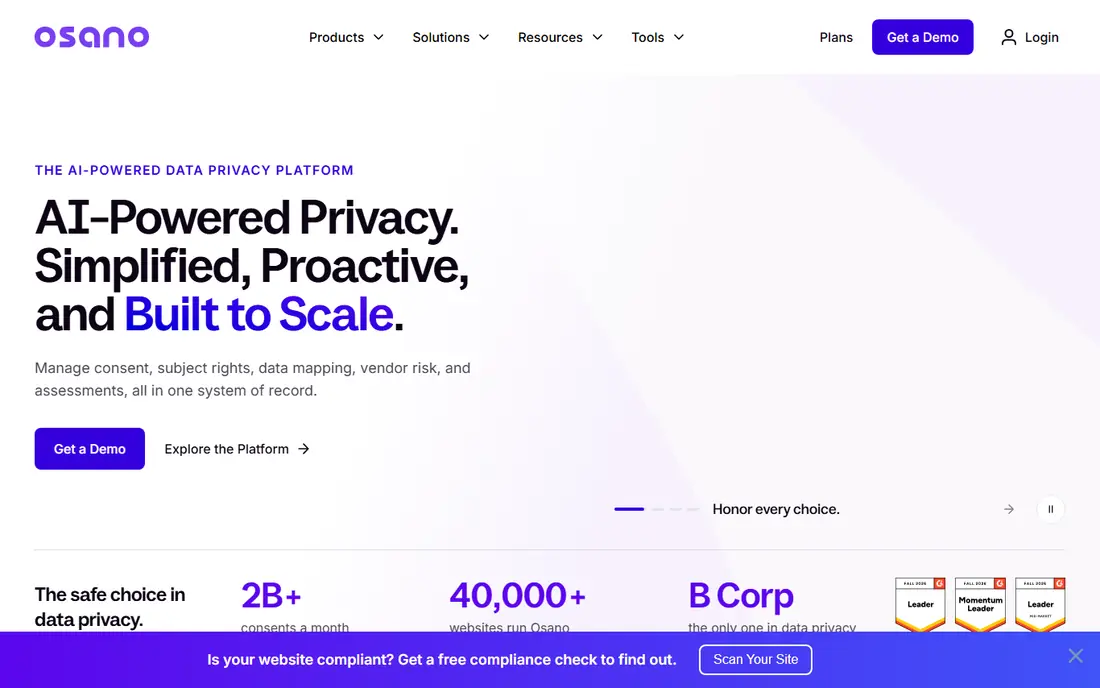
Osano targets US businesses wanting consent plus a compliance backstop. Read the terms carefully before treating that as insurance, since exclusions apply. Also note that the Plus level's per-visitor pricing runs higher than some competitors.
Where it is weaker: Plus level pricing is high per visitor compared with peers.
More specifically, the free plan includes one domain and up to 5,000 monthly visitors with the core banner. On top of that, the distinctive feature is the No Fines pledge: on eligible plans, Osano says it will include certain regulatory fines up to $500,000 if you followed their implementation guidance. Osano started as a consent management tool and grew into a broader privacy product, which makes it a natural stepping stone for firms outgrowing a bare cookie banner. More specifically, Osano suits best when cookies are one part of an expanding privacy workload and you want an US vendor with a human support team. On cost, Osano starts like this: $0. Osano offers a free plan.
- Real free plan for one domain
- No Fines pledge on higher levels
- Full privacy suite needs a sales conversation
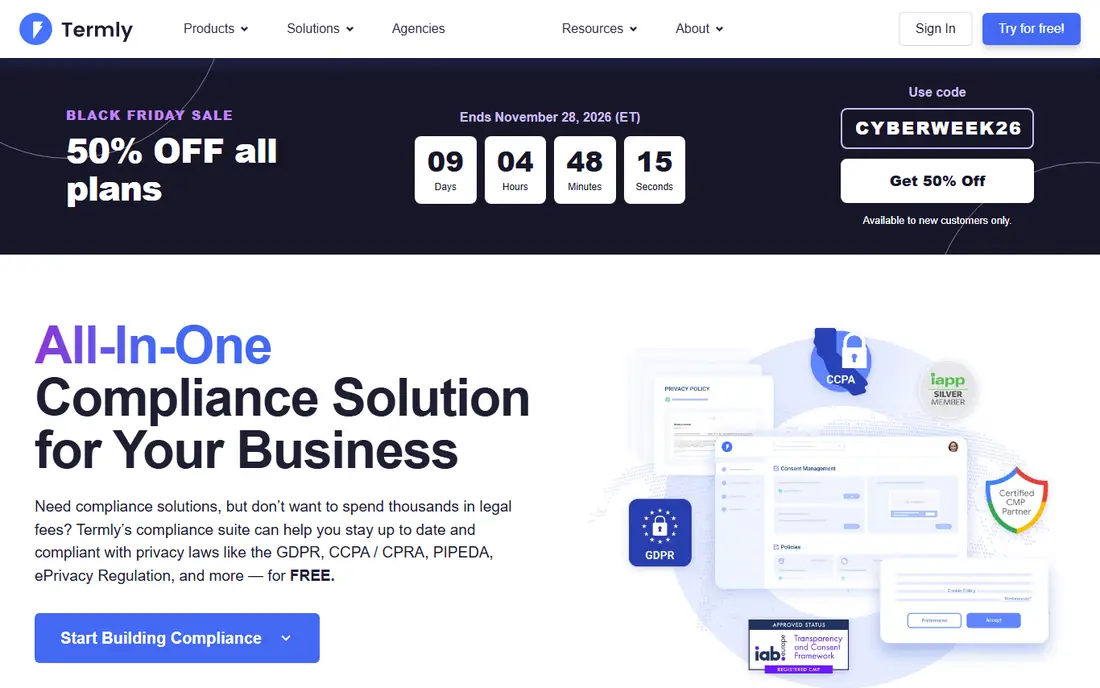
Termly is designed for small sites that require policies and a banner, not a product. What it does, it does well and cheaply, with policies that update as laws change.
Pro+ at $20 per month contains unlimited policies and views, weekly scans, Google Consent Mode v2 and IAB TCF support. In practice, starter at $14 per month per website layers on a second policy and 50,000 monthly banner views. On cost, Termly starts like this: $0. A free plan is available with Termly.
Drawbacks to consider: Per-website pricing brings up for agencies.
- Free plan with cookie banner
- Very budget-friendly premium levels
- Not a full privacy management product
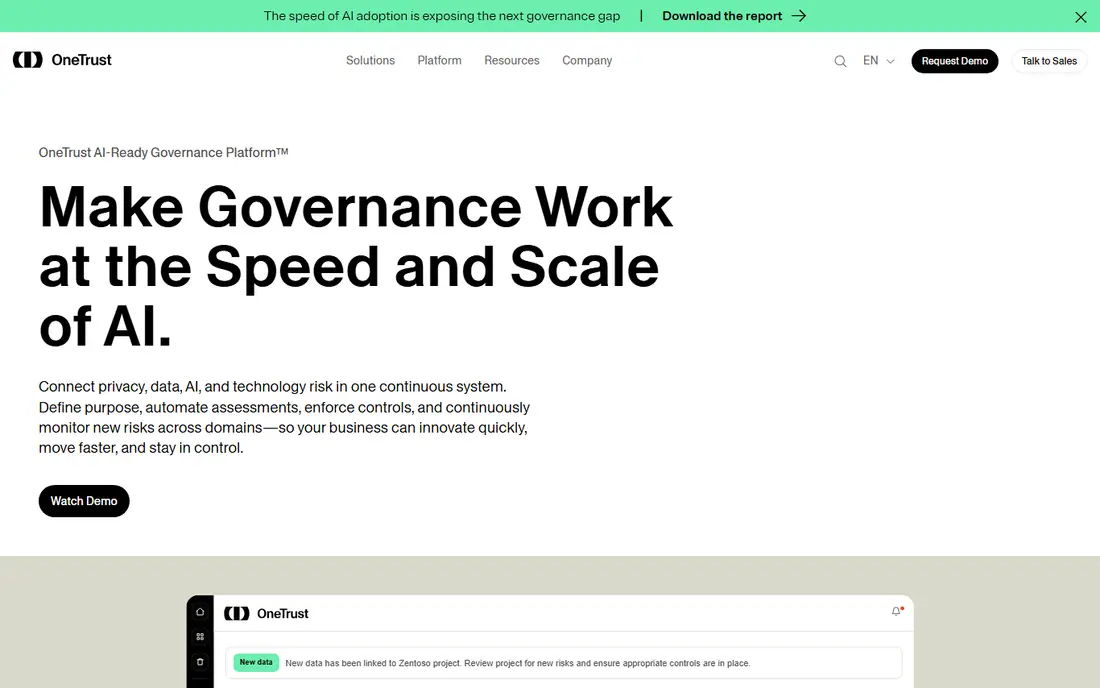
OneTrust works best for enterprises running a full privacy program. OneTrust is the product most enterprise legal teams already know. Its module list is unmatched: privacy automation, consent and preferences, tech risk, external management and AI governance under one roof.
Deployments routinely take weeks to months. The honest catch is cost and complexity. On top of that, for firms that only need consent management, this is far more product than the problem needs, and that is exactly the gap the smaller tools below exist to fill. OneTrust publishes no prices and now enforces a $10,000 annual minimum as of 2026, with buyer-reported median contracts around $11,800 per year and implementation fees adding thousands more. The API access also matters for bigger teams that want privacy workflows wired into their own tooling. OneTrust pricing: Custom quote. OneTrust has no permanent free option.
Reasons to shortlist it: AI governance modules for regulated AI use.
- Capable API and integration ecosystem
- Broadest module coverage in the industry
- Complicated implementation that commonly needs consultants
Where TrustArc fits: teams that value deep regulatory research. In December 2025 the company relaunched its platform as Arc, adding an AI assistant that answers regulatory questions against a large database of privacy laws. As for the details, there is no public pricing and no self-serve level, so budget conversations start with a sales call.
Worth adding: the TRUSTe certification program remains unique: a visible trust mark your site can display, which no competitor gives you. More specifically, TrustArc has been in privacy since 1997, originally as TRUSTe, and that history presents in its regulatory intelligence. TrustArc starts at: Custom quote. There is no free plan with TrustArc.
Points against: Smaller integration ecosystem than OneTrust.
- Relaunched Arc system with AI regulatory guidance
- Solid consent management
- No public pricing
Think of MineOS for starting DSAR handling at zero cost. MineOS (from the company Mine) takes the opposite path from most privacy vendors: it provides away the core request-handling workspace forever and charges for the advanced modules. As for the details, small firms getting their first deletion requests will find it refreshingly practical.
Where MineOS stands out: Modular extras for mapping and consent.
Drawbacks to consider: Advanced automation needs the premium modules.
Since premium pricing is quote-based, budget planning needs a conversation once you outgrow the free level. But the free tier is genuinely functional, not a demo, which makes MineOS a low-risk way to start handling requests properly whereas you build the business case for a larger investment. As for the details, the integration list covers the usual SaaS suspects from Salesforce to Zendesk to Snowflake. From a buyer's view, the free level supplies a full portal for receiving and processing data subject requests, and you can add data mapping or consent management modules as your program grows. Entry price for MineOS: $0. MineOS offers a free plan.
- Solid integration list
- Forever-free request handling workspace
- Premium pricing is quote-based
Ketch is designed for price-transparent privacy with a real free level. Every level bundles the full consent feature set, so you are paying for scale, not for features kept behind a paywall. That transparency extends to packaging: consent, data subject rights and data mapping are available a la carte.
So you do not have to buy the entire system to automate deletions. On top of that, plus starts near $499 per month for 100,000 users with rights workflows available as an add-on. Starter at $150 per month spans 30,000 users. Worth adding: the free level includes 5,000 monthly unique users with the full consent management system, privacy law templates, tracker scanning and two integrations. Entry price for Ketch: $0. You can start on Ketch without paying.
Points against: Per-integration charges beyond the base on some levels.
- Published pricing from $150 per month
- Free level with full consent management
- Enterprise features need the custom Pro level
Choose DataGrail for mid-market firms drowning in data subject requests. The trade is that this is a serious mid-market purchase.
Drawbacks to consider: Mid-market contracts generally $50,000+ per year.
With over 2,500 pre-built integrations included in the price and no per-request or per-integration charges, it removes the two pricing anxieties that make privacy software budgets unpredictable. In daily use, public estimates put usual annual costs between $50,000 and $100,000, with implementation adding more. The starting price for DataGrail: Custom quote. DataGrail has no free plan.
- No per-request or per-integration fees
- 2,500+ pre-built integrations included
- Overkill for straightforward consent needs
Selection criteria
For each of the 7 tools we noted price, free plan or trial, fit for data privacy software and the main limit, using vendor pages and documentation. Prices and plan limits come from vendor pages and can change, so confirm them on the vendor site before you buy. We ordered the tools by general fit, then by how clearly pricing is shown, then by free access. A buyer with unusual needs may reorder them.
Before you commit
- Confirm the entry price on the vendor page for Osano and the others: seat counts and billing terms change the total.
- Check what the free option really includes: Osano, Termly, MineOS and Ketch offer a free plan, and usage caps differ.
- Read the limits listed for Osano first: plus level pricing is high per visitor compared with peers.
- Run a one or two week pilot of TrustArc with the people who will use it every day.
- Ask MineOS how an export works before you move any records in; an easy exit lowers the risk.
FAQ
What is data privacy software?
It is software that helps firms comply with privacy laws like GDPR and CCPA. As for the details, usual functions bundle cookie consent management, data mapping (finding where personal data lives), automating data subject requests like access and deletion, vendor risk assessment and regulatory tracking.
How are the tools for data privacy software ordered?
The order follows typical fit for data privacy software, with Osano first and DataGrail last, then price clarity and free access. It is editorial judgement, not a score, so another team could rank the tools differently.
Do I need data privacy software for a small website?
Probably not a full product. A cookie consent banner with a scanner (Termly, Osano or Ketch free levels) plus generated privacy policies includes the basics for most small sites.
Can I try these options before paying?
Often, yes. Osano, Termly, MineOS and Ketch have a free plan. Use your own data and a real task during the test, and check what the free tier or trial limits before you rely on it.
Which options for data privacy software have a free plan?
On this list, Osano, Termly, MineOS and Ketch include a free plan. Caps on seats, usage or features are common, so test the free plan against your real workload.
What is the difference between a CMP and a privacy product?
A privacy system layers on data mapping, DSAR automation, risk assessments and vendor management. From a buyer's view, plenty of vendors sell both, at times as separate modules.