5 Best Cybersecurity Solutions for IoT for 2026, Vetted and Compared
Best cybersecurity solutions for IoT in 2026: 5 contenders with entry costs and free tiers. Every profile names its biggest catch. Pricing and limits included.
- Editor's choiceNozomi Networks
OT network and endpoint visibility
Starts atSee websiteVisit nozominetworks.comFull review - Great alternativeFortinet FortiNAC
Network access control with IoT visibility
Starts atSee websiteVisit fortinet.comFull review - Also considerClaroty
Cyber-physical systems security
Starts atSee websiteVisit claroty.comFull review
Direct answer
This list puts Nozomi Networks first for OT network and endpoint visibility. Listed starting prices: Microsoft Defender for IoT from $12.00 user/month, premium yearly. Fortinet FortiNAC is the stronger choice for network access control with IoT visibility, while Claroty suits cyber-physical systems security. The other 2 tools in the list cover narrower or pricier cases.
TL;DR:
- Nozomi Networks is the opening pick, best for OT network and endpoint visibility.
- For the cheapest start, look at Microsoft Defender for IoT: $12.00 user/month, premium yearly.
- Palo Alto Networks IoT Security is the one to check for unified IT, IoT, and OT security.
- Check the limits for Fortinet FortiNAC before you commit: concentrated on NAC instead of full IoT security.
Last checked November 2026. Prices and plan details were read from the vendors' own pages in November 2026; vendors change plans often, so confirm the current price on the vendor site before you buy.
Quick comparison
| Tool | Best for | Starts at | Free plan? | |
|---|---|---|---|---|
| Nozomi Networks | OT network and endpoint visibility | See website | Not stated | Visit |
| Fortinet FortiNAC | Network access control with IoT visibility | See website | Not stated | Visit |
| Claroty | Cyber-physical systems security | See website | Not stated | Visit |
| Microsoft Defender for IoT | Microsoft-centric IoT and OT security | $12.00 user/month, premium yearly | Free trial | Visit |
| Palo Alto Networks IoT Security | Unified IT, IoT, and OT security | See website | Not stated | Visit |
Cybersecurity Solutions for IoT, one by one
Choosing cybersecurity solutions for IoT usually comes down to price, fit and limits. This LinkVetted guide sets 5 tools side by side on those three points, with the facts kept short and checkable.
Nozomi Networks
Best for: OT network and endpoint visibility
Nozomi Networks is a good fit for OT network and endpoint visibility. Nozomi Networks gives you OT network and endpoint visibility, threat detection, and AI-powered analysis to keep operational technology cyber resilient.
It is well-suited for industrial and critical infrastructure organizations that require to monitor and secure OT environments without disrupting operations. Check the vendor site for Nozomi Networks pricing; none is listed in this comparison. Free options: Not stated.
Points against: May need OT expertise.
- AI-powered analysis
- Endpoint visibility
- Primarily OT-focused
Fortinet FortiNAC
Best for: Network access control with IoT visibility
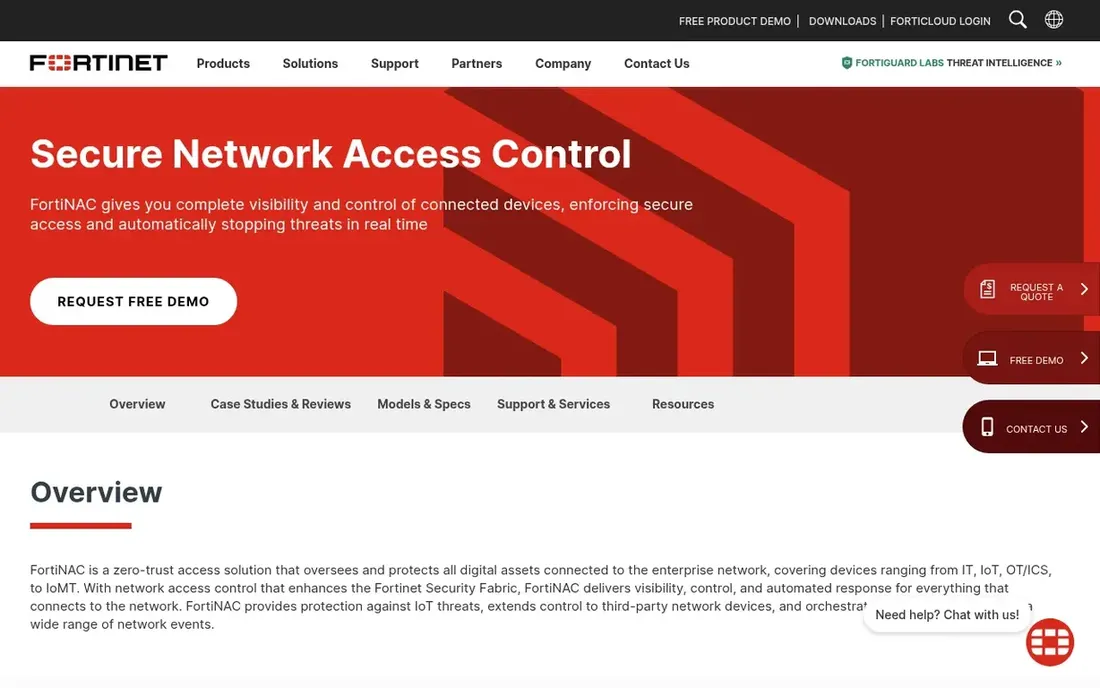
Fortinet FortiNAC serves network access control with IoT visibility. It is well suited to those looking to enforce access policies and gain insight into device behavior on their networks.
Limits to weigh: May need Fortinet infrastructure.
Whereas FortiNAC gives you solid NAC capabilities, it may not include all aspects of IoT security such as threat detection or vulnerability management. Fortinet FortiNAC does not show a starting price in this comparison, so check the vendor site for current pricing. On free options: Not stated.
- Integration with Fortinet Security Fabric
- Network access control
- Concentrated on NAC instead of full IoT security
Claroty
Best for: Cyber-physical systems security
Claroty is aimed squarely at cyber-physical systems security. Claroty secures cyber-physical systems, helping organizations protect connected assets, cut business risks, and increase operational efficiency. It is built for environments where IoT and OT converge, for example industrial and critical infrastructure, offering deep visibility and threat detection.
The main drawbacks: Concentrated on cyber-physical systems.
Claroty's specialization in cyber-physical systems means it may be more than needed for general IoT security. Also, organizations with primarily IT-focused IoT devices might consider broader IT security systems. This comparison lists no price for Claroty; ask the vendor. As for free access: Not stated.
- Risk reduction
- Operational efficiency support
- May be overkill for entry-level IoT
Microsoft Defender for IoT
Best for: Microsoft-centric IoT and OT security

Think of Microsoft Defender for IoT for Microsoft-centric IoT and OT security. Microsoft Defender for IoT provides security options for IoT and ICS/OT devices, including asset discovery, vulnerability management, and threat protection. It is well-suited for organizations that depend on Microsoft security tools and seek to extend protection to their IoT and operational technology environments.
For broader device support, consider vendor-neutral systems. The tool is likely to be most beneficial within a Microsoft-centric stack; those without Microsoft infrastructure may find integration challenging. On cost, Microsoft Defender for IoT starts like this: $12.00 user/month, premium yearly. On free options: Free trial.
Downsides: May need Microsoft ecosystem.
- Asset discovery and inventory
- Vulnerability management
- Can be complicated for non-Microsoft shops
Palo Alto Networks IoT Security
Best for: Unified IT, IoT, and OT security
Choose Palo Alto Networks IoT Security for unified IT, IoT, and OT security. It suits organizations seeking a unified approach to device security across converged networks, notably those already using Palo Alto Networks products.
Honest limits: Can be complicated to deploy.
Also, organizations with primarily Microsoft or specialized OT needs might consider other choices. Palo Alto Networks IoT Security shows no starting price here, so confirm the cost on the vendor site. On free options: Not stated.
- Adaptive security enforcement
- Actionable risk insights
- May need integration with Palo Alto ecosystem
How we compared the tools
LinkVetted looked at what each vendor publishes: pricing, plan limits, feature coverage for cybersecurity solutions for IoT and stated drawbacks. No hands-on testing is claimed. Figures are shown as the vendors publish them. Billing terms, seat minimums and add-ons can change the real cost. The order reflects how well each tool fits the most common buying scenario for cybersecurity solutions for IoT, then price clarity, then free plan access. It is a starting point, not a verdict.
What to confirm before you sign up
- Confirm the entry price on the vendor page. For Nozomi Networks, Fortinet FortiNAC, Claroty and Palo Alto Networks IoT Security that means a quote rather than a fixed price.
- Run a trial of Microsoft Defender for IoT with real work before paying for a year; your own workflow is the best test.
- Before choosing Nozomi Networks, weigh its main limit: primarily OT-focused.
- Compare total cost, not headline price: for Palo Alto Networks IoT Security, add extra seats, add-ons and any usage-based charges.
- Check how data leaves Nozomi Networks: formats, limits and whether exports are available on every plan.
FAQ
Does any tool for cybersecurity solutions for IoT here have a free plan?
A permanent free plan is not offered by Nozomi Networks, Palo Alto Networks IoT Security or the other tools here. Microsoft Defender for IoT offer a trial. Plan a short evaluation period instead.
Do these tools publish their prices?
Not all of them. Nozomi Networks, Fortinet FortiNAC, Claroty and Palo Alto Networks IoT Security publish no starting price, so expect a quote request for those. The rest, Microsoft Defender for IoT included, show a starting price, though seats and billing terms still change the final cost.
Can I try these tools before paying?
Often, yes. Microsoft Defender for IoT offers a free trial. Use your own data and a real task during the test, and check what the free tier or trial limits before you rely on it. All 5 picks in this Cybersecurity solutions for IoT comparison list a starting price, free plan details and the main limits on their cards above.
What should I look for in an IoT cybersecurity option?
Key factors contain thorough device visibility, threat detection, access control, and integration with your existing infrastructure. Consider the mix of IT, IoT, and OT devices in your environment and whether the option supports the protocols they use.
Is Nozomi Networks the right pick for everyone comparing cybersecurity solutions for IoT?
No single tool suits every team. Nozomi Networks comes first because it fits OT network and endpoint visibility, while Fortinet FortiNAC suits network access control with IoT visibility and Claroty suits cyber-physical systems security. Match the tool to your own size, budget and workflow before deciding.
Can I use network access control (NAC) for IoT security?
Even so, NAC alone may not offer full threat detection or vulnerability management, so it is commonly used alongside other security tools.
Sources
- https://www.nozominetworks.com
- https://www.fortinet.com/products/network-access-control
- https://claroty.com
- https://www.microsoft.com/en-us/security/business/endpoint-security/microsoft-defender-iot
- https://www.paloaltonetworks.com/network-security/iot-security