Best Cybersecurity Companies in 2026: 8 Firms Compared
Compare the best cybersecurity companies in 2026, from endpoint and network leaders to identity and cloud security, with strengths and honest limits noted.

- Editor's choice
 Palo Alto Networks
Platform consolidation
Starts atSee websiteVisit paloaltonetworks.comFull review - Great alternative
 CrowdStrike
Endpoint-led detection
Starts atSee websiteVisit crowdstrike.comFull review - Also consider
 Fortinet
Distributed networks and branches
Starts atSee websiteVisit fortinet.comFull review
TL;DR:
- Palo Alto Networks and CrowdStrike lead on platform breadth, but they suit different starting points: network and cloud, or endpoint first.
- Fortinet fits distributed networks and branches, while Zscaler fits remote and cloud-first workforces.
- SentinelOne and Microsoft Security suit teams that want automation or a Microsoft-centred stack.
- Check Point, Okta and others fill gaps that a single platform often leaves, such as identity and network prevention.
- No one vendor covers every risk, so match the company to your largest exposure first, then add the rest.
Quick comparison
| Tool | Best for | Starts at | Free plan? | |
|---|---|---|---|---|
| Palo Alto Networks | Platform consolidation | See website | No | Visit |
| CrowdStrike | Endpoint-led detection | See website | Free trial | Visit |
| Fortinet | Distributed networks and branches | See website | No | Visit |
 Zscaler | Zero trust remote access | See website | Free trial | Visit |
 SentinelOne | Automated endpoint response | See website | Free trial | Visit |
 Microsoft Security | Microsoft-centred organisations | See website | Free trial | Visit |
 Check Point | Unified network prevention | See website | Free trial | Visit |
 Okta | Identity and access control | See website | Free trial | Visit |
The best cybersecurity companies
A cybersecurity company is only as good as the risk it actually reduces. These eight firms cover endpoints, networks, cloud, identity and operations, with different strengths for different kinds of organisations.
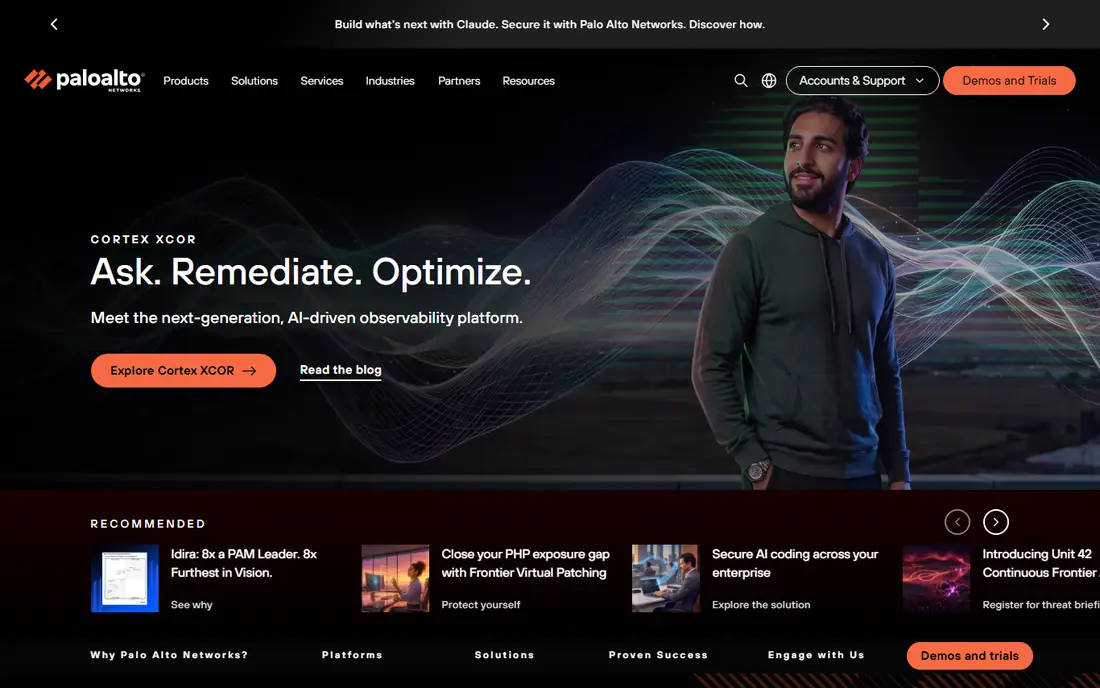
Palo Alto Networks is the platform pick for large organisations that want fewer vendors. Its Strata network security, Prisma Cloud, Cortex XDR and XSIAM products, and SASE tools cover a wide range of controls under one vendor. That breadth helps when security teams are tired of stitching together point tools and separate consoles.
The catch is scale and cost. This is an enterprise platform, priced by quote, and a full rollout takes planning, staffing and integration work. Smaller teams may find the entry point heavy. For a mid-size or large organisation that already uses Palo Alto firewalls or cloud tools, consolidation can still pay off in simpler operations and shared threat data.
- Broad platform across network, cloud and operations
- Strong threat intelligence
- Large partner and support ecosystem
- Enterprise pricing and complexity
- Platform breadth can mean a long rollout
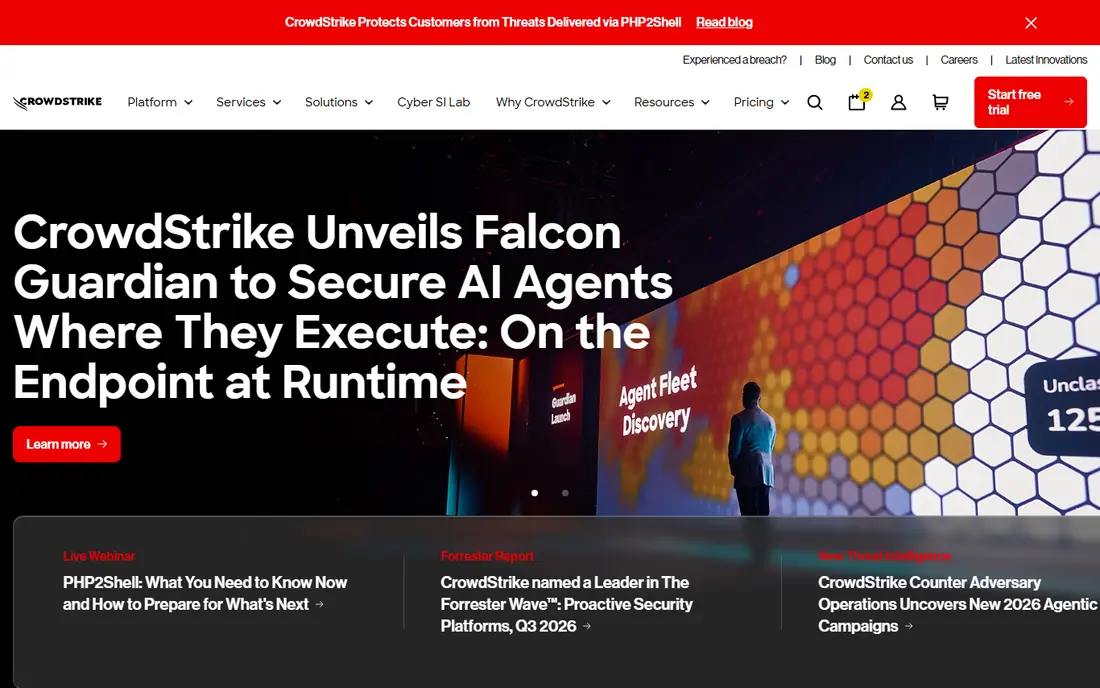
CrowdStrike built its name on endpoint detection and response. The Falcon platform places a light sensor on each device and connects it to cloud analytics, threat intelligence and response tools. That model suits teams that need fast detection across laptops, servers and cloud workloads, with incident data in one place.
CrowdStrike also covers identity protection, cloud security and a next-generation SIEM, so it can grow beyond endpoints. The honest limit is that pricing is by quote and the platform works best when a team commits to several Falcon modules. Buyers who only want basic antivirus will pay for more than they need, while teams that use the full platform get the real benefit.
- Lightweight Falcon sensor
- Strong endpoint detection and threat intelligence
- Cloud-native platform
- Enterprise pricing by quote
- Best value comes from the wider Falcon platform, not one module
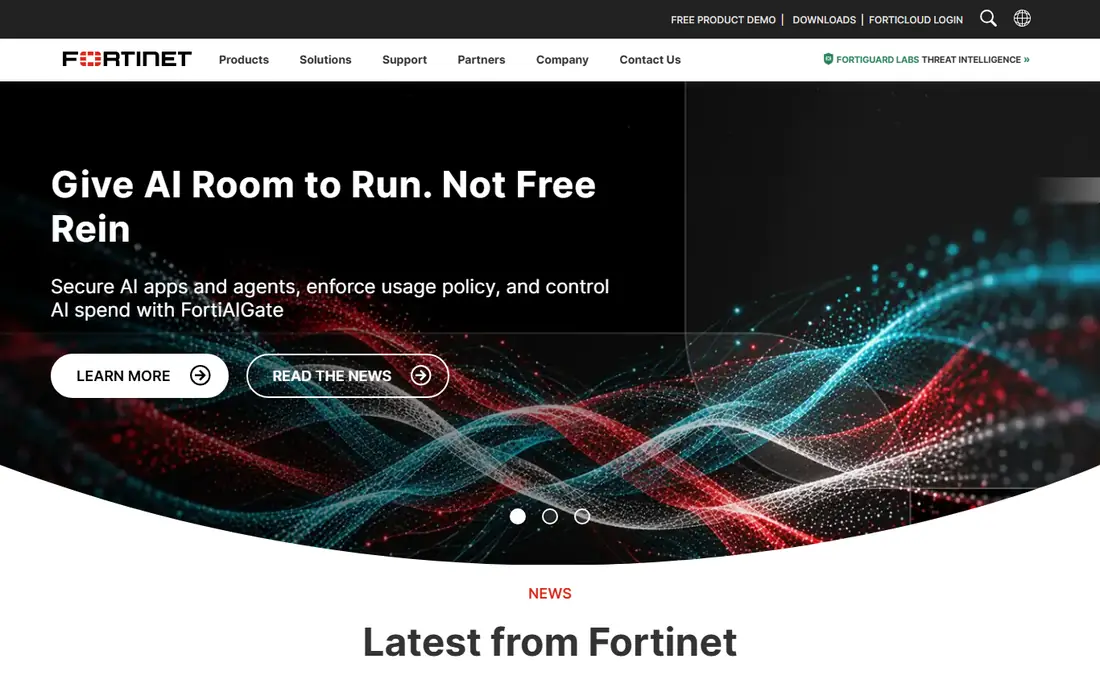
Fortinet suits organisations with many sites, branches and network edges to protect. FortiGate firewalls, FortiSASE, FortiEDR and XDR, FortiSIEM and operational technology security form a fabric that shares threat data across network, endpoint and cloud. Its own FortiASIC chips are a point of pride for performance at the network edge.
The trade is complexity. Buyers must sort hardware models, subscriptions and support tiers, and that takes a partner or an experienced network team. For a single office with a small team, a cloud-only vendor may be simpler. For a retailer, manufacturer or public sector body with dozens of sites, Fortinet is a natural shortlist pick.
- FortiGate firewalls with custom security chips
- Broad Security Fabric
- Strong branch and operational technology coverage
- Hardware and licensing mix can be complex
- Enterprise pricing by quote
Zscaler replaces the old idea of a trusted office network with a zero trust exchange. Users connect through a cloud proxy that checks identity and policy before reaching the internet or a private application. That model fits remote and hybrid workforces, where staff and contractors rarely sit inside one office.
Its strengths are secure internet access, private application access, data protection and digital experience monitoring. The catch is migration. Applications that assume a flat office network, old VPN habits or direct site links may need rework. Pricing is also by user and, for some products, by usage, so a buyer should model total cost for the full workforce, not just office staff.
- Cloud proxy across many data centres
- Zero trust access without a traditional VPN
- Strong web and private app controls
- Pricing by user and usage
- Legacy apps may need careful migration
SentinelOne takes an automation-first approach to endpoints. Its Singularity platform runs models on the device, detects suspicious behaviour, and can isolate a machine and roll back changes without waiting for a human analyst. That speed matters during ransomware and fast-moving attacks, when minutes count.
It also covers cloud workloads, identity and AI-assisted security operations. The honest limit is ecosystem size. Palo Alto and CrowdStrike offer wider platform breadth and larger partner networks, which can matter for a complex enterprise. For a team that wants strong endpoint automation without a huge platform project, SentinelOne is a strong pick.
- AI-assisted detection on the device
- Automated response and rollback
- Cloud and identity coverage
- Enterprise pricing by quote
- Smaller ecosystem than the largest platform vendors
Microsoft Security is the practical pick for organisations already built on Microsoft 365 and Azure. Defender XDR, Microsoft Sentinel, Entra identity, Purview data security and Defender for Cloud share identity, device and cloud signals. That integration can cut the work of joining logs and licences from many vendors.
The catch is commitment. The best pricing often comes inside Microsoft licensing bundles, and teams outside the Microsoft stack will get less benefit. Alert tuning also matters, because a broad platform can produce noise if rules are left at defaults. For a Microsoft shop, though, this is often the lowest-friction way to lift endpoint, identity and cloud security together.
- Deep links to Microsoft 365, Entra and Azure
- Defender XDR and Sentinel SIEM in one family
- Broad licensing bundles
- Best value needs a Microsoft commitment
- Some tools need tuning to avoid alert noise
Check Point is a veteran network security vendor with a prevention-first message. Its Infinity architecture links Quantum firewalls, CloudGuard cloud security, Harmony workspace security and threat prevention into one approach. That suits organisations that still run significant on-premises networks alongside cloud workloads.
The strength is prevention at the gateway, with threat intelligence shared across products. The limit is fit for very small teams. Check Point is an enterprise-grade range, and a small business may find a simpler cloud vendor easier to run. For a mid-size or large organisation with data centres, branches and cloud accounts, it remains a credible alternative to Palo Alto and Fortinet.
- Long track record in network prevention
- Quantum firewalls and CloudGuard
- Harmony workspace security
- Enterprise pricing by quote
- Interface and product range can feel broad for small teams
Okta solves a different problem from the rest of this list: who gets in, and with what proof. Its workforce identity tools cover single sign-on, multi-factor authentication, lifecycle management and privileged access controls, while customer identity tools handle login for external users. Good identity controls stop many attacks before they reach an endpoint or a network.
The honest limit is scope. Okta does not replace endpoint detection, firewalls or cloud security. It works best alongside one of the platform vendors above. Buyers should also model user counts carefully, because identity pricing scales with workforce and customer users. Used well, though, Okta can be the highest-value single purchase on this list, because stolen credentials remain a top attack path.
- Strong workforce and customer identity tools
- Single sign-on and multi-factor authentication
- Broad app catalogue
- Identity is one layer, not a full security platform
- Pricing scales with users and features
How we picked these
We compared official product pages, platform documentation and independent 2026 company rankings, and we kept only firms that are actively sold today and cover a clear security domain. We weighed platform breadth, endpoint and network strength, cloud and identity coverage, and fit for different organisation sizes. Prices are by quote for most enterprise vendors, so we wrote See website rather than inventing a per-user figure that would not match a real contract.
We did not claim hands-on testing of enterprise security tools. The trade-offs here reflect documented product scope, pricing models and consistent reviewer and analyst feedback.
How to choose a cybersecurity company
Start with your largest exposure. If most risk sits on laptops and servers, start with endpoint detection from CrowdStrike, SentinelOne or Microsoft. If risk sits on branches, data centres and network edges, start with Palo Alto, Fortinet or Check Point. If staff work from anywhere, Zscaler and Okta deserve early attention.
Next, check integration. A tool that shares telemetry with your existing SIEM, identity provider and ticketing system will save more time than a slightly stronger tool that sits alone. Ask vendors for a trial in your own environment, with your own devices and applications, and measure detection, false positives and analyst time.
Also plan for operations. A platform needs people to tune rules, review alerts and run incident response. Managed detection services from some vendors can help smaller teams, but they add cost and need clear response roles. Finally, confirm data residency, support hours and contract terms before signing, because security tools are hard to swap once agents and policies are everywhere.
Questions to ask every vendor
Ask how the product detects a new attack with no known signature, how it responds without human action, and what happens when a device is offline. Ask for a clear pricing model by user, device or workload, and for the cost of add-on modules. Ask for references in your sector and size. The quality of those answers tells you more than a feature sheet.
FAQ
What is the best cybersecurity company overall?
There is no single winner for every organisation. Palo Alto Networks is our pick for platform consolidation, CrowdStrike for endpoint-led teams, and Microsoft Security for Microsoft-centred shops. Match the vendor to your largest risk, then check integration and staffing before deciding.
Which cybersecurity company is best for small businesses?
Microsoft Security and SentinelOne are often easier for smaller teams, especially when bundled or managed services are available. Small firms should still use multi-factor authentication, patching and backups, because no vendor product replaces those basics. A managed detection service can help when no full-time security staff exists.
Do I need more than one cybersecurity company?
Most organisations do. Identity, endpoint, network and cloud controls cover different attack paths, and one vendor rarely leads in all four. The goal is a small set of vendors that share data well, not a large pile of tools that no one tunes.
What is zero trust security?
Zero trust means no user or device is trusted by default, even inside an office network. Each access request is checked for identity, device health and policy before it reaches an application. Zscaler and Okta are built around that model, and other vendors support it across their platforms.
How much do enterprise cybersecurity tools cost?
Most enterprise vendors price by quote, based on users, devices, workloads and modules. That is why we list See website for most firms here. Expect a material annual contract for a mid-size organisation, and ask for total cost, including support, add-ons and managed services.
Is Microsoft Security enough on its own?
It can be enough for a Microsoft-centred organisation with good tuning and staffing, especially when paired with strong identity controls. Larger or more complex estates often add a specialist endpoint, network or cloud tool for depth. Test coverage in your own environment before relying on one vendor alone.
Sources
- https://www.paloaltonetworks.com/products
- https://www.crowdstrike.com/en-us/products/
- https://www.fortinet.com/products
- https://www.zscaler.com/products
- https://www.sentinelone.com/platform/
- https://www.microsoft.com/en-us/security/business
- https://www.checkpoint.com/products/
- https://www.okta.com/products/