Cybersecurity Platforms Compared: 6 Tools, Prices and Limits
Best cybersecurity platforms in 2026: 6 tools with starting prices, free plans and limits. Details on cost, catches and fit. Reviewed in November 2026.
- Editor's choice
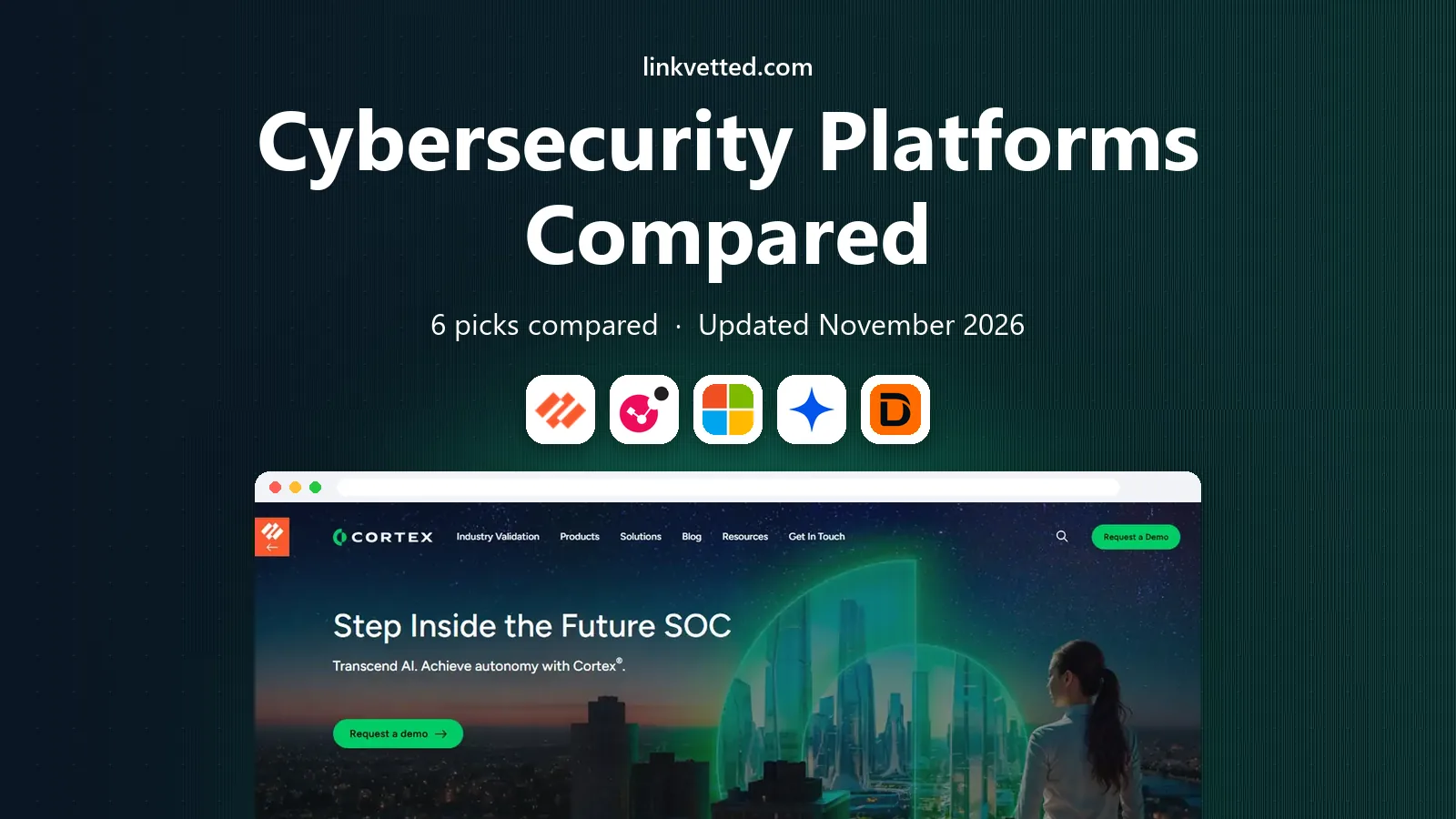
 Palo Alto Cortex
Palo Alto ecosystem security
Starts atSee websiteVisit paloaltonetworks.comFull review - Great alternative
 Check Point
Network security system
Starts atSee websiteVisit checkpoint.comFull review - Also consider
 Microsoft Defender
Microsoft 365 security
Starts atSee websiteVisit microsoft.comFull review
TL;DR:
- Palo Alto Cortex takes the first slot, best suited to Palo Alto ecosystem security.
- A permanent free plan is missing from all 6 tools, Palo Alto Cortex and CrowdStrike Falcon included; plan for a trial or a premium start.
- For endpoint security leader, CrowdStrike Falcon is worth a look.
- Palo Alto Cortex, CrowdStrike Falcon and the 4 others all sell by quote; expect sales conversations before you see a price.
- A fair warning about Palo Alto Cortex: best inside Palo Alto stack.
Direct answer
Palo Alto Cortex comes first here, mainly for Palo Alto ecosystem security. Alternatives: Check Point for network security system, and Microsoft Defender for Microsoft 365 security. The remaining 3 options are covered below with prices and limits.
Quick comparison
| Tool | Best for | Starts at | Free plan? | |
|---|---|---|---|---|
| Palo Alto Cortex | Palo Alto ecosystem security | See website | No | Visit |
| Check Point | Network security system | See website | No | Visit |
| Microsoft Defender | Microsoft 365 security | See website | Free trial | Visit |
 Wiz | Cloud security posture | See website | Free trial | Visit |
 Darktrace | AI anomaly detection | See website | No | Visit |
 CrowdStrike Falcon | Endpoint security leader | See website | Free trial | Visit |
Cybersecurity Platforms profiles
LinkVetted put together this guide to cybersecurity platforms for readers who want a clear shortlist without reading every vendor page. It compares 6 tools on starting price, free plans, who each one suits and where each one falls short.

Palo Alto Cortex is aimed squarely at Palo Alto ecosystem security. Cortex is Palo Alto Networks' security operations product: XDR that correlates endpoint, network, and cloud data, plus SOAR for automatic response. More specifically, outside the Palo Alto ecosystem, some integration advantages fade, and pricing is enterprise-grade.
The main drawbacks: Enterprise pricing.
But for Palo Alto shops, Cortex turns the firewall investment into a full detection and response product. For everyday use, organizations standardized on Palo Alto firewalls get detection and response deeply integrated with their network security. Palo Alto Cortex does not show a starting price in this comparison, so check the vendor site for current pricing. There is no free plan with Palo Alto Cortex.
- Proven enterprise scale
- Deep Palo Alto integration
- Best inside Palo Alto stack
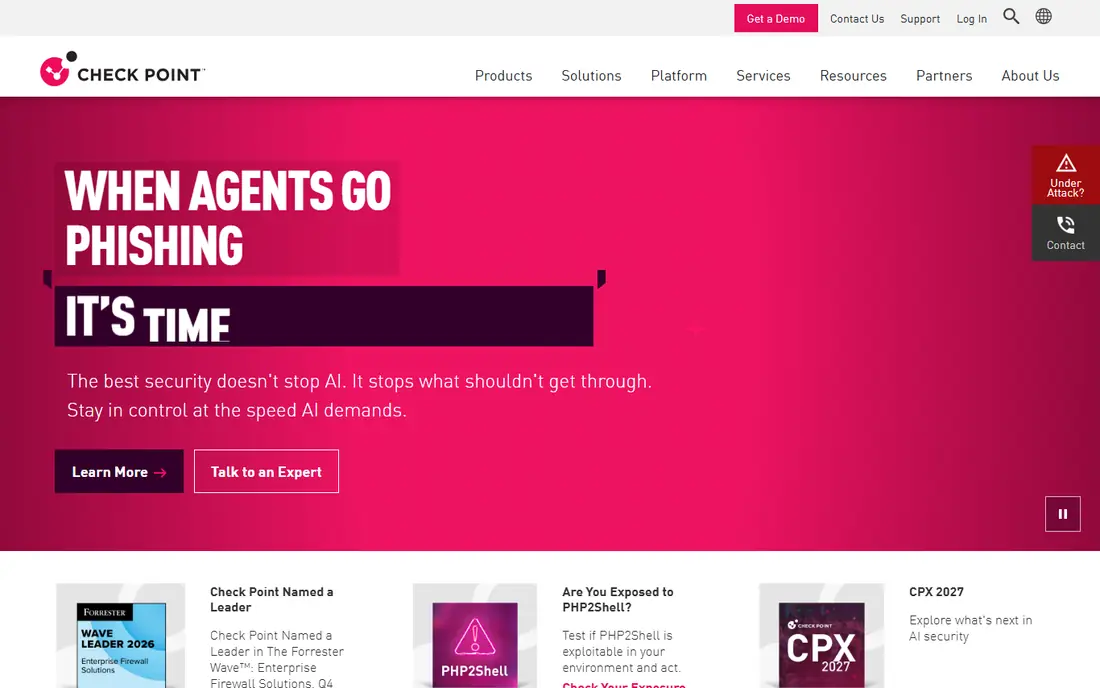
Check Point is built with network security product in mind. Check Point built its name on firewalls and extended into a full security product: network, endpoint, cloud, and mobile with unified management. In practice, the management system deals with complexity well for large deployments.
The architecture reflects its heritage more than cloud-native upstarts, and pricing is premium. But for network-centric security strategies, Check Point's prevention-first approach is proven. This comparison lists no price for Check Point; ask the vendor. No free plan comes with Check Point.
What to check first: Premium pricing.
- Capable management
- Thorough threat prevention
- Traditional architecture
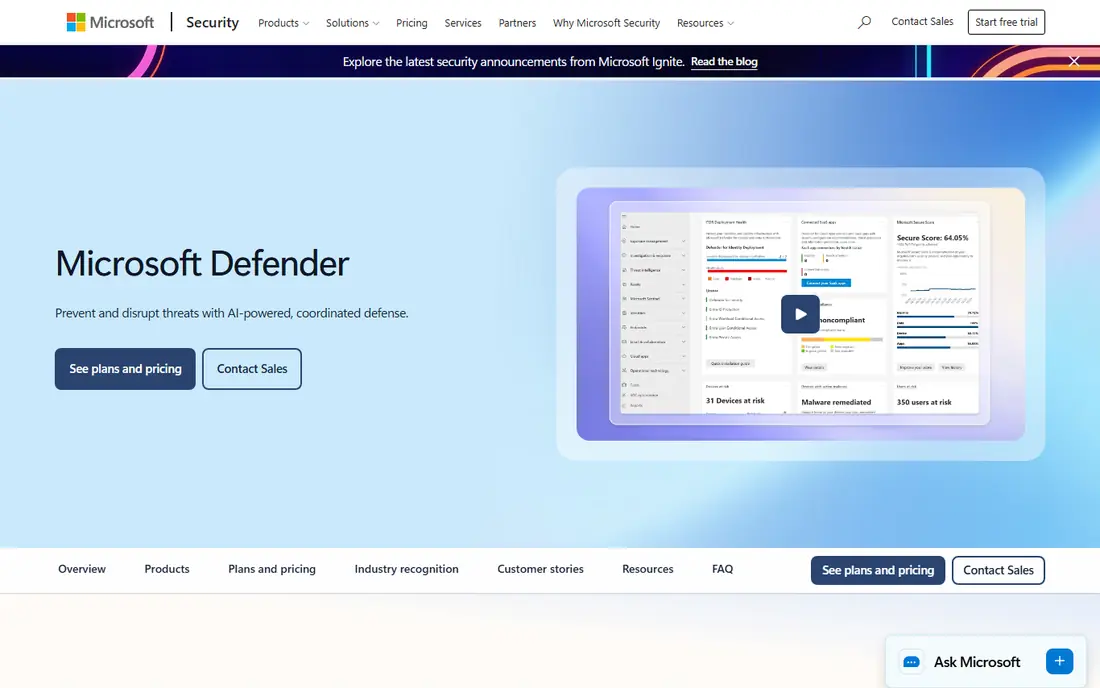
Microsoft Defender works best for Microsoft 365 security. Microsoft Defender (the business suite, formerly Defender for Endpoint plus) hands Microsoft 365 organizations serious security without another vendor. Outside the Microsoft ecosystem, the value drops, and the most advanced features need premium levels.
But the "decent enough plus integrated plus already premium for" equation wins plenty of evaluations. From a buyer's view, the improvement trajectory matters: Defender went from baseline to genuinely competitive, and the OS-level integration hands it visibility advantages. For organizations already paying for Microsoft 365 E5, the incremental cost is compelling. Microsoft Defender shows no starting price here, so confirm the cost on the vendor site. Free plan details: Free trial.
Watch-outs: Advanced features need higher levels.
- Bundled with Microsoft 365
- Improving rapidly
- Best inside Microsoft stack
Think of Wiz for cloud security posture. The agentless approach removed the deployment friction that stalled earlier tools. As for the details, pricing reflects the premium positioning.
But for cloud security posture, Wiz's clarity made it the standard quick. Security teams fix what matters rather than drowning in alerts. It includes cloud, not endpoints or networks; pair it with endpoint protection for full coverage. No starting price is listed for Wiz here; confirm pricing on the vendor site. Free options: Free trial.
The main drawbacks: Cloud-only.
- Quick deployment
- Prioritizes real risks
- Premium pricing
For AI anomaly detection, Darktrace is a natural candidate. Darktrace's AI learns what normal looks like on your network, then flags deviations: the insider exfiltrating data at 3 AM, the compromised device behaving oddly, the novel attack no signature knows. That anomaly approach catches threats that pattern-matching misses.
Downsides: Pricey.
More specifically, pricing is premium, and the AI needs tuning to the environment to avoid noise. But for organizations worried about the threats nobody has seen before, Darktrace's learning approach provides unique coverage. For novel attacks and insider threats, the behavioral approach handles gaps in traditional defenses. Darktrace shows no starting price here, so confirm the cost on the vendor site. Darktrace does not include a free plan.
- Catches novel threats
- Autonomous response option
- Needs tuning to cut noise
CrowdStrike Falcon targets endpoint security leader. CrowdStrike's Falcon system is the endpoint security standard by which others are judged.
Where it is weaker: Full value needs several modules.
The light agent spots and stops breaches with behavioral AI, and the cloud system correlates signals across every endpoint to catch coordinated attacks. For everyday use, the threat intelligence operation is the differentiator: visibility into real-world adversary activity feeds detections that signature-based tools miss. CrowdStrike Falcon does not show a starting price in this comparison, so check the vendor site for current pricing. As for free access: Free trial.
- Best-in-class detection
- Elite threat intelligence
- Premium pricing
What went into this list
The comparison looks at four things: starting price, free access, how well the feature set matches cybersecurity platforms, and the main limit of each tool. Seat minimums, billing terms and add-ons can move the real cost, so the starting prices here are a guide and not a quote. The order reflects how well each tool fits the most common buying scenario for cybersecurity platforms, then price clarity, then free plan access. It is a starting point, not a verdict.
Things to verify first
- Request quotes from Palo Alto Cortex, CrowdStrike Falcon and the others; the list shows no fixed prices.
- Take the trial from Microsoft Defender, Wiz and CrowdStrike Falcon and push a live task through it before you pay.
- Before choosing Palo Alto Cortex, weigh its main limit: best inside Palo Alto stack.
- Ask Darktrace whether prices are locked for the first term and what happens at renewal.
- Let daily users try Palo Alto Cortex on real work; their feedback beats any feature checklist.
FAQ
Do these tools publish their prices?
No. None of the tools, from Palo Alto Cortex to CrowdStrike Falcon, shows a fixed starting price here, so budget time for quotes.
How do we evaluate detection claims?
Vendor claims all sound very good. Run proof-of-concept trials with your own attack simulations before committing.
Do we need cyber insurance?
Increasingly yes, and insurers now need the controls these products supply: EDR, MFA, backups, and incident response plans. The right security stack both cuts risk and satisfies underwriters.
How frequently should we review our security stack?
Continuously for threats, quarterly for strategy. Attacker methods shift constantly; your tooling should evolve with them. Annual architecture reviews catch the larger misalignments.
Can I try these options before paying?
Often, yes. Microsoft Defender, Wiz and CrowdStrike Falcon offer a free trial. Use your own data and a real task during the test, and check what the free tier or trial limits before you rely on it.
Is Palo Alto Cortex the right pick for everyone comparing cybersecurity platforms?
No single tool suits every team. Palo Alto Cortex comes first because it fits Palo Alto ecosystem security, while Check Point suits network security platform and Microsoft Defender suits Microsoft 365 security. Match the tool to your own size, budget and workflow before deciding.