The 6 Best Container Hosting for Microservices in 2026, Ranked
6 best container hosting for microservices, with entry costs, free tiers and the buyer each one serves. Strengths and gaps are listed per tool. Prices checked.
- Editor's choiceDigitalOcean Kubernetes
Straightforward managed Kubernetes for smaller teams
Starts at$4 per monthVisit digitalocean.comFull review - Great alternative
 Rancher
Multi-cluster Kubernetes management
Starts atSee websiteVisit rancher.comFull review - Also consider
 Red Hat OpenShift
Application product with Kubernetes foundations
Starts atSee websiteVisit redhat.comFull review
Direct answer
DigitalOcean Kubernetes leads the list, best for straightforward managed Kubernetes for smaller teams. Listed starting prices: DigitalOcean Kubernetes from $4 per month. Rancher is better for multi-cluster Kubernetes management, and Red Hat OpenShift is better for application platform with Kubernetes foundations. Details, prices and limits for the rest of the 6 tools are below.
TL;DR:
- Number one here is DigitalOcean Kubernetes, a fit for straightforward managed Kubernetes for smaller teams.
- Amazon EKS is the one to check for managed Kubernetes on AWS and on-premises.
- DigitalOcean Kubernetes has the lowest monthly starting price in this list: $4 per month.
- What to know about Rancher first: management layer, not a host itself.
- DigitalOcean Kubernetes, Amazon EKS and the 4 others all need a premium plan or a trial, since no free plan is listed.
Last checked November 2026. Prices and plan details were read from the vendors' own pages in November 2026; vendors change plans often, so confirm the current price on the vendor site before you buy.
Quick comparison
| Tool | Best for | Starts at | Free plan? | |
|---|---|---|---|---|
| DigitalOcean Kubernetes | Straightforward managed Kubernetes for smaller teams | $4 per month | Not stated | Visit |
| Rancher | Multi-cluster Kubernetes management | See website | Not stated | Visit |
| Red Hat OpenShift | Application product with Kubernetes foundations | See website | Not stated | Visit |
 Amazon ECS | Completely managed container orchestration on AWS | See website | Not stated | Visit |
 Azure Kubernetes Service | Managed Kubernetes on Microsoft Azure | See website | Not stated | Visit |
 Amazon EKS | Managed Kubernetes on AWS and on-premises | See website | Not stated | Visit |
The 6 tools in detail
LinkVetted put together this guide to container hosting for microservices for readers who want a clear shortlist without reading every vendor page. It compares 6 tools on starting price, free plans, who each one suits and where each one falls short.
DigitalOcean Kubernetes
Best for: Straightforward managed Kubernetes for smaller teams
DigitalOcean Kubernetes works best for straightforward managed Kubernetes for smaller teams. DigitalOcean Kubernetes is a managed Kubernetes service built for smaller teams and firms, emphasizing straightforward scaling and rapid deployments.
On top of that, organizations needing deep ecosystem integration or multi-cloud controls should compare the bigger managed services. The offering is more focused than hyperscaler products, so advanced integrations and enterprise governance features may be restricted. Entry price for DigitalOcean Kubernetes: $4 per month. Free options: Not stated.
Honest limits: Smaller ecosystem than hyperscalers.
- Managed Kubernetes service
- Straightforward scaling and rapid deployments
- Fewer advanced platform features
Rancher is designed for multi-cluster Kubernetes management. Teams wanting a single managed service without a management layer may prefer a direct cloud offering. In daily use, Rancher is an open-source multi-cluster orchestration product that lets operations teams deploy, handle and secure enterprise Kubernetes.
Drawbacks to consider: not a host itself.
Main advantages: Deploy.
As for the details, Rancher handles Kubernetes instead of replacing the underlying hosting. So you still need clusters from a provider or on-premises infrastructure. Rancher does not show a starting price in this comparison, so check the vendor site for current pricing. Free access: Not stated.
- Open-source orchestration system
- Multi-cluster management
- Needs existing clusters
Red Hat OpenShift is built with application system with Kubernetes foundations in mind. Red Hat OpenShift is described as an application innovation product delivering a full experience with tools to modernize and build new applications, accelerate AI adoption and support growth.
Trade-offs to know: Enterprise-oriented complexity.
In daily use, the system scope is broad, which can mean more components to learn and operate than a bare managed Kubernetes service. Check the vendor site for Red Hat OpenShift pricing; none is listed in this comparison. On free options: Not stated.
- Tools for modernizing applications
- Thorough application system
- Wide system with more moving parts
Amazon ECS is a good fit for completely managed container orchestration on AWS. Amazon ECS is a completely managed container service that manages orchestration so teams focus on applications instead of cluster plumbing.
Points against: AWS-centric ecosystem.
The vendor positions it as simple to use, scalable, secure and dependable, which suits teams already building on AWS and wanting a managed path for microservices without adopting Kubernetes straight. Amazon ECS shows no starting price here, so confirm the cost on the vendor site. As for free access: Not stated.
- Completely managed container service
- Security and reliability focus
- Less portable than Kubernetes
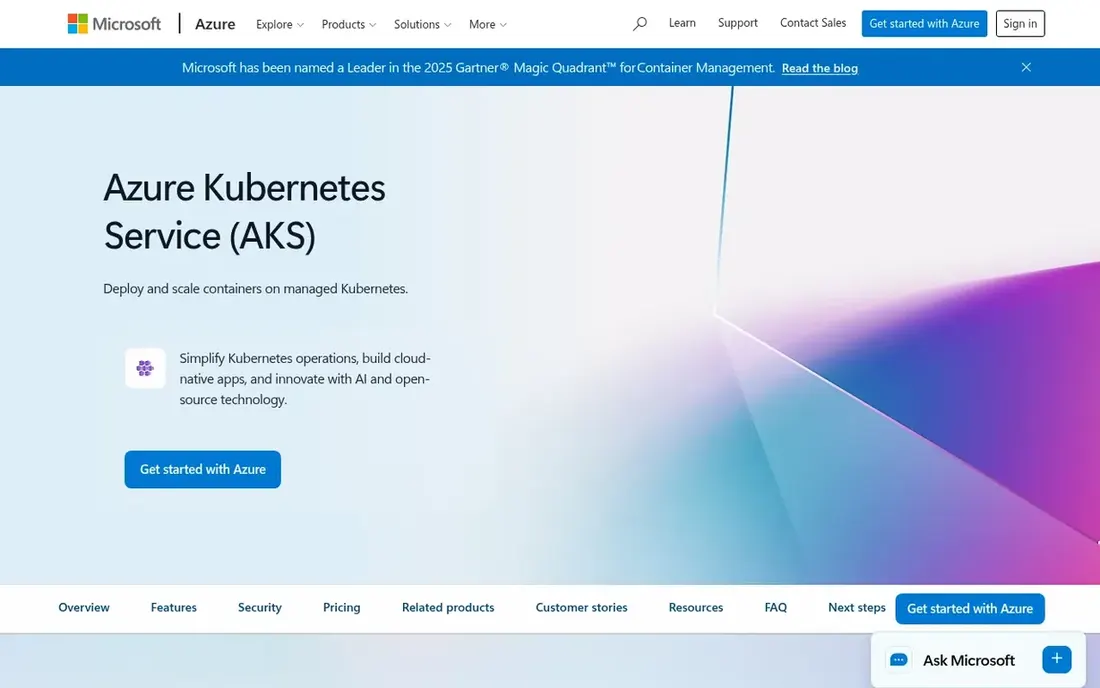
Azure Kubernetes Service was built for managed Kubernetes on Microsoft Azure. It fits organizations standardized on Azure that want Kubernetes for microservices without running the control plane themselves.
Trade-offs to know: Azure-specific ecosystem ties.
Where it shines: Quick delivery of containerized apps.
From a buyer's view, as with any managed Kubernetes offering, teams still own workload configuration, networking and policy decisions. Azure Kubernetes Service shows no starting price here, so confirm the cost on the vendor site. Free plan details: Not stated.
- Scalable deployment focus
- Managed Kubernetes clusters
- Cluster operations still need planning
Amazon EKS makes the most sense for managed Kubernetes on AWS and on-premises. Amazon EKS is a managed Kubernetes service that is certified Kubernetes conformant and can run Kubernetes on AWS and on-premises.
Trade-offs to know: Kubernetes expertise still required.
Amazon EKS shows no starting price here, so confirm the cost on the vendor site. Trial and free access: Not stated.
- Managed Kubernetes service
- Certified Kubernetes conformant
- AWS account and IAM dependency
How we chose
We compared the tools on published pricing, free plan or trial availability, feature coverage for container hosting for microservices, and the limits each vendor documents. Treat prices as a snapshot: vendors change plans often, so check the vendor site for the figure that applies today. The ranking is editorial: typical fit first, then clear pricing, then free access. If your needs are unusual, read the profiles rather than relying on position.
Things to verify first
- Confirm the entry price on the vendor page. For Rancher, Red Hat OpenShift, Amazon ECS and others that means a quote rather than a fixed price.
- Before choosing DigitalOcean Kubernetes, weigh its main limit: fewer advanced product features.
- Ask DigitalOcean Kubernetes how an export works before you move any records in; an easy exit lowers the risk.
- Test how quickly Azure Kubernetes Service answers a pre-sales question; it hints at how support will feel later.
- Work out what Red Hat OpenShift costs with your real seat count, add-ons and usage, not just the entry price.
FAQ
Is DigitalOcean Kubernetes the right pick for everyone comparing container hosting for microservices?
No single tool suits every team. DigitalOcean Kubernetes comes first because it fits simple managed Kubernetes for smaller teams, while Rancher suits multi-cluster Kubernetes management and Red Hat OpenShift suits application platform with Kubernetes foundations. Match the tool to your own size, budget and workflow before deciding.
Does any tool for container hosting for microservices here have a free plan?
A permanent free plan is not offered by DigitalOcean Kubernetes, Amazon EKS or the other tools here. Plan a short evaluation period instead.
How are the tools for container hosting for microservices ordered?
The order follows typical fit for container hosting for microservices, with DigitalOcean Kubernetes first and Amazon EKS last, then price clarity and free access. It is editorial judgement, not a score, so another team could rank the tools differently.
Should I choose a managed container service or managed Kubernetes for microservices?
A managed container service like Amazon ECS cuts operational overhead when you do not need the Kubernetes API. Managed Kubernetes fits teams that want standard Kubernetes portability and are prepared to handle cluster configuration.
Do these tools publish their prices?
Not all of them. Rancher, Red Hat OpenShift, Amazon ECS and others publish no starting price, so expect a quote request for those. The rest, DigitalOcean Kubernetes included, show a starting price, though seats and billing terms still change the final cost.
Sources
- https://www.digitalocean.com/products/kubernetes
- https://www.rancher.com
- https://www.redhat.com/en/technologies/cloud-computing/openshift
- https://aws.amazon.com/ecs
- https://azure.microsoft.com/en-us/products/kubernetes-service
- https://aws.amazon.com/eks