Best Cloud Security Platform Reviews in 2026: 8 Platforms Compared
Read the best cloud security platform reviews for CNAPP, CSPM and runtime protection, with pricing models and strengths for AWS and Azure in 2026 now.
- Editor's choice
 Wiz
Agentless CNAPP and attack paths
Starts atSee websiteVisit wiz.ioFull review - Great alternative
 Orca Security
Agentless-first scanning
Starts atSee websiteVisit orca.securityFull review - Also consider
 Cortex Cloud
Widest Palo Alto module set
Starts atSee websiteVisit paloaltonetworks.comFull review
TL;DR:
- Wiz leads on agentless posture and attack-path views, but pricing is quote-based and enterprise-scale.
- Palo Alto Cortex Cloud, formerly Prisma Cloud, offers the widest module set, with credit-based pricing that needs careful forecasting.
- Microsoft Defender for Cloud and AWS Security Hub are the best starting points for teams already deep in Azure or AWS.
- None of the leading enterprise platforms publish a full public price list, so request a quote for your workload count before budgeting.
Quick comparison
| Tool | Best for | Starts at | Free plan? | |
|---|---|---|---|---|
| Wiz | Agentless CNAPP and attack paths | See website | Free trial | Visit |
| Orca Security | Agentless-first scanning | See website | Free trial | Visit |
| Cortex Cloud | Widest Palo Alto module set | See website | Free trial | Visit |
 Microsoft Defender for Cloud | Azure-first protection | See website | Free trial | Visit |
 AWS Security Hub | AWS-native posture | See website | Free trial | Visit |
 Datadog Cloud Security | Observability-led security | See website | Free trial | Visit |
 Sysdig | Container and Kubernetes runtime | See website | Free trial | Visit |
 Lacework | Anomaly-led cloud protection | See website | Free trial | Visit |
The best cloud security platforms
Cloud security platforms, often called CNAPP tools, scan cloud accounts, workloads, containers and code for misconfigurations, vulnerabilities and risky access paths. The platforms below cover posture management, workload protection and runtime detection, with different strengths for AWS, Azure and Google Cloud.
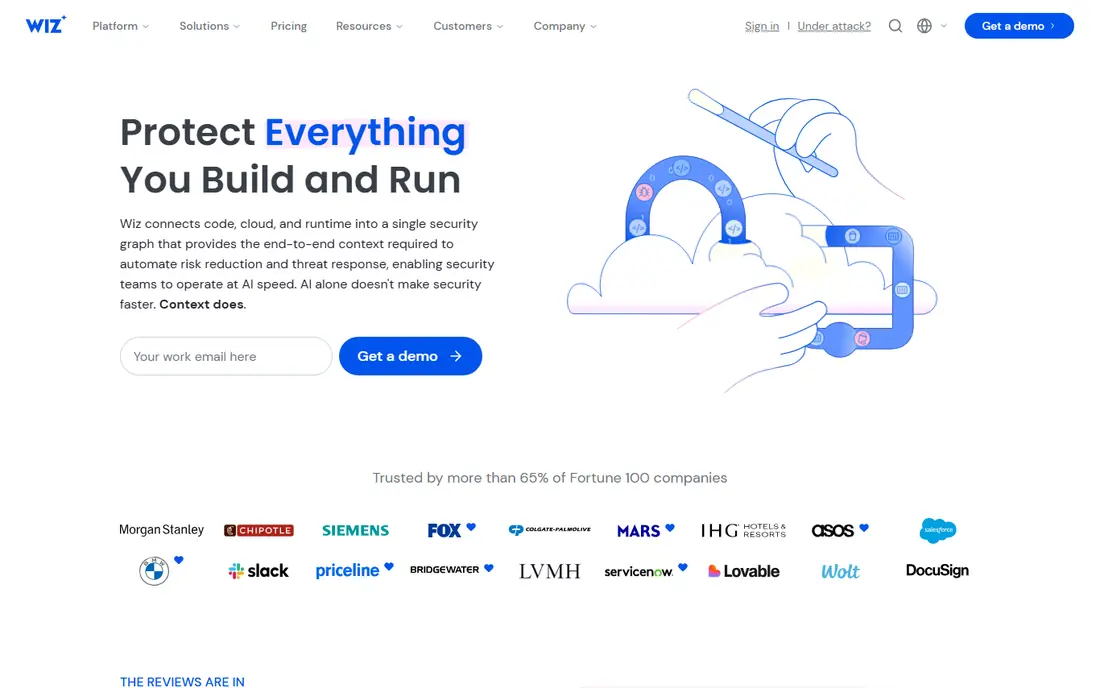
Wiz is the most widely cited cloud security platform in buyer reviews for 2026. It scans AWS, Azure and Google Cloud without agents, maps toxic combinations of misconfigurations, vulnerabilities and exposed data into attack paths, and prioritizes the issues an attacker could actually reach. That context cuts alert noise compared with tools that list every misconfiguration equally.
The catch is price and scale. Wiz does not publish a full rate card, and third-party reports put entry contracts in the tens of thousands of dollars per year, with larger deals far higher. Google Cloud completed its acquisition of Wiz in 2026, which may affect roadmap and bundling. For larger cloud estates that need clear prioritization, Wiz is our pick for most enterprises.
- Agentless scanning across clouds
- Security Graph attack paths
- Fast deployment
- Quote-based pricing
- Enterprise minimums can be high for mid-sized firms
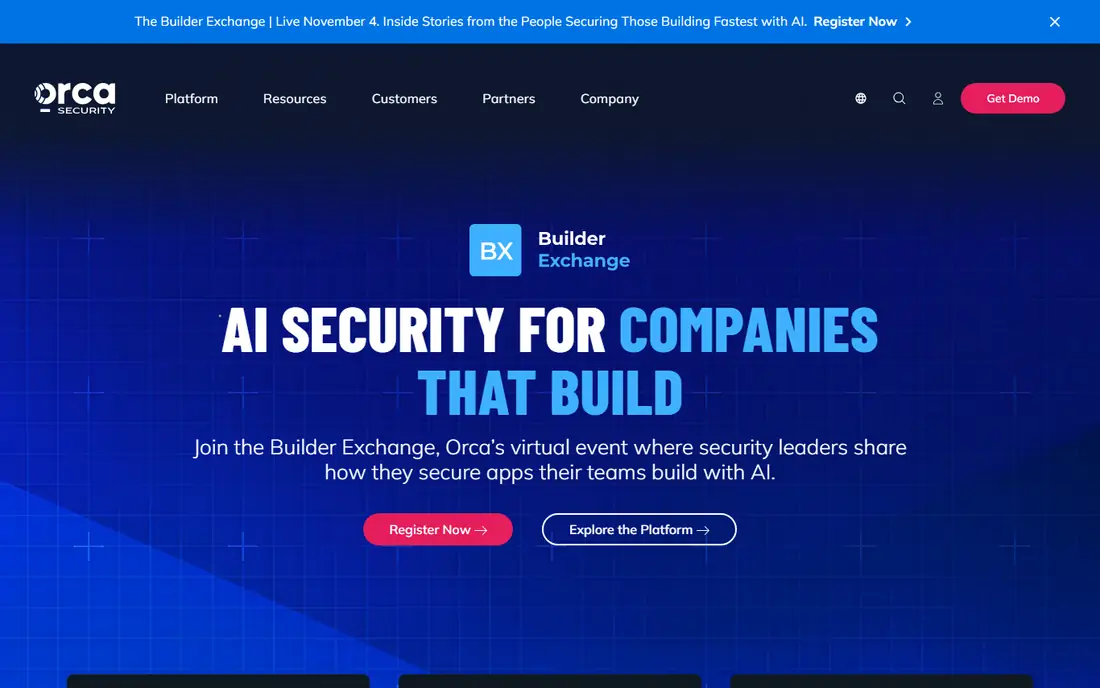
Orca Security takes an agentless-first approach, scanning cloud workloads from outside the workload itself. It covers virtual machines, containers, Kubernetes pods, serverless functions and managed services, with context that links vulnerabilities to internet exposure and sensitive data. Deployment is fast, since no agents need to be installed on every host.
Pricing is also quote-based, with third-party reports putting annual spend in the high five to low six figures for mid-sized estates. Runtime protection is less deep than agent-based rivals in some areas. For teams that want fast, agentless coverage across several clouds without agent rollout work, Orca is a strong alternative to Wiz.
- Agentless SideScanning
- Broad workload coverage
- Simple deployment
- Quote-based pricing
- Runtime depth varies by module

Cortex Cloud is the current name for the platform formerly sold as Prisma Cloud, merged with Cortex Cloud Detection and Response in 2025. It combines posture management, workload protection, code security and runtime detection, with deep Kubernetes and container coverage through its Defender agents. Palo Alto customers also get links to Cortex XSIAM for security operations.
The main drawbacks are complexity and pricing. Licensing is credit-based, with reported unit prices that do not tell you how many credits a typical estate consumes, so forecasting needs a guided trial. Implementation is also heavier than Wiz or Orca. For Palo Alto estates and large enterprises that want one broad platform, Cortex Cloud is a credible pick.
- Broadest module set
- Runtime and Kubernetes depth
- XSIAM links
- Credit-based pricing is hard to forecast
- Implementation can be complex
Microsoft Defender for Cloud is the natural starting point for Azure-heavy teams. It provides posture management, threat protection and compliance views natively in Azure, with per-resource pricing that scales with what you protect. Foundational posture features are free, while Defender plans add workload protection for servers, containers, databases and other resources.
Multi-cloud coverage exists for AWS and Google Cloud, but depth varies and Azure remains the strongest fit. For teams already running Azure, with Microsoft Sentinel or Entra ID in place, Defender for Cloud is the lowest-friction choice and often the cheapest first step.
- Native Azure integration
- Per-resource pricing
- Strong compliance views
- Best value only inside Azure
- Multi-cloud depth varies
AWS Security Hub gives AWS teams a central view of security findings from GuardDuty, Inspector, Config and partner tools, mapped to standards such as CIS and NIST. Pricing is usage-based, by account and finding volume, which suits teams that want to start small and grow. It pairs well with IAM Access Analyzer, which is free for many checks.
The limit is scope. Security Hub is AWS-only and does not match a full CNAPP for multi-cloud posture, code security and runtime depth on its own. For AWS-only estates, or as a foundation under a CNAPP, it is an essential, low-cost starting point.
- Native AWS findings in one view
- GuardDuty and Config links
- Usage-based pricing
- AWS-only
- Needs other tools for full CNAPP depth
Datadog Cloud Security suits teams that already use Datadog for monitoring. It adds posture management, workload protection and runtime detection beside logs, metrics and traces, so engineers can move from a security alert to the underlying system data without switching tools. Published per-host pricing makes budgeting clearer than quote-only rivals.
The drawback is lock-in and cost stacking. Value is highest for existing Datadog customers, and security modules add to an already broad Datadog bill. For observability-led teams that want security in the same console, Datadog is a strong pick.
- Published per-host pricing
- Security beside observability
- EBPF runtime data
- Best value only for Datadog observability customers
- Module pricing adds up
Sysdig is the container specialist in this list. It grew from Falco, the open source runtime security project, and it offers deep runtime detection for containers and Kubernetes, with filtering that highlights vulnerabilities actually loaded in running workloads. That focus reduces noise for teams running large Kubernetes estates.
Posture and multi-cloud breadth are narrower than Wiz or Cortex Cloud, so Sysdig often sits beside a CNAPP rather than replacing one. Pricing is quote-based. For engineering teams where containers and Kubernetes are the main risk, Sysdig earns its place.
- Deep container runtime depth
- Falco lineage
- In-use vulnerability filtering
- Quote-based pricing
- Posture breadth is narrower than Wiz or Cortex Cloud
Lacework, now part of Fortinet, uses behavior-based anomaly detection to spot unusual cloud activity, beside posture and workload protection. Its Polygraph engine builds a baseline of normal behavior and flags deviations, which helps catch novel attacks that signature tools miss. Coverage spans AWS, Azure and Google Cloud workloads.
The Fortinet acquisition means buyers should confirm roadmap, support and packaging for 2026 before signing. Pricing is quote-based. For teams that want anomaly detection beside posture checks, Lacework remains a useful option, especially inside Fortinet estates.
- Behavior-based anomaly detection
- Polygraph engine
- Cloud workload coverage
- Now part of Fortinet, so roadmap needs checking
- Quote-based pricing
How we picked these
We compared vendor feature pages, pricing models, analyst coverage and public buyer reviews for cloud security platforms active in October 2026. We favored platforms with multi-cloud or native cloud depth, clear posture and runtime features, and a track record in production estates. We note where pricing is quote-based rather than published, since that affects budgeting, and we excluded tools that only cover a single narrow control.
What to check before you buy
Count workloads and accounts first
Enterprise CNAPP pricing scales by workload, credit or resource count, so count accounts, virtual machines, containers and serverless functions before requesting a quote. Ask how credits or workload units are metered, what counts as a protected workload, and how costs change as you scale. A guided trial on a real account gives a far better estimate than a sales quote alone.
Test prioritization, not just scanning
Every platform finds misconfigurations. The difference is which findings it pushes to the top and whether engineers can act on them. Test attack-path views, ticket creation, remediation guidance and integration with your ticketing and chat tools. A platform that floods teams with low-risk findings will be ignored, however complete its scan.
Check runtime and code coverage
Posture scanning alone misses runtime attacks and code risks. Check whether the platform covers runtime detection, container images, infrastructure as code and secrets, and whether agents are needed for depth. Agentless tools deploy faster, while agent-based tools often see more at runtime. The right mix depends on your estate.
FAQ
What is the best cloud security platform?
Wiz is the best overall pick for larger multi-cloud estates, thanks to agentless scanning and attack-path prioritization. Orca Security is a strong agentless alternative, while Cortex Cloud suits Palo Alto estates that want the widest module set. Smaller teams should start with native tools such as Defender for Cloud or Security Hub.
What is the best cloud security tool for AWS?
AWS Security Hub plus GuardDuty and Config is the best free and native starting point for AWS-only estates. For deeper multi-cloud CNAPP coverage on AWS, Wiz, Orca and Datadog all score well in buyer reviews. Pair a CNAPP with native AWS tools rather than replacing them outright.
How much does a cloud security platform cost?
Leading enterprise platforms are quote-based, with third-party reports putting entry contracts in the tens of thousands of dollars per year and larger estates in six figures. Native tools use usage-based pricing, while Datadog publishes per-host rates. Request a quote for your workload count and run a trial to forecast credits.
What is CNAPP and how is it different from CSPM?
CSPM, or cloud security posture management, checks cloud settings against best practice. CNAPP, or cloud-native application protection, combines CSPM with workload protection, code security and runtime detection in one platform. Most tools in this list are CNAPP platforms that include CSPM as one module.
Is Prisma Cloud still available?
Prisma Cloud was merged into Cortex Cloud by Palo Alto Networks in 2025, combining CNAPP with cloud detection and response. Buyers who researched Prisma Cloud should confirm that current Cortex Cloud packaging and pricing match their old comparison, since names and modules have changed.
Do I need agents for cloud security?
Not always. Wiz and Orca scan agentlessly for posture and many workload risks, which speeds deployment. Agents add runtime depth for containers, servers and Kubernetes, and Cortex Cloud and Sysdig use agents for that depth. Many teams use both: agentless scanning everywhere, plus agents on high-risk workloads.