Best Cloud Database Hosting Platforms (2026): 5 Picks Checked on Vendor Pages
5 best cloud database hosting platforms, compared on pricing, free plans and best-fit use. Read the caveats before you buy. Reviewed in November 2026.
- Editor's choice
 Google Cloud Spanner
Globally distributed relational workloads
Starts atPricing on requestVisit cloud.google.comFull review - Great alternative
 MongoDB Atlas
Document data and AI application workloads
Starts atPricing on requestVisit mongodb.comFull review - Also considerAzure SQL Database
Managed SQL Server in Microsoft Azure
Starts atPricing on requestVisit azure.microsoft.comFull review
Direct answer
Google Cloud Spanner leads the list, best for globally distributed relational workloads. Look at MongoDB Atlas for document data and AI application workloads, and at Azure SQL Database for managed SQL Server in Microsoft Azure. The remaining 2 options are covered below with prices and limits. None of these vendors publish plan prices, so pricing is on request for every option.
TL;DR:
- Google Cloud Spanner sits first on this list: globally distributed relational workloads.
- What to know about Google Cloud Spanner first: more complicated than a standard managed engine.
- 2 of 5 tools offer a free plan: MongoDB Atlas, Amazon RDS.
- Google Cloud Spanner, Amazon RDS and the 3 others all sell by quote; expect sales conversations before you see a price.
Last checked November 2026. Pricing on request: vendors did not publish plan prices when this guide was last checked (November 2026), so ask each vendor for a written quote.
Quick comparison
| Tool | Best for | Starts at | Free plan? | |
|---|---|---|---|---|
| Google Cloud Spanner | Globally distributed relational workloads | Pricing on request | Not stated | Visit |
| MongoDB Atlas | Document data and AI application workloads | Pricing on request | Yes | Visit |
| Azure SQL Database | Managed SQL Server in Microsoft Azure | Pricing on request | Not stated | Visit |
 Google Cloud SQL | Familiar relational engines on Google Cloud | Pricing on request | Not stated | Visit |
 Amazon RDS | Managed relational databases on AWS | Pricing on request | Yes | Visit |
The 5 tools in detail
If you are comparing cloud database hosting platforms, this page covers 5 tools in one place: what each is best for, what it costs to start, whether it has a free plan, and the main limit to know about.
Google Cloud Spanner was built for globally distributed relational workloads. Spanner is Google Cloud's always-on database that merges relational, graph, key value, and search in a single system.
No maintenance windows means applications keep running during upkeep, which matters for always-on services. In daily use, schema and query patterns may need adjustment coming from a traditional engine. This comparison lists no price for Google Cloud Spanner; ask the vendor. Free access: Not stated.
Honest limits: Overkill for small single-region apps.
- No maintenance windows
- Key value, search
- More complicated than a standard managed engine
For document data and AI application workloads, MongoDB Atlas is a natural candidate. If your workload is primarily transactional SQL, a managed relational service may be more straightforward.
Worth adding: confirm that the retrieval and AI features you need are available in your chosen deployment. Beyond that, teams whose data is naturally hierarchical or schema-flexible frequently find the document approach a better match than rigid tables. MongoDB Atlas does not show a starting price in this comparison, so check the vendor site for current pricing. MongoDB Atlas has a free plan.
Where it is weaker: Feature depth varies by deployment choice.
- Run-anywhere managed system
- Merges live data and retrieval
- Different model from relational SQL
Azure SQL Database
Best for: Managed SQL Server in Microsoft Azure
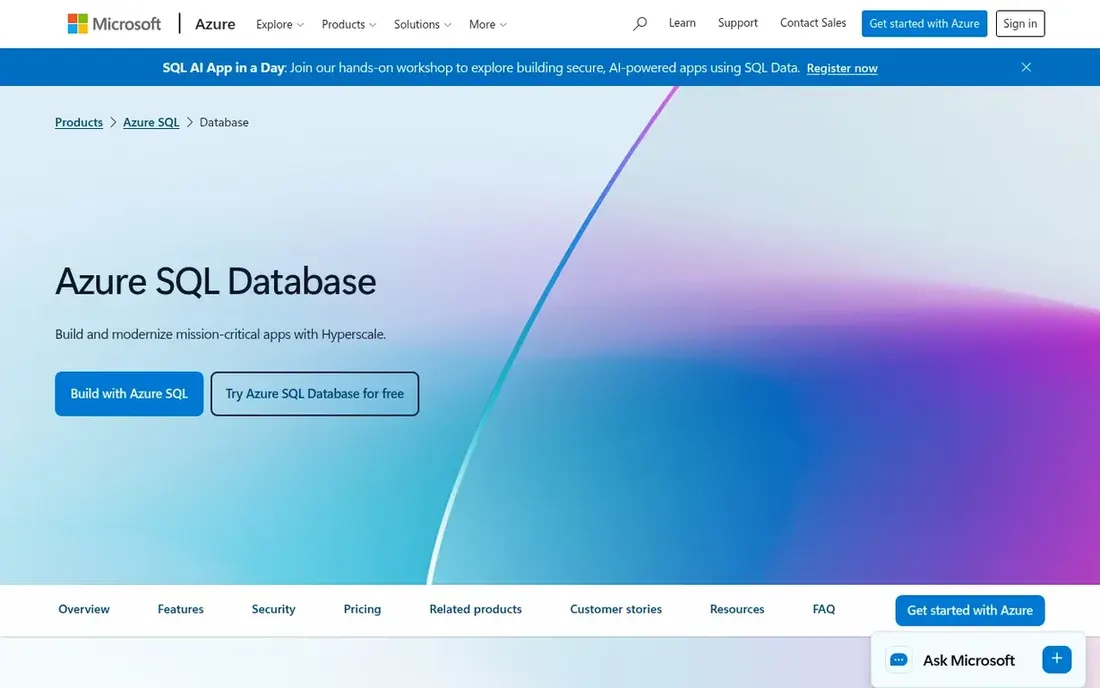
Pick Azure SQL Database if this describes you: managed SQL Server in Microsoft Azure. Azure SQL Database is a completely managed cloud relational database from Microsoft, aimed at high performance and reliability with automation built in.
In daily use, as with any cloud service, the best experience comes inside the same provider's ecosystem. No starting price is listed for Azure SQL Database here; confirm pricing on the vendor site. As for free access: Not stated.
Where it is weaker: Centered on the SQL Server engine.
- Completely managed relational database
- Suits Microsoft-centric environments
- Deepest integration is within Azure
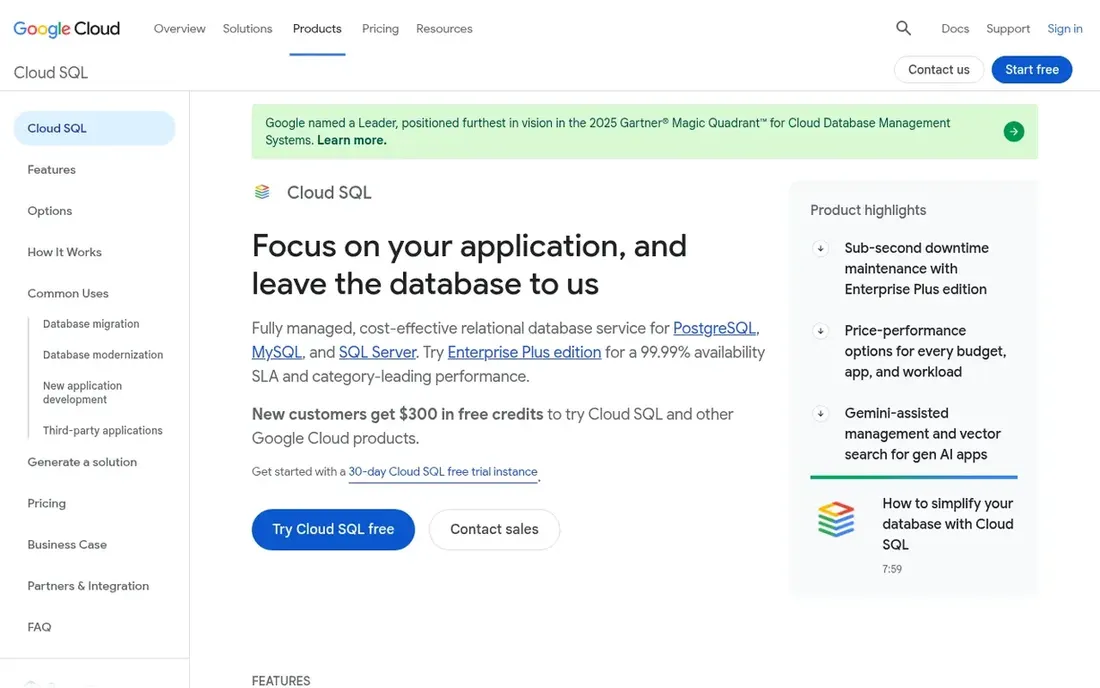
Google Cloud SQL was built for familiar relational engines on Google Cloud. Organizations standardizing on Google Cloud commonly choose it for conventional web and business applications.
Downsides: Limited to the three listed engines.
Pricing for Google Cloud SQL is not stated here, so ask the vendor for current figures. Free plan details: Not stated.
- Supports MySQL, PostgreSQL
- Completely managed relational service
- Best value inside Google Cloud
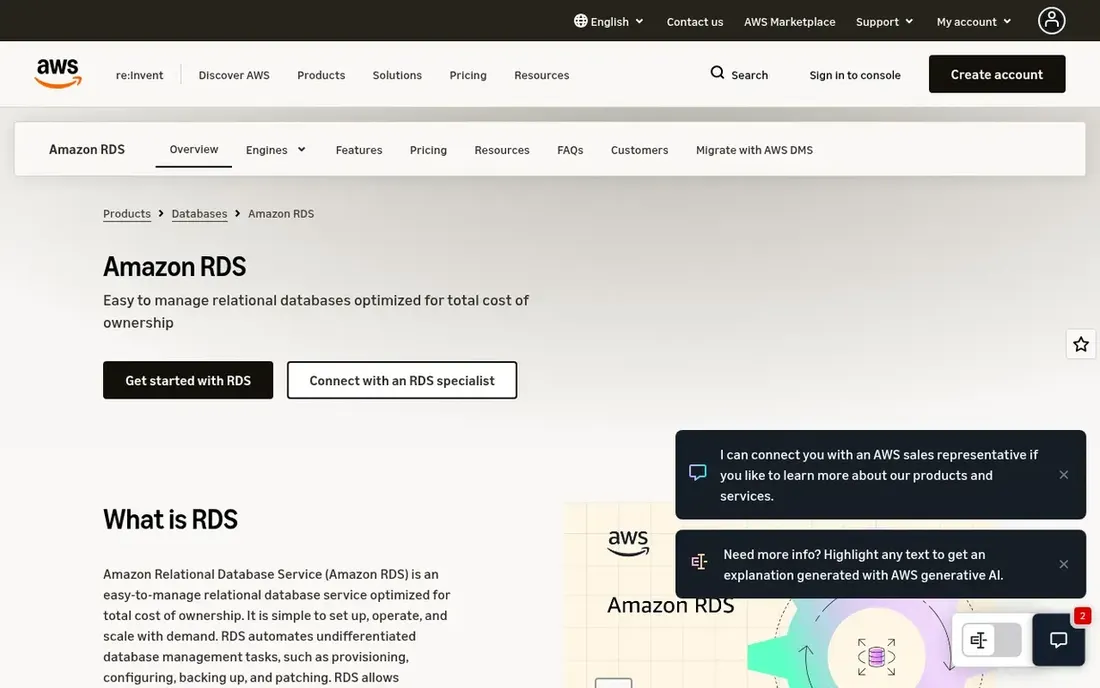
Amazon RDS makes the most sense for managed relational databases on AWS. Amazon RDS is a fully managed relational database service for running open source and commercial engines, including Amazon Aurora, PostgreSQL, MySQL, and SQL Server. It takes care of routine administration so teams can focus on schema and application work.
Downsides: Engine choice affects available features.
Since RDS lives inside AWS, teams on other clouds may find networking and identity integration less natural. Feature parity also varies by engine, so confirm the specifics for your chosen database. Check the vendor site for Amazon RDS pricing; none is listed in this comparison. Free access exists with Amazon RDS.
- Completely managed operations
- Supports several relational engines
- Tied closely to the AWS ecosystem
How these tools were picked
LinkVetted looked at what each vendor publishes: pricing, plan limits, feature coverage for cloud database hosting platforms and stated drawbacks. No hands-on testing is claimed. Seat minimums, billing terms and add-ons can move the real cost, so the starting prices here are a guide and not a quote. We ordered the tools by general fit, then by how clearly pricing is shown, then by free access. A buyer with unusual needs may reorder them.
Things to verify first
- Confirm the entry price with every vendor: no tool from Google Cloud Spanner to Amazon RDS shows a fixed starting price.
- Read the fine print on the free plans from MongoDB Atlas and Amazon RDS; seat, project and feature caps differ.
- Before choosing Google Cloud Spanner, weigh its main limit: more complicated than a standard managed engine.
- Check whether the features you need in MongoDB Atlas sit on the entry plan or only on higher tiers.
- Ask Google Cloud Spanner whether prices are locked for the first term and what happens at renewal.
FAQ
Which options for cloud database hosting platforms have a free plan?
MongoDB Atlas and Amazon RDS offer a free plan in this list. Free plans usually cap users, projects or features, so check the limits on the vendor page.
Can I try these options before paying?
Often, yes. MongoDB Atlas and Amazon RDS have a free plan. Use your own data and a real task during the test, and check what the free tier or trial limits before you rely on it.
How are the tools for cloud database hosting platforms ordered?
Google Cloud Spanner sits first and Amazon RDS last because the order follows typical fit for cloud database hosting platforms, then price clarity and free access. It is a judgement call, so read each profile for fit and limits.
Do these tools publish their prices?
No. None of the tools, from Google Cloud Spanner to Amazon RDS, shows a fixed starting price here, so budget time for quotes.
Sources
- https://cloud.google.com/spanner
- https://www.mongodb.com/atlas
- https://azure.microsoft.com/en-us/products/azure-sql/database
- https://cloud.google.com/sql
- https://aws.amazon.com/rds