Best Carbon Accounting Software in 2026: 8 Platforms Compared
Best carbon accounting software for 2026, from free entry tools to enterprise platforms, with Scope 1, 2, and 3 coverage, reporting, and pricing notes.
- Editor's choice
 Persefoni
Companies starting measurement and financial firms
Starts atSee websiteVisit persefoni.comFull review - Great alternative
 Watershed
Large enterprises with complex reporting needs
Starts atSee websiteVisit watershed.comFull review - Also consider
 Greenly
Small and mid-size companies, especially in Europe
Starts atSee websiteVisit greenly.comFull review
TL;DR:
- We compared 8 options for best carbon accounting software, covering different budgets, use cases, and experience levels.
- Persefoni suits companies starting measurement and financial firms, while Watershed suits large enterprises with complex reporting needs.
- Prices and free plans change by region and plan, so confirm the current price on the official website before you buy.
- The best choice depends on your workflow, not only on the lowest price or the longest feature list.
- Check contract terms, free limits, and total cost, including add-ons, before you commit to a paid plan.
Quick comparison
| Tool | Best for | Starts at | Free plan? | |
|---|---|---|---|---|
| Persefoni | Companies starting measurement and financial firms | See website | Yes | Visit |
| Watershed | Large enterprises with complex reporting needs | See website | No | Visit |
| Greenly | Small and mid-size companies, especially in Europe | See website | No | Visit |
 Sweep | Companies with supplier-heavy Scope 3 footprints | See website | No | Visit |
 Plan A | EU mid-market companies facing CSRD reporting | See website | No | Visit |
 Normative | Companies where Scope 3 dominates the footprint | See website | No | Visit |
 Sphera | Regulated industries needing ESG plus EHS data | See website | No | Visit |
 IBM Envizi | Large firms already using IBM systems | See website | No | Visit |
The best carbon accounting software
We looked for products that exist now, fit best carbon accounting software clearly, and offer a fair balance of features, price, and honest limits. The list below starts with broad, widely useful picks and then moves to specialist options.
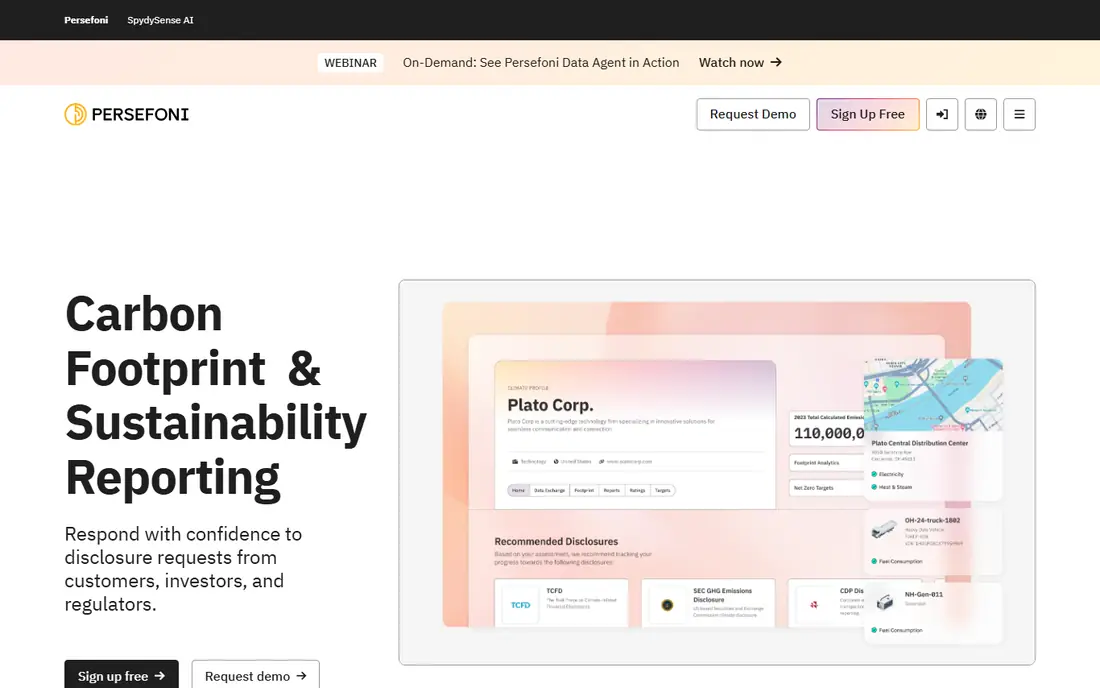
For many travelers, Persefoni stands out for companies starting measurement and financial firms. Persefoni gives companies a finance-grade way to track emissions, with support for financed emissions that matters to banks and investors. For a buyer in this group, the fit is clear, since the core features match the daily need without forcing a larger or more complex system. Price also matters here, with a starting price of see website and a free plan listed as yes, so check the official site for the current terms in your region.
Its strength is the free Pro tier, which lets a small team start measuring without a sales process or a large contract. That practical value matters more than a demo feature.
The weakness is scale cost, since larger reporting needs move to quoted Advanced plans that require a direct discussion. If that weakness affects your main use case, compare the next pick on this list before you commit. A short trial, a demo, or a careful read of the pricing page will usually reveal whether the trade-off is acceptable for your budget and workflow.
- Free Pro tier, finance-grade accounting approach, financed emissions support
- Advanced plans are quote-based and can be costly

If your priority is Watershed stands out for large enterprises with complex reporting needs. Watershed serves large companies that need detailed emissions data, reduction scenarios, and reporting for several frameworks at once. For a buyer in this group, the fit is clear, since the core features match the daily need without forcing a larger or more complex system. Price also matters here, with a starting price of see website and a free plan listed as no, so check the official site for the current terms in your region.
Its strength is depth, with granular data and tools that link measurement to reduction planning. That practical value matters more than a demo feature.
The weakness is price access, since pricing is quote-based and is typically aimed at larger companies rather than small firms. If that weakness affects your main use case, compare the next pick on this list before you commit. A short trial, a demo, or a careful read of the pricing page will usually reveal whether the trade-off is acceptable for your budget and workflow.
- Detailed emissions data, scenario tools, audit-ready reporting
- Quote-based pricing suits larger budgets

A clear place to start is Greenly stands out for small and mid-size companies, especially in europe. Greenly is built for smaller companies that need a guided start, with supplier data collection and reporting aligned to European rules. For a buyer in this group, the fit is clear, since the core features match the daily need without forcing a larger or more complex system. Price also matters here, with a starting price of see website and a free plan listed as no, so check the official site for the current terms in your region.
Its strength is ease of setup, since guided workflows help a lean team produce a first footprint without hiring specialists. That practical value matters more than a demo feature.
The weakness is depth at scale, since very complex supply chains may need a larger enterprise platform. If that weakness affects your main use case, compare the next pick on this list before you commit. A short trial, a demo, or a careful read of the pricing page will usually reveal whether the trade-off is acceptable for your budget and workflow.
- Guided setup, supplier data collection, CSRD-aligned reporting
- Some advanced features need higher tiers
When you compare the options, Sweep stands out for companies with supplier-heavy scope 3 footprints. Sweep focuses on governed sustainability data and supplier collaboration, which helps where Scope 3 data is the main problem. For a buyer in this group, the fit is clear, since the core features match the daily need without forcing a larger or more complex system. Price also matters here, with a starting price of see website and a free plan listed as no, so check the official site for the current terms in your region.
Its strength is supplier workflow, since data requests, validation, and follow-up sit in one place. That practical value matters more than a demo feature.
The weakness is setup time, since a complex company needs care to map suppliers and data sources before results are useful. If that weakness affects your main use case, compare the next pick on this list before you commit. A short trial, a demo, or a careful read of the pricing page will usually reveal whether the trade-off is acceptable for your budget and workflow.
- Supplier collaboration tools, governed data, ESG reporting
- Quote-based pricing, longer setup for complex firms
One name comes up often because Plan A stands out for eu mid-market companies facing csrd reporting. Plan A centers on carbon accounting and decarbonization planning, with reporting shaped around CSRD and European requirements. For a buyer in this group, the fit is clear, since the core features match the daily need without forcing a larger or more complex system. Price also matters here, with a starting price of see website and a free plan listed as no, so check the official site for the current terms in your region.
Its strength is planning, since it links a footprint to reduction actions rather than stopping at a single annual total. That practical value matters more than a demo feature.
The weakness is pricing transparency, since plans are quoted and a small firm cannot budget from a public price list alone. If that weakness affects your main use case, compare the next pick on this list before you commit. A short trial, a demo, or a careful read of the pricing page will usually reveal whether the trade-off is acceptable for your budget and workflow.
- CSRD-focused reporting, decarbonization planning, certified methods
- Quote-based pricing, EU focus may suit some firms less
For a first look, Normative stands out for companies where scope 3 dominates the footprint. Normative is known for automated value-chain accounting and supplier engagement, with support for science-based targets. For a buyer in this group, the fit is clear, since the core features match the daily need without forcing a larger or more complex system. Price also matters here, with a starting price of see website and a free plan listed as no, so check the official site for the current terms in your region.
Its strength is Scope 3 handling, since supplier and spend data are turned into a structured footprint. That practical value matters more than a demo feature.
The weakness is change, since its combination with Greenly means buyers should confirm the current product and contract terms. If that weakness affects your main use case, compare the next pick on this list before you commit. A short trial, a demo, or a careful read of the pricing page will usually reveal whether the trade-off is acceptable for your budget and workflow.
- Value-chain accounting, supplier engagement, science-based target support
- Now part of Greenly, so product direction may change
If you want a calmer choice, Sphera stands out for regulated industries needing esg plus ehs data. Sphera combines sustainability, safety, and life-cycle data, which suits regulated firms that already manage EHS programs. For a buyer in this group, the fit is clear, since the core features match the daily need without forcing a larger or more complex system. Price also matters here, with a starting price of see website and a free plan listed as no, so check the official site for the current terms in your region.
Its strength is breadth, since emissions, risk, and product data can sit under one governance model. That practical value matters more than a demo feature.
The weakness is complexity, since smaller teams may find the platform and its setup heavier than a focused carbon tool. If that weakness affects your main use case, compare the next pick on this list before you commit. A short trial, a demo, or a careful read of the pricing page will usually reveal whether the trade-off is acceptable for your budget and workflow.
- Combined ESG, EHS, and life-cycle data, strong audit trails
- Enterprise pricing and a broad product set can feel heavy
A practical pick is IBM Envizi stands out for large firms already using ibm systems. IBM Envizi gives large firms enterprise ESG analytics and multi-entity consolidation, with a natural fit for IBM customers. For a buyer in this group, the fit is clear, since the core features match the daily need without forcing a larger or more complex system. Price also matters here, with a starting price of see website and a free plan listed as no, so check the official site for the current terms in your region.
Its strength is consolidation, since many sites and business units can report into one system with consistent controls. That practical value matters more than a demo feature.
The weakness is effort, since enterprise setup, data mapping, and governance work take time and internal resources. If that weakness affects your main use case, compare the next pick on this list before you commit. A short trial, a demo, or a careful read of the pricing page will usually reveal whether the trade-off is acceptable for your budget and workflow.
- Enterprise ESG analytics, multi-entity consolidation, IBM ecosystem fit
- Quote-based pricing, implementation effort for large firms
How we picked these
We searched the web for current products that fit best carbon accounting software and checked that each one is available now with an official website. We favored products with clear pricing or a clear quote process, a defined audience, and features that match the topic. We left out products that no longer work, that fit only loosely, or that lacked enough public detail to describe fairly. We did not claim hands-on testing, and prices shown here should be confirmed on the vendor site before purchase.
Buying guide
Match the tool to your reporting duty
A firm facing CSRD, California rules, or investor disclosure needs audit-ready data and framework support. A firm doing a first voluntary footprint can start simpler and add rigor later.
Check Scope 3 before you buy
Most footprints stall on supplier and purchased goods data. Ask how the tool collects, validates, and updates that data, and what happens when a supplier does not reply.
A simple shortlist method
List your top three needs, then score each product on those needs alone. Drop any product that fails a must-have need, even if it looks strong elsewhere. Then compare total cost and contract terms for the two finalists before you decide.
FAQ
What is carbon accounting software?
Carbon accounting software collects activity data, applies emission factors, and calculates Scope 1, 2, and 3 emissions. It then helps a company report results, track change over time, and plan reductions.
What are Scope 1, 2, and 3 emissions?
Scope 1 covers direct emissions from owned sources. Scope 2 covers purchased energy. Scope 3 covers value-chain emissions such as purchased goods, travel, and product use, which is often the largest share.
Do small companies need carbon accounting software?
A small company with a simple footprint can start with a spreadsheet or a free tier. Software becomes useful when suppliers, sites, or reporting duties grow, or when audit-ready records matter.
How much does carbon accounting software cost?
Prices range from free tiers to quoted enterprise contracts that can reach tens of thousands of dollars per year or more. Ask for a written quote tied to your sites, suppliers, and reporting needs before budgeting.
Can software replace a sustainability consultant?
Software organizes data and reporting, but it does not set strategy or judge material issues on its own. Many firms use software plus periodic expert review, especially for a first disclosure or an audit.
Sources
https://www.persefoni.com https://www.watershed.com https://www.greenly.com https://www.sweep.net https://www.plana.earth https://www.normative.io https://www.sphera.com https://www.ibm.com