Best Candidate Relationship Management Software in 2026: 9 Tools Compared
Compare the best candidate relationship management software for pipelines and nurture. We checked talent pools, campaigns, and pricing for hiring teams today.

- Editor's choice
 Beamery
Enterprise talent lifecycle
Starts atSee websiteVisit beamery.comFull review - Great alternative
 Gem
Sourcing and nurture
Starts atSee websiteVisit gem.comFull review - Also consider
 Phenom
Talent experience and mobility
Starts atSee websiteVisit phenom.comFull review
TL;DR:
- Beamery leads for enterprise talent lifecycle management, with segmentation and campaign orchestration at scale.
- Gem leads for recruiter-led sourcing and nurture, with analytics that show what actually fills roles.
- Phenom suits large firms where career site conversion and internal mobility are measurable goals.
- Avature suits global firms with unusual workflows that pre-built tools cannot handle.
- Smaller teams can start with Manatal or Zoho Recruit, then move to an enterprise CRM as pipelines grow.
Quick comparison
| Tool | Best for | Starts at | Free plan? | |
|---|---|---|---|---|
| Beamery | Enterprise talent lifecycle | See website | No | Visit |
| Gem | Sourcing and nurture | See website | No | Visit |
| Phenom | Talent experience and mobility | See website | No | Visit |
 Avature | Highly configurable enterprise CRM | See website | No | Visit |
 SmartRecruiters | Enterprise ATS plus CRM | See website | No | Visit |
 Manatal | Budget-conscious teams | $15 per user per month | Free trial | Visit |
 Recruit CRM | Staffing agencies | See website | Free trial | Visit |
 Crelate | Staffing and mid-market teams | $85 per user per month | Free trial | Visit |
 Zoho Recruit | Small teams and agencies | $25 per month | Yes | Visit |
The best candidate relationship management tools
Candidate relationship management software builds and nurtures talent pools, so a strong candidate who is not hired today can be re-engaged for a future role. The best candidate relationship management tools below cover enterprise talent teams, agencies, and smaller hiring teams.
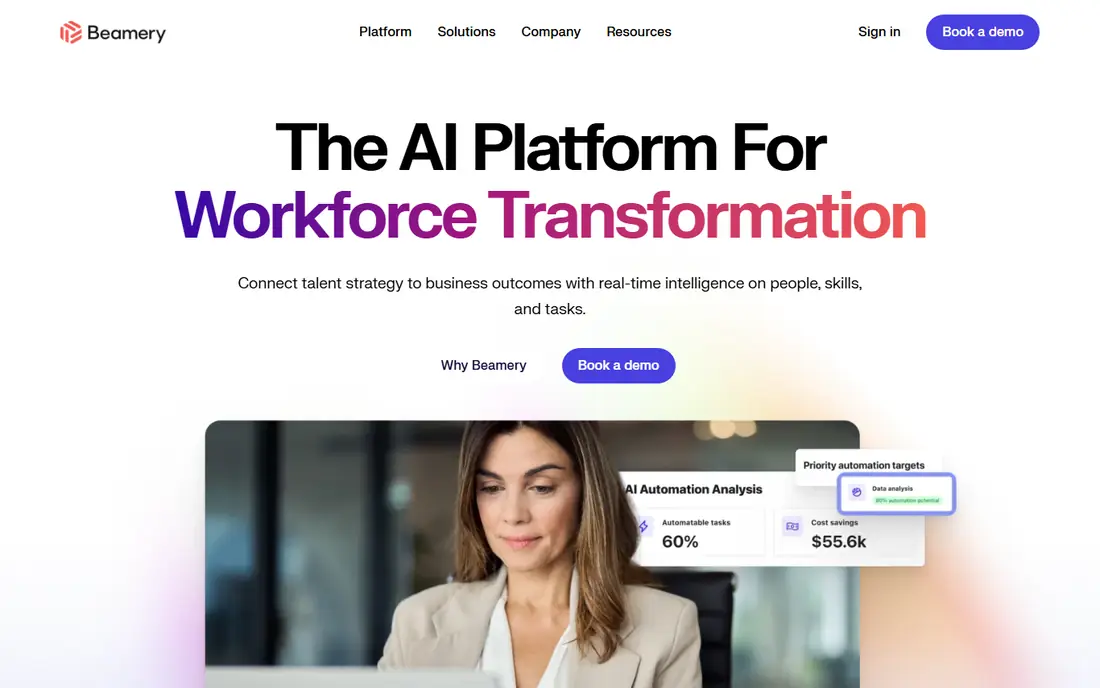
Beamery is a purpose-built talent CRM for large firms that treat pipelines as a long-term asset. Recruiters can segment candidates by skill, location, and engagement, then run nurture campaigns that keep silver-medalist candidates warm for future roles. Talent intelligence helps planners see gaps and build pipelines before a role opens.
Beamery is not a full applicant tracking system, so it pairs with an ATS for end-to-end hiring. Pricing is premium and quoted. For a global firm running proactive pipeline programs, that depth is the point.
- Deep talent segmentation
- Campaign orchestration
- Skills and talent intelligence
- Premium quote-based pricing
- Needs an ATS alongside it for full hiring

Gem began as a sourcing and CRM layer on top of an ATS, and many teams still use it that way. Recruiters can add candidates from job sites, run multi-step outreach sequences, and track which sources actually lead to hires. Talent rediscovery surfaces strong past candidates when a similar role opens, which cuts time to fill.
Gem can also act as an all-in-one ATS if a team wants to consolidate. Larger teams face quote-based pricing, and some AI features sit on higher seats. For a sourcing-heavy team, Gem is a strong first pick.
- Sourcing CRM on top of your ATS
- Outreach sequences
- Talent rediscovery and analytics
- Quote-based pricing for larger teams
- AI features need higher seats

Phenom combines a personalized career site, a talent CRM, and internal mobility tools in one platform. Career site visitors see relevant roles and content, past applicants stay in managed pools, and employees can find internal moves without leaving the platform. That breadth suits large firms where candidate experience is a measurable hiring lever.
Implementation is an enterprise project, and pricing is quoted. For a large firm that wants one talent experience platform, Phenom covers more ground than a standalone CRM.
- Personalized career site
- Talent CRM
- Internal mobility and employee experience
- Enterprise pricing
- Implementation often takes months
Avature is the most configurable enterprise talent CRM in this list, with low-code workflows that adapt to unusual hiring processes. Global firms can run different workflows by region, brand, or business unit while keeping one talent database. Talent pooling, campaigns, and event management are built for scale.
That flexibility needs skilled administrators and a clear design. Firms with standard hiring processes may find it more than they need. For a global firm with complex workflows, Avature is hard to match.
- Highly configurable workflows
- Global enterprise scale
- Deep talent pooling
- Quote-based pricing
- Configuration takes skilled admins
SmartRecruiters pairs an enterprise applicant tracking system with talent community and CRM features, so pools and active hiring live in one place. Collaborative hiring tools help hiring managers and recruiters work together, and the platform covers many countries and languages. That breadth suits global firms that want one hiring suite.
Small teams may find the suite heavy and the price high. For a large firm that wants ATS plus CRM without integrating two vendors, SmartRecruiters is a solid choice.
- Full hiring suite with CRM features
- Talent communities
- Wide global coverage
- Quote-based pricing
- Full suite can feel heavy for small teams
Manatal offers AI-powered candidate pooling, enrichment, and pipeline management at a price small teams can afford. Recruiters can build talent pools, score candidates, and run outreach without an enterprise contract. A free trial lets a team test it on real roles before paying.
Enterprise features such as deep configurability and advanced analytics are thinner than at the top of this list. For a small team or agency that needs a working CRM now, Manatal is the best value pick.
- Low price
- AI recommendations and enrichment
- Talent pools and pipelines
- Less enterprise depth than Beamery or Avature
- Support is lighter
Recruit CRM is built for recruitment agencies and search firms, combining an ATS, a candidate CRM, and client management. Resume parsing, kanban pipelines, email sequences, and automation cover the daily work of an agency desk. That all-in-one design suits growing agencies that do not want several tools.
In-house enterprise teams may find the agency focus less relevant. For an agency that needs candidates, clients, and jobs in one system, Recruit CRM is a practical choice.
- ATS plus CRM in one tool
- Resume parsing
- Email sequences and automation
- Agency focus means less fit for in-house enterprise teams
- Pricing varies by plan
Crelate combines an ATS, a CRM, and AI sourcing for staffing and mid-market teams. Recruiters can manage candidates and clients, search pools, and automate follow-ups in one platform. Flexible plans let a firm scale seats as it grows, which suits agencies with changing headcount.
At $85 per user per month, a large team should compare total cost carefully against enterprise rivals. For a mid-size staffing firm that wants one system for sourcing, CRM, and placement, Crelate is a strong contender.
- ATS plus CRM with AI sourcing
- Flexible plans
- Strong for staffing workflows
- Per-user price adds up for large teams
- Interface takes time to learn
Zoho Recruit offers recruitment CRM features at a low price, with a free plan for very small teams and paid plans from $25 per month. It covers job posting, candidate tracking, talent pools, automation, and sourcing tools, and it integrates with the wider Zoho suite. That value suits small HR teams and agencies starting out.
Talent CRM depth, campaign tools, and analytics are thinner than at Beamery, Gem, or Phenom. For a team that needs a working system on a tight budget, Zoho Recruit is the easiest place to start.
- Low price
- Free plan available
- Customizable workflows and automation
- CRM depth is less than enterprise tools
- Interface feels busy in places
How we picked these
We compared official product pages, talent pool and campaign features, ATS integrations, and published pricing, plus public user feedback on setup and support. We favored tools with clear nurture, segmentation, and rediscovery features, since those decide whether a CRM actually fills future roles. We did not run live hiring campaigns in each tool, so test nurture and rediscovery with your own past candidates before signing.
What to check before you buy candidate CRM software
Talent pools and nurture that match your hiring
List how you actually re-engage candidates: email campaigns, events, talent communities, or internal mobility. A CRM that only stores resumes will not fill roles. Test segmentation, campaign building, and unsubscribes with your own data.
ATS integration and data hygiene
Your CRM must sync cleanly with your ATS, or recruiters will work in two systems and trust neither. Check duplicate handling, consent tracking, and how a candidate moves from pool to active pipeline. Data privacy rules also matter, so confirm consent and retention controls.
Reporting that proves value
Ask how the tool reports source effectiveness, pipeline health, and rediscovery hires. A CRM should show which pools actually produce hires, not just how many candidates you stored. If reporting is weak, the business case for renewal will be weak too.
FAQ
What is the best candidate relationship management software?
Beamery leads for enterprise talent lifecycle work, Gem leads for sourcing-led teams, and Phenom leads for talent experience and internal mobility. Smaller teams often start with Manatal or Zoho Recruit, while agencies often pick Recruit CRM or Crelate.
What are the best candidate relationship management tools for agencies?
Recruit CRM and Crelate are built for agencies, with candidate and client management in one system. Manatal and Zoho Recruit suit smaller agencies on a budget, while Bullhorn suits larger staffing firms with complex operations.
How is a candidate CRM different from an ATS?
An ATS manages active applications for open roles, while a candidate CRM builds and nurtures talent pools for future roles. Many firms use both, with the CRM feeding strong past candidates into the ATS when a matching role opens.
Do I need a candidate CRM if I already have an ATS?
You need one if you regularly lose strong candidates because you have no way to stay in touch after a role closes. If you hire rarely or mainly from fresh applications, an ATS alone may be enough until volume grows.
How much does candidate relationship management software cost?
Small-team tools start around $15 to $25 per user per month, mid-market agency tools run around $85 per user per month, and enterprise tools such as Beamery, Phenom, and Avature are quote-based at enterprise prices. Always get a total for your team size and modules.