Best Bug Bounty Platforms for Beginners in 2026: 8 Platforms Compared
Compare the best bug bounty platforms for beginners. We review 8 platforms on learning resources, program choice, payouts, and safe starts and first payouts.
- Editor's choice
 HackerOne
Largest catalog and training
Starts atFreeVisit hackerone.comFull review - Great alternative
 Bugcrowd
Skill-matched programs
Starts atFreeVisit bugcrowd.comFull review - Also consider
 Intigriti
European programs, less crowding
Starts atFreeVisit intigriti.comFull review
TL;DR:
- HackerOne is the best starting point for most beginners, with the largest program catalog and free Hacker101 training.
- Bugcrowd and Intigriti offer a clearer path from public programs to private invites, with less competition than HackerOne on some programs.
- Open Bug Bounty is a low-pressure way to practice responsible disclosure without money at stake, while Immunefi suits crypto-focused hunters.
- Only test targets inside a program scope and policy. Testing outside scope can be illegal and can end your account, even with good intentions.
Quick comparison
| Tool | Best for | Starts at | Free plan? | |
|---|---|---|---|---|
| HackerOne | Largest catalog and training | Free | Yes | Visit |
| Bugcrowd | Skill-matched programs | Free | Yes | Visit |
| Intigriti | European programs, less crowding | Free | Yes | Visit |
 YesWeHack | European and APAC programs | Free | Yes | Visit |
 Open Bug Bounty | Practice disclosure safely | Free | Yes | Visit |
 Immunefi | Web3 and crypto bounties | Free | Yes | Visit |
 Synack | Vetted researchers aiming higher | Free | No | Visit |
 Cobalt | Managed programs and pentest work | See website | No | Visit |
The best bug bounty platforms for beginners
Bug bounty hunting rewards people who find real security flaws in websites, apps, and APIs, and report them through a platform that pays and coordinates fixes. For beginners, the platform matters as much as skill: program choice, learning material, triage quality, and payout speed shape whether early effort turns into accepted reports. Prices below are for researchers joining platforms, which is free on most platforms, while companies pay platform fees and bounties. We compared official program pages, researcher documentation, and public payout guidance for the platforms below.
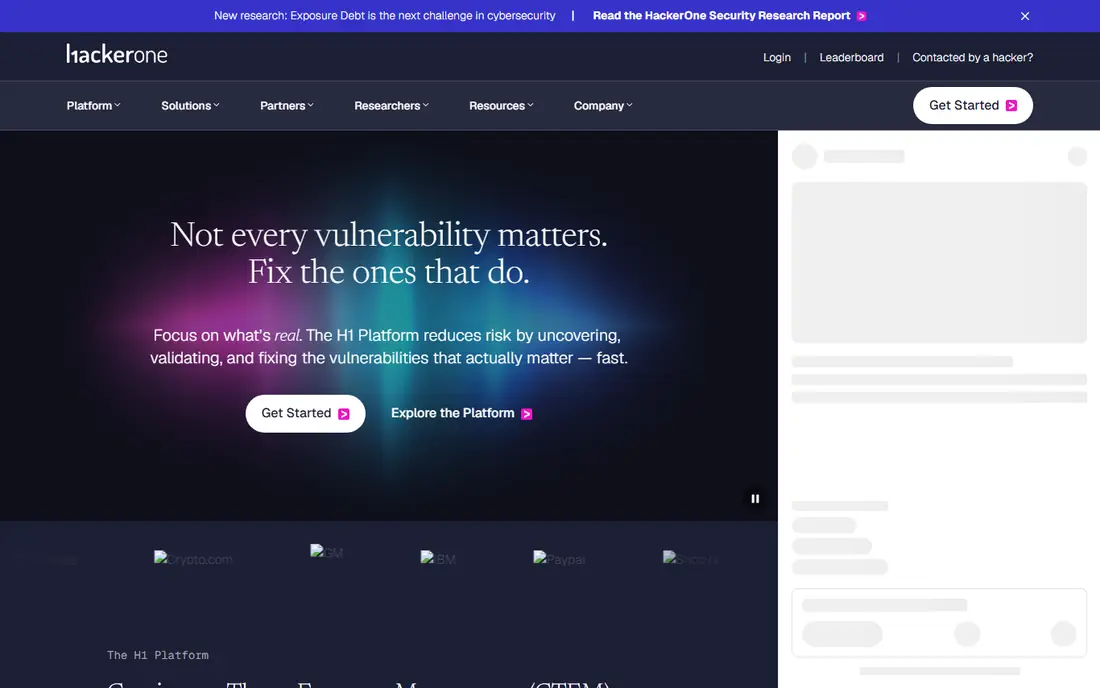
HackerOne is the largest bug bounty platform by program count and researcher community, and that scale is its main beginner advantage. Public programs from major technology companies, plus government vulnerability disclosure programs, give a new hunter many legal targets to study. Hacker101, the free training built into the ecosystem, walks through common vulnerability classes with hands-on challenges, so a beginner can learn methodically instead of guessing.
The drawback is competition. Popular public programs attract thousands of hunters, so common flaws are often reported within hours. Building reputation through accepted reports is the path to private programs, where payouts are higher and competition is lower, but that takes patience. Start with programs marked beginner-friendly, read the scope carefully, and focus on one vulnerability class at a time rather than scanning everything at once.
- Largest program catalog
- Free Hacker101 training
- Clear reputation path to private programs
- Public programs are highly competitive
- Duplicate reports are common
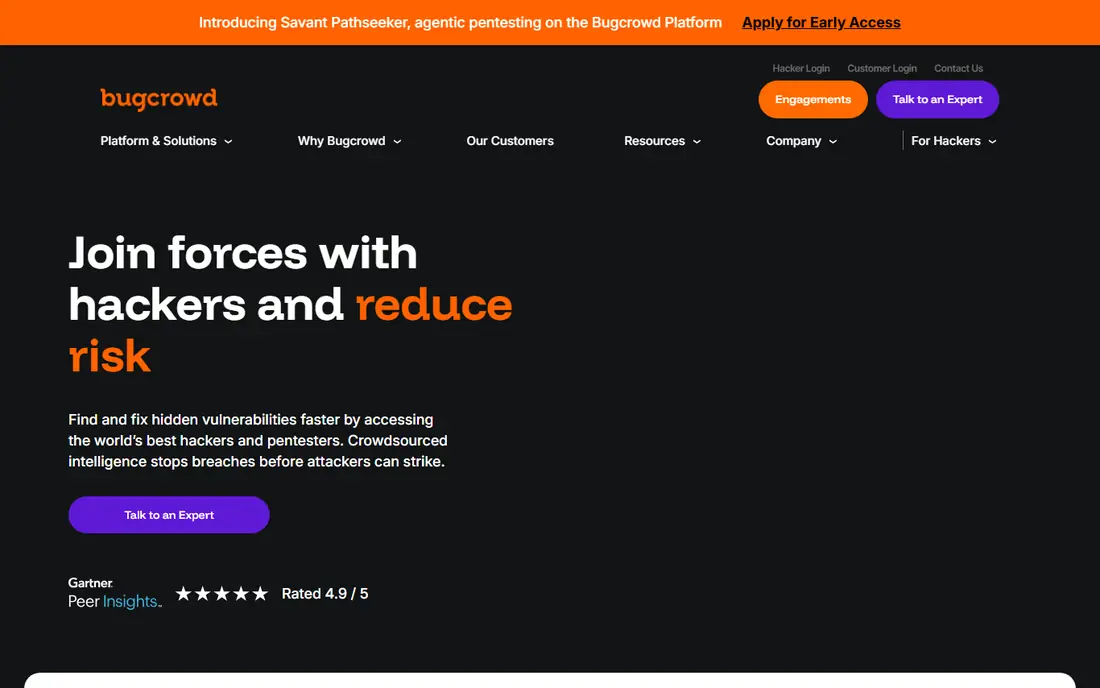
Bugcrowd is a strong second home for beginners, and for some hunters it is a better first home than HackerOne. CrowdMatch helps route researchers toward programs that fit their declared skills, which reduces wasted time on targets that are out of reach. Public programs are open to any researcher, while private invites depend on accepted findings, activity, and accuracy, giving a visible progression path. Payout guidance by severity also helps beginners judge whether a finding is worth reporting.
Bugcrowd still has crowded public programs, and payout speed depends on the company behind each program, not just the platform. Some reports take weeks from submission to payment, especially when a fix needs testing. Beginners should track their accuracy rate, since a history of valid reports matters more for private invites than a large number of low-quality submissions.
- CrowdMatch program matching
- Public and private programs
- Clear payout guidance
- Competition on popular programs
- Payout timelines vary by program
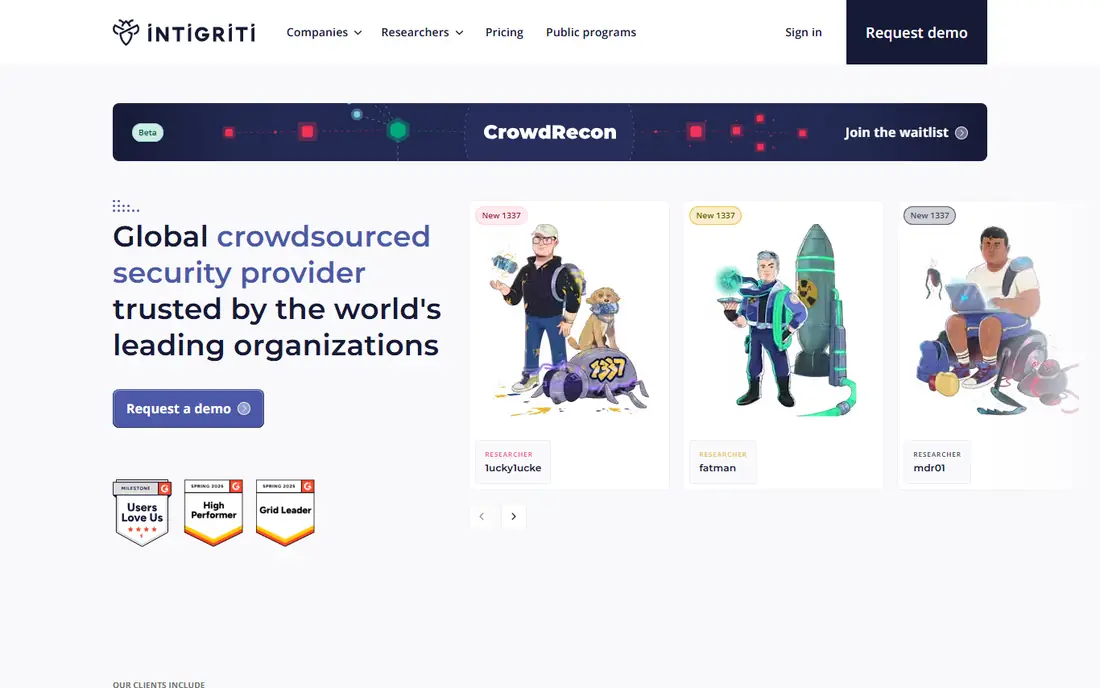
Intigriti, based in Europe, is a favorite among beginners who feel lost in the crowds on larger platforms. With fewer researchers per program, a careful hunter has a better chance of being first to a valid finding, especially on European company targets. Program modes include public, private, and application-based access, and private programs often start with a small selected group. Payment through European bank transfer is also fast for many hunters in the region.
The trade-off is catalog size. Intigriti has fewer active programs than HackerOne or Bugcrowd, so a hunter who wants only US technology targets may find fewer options. Some programs also require an application or a track record before access. For beginners in Europe, or hunters who prefer less crowded programs, Intigriti is an excellent place to build early wins and confidence.
- Smaller researcher pool
- European company focus
- Fast payments for many hunters
- Fewer programs than HackerOne
- Some programs are invite-only
YesWeHack is another European platform that gives beginners a less crowded hunting ground. Programs often start private and expand to public, which means early participants face fewer competing hunters. The platform covers European companies and a growing APAC presence, with rewards that range from modest sums for lower-severity issues to several thousand euros for serious findings. For a hunter who has struggled with duplicates on larger platforms, YesWeHack can feel like a fresh start.
Catalog size is smaller, and learning resources in English are thinner than HackerOne Hacker101. Beginners should still use outside study material and focus on web fundamentals before hunting here. YesWeHack fits best as a second platform alongside HackerOne or Bugcrowd, giving you more program choice without more competition on every target.
- Less competition than US giants
- European focus
- Public and private programs
- Smaller catalog
- Fewer English-language learning resources
Open Bug Bounty is the lowest-pressure way to learn responsible disclosure. Researchers report website vulnerabilities, the platform coordinates with the site owner, and valid reports earn public recognition rather than money. That removes the race for payouts and lets a beginner focus on finding real issues, writing clear reports, and learning how disclosure works. It is also useful for building a public track record before joining paid platforms.
The limits are clear. There are no cash bounties, and the scope is narrower than full bug bounty programs, focusing on website flaws rather than deep API or mobile testing. Open Bug Bounty will not replace paid hunting as a goal, but as a training ground it is valuable. Use it to practice report writing and scope discipline, then carry those habits to paid platforms.
- Free to join
- Practice without money pressure
- Recognition for valid reports
- No monetary bounties
- Scope is limited to website security issues
Immunefi is the leading platform for Web3 and crypto bug bounties, and its payouts reflect the stakes. Critical smart contract flaws can pay far more than typical web bounties, with some programs offering millions for severe issues. The platform covers DeFi protocols, bridges, wallets, and blockchain infrastructure, and its severity framework helps researchers judge impact. For a hunter with Solidity and smart contract audit skills, Immunefi is the natural home.
That specialization is also the barrier. Beginners without smart contract experience will find targets complex and competition from experienced auditors intense. Web3 hunting also carries higher responsibility, since a missed flaw can lead to real financial loss. Treat Immunefi as a goal after building web fundamentals and smart contract study, not as a first platform for a complete beginner.
- Very large crypto bounties
- Strong Web3 focus
- Clear severity framework
- Needs smart contract skills
- High stakes and complex targets
Synack works differently from open bounty platforms. Researchers apply, pass vetting and background checks, and join a Red Team that gets controlled access to targets on a rotating basis. That model reduces duplicate hunting and wasted effort, and missions pay for testing time as well as vulnerabilities. Payouts for confirmed flaws are often higher than open public programs, and the work feels closer to professional penetration testing.
The barrier is entry. Synack is not open to every beginner, and the application process favors hunters with proven skills, certifications, or a track record elsewhere. Beginners should view Synack as a next step after building accepted reports on HackerOne, Bugcrowd, or Intigriti. If you reach that level, Synack offers steadier work and less crowd pressure than open platforms.
- Less competition through vetting
- Controlled target access
- Steady mission work
- Invite and vetting process
- Not open to all beginners
Cobalt, formerly Cobalt Labs, blends bug bounty with managed penetration testing. Companies run structured engagements with vetted researchers, and researchers work on defined scopes with clearer timelines than open public programs. That structure appeals to hunters who want professional engagements rather than racing strangers to the same bug. Cobalt also emphasizes researcher quality and report standards, which helps build a professional reputation.
Cobalt is not a casual starting point for a complete beginner. Access is curated, and company pricing is quote-based, so it is less transparent than open platforms. Beginners should treat Cobalt as a later goal, after building skills and a report history on open platforms. For hunters moving toward professional pentesting, Cobalt is a credible bridge between bounty hunting and client work.
- Managed pentest programs
- Vetted researcher community
- Structured engagements
- Not a casual open bounty platform
- Company pricing is quote-based
How we picked these
We compared official researcher pages, program catalogs, training resources, and payout guidance for platforms that are actively operating in October 2026. We favored platforms that are free for researchers to join, that publish clear scope and policy rules, and that offer a realistic beginner path through public programs or training. We left out invite-only groups with no public joining route, and we note where a platform is vetted rather than open.
How beginners should start safely
Start with learning, not hunting. Work through Hacker101 or a reputable web security course, learn the OWASP Top 10, and practice on legal labs such as PortSwigger Web Security Academy or Hack The Box before touching a live program. Then pick one platform, read three program policies in full, and hunt only inside scope. Scope defines which domains, features, and test types are allowed, and testing outside it can lead to account bans or legal trouble.
Write reports like a professional. Include clear steps to reproduce, impact, and a suggested fix, and be polite with triage teams even when a report is marked duplicate or informative. Track your submissions, learn from rejections, and focus on one vulnerability class until you can find it reliably. Earnings take time: many beginners take months to land a first paid bug, and that is normal. Treat early months as paid learning, not as income.
Staying legal and safe
Never test a site without permission, never use automated scanners on a program that forbids them, and never access other users data, even if a flaw lets you. If you are unsure whether an action is allowed, stop and ask the program team. Keep notes on scope and policy for each target, and use a separate testing browser profile. Responsible disclosure protects users, protects you, and builds the reputation that leads to private programs.
FAQ
What is the best bug bounty platform for beginners?
HackerOne is the best bug bounty platform for beginners for most people, thanks to its large program catalog and free Hacker101 training. Bugcrowd and Intigriti are strong alternatives, with Bugcrowd offering skill matching and Intigriti offering less crowded European programs. Joining more than one platform is common once you have a routine.
Do I need to pay to join a bug bounty platform?
No, joining as a researcher is free on HackerOne, Bugcrowd, Intigriti, YesWeHack, Open Bug Bounty, and Immunefi. Companies pay platform fees and bounties, while researchers earn payouts for accepted reports. Some vetted platforms such as Synack and Cobalt require an application, but they do not charge researchers a joining fee.
How long does it take to earn a first bounty?
Many beginners take one to six months to land a first paid bounty, depending on study time, program choice, and competition. Intigriti and smaller platforms can be faster for some hunters because fewer researchers compete on each program. Focus on learning one vulnerability class well, writing clear reports, and building accuracy, rather than chasing every program at once.
Do I need certifications to start bug hunting?
No, certifications are not required to join open bug bounty platforms, and accepted reports matter more than credentials. Study, labs, and a track record of valid reports will open private programs faster than a certificate alone. Certifications can help later for vetted platforms and professional pentest work, but they are not a gate to starting.
Is bug bounty hunting legal?
Bug bounty hunting is legal when you test only targets inside a program scope and follow its policy and rules of engagement. Testing outside scope, accessing private data, or using tools a program forbids can be illegal and can end your account. Always read the policy before testing, and only test sites that have given permission through a program.