Best Blockchain Analysis Tools in 2026: 8 Tools Compared
Compare the best blockchain analysis tools for compliance, tracing and risk screening, with lawful-use guidance and pricing for 2026 teams with expert picks.
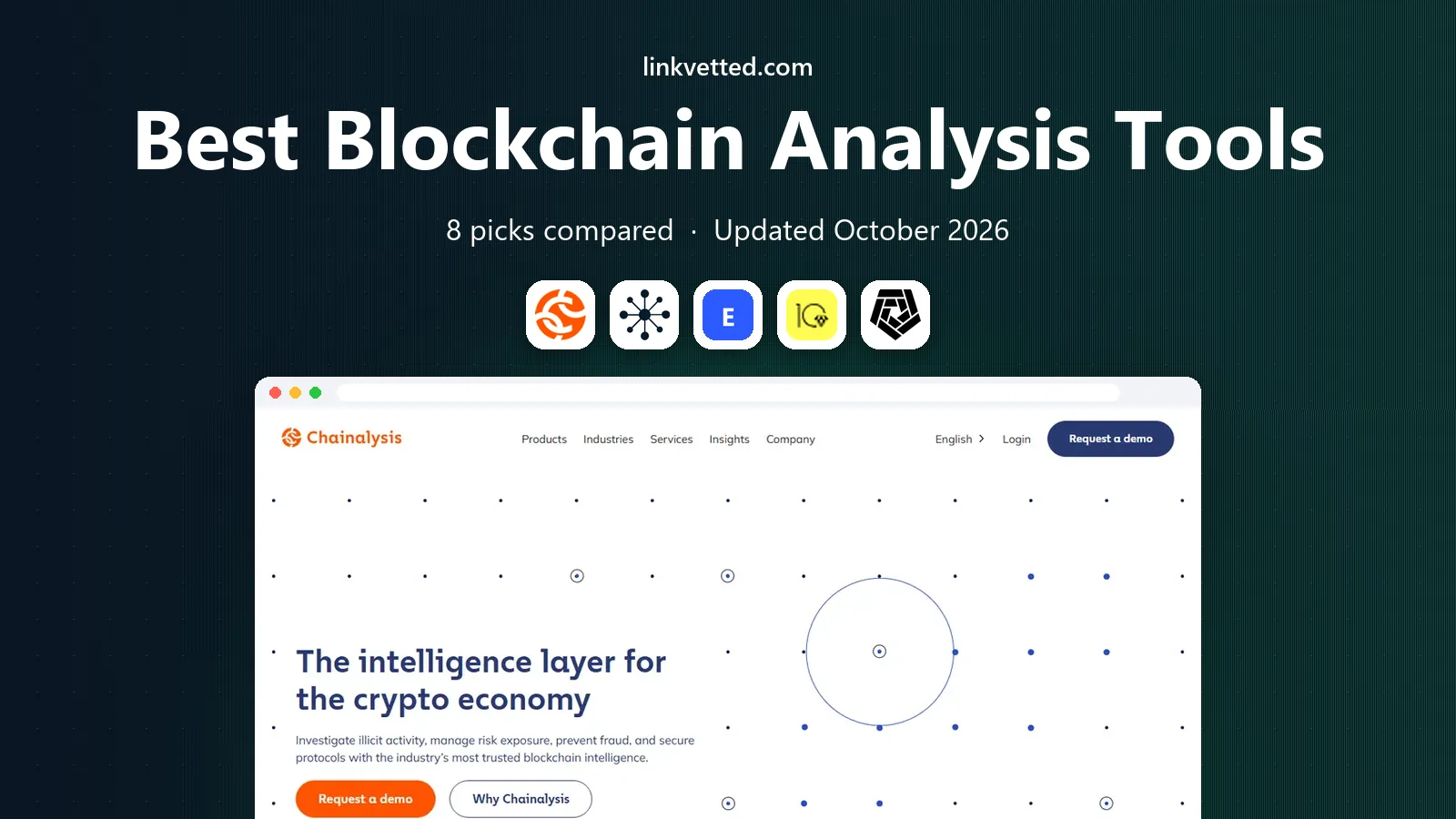
- Editor's choice
 Chainalysis
Enterprise compliance and investigations
Starts atSee websiteVisit chainalysis.comFull review - Great alternative
 TRM Labs
Cross-chain risk and monitoring
Starts atSee websiteVisit trmlabs.comFull review - Also consider
 Elliptic
Screening and cross-chain investigations
Starts atSee websiteVisit elliptic.comFull review
TL;DR:
- Chainalysis, TRM Labs and Elliptic lead for enterprise compliance, screening and investigations.
- Crystal Intelligence suits teams that need clear, evidence-ready tracing across many chains.
- Arkham, Bitquery, Dune and Glassnode offer lower-cost research and data access for smaller teams.
- Most enterprise tools are priced by quote, so budget and chain coverage matter more than a headline price.
- Use these tools only for lawful purposes, such as compliance, fraud prevention, audits and investigations authorized by your organization.
Quick comparison
| Tool | Best for | Starts at | Free plan? | |
|---|---|---|---|---|
| Chainalysis | Enterprise compliance and investigations | See website | No | Visit |
| TRM Labs | Cross-chain risk and monitoring | See website | No | Visit |
| Elliptic | Screening and cross-chain investigations | See website | Free trial | Visit |
 Crystal Intelligence | Evidence-ready tracing | See website | No | Visit |
 Arkham Intelligence | Public wallet and entity research | Free | Yes | Visit |
 Bitquery | Developer data and APIs | $39 per month | Free trial | Visit |
 Dune Analytics | Community dashboards and queries | Free | Yes | Visit |
 Glassnode | On-chain market and network metrics | Free | Yes | Visit |
The best blockchain analysis tools
We compared the best blockchain analysis tools on chain coverage, screening, tracing, monitoring, data access and price. The best blockchain analysis software for your team depends on whether you need compliance screening, deep investigations or market research. All tools below are legitimate analytics and forensics products, intended for lawful use only.

Chainalysis suits large exchanges, banks and government teams that need screening, monitoring, tracing and fraud detection in one platform. Its Reactor investigation tool and KYT compliance products cover many chains, with attribution data that helps teams assess risk and document findings. For regulated firms, that breadth and maturity matter.
The drawback is access. Pricing is by quote and the sales process fits enterprise budgets, not small research teams. Smaller firms should look at Arkham, Bitquery or Dune first, and use Chainalysis when compliance volume and audit needs justify an enterprise contract.
- Broad intelligence platform
- Tracing, monitoring and screening
- Strong law enforcement and enterprise track record
- Enterprise pricing by quote
- Buying process is heavy for small teams
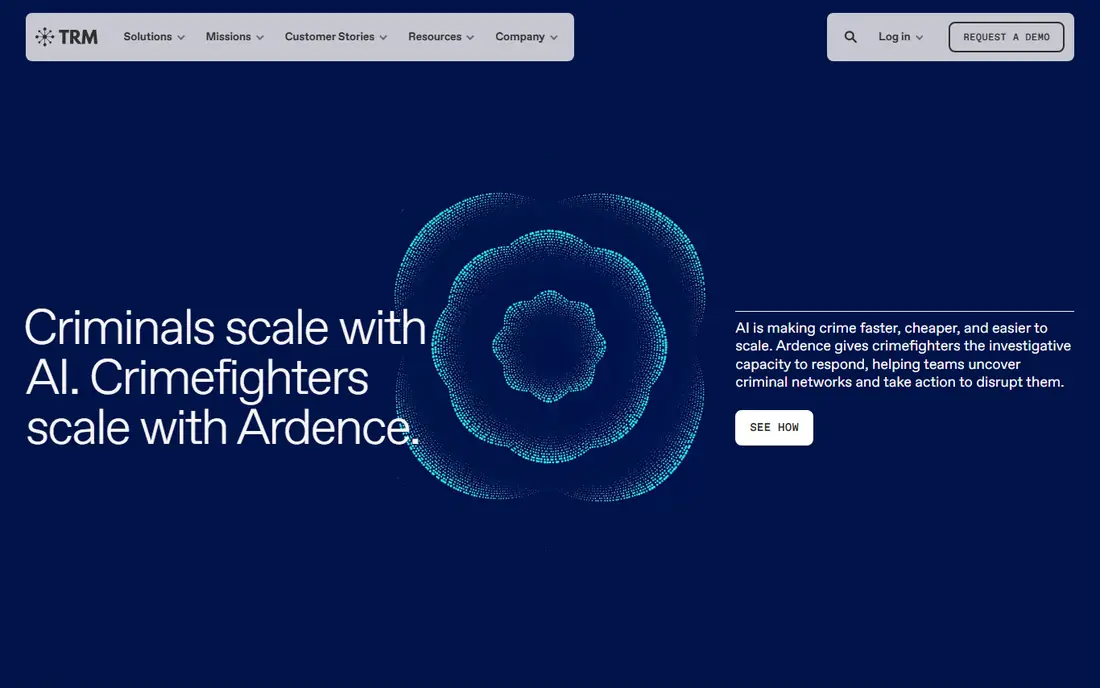
TRM Labs combines investigation, transaction monitoring and risk workflows in one system. It suits crypto businesses and financial institutions that need automated monitoring as volumes grow, with strong coverage for stablecoin flows and cross-chain activity. Automation helps teams flag risk without reviewing every transaction by hand.
Pricing is by quote, which makes small-team budgeting hard. Teams should ask for pricing at their transaction volume and chain list, since costs vary by use case. For US-focused compliance and national security work, TRM is a frequent choice.
- Unified investigation and monitoring
- Broad chain coverage
- Strong stablecoin and automation features
- Enterprise pricing by quote
- Less EU-focused than some rivals
Elliptic suits institutions that screen wallets and monitor transactions at scale, with cross-chain tracing and risk insight. Its Lens and Navigator products link wallet screening to transaction monitoring, which helps compliance teams act on risk in real time. Coverage across many chains and bridges is a key strength.
Elliptic is also enterprise-priced, with a trial for evaluation. Teams should test screening accuracy on their own transaction mix, since risk scores and false positives vary by chain and asset type. For large regulated exchanges, Elliptic remains a core option.
- Cross-chain tracing across many blockchains
- Wallet screening and monitoring
- AI-assisted risk summaries
- Enterprise pricing
- Investigation depth can vary by case type
Crystal Intelligence suits investigation teams that need clear, defensible tracing. It emphasizes explainable money flows, visualizations and evidence bundles that can support audits and legal processes. Verified entity attribution helps analysts explain why an address was flagged, not just that it was flagged.
Crystal is not a market research tool, and pricing is by quote. Teams that mainly track prices or holder behavior should use Dune or Glassnode instead. For forensic work where documentation matters, Crystal is a strong pick.
- Tracing across many blockchains
- Verified entity attribution
- Audit-ready forensic reports
- Pricing by quote
- Less suited to casual market research
Arkham suits researchers, traders and analysts who want to study public wallet activity and entity labels without an enterprise contract. It offers portfolio tracking, entity research and a marketplace for on-chain intelligence, with free access to start. That makes it useful for learning and for initial research.
Arkham does not replace a compliance screening platform for a regulated exchange. Its data is public and label-based, so teams should verify findings before acting on them. For research and early-stage diligence, it is a low-cost starting point.
- Entity labels and portfolio tracking
- Free access available
- Intel marketplace for research
- Public data limits depth
- Not a full enterprise compliance suite
Bitquery suits developers and data teams that want indexed, multi-chain data through APIs. GraphQL and REST access, real-time streams and Coinpath money-flow tools help teams build dashboards, alerts or custom research without running their own nodes. Entry pricing starts at $39 per month when billed annually.
The catch is skill. Bitquery is a data platform, not a point-and-click compliance dashboard, so non-technical teams may find it harder to use. For engineering-led teams, it offers flexible, affordable access to on-chain data.
- GraphQL and REST APIs
- Real-time streams
- Coinpath money-flow analysis
- Needs technical skill
- Pricing rises with API use
Dune Analytics suits analysts who want to query blockchain data with SQL and share dashboards. The community library covers many protocols, tokens and chains, which helps teams find a starting point for research. A free tier lets new users test queries before paying.
Paid plans are priced for heavier use, and community dashboards vary in quality, so verify the query logic before citing a dashboard. For transparent, reproducible research, Dune is a practical and affordable tool.
- Free tier for queries and dashboards
- Large community dashboard library
- SQL-based analysis
- Paid plans start higher for heavy use
- Data quality varies by community dashboard
Glassnode suits investors, researchers and analysts who track network activity, holder behavior and market cycles. Its metrics cover supply, activity, miner behavior and exchange flows, with a free plan for basic access. Paid tiers add deeper indicators and data exports.
Glassnode is not a screening or tracing platform, so compliance teams should pair it with Chainalysis, TRM or Elliptic. For market and network research, however, its indicator library is hard to match.
- Free plan for basic metrics
- Advanced and professional tiers
- Long history of network indicators
- Advanced tiers are expensive
- Less focused on wallet screening
How we picked these
We compared official feature and pricing pages, plus public reviews, for legitimate blockchain analytics and forensics tools still in use in October 2026. We favored tools with clear lawful uses, such as compliance, fraud prevention, audits, research and authorized investigations. We left out anonymous wallet checkers, bots and tools marketed for evading detection.
Lawful use and privacy notes
Blockchain data is public on most chains, but that does not make every use lawful or fair. Use these tools for compliance, risk screening, fraud prevention, audits, research and investigations you are authorized to run. Do not use them to dox private individuals, stalk wallet owners or help move illicit funds. Remember that clustering and labels are estimates, not proof of identity, so verify findings through proper channels before taking action.
Choosing by use case
Compliance teams should start with Chainalysis, TRM Labs or Elliptic, and test screening on their own volumes. Investigation teams should add Crystal for evidence-ready tracing. Research teams should start with Arkham, Dune, Glassnode or Bitquery, and only move to enterprise tools when compliance or audit needs require it.
Verify labels before acting
Labels and risk scores are starting points, not verdicts. A flagged address may belong to an exchange hot wallet, a shared service or a mislabeled cluster, and acting on a label alone can harm an innocent customer. Check transaction history, counterparties and timing, and use a second source where possible before freezing funds, closing an account or filing a report. Keep a record of the evidence and the decision, so compliance reviewers can follow the reasoning later. Careful verification protects both the firm and its customers.
FAQ
What is the best blockchain analysis software?
Chainalysis is our pick for enterprise compliance and investigations, TRM Labs suits cross-chain monitoring, and Elliptic suits screening at scale. For research, Arkham, Dune and Glassnode are strong lower-cost options, while Bitquery suits developers who need API access.
How much do blockchain analysis tools cost?
Enterprise tools such as Chainalysis, TRM Labs, Elliptic and Crystal are priced by quote. Lower-cost options include Bitquery from $39 per month, plus free tiers from Arkham, Dune and Glassnode. Budget depends on chain coverage, volume and whether you need screening or just research.
Can blockchain analysis tools identify wallet owners?
No tool directly reveals a private identity from an address alone. Tools cluster addresses by transaction patterns and link clusters to known entities such as exchanges or sanctioned addresses, using heuristics and off-chain data. Treat labels as leads to verify, not as confirmed identities.
Are blockchain analysis tools legal to use?
Yes, when used for lawful purposes such as compliance, fraud prevention, audits, research and authorized investigations. Using them to facilitate crime, evade sanctions or harass individuals is not lawful use. Follow your local laws and your organization policies, and keep records of authorized work.
What is the difference between blockchain analytics and analysis tools?
In practice, the terms are used interchangeably. Both refer to software that examines on-chain data to extract insight, whether for compliance, investigations or market research. The key difference is use case, not the label on the product page.