Choosing Big Data Analytics Software for Startups in 2026: 6 Options Compared
Best big data analytics software for startups, compared. 6 tools with published prices, free plans and limits. Concise write-ups of every option. Easy to scan.
- Editor's choice
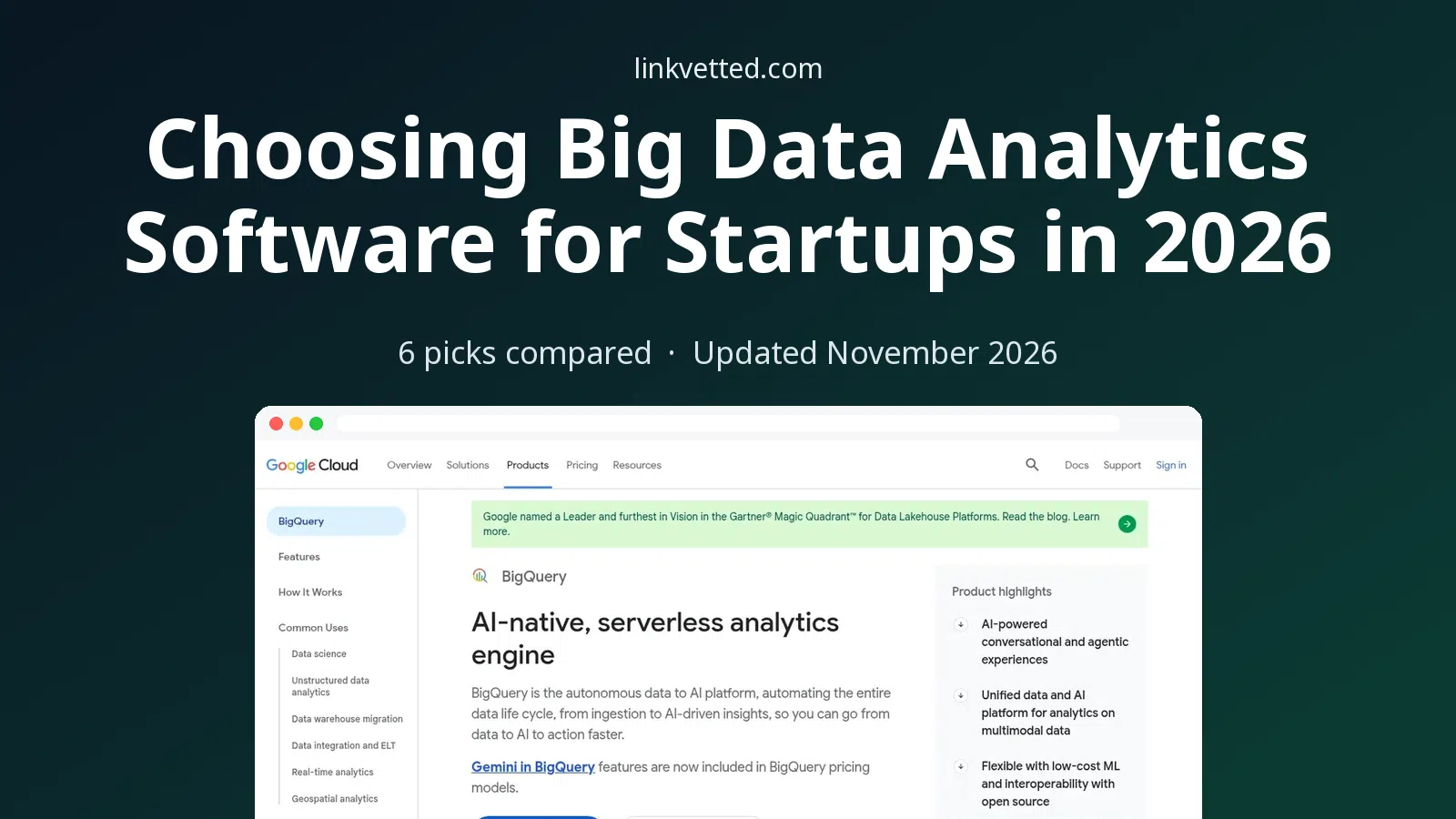
 Google BigQuery
Autonomous, automatic data life cycle
Starts atSee websiteVisit cloud.google.comFull review - Great alternativeClickHouse
Live, data-intensive workloads
Starts at$0.056 per unit per hourVisit clickhouse.comFull review - Also consider
 Starburst
Governed data access without movement
Starts at$0.50 /creditVisit starburst.ioFull review
Direct answer
Our first pick is Google BigQuery, best for autonomous, automatic data life cycle. Listed starting prices: ClickHouse from $0.056 per unit per hour and Starburst from $0.50 /credit. For a different need, ClickHouse covers live, data-intensive workloads and Starburst covers governed data access without movement. Details, prices and limits for the rest of the 6 tools are below.
TL;DR:
- This list starts with Google BigQuery, which is built for autonomous, automated data life cycle.
- Domo is the one to check for governed data and business insights.
- The main caution on ClickHouse: Composability means more assembly decisions.
- Starburst stands alone as the one tool in this list with a free plan.
Last checked November 2026. Prices and plan details were read from the vendors' own pages in November 2026; vendors change plans often, so confirm the current price on the vendor site before you buy.
Quick comparison
| Tool | Best for | Starts at | Free plan? | |
|---|---|---|---|---|
| Google BigQuery | Autonomous, automatic data life cycle | See website | Not stated | Visit |
| ClickHouse | Live, data-intensive workloads | $0.056 per unit per hour | Free trial | Visit |
| Starburst | Governed data access without movement | $0.50 /credit | Yes | Visit |
 Amazon Redshift | Straightforward, economical managed warehousing | See website | Not stated | Visit |
 Databricks | Unified data, analytics and AI | See website | Not stated | Visit |
 Domo | Governed data and business insights | See website | Free trial | Visit |
Big Data Analytics Software for Startups profiles
This LinkVetted guide covers 6 big data analytics software for startups. Each profile lists a starting price, free plan details, strengths and drawbacks, so you can drop poor fits quickly.
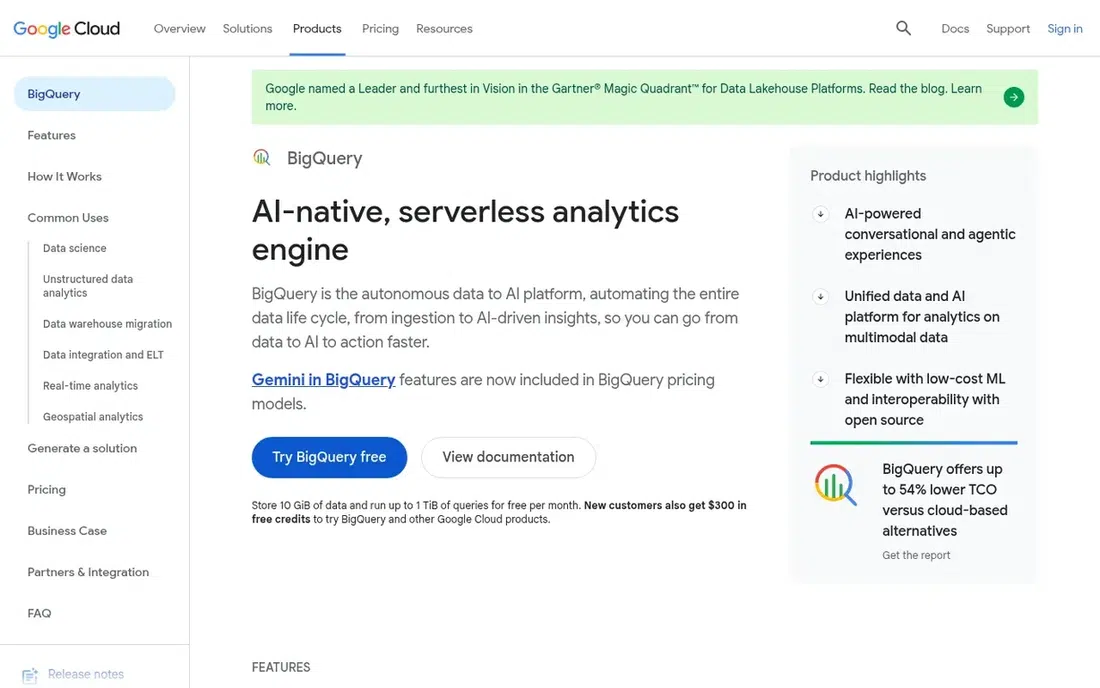
Where Google BigQuery fits: autonomous, automated data life cycle. For startups, that automation can lower the operational burden of running a warehouse and let a small data team focus on analysis instead of infrastructure tuning.
It is also a broad system, so startups with very narrow live needs might evaluate ClickHouse alongside it. Google BigQuery shows no starting price here, so confirm the cost on the vendor site. Trial and free access: Not stated.
What to check first: Less emphasis on custom engine control.
- Managed system cuts operational overhead
- Automates the whole data life cycle
- Automation can obscure cost drivers for new teams
ClickHouse
Best for: Live, data-intensive workloads
ClickHouse serves live, data-intensive workloads. Startups that want a managed warehouse with wide automation, like Google BigQuery, or a unified Data + AI Platform, like Databricks, may prefer those for general analytics.
Watch-outs: Not positioned as a full governed BI suite.
In practice, ClickHouse describes itself as the open, composable product for data-intensive workloads, spanning live analytics and transactions to observability, security and AI engineering. Entry price for ClickHouse: $0.056 per unit per hour. As for free access: Free trial.
- Observability and AI engineering
- Open and composable system
- Composability means more assembly decisions
Think of Starburst for governed data access without movement. Teams seeking a single managed warehouse, for example Amazon Redshift, or a unified AI system, like Databricks, might start there instead.
Limits to weigh: Enterprise intelligence framing may exceed early startup needs.
Worth adding: Starburst is described as an enterprise intelligence system that links governed enterprise data to AI agents and trusted answers without unnecessary data movement. The starting price for Starburst: $0.50 /credit. Starburst includes a free tier.
- Links governed enterprise data to AI agents
- Focus on trusted answers across sources
- Value relies on having governed data sources in place
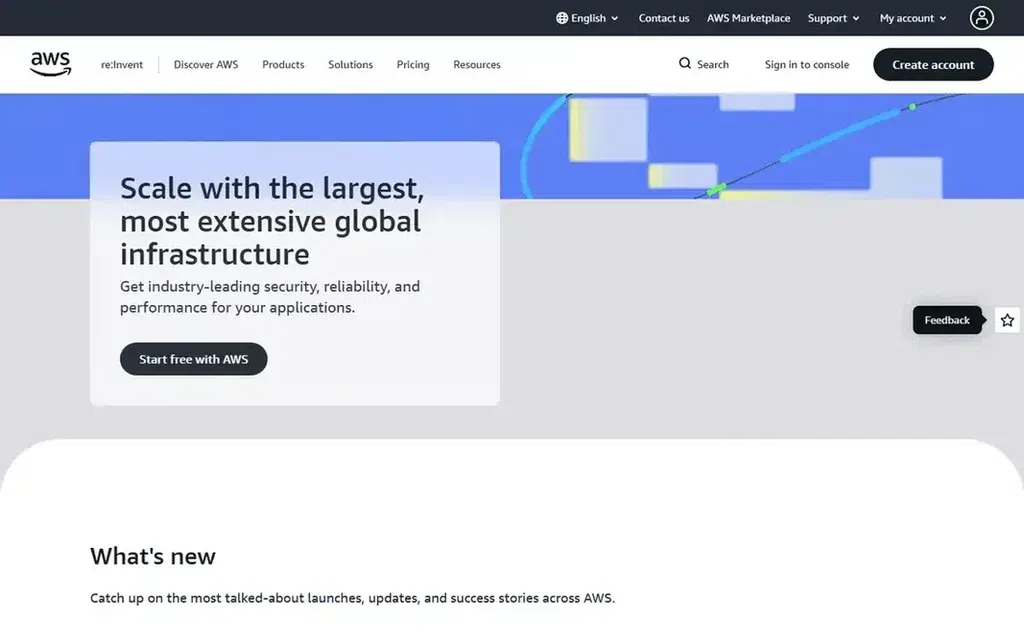
Think of Amazon Redshift for straightforward, economical managed warehousing. Amazon Redshift is a quick, completely managed cloud data warehouse that makes it straightforward and economical to analyze all your data, based on its vendor page.
More specifically, startups prioritizing a unified Data + AI Platform, like Databricks, or a highly composable engine, like ClickHouse, should weigh those alternatives. Check the vendor site for Amazon Redshift pricing; none is listed in this comparison. Free plan details: Not stated.
The main drawbacks: May need companion services for broader data work.
- Positioned as straightforward to operate
- Framed as economical for analyzing all your data
- Warehouse focus is narrower than full AI products
Databricks is designed for unified data, analytics and AI. Startups that only need a straightforward managed warehouse, or that lack anyone to own the system, may prefer a narrower choice for example Google BigQuery or Amazon Redshift. In daily use, Databricks gives you a unified product for data, analytics and AI, built around a data-centric approach.
Where it is weaker: Less suited to teams wanting only a straightforward warehouse.
It eases ETL, data warehousing, governance and AI on the Data + AI Platform. This makes it a fit for startups that expect to grow into machine learning and want one environment for engineering and analytics instead of separate point tools. The system spans a broad set of workloads, so a small team may have to invest time in learning its structure and governance model. Check the vendor site for Databricks pricing; none is listed in this comparison. Trial and free access: Not stated.
- Cuts the need to stitch together separate tools
- Single product for ETL, warehousing
- Wide surface area can need dedicated system skills
Domo works best for governed data and business insights. Domo emphasizes business-critical insights and governed data for AI agents, so it may overlap with analytics tools a startup already uses.
Where it falls short: Less centered on custom data engineering.
- Aims to accelerate business-critical insights
- Links and moves data from any source
- Business-insight focus may overlap with existing BI tools
How we compared the tools
Each tool was reviewed on what its vendor publishes: price, plan limits, core features and stated drawbacks. We did not run hands-on tests. Figures are shown as the vendors publish them. Billing terms, seat minimums and add-ons can change the real cost. The order reflects how well each tool fits the most common buying scenario for big data analytics software for startups, then price clarity, then free plan access. It is a starting point, not a verdict.
What to confirm before you sign up
- Confirm the entry price on the vendor page. For Google BigQuery, Amazon Redshift, Databricks and Domo that means a quote rather than a fixed price.
- Test the free plan from Starburst against your real workload before relying on it.
- Use real work to test the free trial from ClickHouse and Domo, rather than a demo project.
- Before choosing Google BigQuery, weigh its main limit: automation can obscure cost drivers for new teams.
- Price Domo for your actual team size; headline prices rarely include add-ons or overage.
- Ask Databricks which support channels and response times come with the plan you would buy.
FAQ
Can I try these tools before paying?
Often, yes. Starburst has a free plan and ClickHouse and Domo offer a free trial. Use your own data and a real task during the test, and check what the free tier or trial limits before you rely on it.
How are the tools for big data analytics software for startups ordered?
The order follows typical fit for big data analytics software for startups, with Google BigQuery first and Domo last, then price clarity and free access. It is editorial judgement, not a score, so another team could rank the tools differently.
Which choice suits live analytics?
ClickHouse is positioned for data-intensive workloads including live analytics, observability and security, making it relevant when high-volume event data is central. Google BigQuery and Amazon Redshift are more general managed warehouse choices.
How do these products manage governance?
Databricks comes with governance as part of its Data + AI Platform, and Starburst emphasizes connecting governed enterprise data to AI agents without unnecessary data movement. Domo also flags governed data for AI agents.
What should a startup look for in big data analytics software?
Start with the workload you actually have, for example a managed warehouse, live event analytics or AI development. Then check how much operational management the system gives you, since a small team benefits from automation.
Do these tools publish their prices?
Not all of them. Google BigQuery, Amazon Redshift, Databricks and Domo publish no starting price, so expect a quote request for those. The rest, ClickHouse included, show a starting price, though seats and billing terms still change the final cost.
Sources
- https://cloud.google.com/bigquery
- https://clickhouse.com
- https://www.starburst.io
- https://aws.amazon.com/redshift
- https://databricks.com
- https://www.domo.com