6 Artifact Repository Tools for Enterprise Worth Shortlisting in 2026
Weighing the best Artifact repository tools for enterprise? We lined up 6 products by cost, free access and fit. Each entry gets a plain verdict. Easy to scan.
- Editor's choice
 Azure Artifacts
Microsoft-centric pipelines and NuGet feeds
Starts atSee websiteVisit azure.microsoft.comFull review - Great alternative
 GitHub Packages
Teams already building on GitHub
Starts at$4 per user per monthVisit github.comFull review - Also consider
 Google Artifact Registry
Google Cloud builds and container artifacts
Starts atSee websiteVisit cloud.google.comFull review
Direct answer
For Microsoft-centric pipelines and NuGet feeds, Azure Artifacts is where this list starts. Listed starting prices: GitHub Packages from $4 per user per month, JFrog Artifactory from $50 per month and Sonatype Nexus Repository from $1,200 per year. GitHub Packages fits teams already building on GitHub; Google Artifact Registry fits Google Cloud builds and container artifacts. Prices, free plans and limits for all 6 tools follow.
TL;DR:
- Azure Artifacts takes the first slot, best suited to Microsoft-centric pipelines and NuGet feeds.
- A fair warning about GitHub Packages: best value chiefly inside the GitHub ecosystem.
- AWS CodeArtifact fits AWS-native managed package storage.
- A free plan is available from 3 of the 6 tools: GitHub Packages, Sonatype Nexus Repository, AWS CodeArtifact.
- The lowest published monthly entry price here is $4 per user per month, from GitHub Packages.
Last checked November 2026. Prices and plan details were read from the vendors' own pages in November 2026; vendors change plans often, so confirm the current price on the vendor site before you buy.
Quick comparison
| Tool | Best for | Starts at | Free plan? | |
|---|---|---|---|---|
| Azure Artifacts | Microsoft-centric pipelines and NuGet feeds | See website | Free trial | Visit |
| GitHub Packages | Teams already building on GitHub | $4 per user per month | Yes | Visit |
| Google Artifact Registry | Google Cloud builds and container artifacts | See website | Not stated | Visit |
| JFrog Artifactory | Universal repository across plenty of artifact types | $50 per month | Not stated | Visit |
 Sonatype Nexus Repository | Central management of artifacts and AI models | $1,200 per year | Yes | Visit |
 AWS CodeArtifact | AWS-native managed package storage | See website | Yes | Visit |
Tool-by-tool breakdown
If you are comparing Artifact repository tools for enterprise, this page covers 6 tools in one place: what each is best for, what it costs to start, whether it has a free plan, and the main limit to know about.
Choose Azure Artifacts for Microsoft-centric pipelines and NuGet feeds. The format list is narrower than universal repositories, so teams with unusual package types may need another tool alongside it.
On top of that, value is highest when pipelines already live in Azure DevOps. This comparison lists no price for Azure Artifacts; ask the vendor. On free options: Free trial.
Drawbacks to consider: Format coverage narrower than universal repositories.
Best features of Azure Artifacts: Builds Maven.
- Npm and NuGet feeds
- Merges public and private sources
- Most natural inside Azure DevOps
Where GitHub Packages fits: teams already building on GitHub. GitHub Packages brings package hosting into the same system where plenty of teams already keep source code and run automation. Beyond that, the vendor describes building, packaging, releasing, updating and deploying projects in any language on GitHub or external systems.
Its advantages shrink if your engineering work spans several source systems, since the package registry is most natural inside GitHub. Enterprises with strict separation between source control and artifact storage may prefer a dedicated repository. What you pay to start with GitHub Packages: $4 per user per month. GitHub Packages offers a free plan.
Trade-offs to know: Less suited as a neutral multi-vendor hub.
- Works with projects in any language
- Package hosting alongside source and automation
- Best value primarily inside the GitHub ecosystem
Google Artifact Registry
Best for: Google Cloud builds and container artifacts
Google Artifact Registry is aimed squarely at Google Cloud builds and container artifacts. Google Artifact Registry is documented as a universal package manager for build artifacts and dependencies. It does well as the artifact layer for container-based delivery where images and packages are consumed by Google Cloud services.
Its strengths are greatest when your workloads already live on Google Cloud; elsewhere the integration benefits fade. If you need a vendor-neutral repository spanning several clouds, consider a dedicated platform instead, and use Artifact Registry where Google Cloud is the core. Beyond that, configuration assumes familiarity with cloud identity and permissions. This comparison lists no price for Google Artifact Registry; ask the vendor. Free access: Not stated.
Watch-outs: Most valuable inside Google Cloud.
- Universal package manager for build artifacts
- Natural fit for Google Cloud pipelines
- Needs cloud knowledge to configure well
JFrog Artifactory
Best for: Universal repository across plenty of artifact types
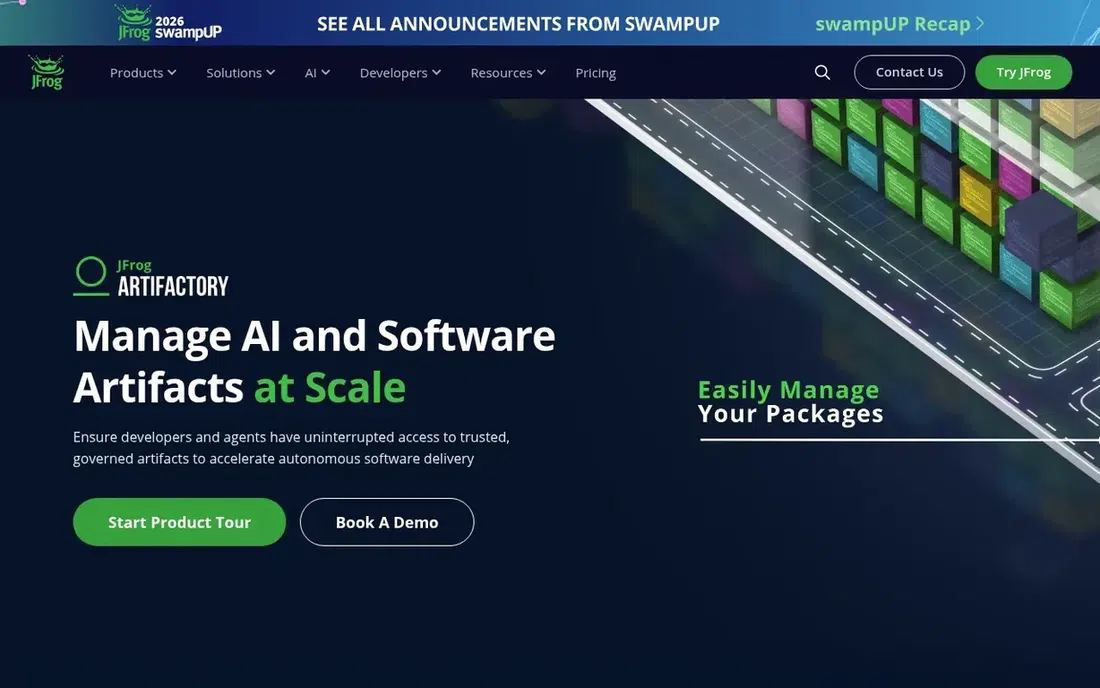
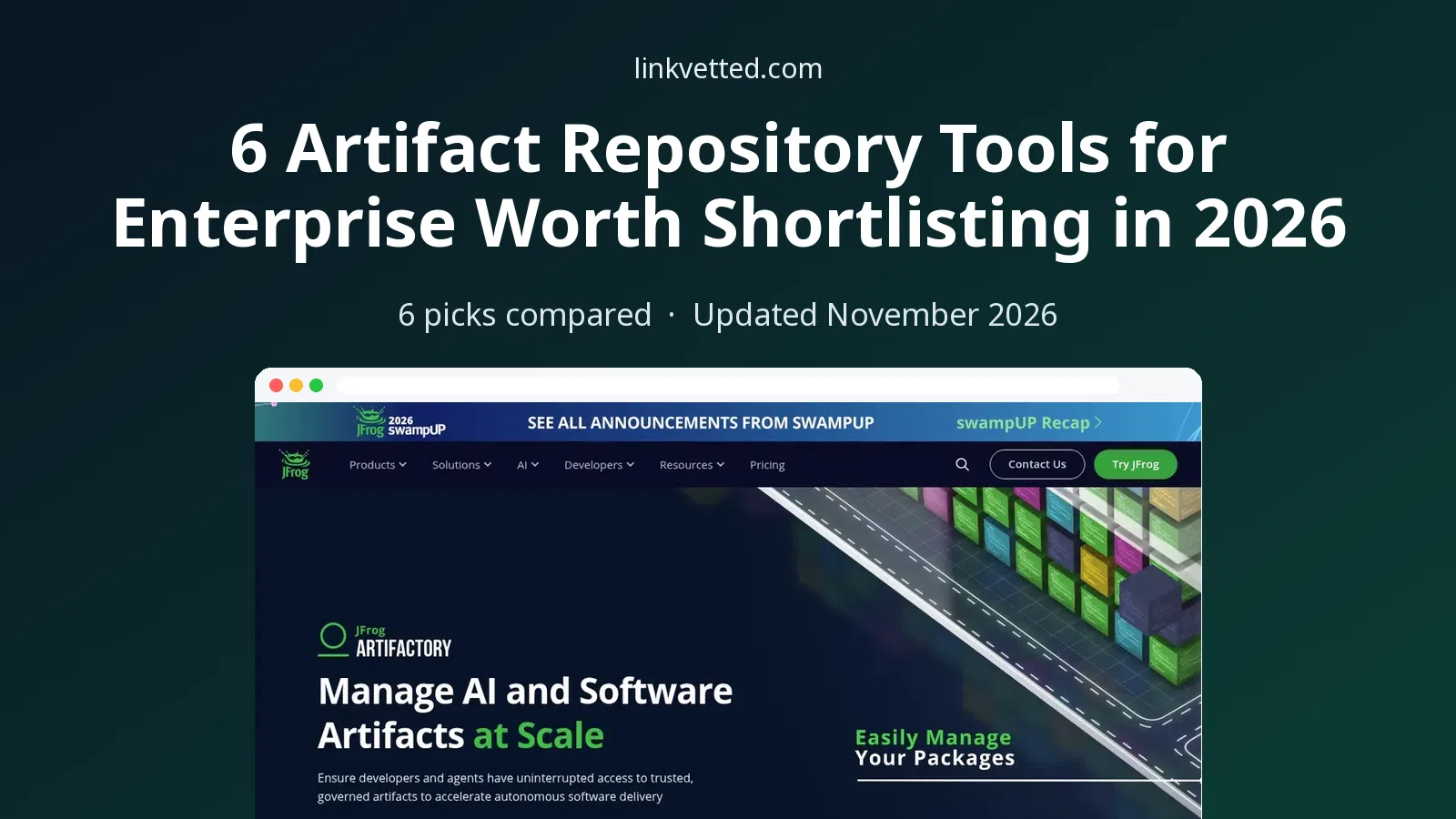
For universal repository across many artifact types, JFrog Artifactory is a natural candidate. If your work is tightly bound to one cloud vendor's pipeline, that vendor's native repository can be more straightforward.
Limits to weigh: Overkill for small, single-format teams.
JFrog Artifactory pricing: $50 per month. Free options: Not stated.
- Described as secure and scalable for full lifecycle management
- Packages and AI/ML models
- Large surface area can mean more setup effort
Sonatype Nexus Repository
Best for: Central management of artifacts and AI models
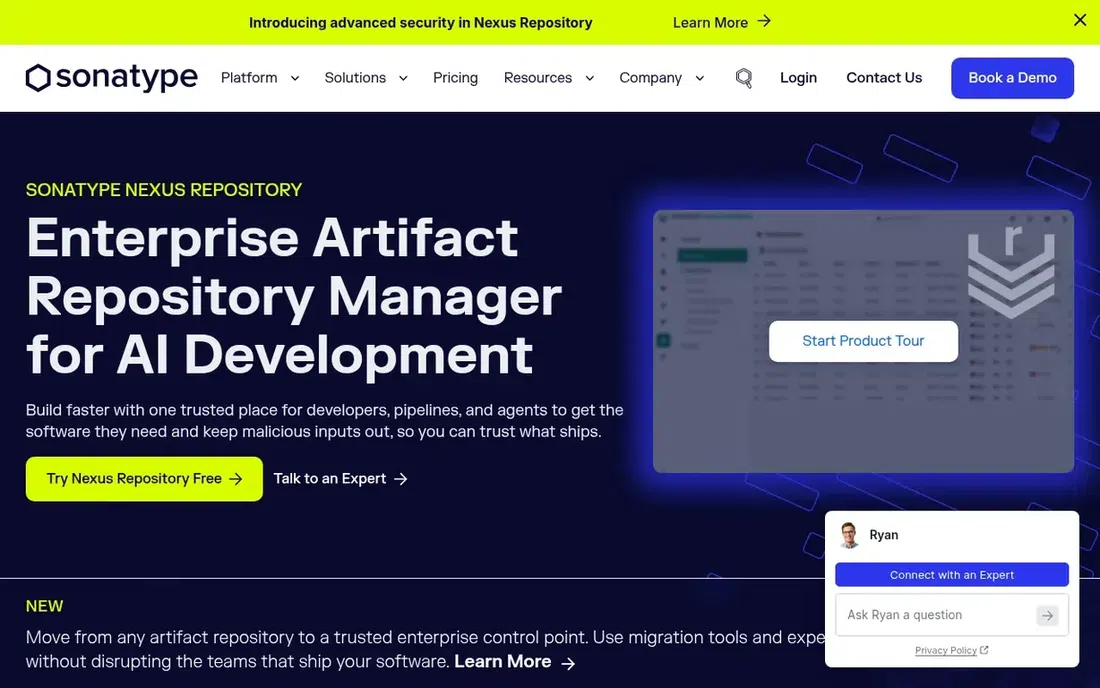
Sonatype Nexus Repository targets central management of artifacts and AI models. Sonatype Nexus Repository is described as a leading artifact repository for centrally managing software artifacts and AI models, with a focus on helping teams ship code quick. It is a typical choice for organizations standardizing proxy and hosted repositories across numerous development teams.
On top of that, if you want a completely managed service with no infrastructure to run, a cloud-native choice may fit better. Otherwise Nexus is a solid central hub. High availability and storage growth need planning as usage expands. Sonatype Nexus Repository pricing: $1,200 per year. A free plan is available with Sonatype Nexus Repository.
Limits to weigh: Feature depth varies by format.
- Central store for software artifacts and AI models
- Positioned as a leading artifact repository
- Needs planning for high availability at scale
AWS CodeArtifact is built with AWS-native managed package storage in mind. Worth adding: multi-cloud enterprises may end up juggling multiple keeps.
On top of that, the service is oriented around package repositories instead of every artifact type, and it is most comfortable when your cloud estate is AWS. This comparison lists no price for AWS CodeArtifact; ask the vendor. Free access exists with AWS CodeArtifact.
Limits to weigh: Tied closely to AWS account structure.
- Secure publish and consume workflows
- Suits AWS-centered architectures
- Not a universal store for every artifact type
How we compared the tools
We compared the tools on published pricing, free plan or trial availability, feature coverage for Artifact repository tools for enterprise, and the limits each vendor documents. Where a vendor does not publish a price, the entry says quote. Where a price depends on seats or billing term, the entry says so. Order on the page follows fit for the typical buyer first, then price transparency and free access. Your own requirements should decide the final pick.
Before you commit
- Confirm the entry price on the vendor page. For Azure Artifacts, Google Artifact Registry and AWS CodeArtifact that means a quote rather than a fixed price.
- Check what the free option really includes: GitHub Packages, Sonatype Nexus Repository and AWS CodeArtifact offer a free plan, and usage caps differ.
- Run a trial of Azure Artifacts with real work before paying for a year; your own workflow is the best test.
- Before choosing Azure Artifacts, weigh its main limit: most natural inside Azure DevOps.
- Ask the daily users to test Sonatype Nexus Repository on a live task before you roll it out to everyone.
- Compare total cost, not headline price: for JFrog Artifactory, add extra seats, add-ons and any usage-based charges.
FAQ
Which options for Artifact repository tools for enterprise have a free plan?
On this list, GitHub Packages, Sonatype Nexus Repository and AWS CodeArtifact include a free plan. Caps on seats, usage or features are common, so test the free plan against your real workload. One other tool offers a trial instead.
What makes an artifact repository right for enterprise use?
Enterprise suitability typically comes down to format coverage, access control, availability and how well the repository suits existing pipelines. Confirm these areas against your own requirements instead of assuming any single tool suits all cases.
Do these tools publish their prices?
Not all of them. Azure Artifacts, Google Artifact Registry and AWS CodeArtifact publish no starting price, so expect a quote request for those. The rest, GitHub Packages included, show a starting price, though seats and billing terms still change the final cost.
Is Azure Artifacts the right pick for everyone comparing Artifact repository tools for enterprise?
No single tool suits every team. Azure Artifacts comes first because it fits Microsoft-centric pipelines and NuGet feeds, while GitHub Packages suits teams already building on GitHub and Google Artifact Registry suits Google Cloud builds and container artifacts. Match the tool to your own size, budget and workflow before deciding.
How are the tools for Artifact repository tools for enterprise ordered?
The order follows typical fit for Artifact repository tools for enterprise, with Azure Artifacts first and AWS CodeArtifact last, then price clarity and free access. It is editorial judgement, not a score, so another team could rank the tools differently.
Sources
- https://azure.microsoft.com/en-us/products/devops/artifacts
- https://github.com/features/packages
- https://cloud.google.com/artifact-registry
- https://jfrog.com/artifactory
- https://www.sonatype.com/products/sonatype-nexus-repository
- https://aws.amazon.com/codeartifact